Category Archives: E.coli O157:H7

Research – Tips For Handling Flour Safely to Avoid Food Poisoning

Food Poisoning Bulletin

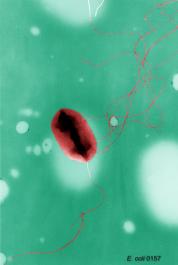
kswfoodworld E.coli O157

Image CDC


When an E. coli O157:H7 outbreak in 2009 was linked to the flour used in prepackaged cookie dough, many people were shocked. How could flour, which seems so innocuous, actually be contaminated with such a serious pathogen? Flour is dry. It seems inert and safe. But flour is a raw agricultural product, and can be contaminated with pathogens just like romaine lettuce. Learn some tips for handling flour safely to avoid food poisoning.

RASFF Alert- STEC E.coli – E.coli O157 = Sliced Pepperoni

RASFF-Logo

RASFF – shigatoxin-producing Escherichia coli (O157) in sliced pepperoni from Germany, packaged in the United Kingdom in the UK

Ireland – Recall of a Batch of Co-op Sliced Pepperoni Due to Presence of E.coli O157

FSAI

Summary
Category 1: For Action
Alert Notification: 2020.20
Product: Co-op Sliced Pepperoni, pack size: 70g, approval number: DE NW 20158 EG
Batch Code: Use by date: 19.05.2020
Country Of Origin: uk

Message:

Co-op is recalling the above batch of its Sliced Pepperoni due to the detection of E.coli O157.  Point-of-sale recall notices will be displayed in stores supplied with the implicated batch.

Nature Of Danger:

Shiga toxin-producing Escherichia coli (STEC), also known as Verocytotoxigenic E. coli (VTEC), are a specific group of E. coli.  While most E. coli are harmless and live in the intestines of healthy humans, STEC produce a powerful toxin which can cause severe illness. Symptoms include abdominal cramps and diarrhoea which is sometimes bloody. Usually there is little or no fever, and patients recover within 5 to 10 days.  In some people however, particularly children under 5 years of age and the elderly, the infection can cause a complication called haemolytic uraemic syndrome (HUS), in which the red blood cells are destroyed and the kidneys can stop working properly.

Action Required:

Manufacturers, wholesalers, distributors, caterers & retailers:

Retailers are requested to remove the implicated batch from sale and to display a point-of-sale recall notice in stores where the affected batch was sold.

Consumers:

Consumers are advised not to eat the implicated batch.

UK – Co-op recalls Sliced Pepperoni because of contamination with E. coli

FSA

Co-op is recalling Co-op Sliced Pepperoni because E. coli O157 has been found in the product.

Product details

Co-op Sliced Pepperoni

Pack size 70g
Use by 19 May 2020

Risk statement

The presence of Shiga toxin-producing E. coli in the product listed above.

Symptoms caused by this organism include diarrhoea, abdominal pain, bloody diarrhoea, and haemolytic uremic syndrome, a serious condition that can lead to kidney failure and can be fatal.

Action taken by the company

Co-op is recalling the above product. Point-of-sale notices will be displayed in all retail stores that are selling this product. These notices explain to customers why the product is being recalled and tell them what to do if they have bought the product. Please see the attached notice.

Our advice to consumers

If you have bought the above product, do not eat it. Instead contact 0800 0686 727 or customer.careline@coop.co.uk to arrange a refund. If customers are making an essential trip to the store from where it was bought, they can return the item in-store for a full refund.

Research – Metabolic diversity of the ‘big six’ of E. coli strains

Phys Org

NUS food scientists have discovered that the six major strains of Escherichia coli (E. coli) that cause foodborne illnesses have different metabolisms and tolerance towards acidic conditions.

Pathogenic E. coli are responsible for a number of foodborne disease outbreaks. Among the hundreds of E. coli serogroups (strains), pathogen E. coli O157:H7 is the most widely recognised due to the severity of the  it causes. Apart from E. coli O157, there are another six serogroups that are identified by the United States Food and Drug Administration as emerging pathogens commonly found in foodborne disease outbreaks. These are known as the “big six.” As part of food safety, it is important to be able to characterise these pathogens and understand their behaviour so that proper measures can be developed to keep them at bay.

Research – Petition Asks FSIS to Declare 31 Salmonella Strains as Adulterants in Meat and Poultry

Food Safety Magazine

Marler Clark LLP filed a petition on behalf of several individuals and consumer groups on January 18, 2020, asking the U.S. Department of Agriculture Food Safety and Inspection Service (USDA FSIS) to issue an interpretive rule declaring 31 Salmonella strains as per se adulterants in meat and poultry products. These strains include four antibiotic-resistant serovars—Salmonella enterica Hadar, Heidelberg, Newport, and Typhimurium—as well as Dublin, Enteritidis, and Infantis. In support of its request, the petition relies heavily on its interpretation of precedent established following the 1993 Escherichia coli outbreak, when USDA declared E. coli O157:H7 a per se adulterant in raw ground beef through interpretive rulemaking.

The petition argues that FSIS has the authority to declare the 31 Salmonella serovars per se adulterants through interpretive rulemaking because the proposed rule would meet the criteria set out in Texas Food Industry Ass’n v. Espy, 870 F. Supp. 143, 147-48 (W.D. Tex. 1994). More specifically, the petition argues that because the Federal Meat Inspection Act does not require USDA to engage in substantive rulemaking to determine whether a particular substance is an adulterant, the agency has “the discretion to proceed through case-by-case adjudication and interpretive orders, rather than through the rulemaking process.” Espy, 870 F. Supp. at 147. The petition also argues that the issuance of such a rule would not be arbitrary or capricious or not in accordance with law.

Research – Hemolytic Uremic Syndrome

Pediatrics in Review

Thrombotic microangiopathy (TMA) was described by Moschcowitz in 1924, and the term hemolytic uremic syndrome (HUS) appeared by 1955 to describe a series of patients with small-vessel renal thrombi, thrombocytopenia, and hemolytic anemia. During the 1970s an association was noted between enteric Escherichia coli infections and HUS, and in 1983 the specific trigger of Shiga toxin–producing E coli (STEC) was recognized. This recognition led to classification of HUS as “diarrhea positive” or “diarrhea negative,” although this terminology is no longer popular. Other secondary forms of HUS are known, including HUS associated with invasive pneumococcal infection, human immunodeficiency virus, systemic lupus erythematosus, or uncommon reactions to medications such as cyclosporine. More recently, the term atypical HUS (aHUS) has been used to describe a rare form of HUS occurring in susceptible individuals, most often from defects in regulation of the alternative pathway of complement, whereas typical HUS largely refers to STEC-HUS or pneumococcal HUS.

In patients with bloody diarrhea, it is imperative that front-line providers understand the importance of testing for STEC. In many parts of the world STEC O157:H7 is the most common pathogen leading to HUS, but it certainly is not the only one as many other organisms besides E coli have been causally implicated with HUS. Testing for STEC is evolving quickly. Stool culture, various assays for the Shiga toxin, and most recently DNA testing of stool are all being used, each method with its own strengths and limitations. The most crucial issue is timeliness because the window of opportunity …

USA – USDA Can Determine Contamination-Free Romaine Regions

Quality Assurance Magazine Eurofins Food Testing UK

USDA data on daily shipments of romaine lettuce can be used to determine which production regions are free from contamination during a foodborne illness outbreak. These data, reported by USDA’s Agricultural Marketing Service with a one- or two-day lag, provide essentially real-time information on produce shipped out to retailers. An analysis conducted by the USDA’s Economic Research Service (ERS) demonstrates how this information may allow FDA to rule out an entire production region as the source of contamination.

Leafy greens, including romaine lettuce, are the sixth most commonly consumed type of vegetable in the United States. From May to November, most romaine lettuce in the U.S. comes from California’s Central Coast region; from December to April, most comes from the Yuma, Ariz. region. Among the 29 outbreaks of Shiga-toxin producing Escherichia coli O157:H7 (E. coli) associated with romaine lettuce between 1998 and 2018, illnesses peaked in April and October, which corresponds with the tail end of harvest season in the two main romaine growing regions. In 2017 and 2018, there were three multistate, multinational foodborne illness E. coli outbreaks associated with the consumption of romaine lettuce that occurred at the tail end of either Yuma, Ariz., or California’s Central Coast production seasons. These outbreaks led to a total of 376 illnesses, 158 hospitalizations, and 7 deaths.

Research -An in situ-Synthesized Gene Chip for the Detection of Food-Borne Pathogens on Fresh-Cut Cantaloupe and Lettuce

Frontiers

Fresh foods are vulnerable to foodborne pathogens which cause foodborne illness and endanger people’s life and safety. The rapid detection of foodborne pathogens is crucial for food safety surveillance. An in situ-synthesized gene chip for the detection of foodborne pathogens on fresh-cut fruits and vegetables was developed. The target genes were identified and screened by comparing the specific sequences of Salmonella Typhimurium, Vibrio parahemolyticusStaphylococcus aureusListeria monocytogenes, and Escherichia coli O157:H7 from the National Center for Biotechnology Information database. Tiling array probes were designed to target selected genes in an optimized hybridization system. A total of 141 specific probes were selected from 3,227 hybridization probes, comprising 26 L. monocytogenes, 24 S. aureus, 25 E. coli O157:H7, 20 Salmonella Typhimurium, and 46 V. parahemolyticus probes that are unique to this study. The optimized assay had strong amplification signals and high accuracy. The detection limit for the five target pathogens on fresh-cut cantaloupe and lettuce was approximately 3 log cfu/g without culturing and with a detection time of 24 h. The detection technology established in this study can rapidly detect and monitor the foodborne pathogens on fresh-cut fruits and vegetables throughout the logistical distribution chain, i.e., processing, cleaning, fresh-cutting, packaging, storage, transport, and sale, and represents a valuable technology that support the safety of fresh agricultural products.

UK – STEC increase for England and Wales in 2018

Food Safety News

More than 1,500 confirmed Shiga toxin-producing E. coli (STEC) infections were reported in England and Wales in 2018 and five people died, according to Public Health England data.

A total of 1,553 confirmed cases included 607 laboratory-confirmed cases of STEC serogroup O157 and 612 infections where a non-O157 serogroup was isolated. In 2017, 948 confirmed cases of STEC were reported.

For 334 cases, samples tested positive by Polymerase Chain Reaction (PCR) for Shiga toxin (stx) genes, but STEC was not cultured with more than 300 of these in England.

Four STEC outbreaks caused by O157 affecting 55 people were investigated in 2018. It was not possible to find the vehicle and/or source of infection for the two largest and national outbreaks were a foodborne source was suspected. In one of these, 26 people were ill with 10 needing hospital treatment. In the other, 17 people were sick and four were hospitalised. The other two smaller outbreaks involved a petting farm and an outdoor event.