Category Archives: Decontamination Microbial

Research – Prevalence ofE. coliO157:H7 in water sources: an overview on associated diseases, outbreaks and detection methods

Elsevier

Escherichia coliO157:H7 is a zoonotic pathogen with its ability to cause human illness ranging from diarrheal dis-ease to fatal hemolytic uremic syndrome.E. coliO157:H7 had been associated with waterborne outbreaksresulting in high morbidity and mortality worldwide. Therefore, it is important to investigate the prevalence ofE. coliO157:H7 in water sources especially used for drinking and to develop the diagnostic methods for itsearly detection. The review describes traditional cultural methods, immunological techniques, and polymerasechain reaction (PCR)–based methods for detection of this bacterium in water sources. The current PCR-basedtechniques such as real-time PCR are more specific and sensitive and require less detection time (b3 hours).These methods can be applied for regular water monitoring and proper management of water sources to preventwaterborne diseases due toE. coliO157:H7.


Research – Vibrio vulnificus and Vibrio parahaemolyticus in Oysters under Low Tidal Range Conditions: Is Seawater Analysis Useful for Risk Assessment?

MDPI

Food Illness

Abstract

Human-pathogenic Vibrio bacteria are acquired by oysters through filtering seawater, however, the relationships between levels of these bacteria in measured in oysters and overlying waters are inconsistent across regions. The reasons for these discrepancies are unclear hindering our ability to assess if -or when- seawater samples can be used as a proxy for oysters to assess risk. We investigated whether concentrations of total and human pathogenic Vibrio vulnificus (vvhA and pilF genes) and Vibrio parahaemolyticus (tlhtdh and trh genes) measured in seawater reflect concentrations of these bacteria in oysters (Crassostrea virginica) cultured within the US lower Chesapeake Bay region. We measured Vibrio spp. concentrations using an MPN-qPCR approach and analyzed the data using structural equation modeling (SEM). We found seawater concentrations of these bacteria to predictably respond to temperature and salinity over chlorophyll a, pheophytin or turbidity. We also inferred from the SEM results that Vibrio concentrations in seawater strongly predict their respective concentrations in oysters. We hypothesize that such seawater-oyster coupling can be observed in regions of low tidal range. Due to the ease of sampling and processing of seawater samples compared to oyster samples, we suggest that under low tidal range conditions, seawater samples can foster increased spatial and temporal coverage and complement data associated with oyster samples.

Research – EFSA – FOODSAFETY4EU: paving the way for the food safety system of the future

EFSA

Abstract

Food safety is a top priority for the European Commission, which policies aim at sustaining a high level of protection of human health and consumers’ interests, while ensuring an effective functioning of the internal EU market. Under the New Transparency Regulation (EU/2019/138), the 3-year EU-fundedFOODSAFETY4EUproject (FS4EU) kicked off in January 2021, represents a significant step for the European Union (EU) food safety system (FSS), towards more transparency, better engagement, and closer cooperation.

This Horizon 2020 Project, coordinated by CNR-ISPA (Italy), focuses on building a multi-stakeholder platform for the future EU FSS. The FOODSAFETY4EU Network currently consists of 23 consortium partners and around 50 stakeholders: Food Safety Authorities (FSA), consumer associations, academia, research centres and networks, food industries and sector associations, thinktanks, etc. Through a structured, digitally supported, participatory process, the platform hosts the co-design of future strategic research and innovation agenda (SRIA), as well as risk communication models tailored to the specificities of various target groups. Among the goals: providing scientific advice and technical support for EU food safety policies, by enabling actors to access, share and exchange scientific knowledge, resources, and data more efficiently, to better synchronise food safety research and policies, and to contribute to a more transparent communication through the FSS.

Overall, the FS4EU project underpins the EFSA missions in risk assessment, including risk communication, with the ambition to be a basis for a Knowledge Centre for Food Safety in Europe. Accordingly, the EU-FORA 2021–2022 fellow (based in CNR-ISPA under the Work Programme RECIPE: Risk AssEssment/Risk CommunIcation: understanding the context and addressing Priorities of the futurE–a learning-by-doing approach) committed to multiple Work Packages, actively participated to various activities, thus successfully contributing to the FS4EU project meeting its objectives by the end of 2023

RASFF Alerts – Animal Feed – Salmonella – Pet Food – Rapeseed Mealt

RASFF

Salmonella Spp in processed animal proteins (SOA cat.3) for petfood from Czech Republic in Italy

RASFF

Salmonella Senftenberg in the post-extraction rapeseed meal from Ukraine in Poland

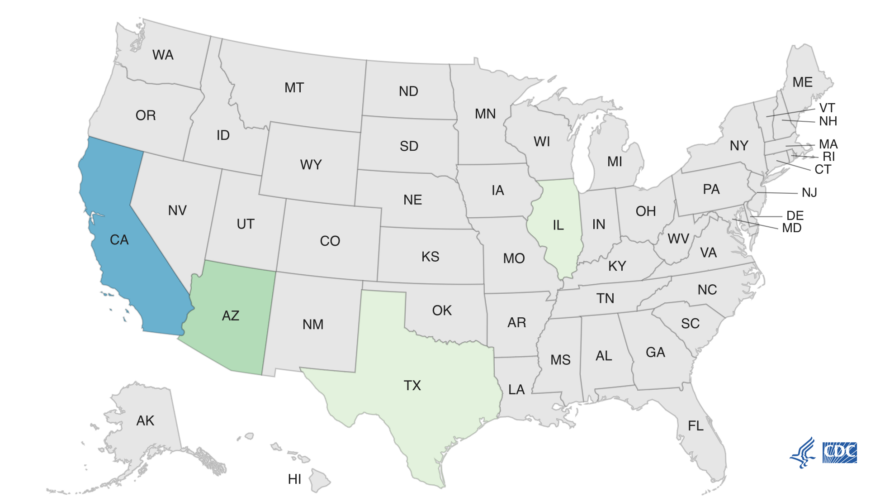
USA -39 California, Arizona, Texas and Illinois Salmonella illnesses linked to raw fish

Food Poison Journal

A total of 39 people infected with the outbreak strain of Salmonella Litchfield were reported from 4 states – California, Arizona, Texas and Illinois.


Illnesses started on dates ranging from June 14, 2022, to October 23, 2022 (see timeline). Sick people ranged in age from 1 to 80 years, with a median age of 33, and 66% were female. Of 32 people with information available, 15 were hospitalized. No deaths were reported.

Estonia improves fish controls after Listeria outbreak

Food Safety News

Measures taken by Estonian authorities following a Listeria outbreak have improved the fish control system, according to the European Commission.

A remote DG Sante audit, in October 2020, looked at checks to ensure smoked fish meets microbiological food safety criteria, as well as measures taken by authorities in non-compliances.

Eight Rapid Alert System for Food and Feed (RASFF) reports for Listeria monocytogenes in smoked fishery products from Estonia have been issued since 2015. All but one concerned the same establishment.

A multi-country outbreak of 22 listeriosis cases linked to cold-smoked salmon and trout pointed toward M.V Wool, an Estonian processing company as the manufacturer of these fish products. This was based on traceability information and a match between the outbreak strain and samples on the processing line and in four batches of the final product. Five countries were affected from 2014 to 2019 and five people died.

Research – Safety and quality of water used with fresh fruits and vegetables

WHO

During fresh fruit and vegetables (FFV) production, water is used for a variety of purposes. Even the water was conventionally treated and disinfected, it may still potentially contain human pathogens, albeit at low concentrations. A risk assessment, appropriate to the national or local production context, should be conducted to assess the potential risks associated with a specific water source or supply in order to devise the appropriate risk mitigation strategies.

Since the 48th session of Codex Committee on Food Hygiene (CCFH) noted the importance of water safety and quality in food production and processing, FAO and WHO has undertaken the work on this subject. This report describes the output of the third in a series of meetings, which examined appropriate and fit-for-purpose microbiological criteria for water used with fresh fruit and vegetables. The advice herein will support decision making when applying the concept of fit-for-purpose water for use in the pre- and post-harvest production of fresh fruit and vegetables.

Research – Listeria monocytogenes in ready-to-eat (‎RTE)‎ food: attribution, characterization and monitoring: meeting report

WHO

Since the publication of the 2004 risk assessment, outbreaks of illness and resultant deaths due to L. monocytogenes continue to occur across the globe. Continued effort is needed to summarize and critically evaluate the most recent information on L. monocytogenes in RTE foods. New data to improve and further inform the 2004 Risk Assessment is available for nearly every factor considered previously, including new quantitative data on L. monocytogenes contamination of foods.

To facilitate this work, an FAO/WHO expert meeting was held by virtual means from 20 October to 6 November 2020 to review and discuss the available data and background documents, and to assess the need to modify and update risk assessment models/tools. This report focuses on the deliberations and conclusions of the expert meeting.

USA – FDA Core Investigation Table -Investigations of Foodborne Illness Outbreaks

fda

What’s New

  • While FDA’s overall response regarding powdered infant formula is continuing, this investigation of Cronobacter illnesses linked to powdered infant formula (reference #1056) has been marked as closed. Resources for Parents and Caregivers are available on the FDA website and additional updates will be provided as needed.
  • The outbreak of Salmonella Litchfield linked to seafood (reference #1105) is over and the FDA investigation has closed. 
  • The outbreak of Listeria monocytogenes linked to Brie and Camembert Cheese (reference #1106) is over and the FDA investigation has closed. 
  • The case count for the outbreak of Salmonella Typhimurium has increased from 270 to 274 cases.

Hong Kong – Test results of microbiological quality of poon choi all satisfactory

CFS

The Centre for Food Safety (CFS) of the Food and Environmental Hygiene Department today (December 5) announced the test results of a recently completed seasonal food surveillance project on the microbiological quality of poon choi. A total of 30 samples were collected and all passed the tests.
     
A CFS spokesman said, “As poon choi is popular for gatherings during winter, and there were previous cases of bacterial food poisoning associated with poon choi, the CFS has continued to conduct a seasonal food surveillance project this year to assess the microbiological quality of poon choi. A total of 30 poon choi samples were collected from different retailers (including online retailers) for testing of common food poisoning organisms including Bacillus cereus, Clostridium perfringens, Salmonella, coagulase-positive staphylococci organisms and Vibrio parahaemolyticus.”
     
Despite the satisfactory results of all samples tested, the spokesman reminded members of the public to be careful when purchasing and enjoying this seasonal delicacy. He advised consumers to order poon choi from licensed and reliable shops, reheat poon choi thoroughly before consumption, consume the food as soon as possible or keep the food at temperatures above 60 degrees Celsius, avoid prolonged storage of poon choi at room temperature to reduce the risk of bacteria growth, and stop consuming the food if it tastes or smells abnormal.