Category Archives: Cyclospora

USA – Investigations of Foodborne Illness Outbreaks

FDA

What’s New

  • A new outbreak of Cyclospora cayetanensis (ref #1163) in a not yet identified product has been added to the table. FDA has initiated sample collection and analysis.
  • For the outbreak of Cyclospora cayetanensis (ref #1159), the case count has increased from 36 to 37 cases.
Date
Posted
Ref Pathogen
or
Cause of
Illness
Product(s)
Linked to
Illnesses

(if any)
Total
Case
Count

Status
7/6/2023 1163 Cyclospora
cayetanensis
Not Yet
Identified
105 Active
6/14/2023 1157 Salmonella
Paratyphi B
var. L(+)
tartrate+
Not Yet
Identified
34 Active
6/14/2023 1159 Cyclospora
cayetanensis
Not Yet
Identified
37 Active
5/24/2023 1156 Salmonella
Enteritidis
Raw
Cookie
Dough
See
Advisory
Active
4/26/2023 1152 Not Yet
Identified
Morel
Mushroom
See
Advisory
Active
3/1/2023 1143 Hepatitis
A Virus
Frozen
Strawberries
See
Advisory
Active

USA – Preliminary Incidence and Trends of Infections Caused by Pathogens Transmitted Commonly Through Food — Foodborne Diseases Active Surveillance Network, 10 U.S. Sites, 2022

CDC

The figure is a photo of a worker in a produce section with information about foodborne illnesses.

Summary

What is already known about this topic?

Campylobacter and Salmonella are the leading causes of bacterial enteric infections transmitted commonly by food. Reported incidence of enteric infections was lower during the COVID-19 pandemic (2020–2021) compared with previous years.

What is added by this report?

During 2022, FoodNet identified higher incidences of Shiga toxin-producing Escherichia coliYersiniaVibrio, and Cyclospora infections compared with 2016–2018. Campylobacter, Salmonella, Shigella, and Listeria incidences did not change.

What are the implications for public health practice?

Progress in reducing enteric infection incidence was not observed during 2022, as influences of the COVID-19 pandemic subsided. Collaboration among food growers, processors, retail stores, restaurants, and regulators is needed to reduce pathogen contamination during poultry slaughter and to prevent contamination of leafy greens.

USA- FDA – Investigations of Foodborne Illness Outbreaks

FDA

What’s New

  • For the outbreak of Salmonella Paratyphi B var. L(+) tartrate+ (ref #1157), FDA initiated an on-site inspection and sample collection and analysis. The case count has increased from 33 to 34 cases.
  • For the outbreak of Cyclospora cayetanensis (ref #1159), the case count has increased from 34 to 36 cases.
Date
Posted
Ref Pathogen
or
Cause of
Illness
Product(s)
Linked to
Illnesses

(if any)
Total
Case
Count

Status
6/14/2023 1157 Salmonella
Paratyphi B
var. L(+)
tartrate+
Not Yet
Identified
34 Active
6/14/2023 1159 Cyclospora
cayetanensis
Not Yet
Identified
36 Active
5/24/2023 1156 Salmonella
Enteritidis
Raw
Cookie
Dough
See
Advisory
Active
4/26/2023 1152 Not Yet
Identified
Morel
Mushroom
See
Advisory
Active
3/1/2023 1143 Hepatitis
A Virus
Frozen
Organic
Strawberries
See
Advisory
Active

USA – Nationwide outbreak from Cyclospora tops 200; officials continue to seek source

Food Safety News

The number of patients in a nationwide outbreak of infections from the foodborne Cyclospora parasite continue to increase, having reached 210 laboratory-confirmed cases.

Federal, state and local public health officials are investigating the outbreak, which is spread across 22 states and New York City, according to a June 22 update from the Centers for Disease Control and Prevention.

The CDC and the Food and Drug Administration have been tracking the outbreak since April 1. Additional infections could have started before that date.

Also, there are likely more than 210 people in the ongoing outbreak because of the lag time between when patients become ill and when confirmation testing can be completed and results filed with the CDC. Some sick people don’t seek medical attention, also impacting the outbreak count. The parasite is killed by using antibiotics. Specific tests are required to diagnose Cyclospora infections.

“No specific food items have been identified as the source of most of these illnesses. State and local public health officials are interviewing people with cyclosporiasis to find out what foods they ate before getting sick,” the CDC reported.

USA – Broccoli was named as the source of the Cyclospora outbreak but the country of origin was not determined

Food Safety News

Public health officials have declared that imported broccoli was behind an outbreak from the Cyclospora parasite, but have closed their investigation without determining exactly where the produce came from.

The Food and Drug Administration announced that the outbreak has been determined to be over. The FDA reported that the U.S. Centers for Disease Control and Prevention, along with state and local officials, all concur that the outbreak has ended.

Twenty patients were confirmed as having been infected by the microscopic parasite Cyclospora, but their home states and ages have not been reported.

The outbreak was first reported by the FDA on May 24. The CDC has not posted any information about the outbreak.

USA – FDA – Investigations of Foodborne Illness Outbreaks

FDA

What’s New

  • For the outbreak of Salmonella Paratyphi B var. L(+) tartrate+ (ref #1157) in a not yet identified product, the case count increased from 31 to 33.
  • For the outbreak of Cyclospora cayetanensis (ref #1159), the case count has increased from 28 cases to 34 cases.
  • For the outbreak of Cyclospora cayetanensis (ref #1155), CDC, FDA, and state and local partners have determined that the outbreak has ended and have closed the investigation. Based on epidemiological investigations conducted by CDC and state and local partners, ill people reported eating broccoli before becoming sick. FDA and state and local partners conducted traceback investigations and determined that the product of interest was imported broccoli. FDA and state and local partners also collected and analyzed product samples and all samples were negative for Cyclospora. Due to the absence of supporting evidence collected from traceback and sample collection, investigators were unable to confirm a specific type or producer of imported broccoli as the source of the outbreak.

USA – Multiple states report infections from Cyclospora; source evades investigators

Food Safety News

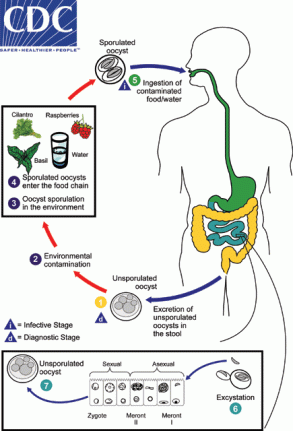
Cyclospora_LifeCycle201

The Centers for Disease Control and Prevention is reporting a multi-state outbreak of infections from the Cyclospora parasite that has sickened almost 100 people.

As of the agency’s most recent outbreak update, 97 people from 14 states have been confirmed infected by the microscopic parasite. Sixteen people have required hospitalization because their symptoms were so severe. Public health officials have not reported any deaths.

The total number of sick people has not yet been reported to the CDC because of the time it takes for testing and confirmation testing. Some individual case counts reported so far this year by state authorities include Colorado with 62 patients who ate at a single restaurant. Outbreak investigations are also underway in 15 other states.

Prior to the current update, the CDC first reported on the outbreak on May 25. The first date of onset of the infections was April 1. No specific food items have been identified as the source of the parasite.

USA – Another state reports a Cyclospora outbreak

Food Safety News

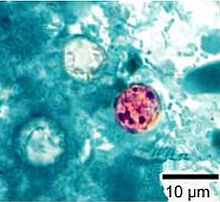
220px-Cyclospora_cayetanensis_stained

The Alabama Department of Public Health is investigating multiple reports of Cyclospora infection statewide.

The state’s health department has logged more infections from this parasite since April, and there are more than twice as many cases so far this year as were reported in Alabama in all of 2022.

Cyclosporiasis is a gastrointestinal illness caused by a microscopic parasite. People can get sick with cyclosporiasis by eating fresh produce contaminated with Cyclospora. However, Alabama officials have not yet determined a specific source of the parasites in this year’s outbreak.

In recent weeks other states, including Georgia, and the U.S. Food and Drug Administration have reported outbreaks of infections from the parasite.

USA – FDA – Core Outbreak Table Investigations of Foodborne Illness Outbreaks

FDA

What’s New

  • An outbreak of Salmonella Enteritidis (ref # 1156) linked to raw cookie dough has been added to the table. On 05/23/2023, FDA issued an Outbreak Advisory. Additionally, traceback, an onsite inspection, and sample collection and analysis have been initiated.
  • An outbreak of Cyclospora cayetanensis (ref # 1155) in a not yet identified product has been added to the table. Traceback has been initiated.
  • For the investigation of illnesses with a suspect vehicle of Morel mushrooms (ref # 1152), the FDA issued an advisory on 5/19/2023.
Date
Posted
Ref Pathogen
or
Cause of
Illness
Product(s)
Linked to
Illnesses

(if any)
Total
Case
Count

Status
5/24/2023 1156 Salmonella
Enteritidis
Raw Cookie Dough See
Outbreak
Advisory
Active
5/24/2023 1155 Cyclospora
cayetanensis
Not Yet
Identified
19 Active
4/26/2023 1152 Not Yet Identified Morel Mushroom
(suspect)
See Advisory Active
3/29/2023 1141 Salmonella Infantis Raw Flour See
Outbreak
Advisory
Active
3/1/2023 1143 Hepatitis A Virus Frozen Organic
Strawberries
See
Outbreak
Advisory
Active
2/15/2023 1123 Listeria
monocytogenes
Not Yet
Identified
See
CDC
Investigation
Notice
Active

USA – Cyclospora outbreak in Georgia prompts public health alert

Food Safety News

Officials in Georgia are investigating an outbreak of cyclospora infections in the northwest part of the state.

The Georgia Department of Public Health Northwest Health District has not released any numbers, but it is urging people with symptoms of cyclospora infection to seek medical treatment and report any confirmed infections to local public health officials.

Georgia public health officials say their investigation is ongoing and the number of cases is expected to increase.

Cyclosporiasis causes an illness that can result in prolonged gastrointestinal distress, including watery diarrhea with frequent, sometimes explosive, bowel movements that can last for weeks. In severe cases, cyclospora infection can require hospitalization.220px-Cyclospora_cayetanensis_stained