Category Archives: Cryptosporidium

USA – Cryptosporidiosis Outbreak Linked to Raw Milk from Maine Farm

Maine Gov

crypto

Maine Center for Disease Control and Prevention (Maine CDC) has identified an outbreak of cryptosporidiosis in individuals who consumed unpasteurized/raw milk from Roux Farm in Shapleigh, Maine, within the last two months. Epidemiologists identified at least four individuals who became ill and tested positive for cryptosporidiosis. Anyone who consumed raw milk (regular or any flavor) from Roux Farm produced before October 18, 2020, may be at elevated risk of cryptosporidiosis. Raw milk from the farm was sold through a variety of stores in the state.

Advisory (PDF)

Ireland -Irish authorities probe salad link in Cryptosporidium outbreak

Food Safety News

Officials in Ireland are investigating an outbreak of cryptosporidium linked to a salad that has affected more than 40 people.

The Health Service Executive’s (HSE) Department of Public Health East was notified of an outbreak of cryptosporidiosis in the Dublin and Wicklow area. To date, 42 cases have been notified; with the onset of symptoms occurring over a 14 day period from July 15.

A food alert was issued by the Food Safety Authority of Ireland (FSAI) and certain batches of mixed salad leaves were withdrawn.

Product recall
The FSAI was notified by the HSE of an outbreak of cryptosporidiosis. An outbreak control team is in place and the investigation is ongoing. Many lines of inquiry are being followed up to identify and control the source of the outbreak, according to the agency.


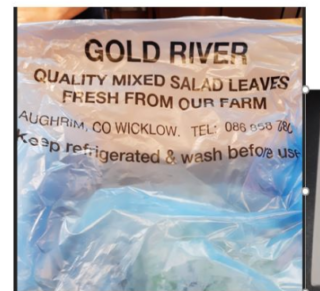
Ireland – Withdrawal of Gold River Quality Mixed Salad Leaves due to the Possible Presence of Cryptosporidium

FSAI

Summary
Category 1: For Action
Alert Notification: 2020.42
Product: Gold River Quality Mixed Salad Leaves (Seasonal Salad Box); pack size: 1kg
Batch Code: All batch codes, all best before dates.
Country Of Origin: Ireland

Message:

All batches of Gold River Quality Mixed Salad Leaves (Seasonal Salad Box) are being withdrawn from sale as a precaution, due to the possible presence of Cryptosporidium.

Nature Of Danger:

Cryptosporidium is a microscopic parasite which causes cryptosporidiosis, a common form of gastroenteritis. Watery diarrhoea is the most common symptom of cryptosporidiosis, which can be particularly serious for young children, older people, pregnant women and people with weakened immune systems.

Action Required:

Inspectors:

EHOs are requested to notify the FSAI at foodincidents@fsai.ie, if the implicated batches are found to be in use at catering premises.

Manufacturers, wholesalers, distributors, caterers & retailers:

Caterers should not use the implicated batches.

Gold River Photos

Research – Research shows estimated 180 deaths per year in UK because of foodborne illness

Food Safety News

Researchers have estimated there are 180 deaths per year in the United Kingdom caused by foodborne diseases from 11 pathogens.

The Food Standards Agency (FSA) estimates that about 2.4 million cases of foodborne illness occur every year in the UK.

Foodborne norovirus is projected to cause 56 deaths per year, Salmonella 33 deaths, Listeria monocytogenes 26, Clostridium perfringens 25, and Campylobacter 21. Most fatalities occur in those aged 75 years and older.

Foodborne deaths from Shigella, Cryptosporidium, Giardia, adenovirus, astrovirus and rotavirus are rare, according to the study published in the journal BMJ Open Gastroenterology.

USA -76 with Cyclospora illnesses linked to ALDI, Jewel-Osco and Hy-Vee salads in Iowa, Illinois, Kansas, Minnesota, Missouri and Nebraska

Food Poison Journal crypto

CDC, public health and regulatory officials in several states, and the U.S. Food and Drug Administration (FDA) are investigating a multistate outbreak of Cyclospora infections linked to bagged salad mix purchased at ALDI, Hy-Vee, and Jewel-Osco stores in Iowa, Illinois, Kansas, Missouri, Minnesota, and Nebraska. As of June 19, 2020, a total of 76 people with laboratory-confirmed Cyclospora infections associated with this outbreak have been reported from 6 states:  Iowa (28), Illinois (23), Kansas (1), Minnesota (10), Missouri (7) and Nebraska (7).

People with laboratory-confirmed Cyclospora infections and who reported eating bagged salad mix before getting sick have been reported from 6 states (Iowa, Illinois, Kansas, Missouri, Nebraska, and Minnesota). Illnesses started on dates ranging from May 11, 2020 to June 14, 2020. Sixteen people have been hospitalized. No deaths attributed to Cyclospora have been reported.


Research – Raw is still risky: Six years after a toddler died, Australian advocates want raw milk back on the table

Barf blog

In late 2014, three children in the Australian state of Victoria developed hemolytic uremic syndrome linked to Shiga-toxin toxin producing E. coli in unpasteurized bath milk produced by Mountain View Dairy Farm. One child died, and two others developed cryptosporidiosis.

The Victorian government quickly banned the sale of so-called bath milk, which although labeled as not fit for human consumption, was a widely recognized way for Australian consumers to access raw milk.

Research -A review of outbreaks of cryptosporidiosis due to unpasteurized milk

Spinger  raw

Abstract

Purpose

This review analysed outbreaks of human cryptosporidiosis due to raw milk. The objective of our study was to highlight and identify underestimated and underreported aspects of transmission of the parasite as well as the added value of genotyping Cryptosporidium isolates.

Methods

We conducted a descriptive literature review using the digital archives Pubmed and Embase. All original papers and case reports referring to outbreaks of Cryptosporidium due to unpasteurized milk were reviewed. The cross-references from these publications were also included.

Results

Outbreaks have been described in the USA, Australia, and the UK. Laboratory evidence of Cryptosporidium from milk specimens was lacking in the majority of the investigations. However, in most recent reports molecular tests on stool specimens along with epidemiological data supported that the infection was acquired through the consumption of unpasteurized milk. As the incubation period for Cryptosporidium is relatively long (days to weeks) compared with many other foodborne pathogens (hours to days), these reports often lack microbiological confirmation because, by the time the outbreak was identified, the possibly contaminated milk was not available anymore.

Conclusion

Cryptosporidiosis is generally considered a waterborne intestinal infection, but several reports on foodborne transmission (including through raw milk) have been reported in the literature. Calves are frequently infected with Cryptosporidium spp., which does not multiply in milk. However, Cryptosporidium oocysts can survive if pasteurization fails. Thus, pasteurization is essential to inactivate oocysts. Although cryptosporidiosis cases acquired from raw milk are seldom reported, the risk should not be underestimated and Cryptosporidium should be considered as a potential agent of contamination. Genotyping Cryptosporidium isolates might be a supportive tool to strengthen epidemiologic evidence as well as to estimate the burden of the disease.


Sweden – Sweden ‘crypto’ outbreak update: Nearly 400 cases, Cases declining

Outbreak News Today

crypto

Image CDC


Since the last report on the Cryptosporidium outbreak in Sweden about two weeks ago, health officials say the number of reported cases has decreased in recent weeks.

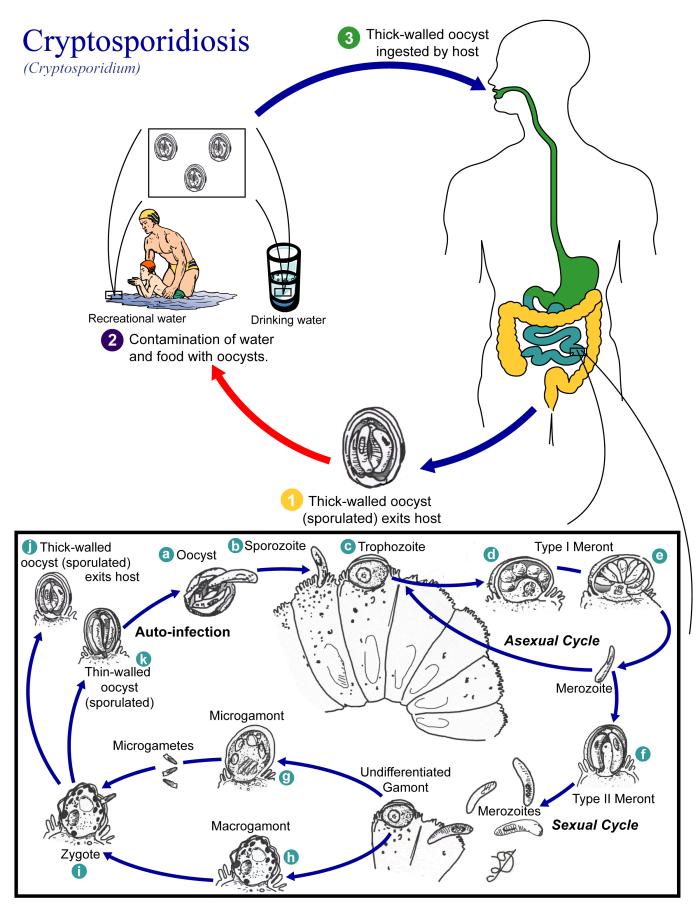
Cryptosporidium life cycle/CDC

While cases are declining, the number of cases reported per week remains slightly higher compared to the same period in previous years. To date, some 400 Cryptosporidium cases have been recorded.

Most cases have been reported from Stockholm, Östergötland, Västra Götaland, Halland, Jönköping and Uppsala.

The Public Health Authority analyzes samples from the cases to determine what type of cryptosporidium they have become ill from. Of the 202 samples analyzed so far, 93 have been shown to belong to subtype (A) and 58 belong to subtype B of Cryptosporidium parvum. In addition to this subtype, a number of different subtypes have been detected.

Sweden – Sweden -Cryptosporidium outbreak tops 300 cases since October

Outbreak News Today crypt

In a follow-up on a previous report on the Cryptosporidium outbreak in Sweden, the Public Health Authority, or Folkhalsomyndigheten, report more than 300 cases of cryptosporidiosis in October and November.

The good news is while the number of cases are still unusually high, the number of reported cases has decreased.


France -Cryptosporidium outbreak reported in Alpes-Maritimes, France

Outbreak News Today 

The Agence régionale de santé Provence-Alpes-Côte d’Azur (ARS Paca) is reporting (computer translated) a Cryptosporodium outbreak in Grasse and several surrounding municipalities of the Alpes-Maritimes.

Since October 7, at least 92 cases of diarrhea caused by a parasite. There is a suspicion of contamination in the Grasse sector, supplied with water by the Foulon canal (west of the Alpes-Maritimes), which could have been contaminated following heavy rainfall.

Officials recommended as a precaution to drink only bottled water or to boil the tap water before consume it or use it to prepare food.