Category Archives: Cryptosporidiosis

Ireland – Tipperary County Council not aware of source of Cryptosporidium in Borrisokane water

Tipperary Live

crypto

Tipperary County Council is not aware if the source of the cryptosporidium that has affected Borrisokane water supply has been found, local councillors have been told.

Cllr Ger Darcy had also raised concerns as to whether the pollution could happen again.

Irish Water is installing a UV system to kill any bacteria in the supply and director of water services Jerry Robinson said that hopefully that would be done this month, but warned it was a “work in progress”.

He said the UV system should prevent issues in the future.

Ireland – HPSC provides advice for parents following large increase in incidence of Cryptosporidiosis

HPSC

crypto

The HSE-Health Protection Surveillance Centre (HPSC) is providing advice to parents about preventing cryptosporidiosis following a large increase in a potentially serious tummy bug in children over the last few weeks.

Since the beginning of March, the number of cases of cryptosporidiosis has more than doubled in comparison to the average rates, especially in small children aged 1 to 4 years of age. When children spend time outdoors and in particular on farms, they are more likely to pick up this bug and it is important they wash their hands regularly with soap under warm running water.

Factsheet to assist parents

Hands should always be washed:

  • After using the toilet
  • Before eating
  • Before preparing food
  • After playing, working or being outside (especially on the farm)
  • After touching dirty outdoor clothes or boots
  • After touching pets, livestock and other animals

It is important to know that:

  • Alcohol hand gel will not kill the cryptosporidiosis bug – only soap and warm water will
  • Children should not eat food (including sweets and treats) out of doors especially on the farm, or in the open countryside, unless their hands have been cleaned
  • Raw (unpasteurised) milk can be contaminated with many harmful infectious diseases including cryptosporidiosis. Young children and pregnant women are at most risk.
  • If you have a private well, you should ensure that the water from it is safe. The EPA has advice on protecting your well

Symptoms:
Symptoms of cryptosporidiosis generally begin about a week after swallowing the bug, but can start after only a couple of days. The symptoms last about one week (but can last longer). People who are immunocompromised (whose body’s defence system is weak due to a medical condition or because of medication) can have severe symptoms if they catch cryptosporidiosis.

The most common symptom of cryptosporidiosis is watery diarrhoea. Other symptoms include:

  • Stomach cramps or pain
  • A temperature
  • Nausea
  • Vomiting

Some people with cryptosporidiosis will not get sick at all.

Cryptosporidiosis is spread when the bug passes from the person or animal in the stools or manure, and anything contaminated by the stools or manure (hands, touch surfaces, handles, food, water and outdoor surfaces) can lead to a person becoming infected.


Norway – Children sick in Norway after drinking raw milk

Food Safety News

Almost 20 children in Norway have fallen sick after a farm visit that included drinking unpasteurized, raw milk.

Health officials reported 17 people became ill after the farm trip, including 16 children aged 3 to 5 years old. Most were infected with Campylobacter but a few patients were also diagnosed with infections from the parasite Cryptosporidium after contact with animals.

The children fell ill after the farm visit in Viken, a county in Eastern Norway, where they were served raw, unpasteurized milk as part of their packed lunch. Pasteurization kills bacteria, viruses and parasites often found in raw milk.

The Norwegian Food Safety Authority (Mattilsynet) and the Norwegian Institute of Public Health (Folkehelseinstituttet) recommend that children, pregnant women, the elderly and those with weakened immune systems avoid drinking raw milk, because infections can have serious consequences for them.

Research – Potential Risk of Three Zoonotic Protozoa (Cryptosporidium spp., Giardia duodenalis, and Toxoplasma gondii) Transmission from Fish Consumption

MDPI

In recent decades, worldwide fish consumption has increased notably worldwide. Despite the health benefits of fish consumption, it also can suppose a risk because of fishborne diseases, including parasitic infections. Global changes are leading to the emergence of parasites in new locations and to the appearance of new sources of transmission. That is the case of the zoonotic protozoa Cryptosporidium spp., Giardia duodenalis, and Toxoplasma gondii; all of them reach aquatic environments and have been found in shellfish. Similarly, these protozoa can be present in other aquatic animals, such as fish. The present review gives an overview on these three zoonotic protozoa in order to understand their potential presence in fish and to comprehensively revise all the evidences of fish as a new potential source of Cryptosporidium spp., Giardia duodenalis, and Toxoplasma gondii transmission. All of them have been found in both marine and freshwater fishes. Until now, it has not been possible to demonstrate that fish are natural hosts for these protozoa; otherwise, they would merely act as mechanical transporters. Nevertheless, even if fish only accumulate and transport these protozoa, they could be a “new” source of infection for people. View Full-Text

USA – Estimate of Burden and Direct Healthcare Cost of Infectious Waterborne Disease in the United States

CDC

Provision of safe drinking water in the United States is a great public health achievement. However, new waterborne disease challenges have emerged (e.g., aging infrastructure, chlorine-tolerant and biofilm-related pathogens, increased recreational water use). Comprehensive estimates of the health burden for all water exposure routes (ingestion, contact, inhalation) and sources (drinking, recreational, environmental) are needed. We estimated total illnesses, emergency department (ED) visits, hospitalizations, deaths, and direct healthcare costs for 17 waterborne infectious diseases. About 7.15 million waterborne illnesses occur annually (95% credible interval [CrI] 3.88 million–12.0 million), results in 601,000 ED visits (95% CrI 364,000–866,000), 118,000 hospitalizations (95% CrI 86,800–150,000), and 6,630 deaths (95% CrI 4,520–8,870) and incurring US $3.33 billion (95% CrI 1.37 billion–8.77 billion) in direct healthcare costs. Otitis externa and norovirus infection were the most common illnesses. Most hospitalizations and deaths were caused by biofilm-associated pathogens (nontuberculous mycobacteria, PseudomonasLegionella), costing US $2.39 billion annually.

At the beginning of the 20th century, diseases commonly transmitted by water, such as cholera and typhoid, were major causes of death in the United States (1). Reliable provision of treated, safe drinking water dramatically reduced the burden of these diseases and has been recognized as one of the greatest public health achievements of the 20th century (2). Despite this achievement, waterborne disease in the United States persists (35).

In the United States, outbreaks associated with large public drinking water systems have sharply declined in the past 40 years (3,6), likely the result of improvements in regulation and operation. However, transmission of disease via drinking water systems still occurs, often attributable to aging infrastructure, operational challenges, and the private or unregulated water systems (e.g., private wells) that serve an estimated 43 million persons (7). At the same time, the complexity and scope of water use has increased; drinking, sanitation, hygiene, cooling, and heating needs are supported by 6 million miles of plumbing inside US buildings (i.e., premise plumbing) (8,9). Premise plumbing water quality can be compromised by long water residency times, reduced disinfectant levels, and inadequate hot water temperatures, creating environments where pathogens (e.g., nontuberculous mycobacteria [NTM], Pseudomonas, and Legionella) can amplify in biofilms (10). People can be exposed to these pathogens through contact, ingestion, or inhalation of aerosols (e.g., from showerheads, building cooling towers, or decorative fountains).

As leisure time has increased, swimming pools, waterparks, water playgrounds, and hot tubs have proliferated (5). These venues rely largely on chlorination as the major barrier against disease transmission. Cryptosporidium has emerged as the major cause of outbreaks associated with treated aquatic venues because it is extremely chlorine resistant and has a low infectious dose (5,11,12). Warmer oceans have led to Vibrio-associated wound infections farther north than previously documented (13).

Estimates of the overall burden of foodborne disease in the United States, including both known and unknown agents, have been useful in directing prevention activities and setting public health goals (14,15). Quantifying the burden of infectious waterborne disease in the United States would also be beneficial.

Previous studies have attempted to estimate the burden of gastrointestinal illness (16,17) or all illness associated with drinking water (18) and untreated recreational water (19) in the United States, but the burden of disease from all water sources (drinking, recreational, environmental) and exposure routes (ingestion, contact, inhalation) has not been estimated. We present an estimate of the burden of waterborne disease in the United States that includes gastrointestinal, respiratory, and systemic disease; accounts for underdiagnosis; and includes all water sources and exposure routes.

USA – Cryptosporidiosis Outbreak Linked to Raw Milk from Maine Farm

Maine Gov

crypto

Maine Center for Disease Control and Prevention (Maine CDC) has identified an outbreak of cryptosporidiosis in individuals who consumed unpasteurized/raw milk from Roux Farm in Shapleigh, Maine, within the last two months. Epidemiologists identified at least four individuals who became ill and tested positive for cryptosporidiosis. Anyone who consumed raw milk (regular or any flavor) from Roux Farm produced before October 18, 2020, may be at elevated risk of cryptosporidiosis. Raw milk from the farm was sold through a variety of stores in the state.

Advisory (PDF)

Ireland -Irish authorities probe salad link in Cryptosporidium outbreak

Food Safety News

Officials in Ireland are investigating an outbreak of cryptosporidium linked to a salad that has affected more than 40 people.

The Health Service Executive’s (HSE) Department of Public Health East was notified of an outbreak of cryptosporidiosis in the Dublin and Wicklow area. To date, 42 cases have been notified; with the onset of symptoms occurring over a 14 day period from July 15.

A food alert was issued by the Food Safety Authority of Ireland (FSAI) and certain batches of mixed salad leaves were withdrawn.

Product recall
The FSAI was notified by the HSE of an outbreak of cryptosporidiosis. An outbreak control team is in place and the investigation is ongoing. Many lines of inquiry are being followed up to identify and control the source of the outbreak, according to the agency.


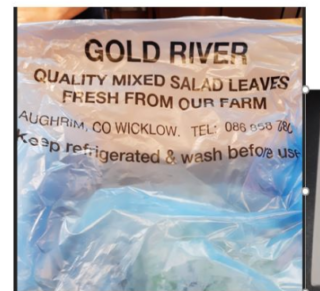
Ireland – Withdrawal of Gold River Quality Mixed Salad Leaves due to the Possible Presence of Cryptosporidium

FSAI

Summary
Category 1: For Action
Alert Notification: 2020.42
Product: Gold River Quality Mixed Salad Leaves (Seasonal Salad Box); pack size: 1kg
Batch Code: All batch codes, all best before dates.
Country Of Origin: Ireland

Message:

All batches of Gold River Quality Mixed Salad Leaves (Seasonal Salad Box) are being withdrawn from sale as a precaution, due to the possible presence of Cryptosporidium.

Nature Of Danger:

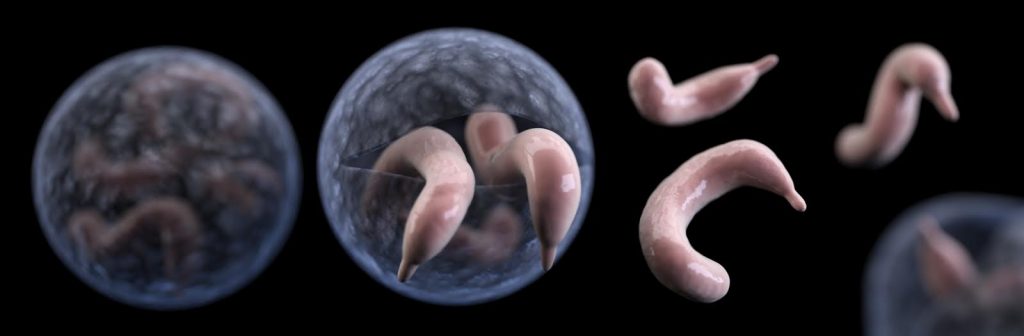
Cryptosporidium is a microscopic parasite which causes cryptosporidiosis, a common form of gastroenteritis. Watery diarrhoea is the most common symptom of cryptosporidiosis, which can be particularly serious for young children, older people, pregnant women and people with weakened immune systems.

Action Required:

Inspectors:

EHOs are requested to notify the FSAI at foodincidents@fsai.ie, if the implicated batches are found to be in use at catering premises.

Manufacturers, wholesalers, distributors, caterers & retailers:

Caterers should not use the implicated batches.

Gold River Photos

USA -76 with Cyclospora illnesses linked to ALDI, Jewel-Osco and Hy-Vee salads in Iowa, Illinois, Kansas, Minnesota, Missouri and Nebraska

Food Poison Journal crypto

CDC, public health and regulatory officials in several states, and the U.S. Food and Drug Administration (FDA) are investigating a multistate outbreak of Cyclospora infections linked to bagged salad mix purchased at ALDI, Hy-Vee, and Jewel-Osco stores in Iowa, Illinois, Kansas, Missouri, Minnesota, and Nebraska. As of June 19, 2020, a total of 76 people with laboratory-confirmed Cyclospora infections associated with this outbreak have been reported from 6 states:  Iowa (28), Illinois (23), Kansas (1), Minnesota (10), Missouri (7) and Nebraska (7).

People with laboratory-confirmed Cyclospora infections and who reported eating bagged salad mix before getting sick have been reported from 6 states (Iowa, Illinois, Kansas, Missouri, Nebraska, and Minnesota). Illnesses started on dates ranging from May 11, 2020 to June 14, 2020. Sixteen people have been hospitalized. No deaths attributed to Cyclospora have been reported.


Research – Raw is still risky: Six years after a toddler died, Australian advocates want raw milk back on the table

Barf blog

In late 2014, three children in the Australian state of Victoria developed hemolytic uremic syndrome linked to Shiga-toxin toxin producing E. coli in unpasteurized bath milk produced by Mountain View Dairy Farm. One child died, and two others developed cryptosporidiosis.

The Victorian government quickly banned the sale of so-called bath milk, which although labeled as not fit for human consumption, was a widely recognized way for Australian consumers to access raw milk.