Category Archives: cross contamination

USA – Byheart Issues Voluntary Recall of Five Batches of Its Infant Formula Because of Possible Health Risk – Cronobacter sakazakii

FDA

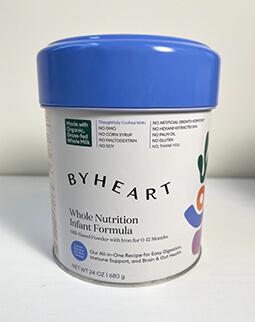
Product image front can label ByHeart Whole Nutrition Infant Formula Milk-Based Powder with Iron for 0-12 Months, NET WT 24 OZ (680g)”

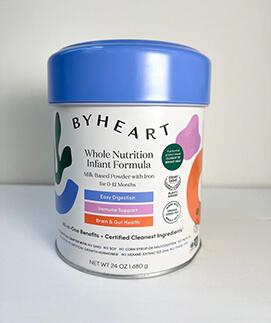
Product image side can label ByHeart Whole Nutrition Infant Formula Milk-Based Powder with Iron for 0-12 Months, NET WT 24 OZ (680g)

Summary

Company Announcement Date:
FDA Publish Date:
Product Type:
Food & Beverages
Reason for Announcement:
Potential for cross-contamination with Cronobacter sakazakii
Company Name:
ByHeart
Brand Name:
ByHeart
Product Description:
Whole Nutrition Infant Formula, Milk Based Powder with Iron for 0-12months

Company Announcement

None of the distributed ByHeart product has tested positive for any contaminants

No consumer complaints received, to date, that would indicate any illness

Recall is not related to ByHeart’s own manufacturing facility in Reading, PA in any way; facility continues to run 24/7; re-stock expected in January

ByHeartExternal Link Disclaimer, a next-generation baby nutrition company, announced today that, out of an abundance of caution, it has chosen to voluntarily recall five batches of ByHeart Whole Nutrition Infant Formula due to the potential for cross-contamination with Cronobacter sakazakii. No distributed ByHeart product has tested positive for the bacteria.

The product being recalled is ByHeart Whole Nutrition Infant Formula, Milk Based Powder with Iron for 0-12 Months in 24 oz containers. The formula under voluntary recall was distributed directly to consumers in the U.S. and can be identified by the number on the bottom of the can. Recalled product batches are 22273 C1, 22276 C1, 22277 C1, 22278 C1, and 22280 C1 printed with use by 01 JAN 24 or 01JUL 24.

Cronobacter bacteria can cause severe, life-threatening infections (sepsis) or meningitis (an inflammation of the membranes that protect the brain and spine). Symptoms of sepsis and meningitis may include poor feeding, irritability, temperature changes, jaundice (yellow skin and whites of the eyes), grunting breaths and abnormal movements. Cronobacter infection may also cause bowel damage and may spread through the blood to other parts of the body.

It is important to note that this recall is not related to ByHeart’s own manufacturing in any way. In addition, the company has not received any consumer complaints that would indicate any illness, to date; illness complaints are an early detection of safety concerns. If a baby has already consumed all of the formula, there is no reason for concern, and no additional action is needed. If parents have any questions, they should consult with their pediatrician.

ByHeart owns its entire manufacturing supply chain with the exception of final canning, which is conducted by a reputable third-party packager. ByHeart is taking this precautionary measure because one test sample collected from the third-party packaging facility tested positive for Cronobacter sakazakii. All product packaged that day, and the first production on the next day, was isolated for destruction and not distributed. Out of an abundance of caution, we are now recalling all product produced during the entire production run.

As a company committed to parents, ByHeart holds itself to the highest standards when it comes to safety and applauds the FDA’s efforts to oversee the safe manufacturing of infant formula. Parents can remain confident in the safety of ByHeart’s products as the company continues to expand its investments in infant formula innovation, clinical studies, and industry-leading quality standards. ByHeart’s manufacturing facility in Reading, PA, continues to operate 24/7, and the company is committed to providing customers formula in January.

What ByHeart Customers Should Do

Customers who purchased ByHeart product should check the bottom of the can and dispose of product from batches 22273 C1, 22276 C1, 22277 C1, 22278 C1, and 22280 C1. ByHeart is setting up a webpage at https://byheart.com/noticesExternal Link Disclaimer with additional information about its measures. Should customers have any other questions or want to find out if the product they have is included in the voluntary recall, please email notices@byheart.com or text ByHeart at 1-909-506-2354. The company will also be reaching out directly to all customers via email who purchased orders from these identified batches.

ByHeart knows that formula is critical to a baby’s health and growth and wants to make sure that all customers have what they need to keep their baby fed and healthy, no matter what brand of formula they use. While ByHeart works 24/7 to meet the demand for formula, the fastest way the company can replace the formula customers purchased is to cover the cost of two cans of alternate formula. Additionally, affected customers will receive two cans of their next order of ByHeart Whole Nutrition Formula for free.

If your infant is experiencing symptoms related to Cronobacter infection, contact your health care provider to report their symptoms and receive immediate care. To report an illness or adverse event, you can


Company Contact Information

Consumers:
ByHeart
 1-909-506-2354
 notices@byheart.com

USA – Kraft Heinz Foods Company Recalls Ready-To-Eat Ham and Cheese Loaf Products Due to Possible Cross-Contamination From Under-Processed Products

FSIS USDA

WASHINGTON, Dec. 5, 2022 – Kraft Heinz Foods Company, a Kirksville, Mo. establishment, is recalling approximately 2,400 pounds of ready-to-eat ham and cheese loaf products due to possible cross-contamination with under-processed products, the U.S. Department of Agriculture’s Food Safety and Inspection Service (FSIS) announced today.

The ready-to-eat ham and cheese loaf products were produced on Oct. 10, 2022. The following products are subject to recall [view labels]:

  • 16-oz. rigid vacuum-packed packages containing “Oscar Mayer Ham & Cheese LOAF” with codes from “07 Feb 2023 20:40 7B” through “07 Feb 2023 22:16 7B” on the label.

The products subject to recall bear establishment number “Est. 537V” inside the USDA mark of inspection. These items were shipped to distribution centers in Ohio and Virginia, and further distributed for retail sales.

The problem was discovered when the establishment notified FSIS that the product was sliced on the same equipment as product that had been under processed, and the equipment was not cleaned between runs of the under-processed and fully cooked product. This has led to concerns of possible cross-contamination of the fully cooked ham and cheese loaf product.

There have been no confirmed reports of adverse reactions due to consumption of these products. Anyone concerned about an injury or illness should contact a healthcare provider.  

FSIS is concerned that some product may be in consumers’ refrigerators or freezers. Consumers who have purchased these products are urged not to consume them. These products should be thrown away or returned to the place of purchase.

Click to access Recall-043-2022-label.pdf

Italy – MUSSELS ORIGIN IN SPAIN – Microbiological Contamination

Salute

Trademark : EFFELLE PESCA SRL APPROVALNUMBER IT S1086 CE

Name : batch FL 335600 MUSSELS ORIGIN IN SPAIN PACKAGED BY EFFELLE PESCA SRL -MESOLA (FE)

Reason for reporting : Recall due to microbiological risk

Publication date : 28 November 2022

Documentation

Documentation

Research – Dynamic Changes of Bacterial Communities and Microbial Association Networks in Ready-to-Eat Chicken Meat during Storage

MDPI

Ready-to-eat (RTE) chicken is a popular food in China, but its lack of food safety due to bacterial contamination remains a concern, and the dynamic changes of microbial association networks during storage are not fully understood. This study investigated the impact of storage time and temperature on bacterial compositions and microbial association networks in RTE chicken using 16S rDNA high-throughput sequencing. The results show that the predominant phyla present in all samples were Proteobacteria and Firmicutes, and the most abundant genera were WeissellaPseudomonas and Proteus. Increased storage time and temperature decreased the richness and diversity of the microorganisms of the bacterial communities. Higher storage temperatures impacted the bacterial community composition more significantly. Microbial interaction analyses showed 22 positive and 6 negative interactions at 4 °C, 30 positive and 12 negative interactions at 8 °C and 44 positive and 45 negative interactions at 22 °C, indicating an increase in the complexity of interaction networks with an increase in the storage temperature. Enterobacter dominated the interactions during storage at 4 and 22 °C, and Pseudomonas did so at 22 °C. Moreover, interactions between pathogenic and/or spoilage bacteria, such as those between Pseudomonas fragi and Weissella viridescensEnterobacter unclassified and Proteus unclassified, or those between Enterobacteriaceae unclassified and W.viridescens, were observed. This study provides insight into the process involved in RTE meat spoilage and can aid in improving the quality and safety of RTE meat products to reduce outbreaks of foodborne illness. View Full-Text

Slovakia – Cronobacter prompts infant formula recall in Slovakia

Food Safety News

A brand of infant formula has been recalled in Slovakia because of Cronobacter sakazakii contamination.

The Public Health Authority of the Slovak Republic (UVZSR) said the issue was detected as part of official food controls by authorities. No related illnesses have been reported.

The affected goat’s milk infant formula was made in the Czech Republic by Goldim. The product is “Naše mléko 1” with a date of Oct. 31, 2023, and lot number L430. It is intended for infants up to 6 months of age.

The product was analyzed in an accredited regional public health authority (RÚVZ) laboratory and it did not comply with the microbiological legislation for Cronobacter sakazakii.

UVZSR said this means the formula is considered not to be safe and should be withdrawn from the market.

RASFF Alert – Cronobacter – Infant Formula

RASFF

Cronobacter in infant formula from Czech Republic in Slovenia

Research – Another drop in outbreaks was recorded in Germany for 2021

Food Safety News

The amount of foodborne outbreaks reported in Germany has continued to fall, according to the latest figures.

In 2021, the Robert Koch-Institut (RKI) and Federal Office of Consumer Protection and Food Safety (BVL) received slightly fewer reports of outbreaks with 168 compared to 193 in the previous year.

At least 1,179 cases, 196 hospitalizations, and two deaths were related to them in 2021. As in previous years, the top causes were Campylobacter and Salmonella.

Other agents involved in outbreaks were norovirus, Bacillus cereus, hepatitis A virus, Listeria monocytogenes, Clostridium perfringens, Yersinia enterocolitica, Shiga toxin-producing E. coli (STEC), Clostridium botulinum, Cronobacter sakazakii, histamine, Shigella, and Staphylococcus aureus. In seven outbreaks with 73 cases, the pathogen remained unknown.

Nineteen of the 22 outbreaks with more than five patients were caused by Salmonella.

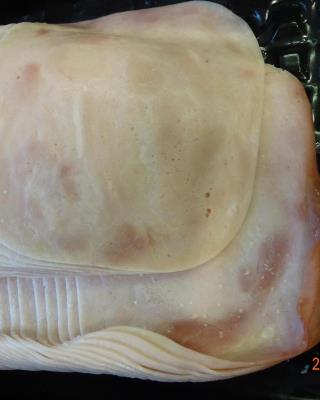
Czech Republic – STEAMED HAM, SLICED – Microbial Activity

Potravinynapranyri

Illustrative photo #1

Place of inspection:
Vřesina ( Sportovní 326/6, 747 20 Vřesina )
ID: 01738950
Food group: Meat and meat products Heat-treated perishable products

STEAMED HAM, SLICED
Category: Dangerous foods
Invalid parameter:

changes caused by microbial activity

The product had a sticky surface, rough edges and smelled of spoilage. Food is not considered safe if it shows signs of spoilage.

The food was more than a month past its use-by date. 

Batch: 940030
Expiration date: 16/06/2022
Date of sample collection: 21/07/2022
Reference number: 22-000499-SZPI-CZ
The sample was detected by the official control of the State Agricultural and Food Inspection.

Denmark – Fermentation in damaged cans with kidney beans and white beans – Microbial Contamination

DVFA

REMA Distribution A/S is recalling several lots of tins of kidney beans in brine and kidney beans in chilli sauce as well as white beans in tomato sauce.

Small perforations in the cans means that there is a risk of microbiological contamination of the contents and fermentation in the cans.

Recalled Foods , Published: October 14, 2022

Modified October 14, 2022

​​​​​​​Which food:
REMA1000 Kidney Beans in brine, 420g

Lot no: LU052../ LU053../ LU054../ LU055..

Best-before date: 30.11.2025

EAN barcode: 5705830004307

REMA1000 Kidney Beans in Chilli Sauce, 420g

Lot no: LU080../ LU081..

Best-before date: 30.11.2025

EAN barcode: 5705830004321

REMA1000 White Beans in Tomato Sauce, 420g

Lot no: LU089…/ LU090…/ LU091…/ LU159….

Best-before date: 30.11.2025

EAN barcode: 5705830004314

Sold in:
REMA1000 stores throughout the country

Company that is recalling:
REMA Distribution A/S

Reason:
An error occurred during the packaging of the products, which means that the cans may be perforated and thus contaminated. The products are therefore unsuitable as food.

Risk:
The small perforations in the cans create a risk that fermentation may occur in the products and that the contents of the cans may be exposed to microbiological contamination with e.g. bacteria. The perforation can also mean that the products can develop a different smell.

Advice to consumers:
The Danish Food and Food Administration advises consumers to return the products to the store where they were bought, or to discard them.

Qatar recalls microbial-contaminated shrimp from India

SeaFoodSource

Qatar’s Ministry of Public Health has issued a warning against a certain volume of fresh and frozen shrimp imported from India and has decided to recall the affected quantity from the market, Gulf Times reported on 8 October.

Analyses at Qatar’s food laboratories have reportedly found that some volumes of Indian imported shrimp are microbially contaminated, according to a statement from the ministry.

The public health ministry is working with the Ministry of Municipal Affairs to recall all the …