Category Archives: Clostridium

Quebec – Notice not to consume basil pesto prepared and sold by the company Les Brasseurs de Vegetables – Clostridium botulinum

Quebec

QUEBEC CITY , September 11 , 2023 /CNW/ – The Ministry of Agriculture, Fisheries and Food (MAPAQ), in collaboration with the company Les brasseurs de vegetables, located at 1788, 7 e Rang ,  in Tingwick , advises the population not to consume the product indicated in the table below, because it has not been prepared and packaged to ensure its safety. In fact, this product could promote the proliferation of the bacteria  Clostridium botulinum . 

Product name

Format

Affected lot

“Basil Pesto”

150ml

250ml

500ml

Units sold

until

September 6, 2023

The product which is the subject of this warning was offered for sale until September 6, 2023, in several establishments in the region. It was packaged in glass jars with a metal lid and sold at room temperature. The product label included, in addition to its name, the words “Les brasseurs de vegetables”.

The operator is voluntarily recalling the product in question. It has agreed with MAPAQ to issue this warning as a precautionary measure. In addition, people who have this product in their possession are advised not to consume it. They must return it to the establishment where they bought it or throw it away.

Even if the affected product does not show signs of spoilage or suspicious odor, it could be contaminated with the bacteria Clostridium botulinum . Foods contaminated with the toxin of this bacteria can cause, when ingested, the following symptoms: facial paralysis, unresponsive or fixed pupils, difficulty swallowing, drooping eyelids, vision and speech problems. In severe cases, the disease can cause death.

It should be noted that no cases of illness associated with the consumption of this food have been reported to MAPAQ to date.

Risk classification: class 1
Reference number: 4803

Source:
Media relations
Direction des communications
Ministry of Agriculture, Fisheries
and Food
Tel. : 418 380-2100, ext. 3512
www.mapaq.gouv.qc. ThatThis link will open in a new window.

Research – Natural preservatives for hams: Essential oil mixtures and major compounds’ efficacy against Clostridium sporogenes

Wiley Online

Abstract

The demand for healthier products by consumers has prompted research into the use of essential oils (EOs), which are known for their antimicrobial properties. This study investigated the antimicrobial properties of EOs as a potential alternative to synthetic preservatives, specifically, cinnamon, clove, and oregano EOs, as well as their majority compounds (cinnamaldehyde, eugenol, and carvacrol) on Clostridium sporogenes inoculated in hams. The findings of the study revealed that cinnamon EO and its major compound cinnamaldehyde were the most efficient in inhibiting the growth of C. sporogenes, demonstrating the lowest minimum bactericidal concentration MBC (0.1%). The combination of oregano EO, cinnamon EO, cinnamaldehyde, and carvacrol led to a significant decrease in bacterial growth (approximately 3 log) after 28 days in hams. Furthermore, the presence of spores was not observed for 14 days (at 14°C) and 21 days (at 7°C) of storage, indicating a delay in sporulation. The treatments using the combination of EOs, and their major compounds had minimal impact on the color of the hams while maintaining the physicochemical characteristics of the product. This study demonstrates that EOs and their major compounds can be applied as natural preservatives in ham, offering a potential alternative for reducing the use of nitrites in various food types. The research emphasizes the antibacterial efficacy of cinnamon, clove, and oregano EOs, along with their major compounds, in inhibiting C. sporogenes in ham. The findings indicate that these natural alternatives could be valuable in preserving food products and reducing the reliance on synthetic preservatives.

Research – Foodborne Botulism, Canada, 2006–2021

cdc

kswfoodworld

Abstract

During 2006–2021, Canada had 55 laboratory-confirmed outbreaks of foodborne botulism, involving 67 cases. The mean annual incidence was 0.01 case/100,000 population. Foodborne botulism in Indigenous communities accounted for 46% of all cases, which is down from 85% of all cases during 1990–2005. Among all cases, 52% were caused by botulinum neurotoxin type E, but types A (24%), B (16%), F (3%), and AB (1%) also occurred; 3% were caused by undetermined serotypes. Four outbreaks resulted from commercial products, including a 2006 international outbreak caused by carrot juice. Hospital data indicated that 78% of patients were transferred to special care units and 70% required mechanical ventilation; 7 deaths were reported. Botulinum neurotoxin type A was associated with much longer hospital stays and more time spent in special care than types B or E. Foodborne botulism often is misdiagnosed. Increased clinician awareness can improve diagnosis, which can aid epidemiologic investigations and patient treatment.

Research – Foodborne Botulism, Canada, 2006–2021

CDC

Abstract

During 2006–2021, Canada had 55 laboratory-confirmed outbreaks of foodborne botulism, involving 67 cases. The mean annual incidence was 0.01 case/100,000 population. Foodborne botulism in Indigenous communities accounted for 46% of all cases, which is down from 85% of all cases during 1990–2005. Among all cases, 52% were caused by botulinum neurotoxin type E, but types A (24%), B (16%), F (3%), and AB (1%) also occurred; 3% were caused by undetermined serotypes. Four outbreaks resulted from commercial products, including a 2006 international outbreak caused by carrot juice. Hospital data indicated that 78% of patients were transferred to special care units and 70% required mechanical ventilation; 7 deaths were reported. Botulinum neurotoxin type A was associated with much longer hospital stays and more time spent in special care than types B or E. Foodborne botulism often is misdiagnosed. Increased clinician awareness can improve diagnosis, which can aid epidemiologic investigations and patient treatment.

ECDC -Botulism – Annual Epidemiological Report for 2021

ECDC

In 2021, 82 confirmed cases of botulism were reported in the EU/EEA. Among 30 reporting countries, 19 countries notified zero cases. The overall notification rate was 0.02 cases per 100 000 population. Denmark reported the highest notification rate (0.10 cases per 100 000 population), followed by Romania (0.06 cases per 100 000 population) and Italy (0.05 cases per 100 000 population).

Download

France – TORTILLAS -Clostridium botulinum

Gov france

Identification information of the recalled product

  • Product category Feed
  • Product subcategory Others
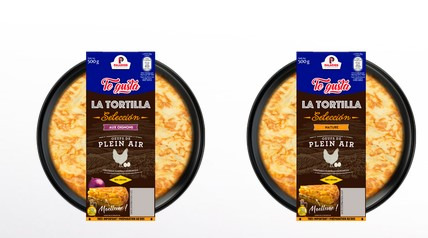
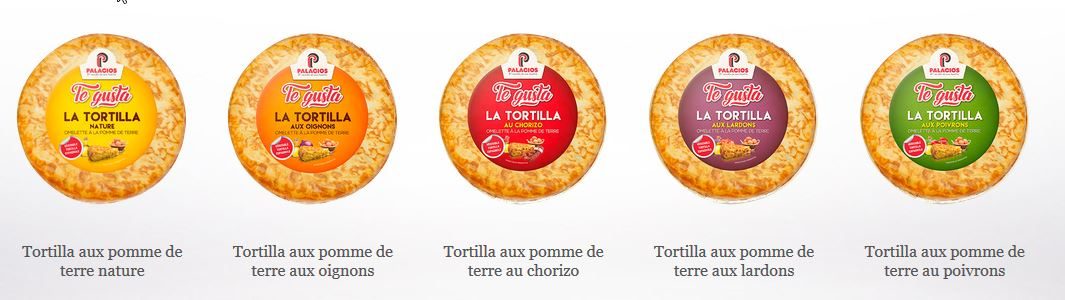
  • Product brand name PALACIOS / TE GUSTA
  • Model names or references Fresh potato tortillas, all flavors (with, without onions, chorizo…etc)
  • Identification of products
    Batch Date
    All lots Use-by date 07/24/2023
    All lots Use-by date 07/31/2023
    All lots Use-by date 08/08/2023
    All lots Use-by date 08/11/2023
  • Packaging 500g
  • Storage temperature Product to be stored in the refrigerator
  • Health mark 26.03635/SG
  • Further information Only fresh tortillas from the factory in Mudrian, Spain (approval number 26.03635/SG), are concerned. Vacuum-packed tortillas are not affected.
  • Geographic area of ​​sale Whole France
  • Distributors Carrefour, Cora, Intermarché, Netto

France – TORTILLAS – Clostridium botulinum

Gov france

Identification information of the recalled product

  • Product category Feed
  • Product subcategory Others
  • Product brand name PALACIOS / TE GUSTA
  • Model names or references Plain potato tortillas Potato and onion tortillas Potato and bacon tortillas Potato and pepper tortillas Potato and chorizo ​​tortillas Halal potato tortillas
  • Identification of products
    Batch
    All lots
  • Storage temperature Product to be stored in the refrigerator
  • Further information There is a range of PALACIOS frozen tortillas concerned as well.
  • Geographic area of ​​sale Whole France
  • Distributors Carrefour, Cora, intermarket

RASFF Alert – Suspected botulism due to fresh potato tortilla from Spain

RASFF

Suspected botulism due to fresh potato tortilla from Spain in Andorra, France , Italy and Portugal

Spain: Botulism outbreak linked to packaged potato omelette

Outbreak News Today

On July 11, Italy notified through the Early Warning and Response System of the Union Union (EWRS) two cases of botulism whose only food in common had been an omelet of packaged potato consumed in Spain.

On July 14, the Community of Madrid and the Community Valenciana notified the National Epidemiological Surveillance Network (RENAVE) of two cases with symptoms compatible with botulism, with ingestion of the same food, for which reason the immediately alerts the Autonomous Communities and Cities (CC.AA.).

Also, it contacted the Spanish Agency for Food Safety and Nutrition (AESAN) as responsible for analyzing traceability and coordinating pertinent investigations regarding the food product.

Up to now, 7 cases have been reported with a history of consumption of packaged potato in the days prior to the onset of the symptoms: 5 laboratory-confirmed cases with symptom onset date between June 24 and July 10 and 2 probable cases (with compatible clinic and epidemiological link), whose dates of onset of symptoms have been 21 June and July 1 respectively.

France – Onion Tortilla – Clostridium botulinum

Gov france

Identification information of the recalled product

  • Product category Feed
  • Product subcategory Prepared meals and snacks
  • Product brand name Itinerary of Flavors
  • Model names or references Onion Tortilla – Itinerary of Flavors – 500g
  • Identification of products
    GTIN Date
    3250392934200 Use-by date 06/19/2023
    3250392934200 Use-by date 06/27/2023
    3250392934200 Use-by date 05/07/2023
    3250392934200 Use-by date 07/10/2023
    3250392934200 Use-by date 07/17/2023
    3250392934200 Use-by date 07/24/2023
    3250392934200 Use-by date 07/31/2023
    3250392934200 Use-by date 08/08/2023
    3250392934200 Use-by date 08/11/2023
  • Marketing start/end date From 05/19/2023 to 07/21/2023
  • Storage temperature Product to be stored in the refrigerator
  • Geographic area of ​​sale Whole France
  • Distributors Intermarché