Category Archives: Biotoxin

RASFF Alert- Shellfish Lipophilic Biotoxin – Cockles

RASFF

Lipophilic toxins in cockles (Cerestoderma edule) from Portugal in Spain

New Zealand – Public health warning: shellfish biotoxin warning for Marlborough – PSP

MPI

New Zealand Food Safety is advising the public not to collect or consume shellfish gathered from the inner Queen Charlotte Sound, as well as near Collingwood in Golden Bay, due to the presence of high levels of paralytic shellfish toxins.

Routine tests on mussels from near Waikawa have shown levels of paralytic shellfish toxins 3 times higher than the safe limit. The warning extends from Anakiwa, out to West Head and Dieffenbach Point.

In addition to the Queen Charlotte Sound warning, the levels of paralytic shellfish toxins in mussels farmed near Collingwood have risen in recent weeks and are nearly at the safe limit. Commercial harvesting from the mussel farms have stopped and the public are warned that shellfish gathered from the shore could also have elevated levels of toxins.

New Zealand – South Island shellfish biotoxin warnings – PSP

MPI

MARLBOROUGH

Toggle expandable

Reason for alert Paralytic Shellfish Poisoning (PSP)

Date warning issued Media release: 24 April 2024
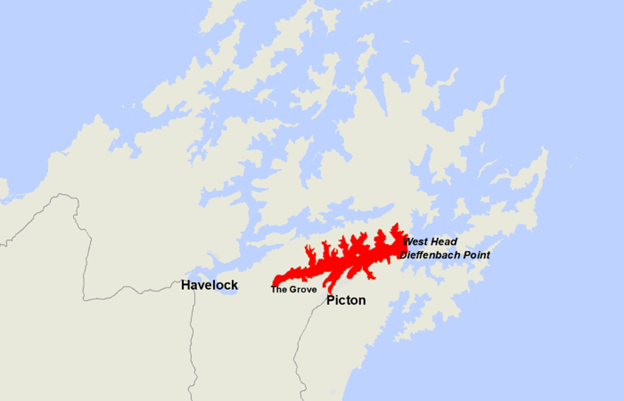
Affected area Inner Queen Charlotte Sound – Anakiwa to West Head and Dieffenbach Point.
Shellfish affected Affected shellfish include bivalve shellfish such as mussels, oysters, tuatua, pipi, toheroa, cockles and scallops, as well as pūpū (cat’s eyes), Cook’s turban, and kina (sea urchin).

Note, cooking shellfish does not remove the toxin.

Pāua, crab, and crayfish may still be eaten if the gut has been completely removed prior to cooking, as toxins accumulate in the gut. If the gut is not removed its contents could contaminate the meat during the cooking process. Finfish are not affected by this warning.

Symptoms Symptoms typically appear between 10 minutes and 3 hours after ingestion and may include:

  • numbness and a tingling (prickly feeling) around the mouth, face, and extremities (hands and feet)
  • difficulty swallowing or breathing
  • dizziness
  • headache
  • nausea
  • vomiting
  • diarrhoea
  • paralysis and respiratory failure and in severe cases, death.
Other information Paralytic shellfish toxins have been detected in shellfish at levels three times over the safe limit of 0.8mg/kg set by New Zealand Food Safety. Ongoing testing will continue and any changes will be communicated accordingly.

Map of affected area

Map showing the area covered by the lobster biotoxin alert, from the inner Queen Charlotte Sound, as well as near Collingwood in Golden Bay.

USA -FDA Advises Restaurants and Retailers Not to Serve or Sell and Consumers Not to Eat Certain Mussels from Newfoundland, Canada Due to Potential Contamination

FDA

Certain live mussels from Allen’s Fisheries, Ltd. (NL0047SP), Benoit’s Cove, Newfoundland, Canada were initially harvested on 2/07/2024 (Julian date 24038) from harvest area AQ # 15 Newfoundland, with final harvest date of 2/18/2024 (Julian date 24049) and shipped to  distributors in CT, FL, MD, MA, NJ, NY, and PA on or around 2/21/2024 (Julian Date 24052). The live mussels were distributed to restaurants and retailers in CT, FL, MD, MA, NJ, NY, and PA and may have been distributed to other states, as well.

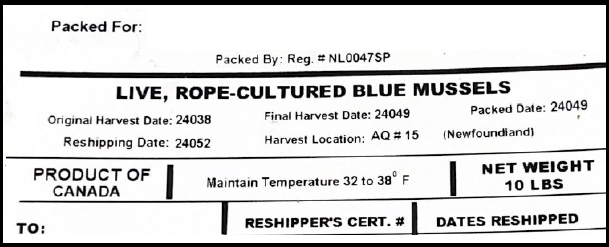
The following product tag is provided to be representative of labeling that would accompany the implicated mussels.

Sample product tag from the alert concerning certain mussels from Newfoundland, Canada due to potential contamination

Purpose

The FDA is advising restaurants and food retailers not to serve or sell and to dispose of mussels and consumers not to eat mussels from Allen’s Fisheries (NL0047SP) in Newfoundland, Canada, harvested on 2/07/2024 (Julian date 24038), from harvest area AQ # 15 Newfoundland, with final harvest date of 2/18/2024 (Julian date 24049) and shipped to distributors in CT, FL, MD, MA, NJ, NY, and PA on or around 2/21/2024 (Julian Date 24052) because they may be contaminated.

Contaminated shellfish can cause illness, especially if eaten raw, particularly in people with compromised immune systems. Food contaminated with pathogens or biotoxins may look, smell, and taste normal. Consumers of these products who are experiencing food poisoning symptoms such as diarrhea, stomach pain or cramps, nausea, vomiting, or fever should contact their healthcare provider, who should report their symptoms to their local Health Department.

Summary of Problem and Scope

On 3/1/2024, the New Jersey Department of Health advised the FDA of an outbreak of illness associated with consumption of certain mussels. The cases experienced symptoms including nausea, vomiting and diarrhea. The advisory includes mussels from Allen’s Fisheries (NL0047SP) in Newfoundland, Canada, harvested on 2/07/2024 (Julian date 24038), from harvest area AQ # 15 Newfoundland, with final harvest date of 2/18/2024 (Julian date 24049) and shipped to distributors in CT, FL, MD, MA, NJ, NY, and PA on or around 2/21/2024 (Julian Date 24052).

Research – Microbiological and Toxicological Investigations on Bivalve Molluscs Farmed in Sicily

MDPI

Abstract

Bivalves can concentrate biological and chemical pollutants, causing foodborne outbreaks whose occurrence is increasing, due to climatic and anthropic factors that are difficult to reverse, hence the need for improved surveillance. This study aimed to evaluate the hygienic qualities of bivalves sampled along the production and distribution chain in Sicily and collect useful data for consumer safety. Bacteriological and molecular analyses were performed on 254 samples of bivalves for the detection of enteropathogenic VibrioArcobacter spp., Aeromonas spp., Salmonella spp., and beta-glucuronidase-positive Escherichia coli. A total of 96 out of 254 samples, collected in the production areas, were processed for algal biotoxins and heavy metals detection. Bacterial and algal contaminations were also assessed for 21 samples of water from aquaculture implants. Vibrio spp., Arcobacter spp., Aeromonas hydrophilaSalmonella spp., and Escherichia coli were detected in 106/254, 79/254, 12/254, 16/254, and 95/254 molluscs, respectively. A total of 10/96 bivalves tested positive for algal biotoxins, and metals were under the legal limit. V. alginolyticusA. butzleri, and E. coli were detected in 5, 3, and 3 water samples, respectively. Alexandrium minutumDinophysis acuminataLingulodinium polyedra, and Pseudonitzschia spp. were detected in water samples collected with the biotoxin-containing molluscs. Traces of yessotoxins were detected in molluscs from water samples containing the corresponding producing algae. Despite the strict regulation by the European Commission over shellfish supply chain monitoring, our analyses highlighted the need for efficiency improvement.

New Zealand- Shellfish Biotoxin Alert – PSP

MPI

EAST CAPE LOBSTER WARNING

Toggle expandable

Reason for alert Paralytic Shellfish Poisoning (PSP)

Check the symptoms of PSP

Date warning issued Media release: 26 January 2024

Update: The area affected by the warning was reduced on 15 February 2024.

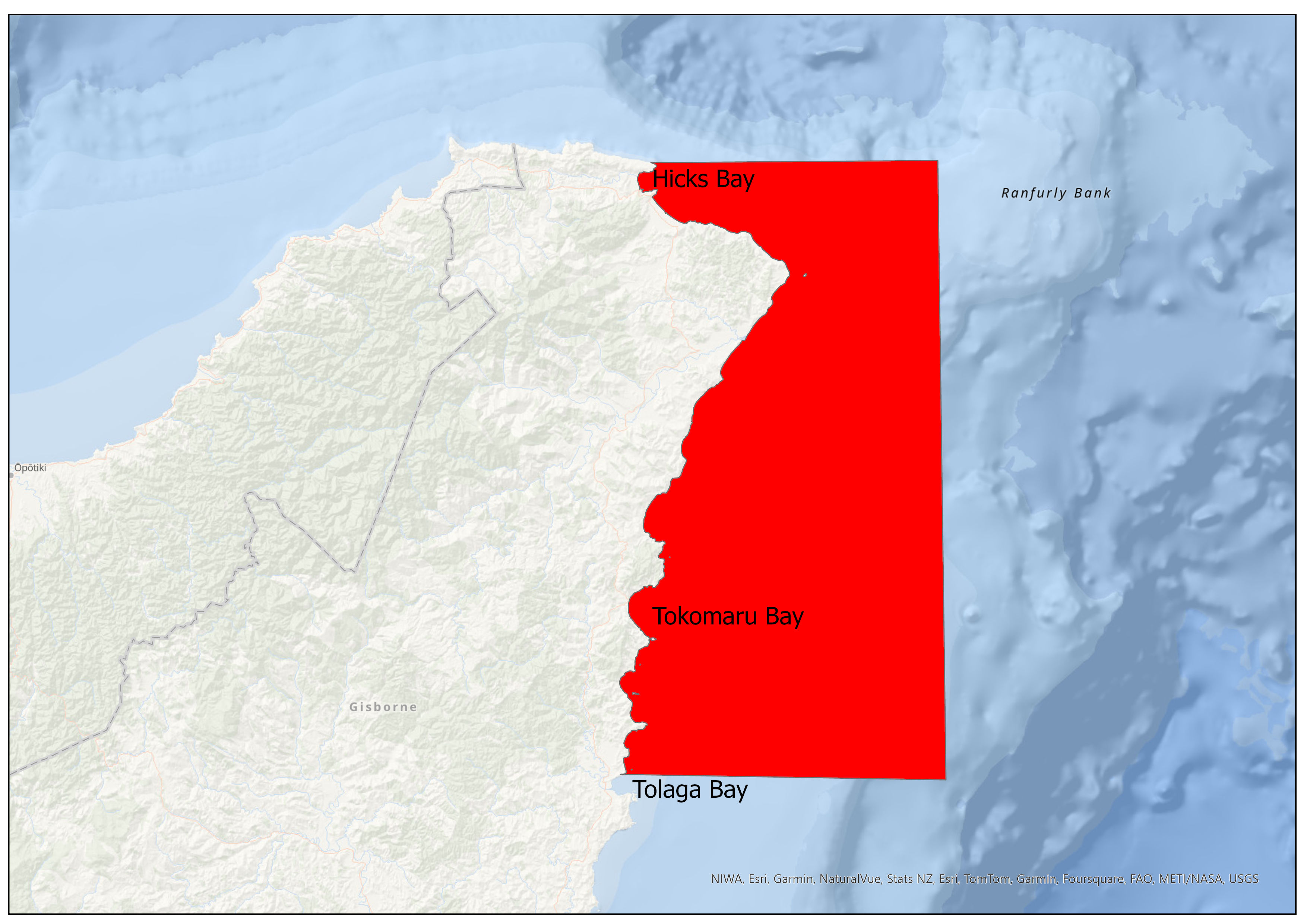
Affected area From 15 February 2024, the area extends from the north side of Tolaga Bay to Hicks Bay.
Shellfish affected Lobster are the only species affected. Shellfish and finfish are not affected by this warning.

Lobster (crayfish) may still be eaten if the gut has been completely removed prior to cooking, as toxins can accumulate in the gut. If the gut is not removed its contents could contaminate the meat during the cooking process.

Symptoms Symptoms typically appear between 10 minutes and 3 hours after ingestion and may include:

  • numbness and a tingling (prickly feeling) around the mouth, face, and extremities (hands and feet)
  • difficulty swallowing or breathing
  • dizziness
  • headache
  • nausea
  • vomiting
  • diarrhoea
  • paralysis and respiratory failure and, in severe cases, death.
Other information Elevated paralytic shellfish toxins are still being detected in lobster near Tokomaru Bay.

Map of the affected area

Map showing the area covered by the lobster biotoxin alert, extending from the north side of Tolaga Bay to Hicks Bay.

New Zealand – Public health warning: shellfish biotoxin alert for East Coast of North Island further extended

MPI

New Zealand Food Safety is extending its advisory to the public not to collect or consume shellfish gathered from the East Coast of the North Island due to the presence of paralytic shellfish toxins.

“We have extended the existing warning north to now span from Cape Runaway all the way south to Blackhead Point, which is just north of Pōrangahau. Follow-up tests on mussels from Hicks Bay Beach showed levels of paralytic shellfish toxins three times the safe limit,” says New Zealand Food Safety deputy director-general Vincent Arbuckle.

“Please do not gather and eat shellfish from this area because anyone doing so could get sick. Affected shellfish include bivalve shellfish such as mussels, oysters, tuatua, pipi, toheroa, cockles, and scallops, as well as pūpū (cat’s eyes), Cook’s turban and kina (sea urchin).

“We are monitoring an algal bloom off the East Coast, which is spreading. This type of algae produces a dangerous toxin and when shellfish filter-feed, these toxins can accumulate in their gut and flesh. Generally, the more algae there are in the water, the more toxic the shellfish get.

“Cooking the shellfish does not remove the toxin, so shellfish from this area should not be eaten.”

Symptoms of paralytic shellfish poisoning usually appear within 10 minutes to 3 hours of eating and may include:

  • numbness and a tingling (prickly feeling) around the mouth, face, hands, and feet
  • difficulty swallowing or breathing
  • dizziness and headache
  • nausea and vomiting
  • diarrhoea
  • paralysis and respiratory failure and, in severe cases, death.

Pāua, crab, and crayfish may still be eaten if the gut has been completely removed prior to cooking, as toxins accumulate in the gut. If the gut is not removed, its contents could contaminate the meat during the cooking process.

Finfish are not affected by this public health warning, but we advise gutting the fish and discarding the liver before cooking.

New Zealand Food Safety has had no notifications of associated illness.

If anyone becomes ill after eating shellfish from an area where a public health warning has been issued, phone Healthline for advice on 0800 61 11 16, or seek medical attention immediately. You are also advised to contact your nearest public health unit and keep any leftover shellfish in case it can be tested.

“We are monitoring shellfish in the region and will notify the public of any changes to the situation,” says Mr Arbuckle.

Commercially harvested shellfish – sold in shops and supermarkets or exported – is subject to strict water and flesh monitoring programmes by New Zealand Food Safety to ensure they are safe to eat.

RASFF Alerts – Shellfish Biotoxin – Tellines – Live Bivalve Molluscs

RASFF

Presence of lipophillic toxins in a telline fishing area from France in Belgium and Spain

RASFF

Lipophilic biotoxins in live bivalve molluscs (Ruditapes decussatus) origin Portugal from Portugal in Spain

New Zealand – Public health warning: shellfish biotoxin alert for East Cape region

MPI

New Zealand Food Safety is advising the public not to collect or consume shellfish gathered from near Tolaga Bay due to the presence of toxins.

“Routine tests on mussels from Tolaga Bay have shown levels of paralytic shellfish toxins over the safe limit,” says New Zealand Food Safety deputy director-general Vincent Arbuckle. “The warning extends from Tatapouri Point just north of Gisborne, up to Koutunui Point in Tokamaru Bay.

“Please do not gather and eat shellfish from this area because anyone doing so could get sick.

“Cooking the shellfish does not remove the toxin, so shellfish from this area should not be eaten.”

Symptoms of paralytic shellfish poisoning usually appear within 10 minutes to 3 hours of eating and may include:

  • numbness and a tingling (prickly feeling) around the mouth, face, hands, and feet
  • difficulty swallowing or breathing
  • dizziness and headache
  • nausea and vomiting
  • diarrhoea
  • paralysis and respiratory failure and, in severe cases, death.

Pāua, crab, and crayfish may still be eaten if the gut has been completely removed prior to cooking, as toxins accumulate in the gut. If the gut is not removed, its contents could contaminate the meat during the cooking process.

New Zealand Food Safety has had no notifications of associated illness.

If anyone becomes ill after eating shellfish from an area where a public health warning has been issued, phone Healthline for advice on 0800 61 11 16, or seek medical attention immediately. You are also advised to contact your nearest public health unit and keep any leftover shellfish in case it can be tested.

“New Zealand Food Safety is monitoring shellfish in the region and will notify the public of any changes to the situation,” says Mr Arbuckle.

Commercially harvested shellfish – sold in shops and supermarkets or exported – is subject to strict water and flesh monitoring programmes by New Zealand Food Safety to ensure they are safe to eat.
A public health warning remains in place in the Queen Charlotte Sound due to high levels of Diarrhetic Shellfish Toxins.

Australia – Update – JS Health x Inside Out Almond Milk and Oat Milk 1 L – Potential Biotoxin Formation

FSANZ

​Updated: 17 February 2023 (This update is due to further investigation following the initial single product recall due to potential biotoxin contamination)​

Product information

Inside Out Nutritious Goods Pty Ltd is conducting a recall of multiple products:

JS Health x ​​Inside Out Unsweetened Almond Milk Collagen + Calcium + Prebiotics, 1 L​.

JS Health x ​​Inside Out Unsweetened Oat Milk Collagen + Calcium + Prebiotics, 1 L

JS Health x ​​Inside Out Barista Oat Milk Collagen + Calcium + Prebiotics, 1 L

The products have been available for sale at Woolworths nationally.

Date markings

USE BY DATE up to and including 18 MAY 2023 

Problem

The recall is due to missing storage instructions. Product is not labelled with directions to ‘keep refrigerated’.

Food safety hazard

Failure to refrigerate this product may lead to microbial growth and biotoxin contamination which may cause illness/injury if consumed.

Country of origin

Australia

What to do​

This product must be kept refrigerated. Consumers should not drink this product if it has not been kept refrigerated (stored below 4 degrees C). Any consumers concerned about their health should seek medical advice.

Note: this product is sold refrigerated.

For further information please contact:

Inside Out Nutritious Goods Pty Ltd

02 9737 9771

https://insideoutng.com.au​

Click to access JS%20Health%20x%20Inside%20Out%20and%20Almond%20and%20Oat%20milk%20Recall%20Notice.pdf