Category Archives: Bacillus

USA – Public Health reports 88 people got food poisoning at event – Bacillus cereus

GUELPH TODAY

More than 80 people were left with food poisoning after attending an International Women’s Day event in Orangeville last month, reports Wellington-Dufferin-Guelph Public Health.

Held on March 8, around 244 guests attended the Best Western Plus Orangeville & Suites for an International Women’s Day luncheon; at least 88 of those guests found themselves experiencing vomiting, diarrhea, headaches and nausea after eating contaminated food at the event. 

The primary culprits were the sweet potatoes and quinoa in the chicken bowl, which was prepared by an outside caterer. 

Public Health inspectors found the food was contaminated with the bacillus cereus bacteria, which lives in soil and can easily attach itself to vegetables and fruits. 

RASFF Alert – Bacillus cereus – Prepared Dish

RASFF

Bacillus cereus in prepared dish from Austria in Italy

Canada – Hot sauce recalled due to Bacillus cereus

CFIA

Summary

Product
Hot (Sauce)
Issue
Food – Microbial Contamination – Other
What to do

Do not use, sell, serve or distribute the affected product.

Audience
Hotels, restaurants and institutions

Hot sauce recalled due to Bacillus cereus.

The recalled product has been sold in Ontario.

RASFF Alert- Bacillus cereus – Prepared Dish

RASFF

Bacillus cereus in prepared dish from Austria in Italy

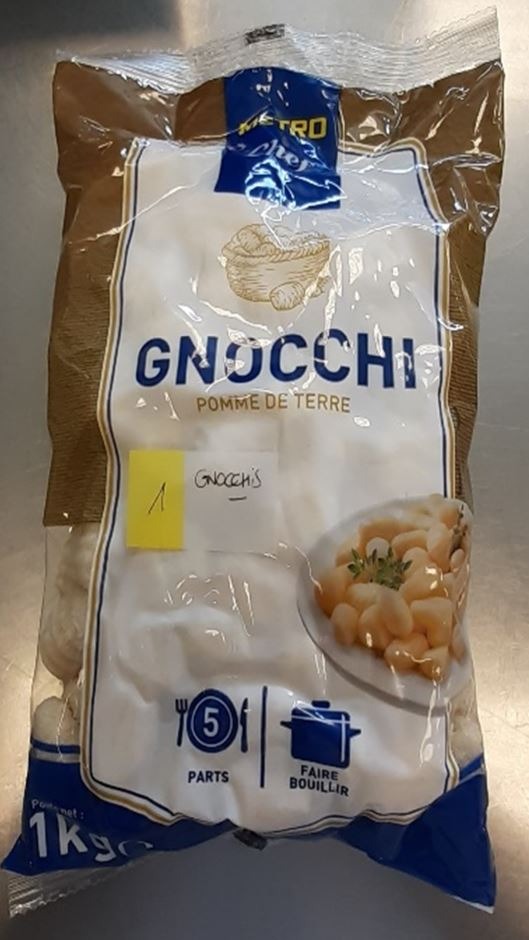
France – Potato gnocchi 1kg METRO CHEF – Bacillus cereus

Gov france

Identification information of the recalled product

  • Product category Feed
  • Product subcategory Prepared meals and snacks
  • Product brand name METRO CHEF
  • Model names or references Potato gnocchi 1kg METRO CHEF
  • Identification of products
    GTIN Batch Date
    3439496603001 0613 Use-by date 01/05/2023
  • Marketing start/end date From 08/03/2023 to 04/04/2023
  • Storage temperature Product to be stored in the refrigerator
  • Geographic area of ​​sale Whole France
  • Distributors METRO

Practical information regarding the recall

  • Reason for recall Presence of Bacillus cereus above the alert threshold

Research – High Genetic Diversity and Virulence Potential in Bacillus cereus sensu lato Isolated from Milk and Cheeses in Apulia Region, Southern Italy

MDPI

Abstract

The Bacillus cereus group includes species that act as food-borne pathogens causing diarrheal and emetic symptoms. They are widely distributed and can be found in various foods. In this study, out of 550 samples of milk and cheeses, 139 (25.3%) were found to be contaminated by B. cereus sensu lato (s.l.). One isolate per positive sample was characterized by Multilocus Sequence Typing (MLST) and for the presence of ten virulence genes. Based on MLST, all isolates were classified into 73 different sequence types (STs), of which 12 isolates were assigned to new STs. Virulence genes detection revealed that 90% and 61% of the isolates harboured the nheABC and the hblCDA gene cluster, respectively. Ninety-four percent of the isolates harboured the enterotoxin genes entS and entFM; 8% of the isolates possessed the ces gene. Thirty-eight different genetic profiles were identified, suggesting a high genetic diversity. Our study clearly shows the widespread diffusion of potentially toxigenic isolates of B. cereus s.l. in milk and cheeses in the Apulia region highlighting the need to adopt GMP and HACCP procedures along every step of the milk and cheese production chain in order to reduce the public health risk linked to the consumption of foods contaminated by B. cereus s.l.

Research – How filthy is YOUR phone? Stomach-churning study reveals the ‘invisible life’ lurking on the average device – including E.Coli from human POO

Daily Mail

Bacteria from both human and cockroach poo are among the secret germs that lurk on our phones, experts have warned.

E.Coli and Fecal Streptococci were found on 100 per cent of smartphone screens in a study of the harmful microbes that plague our devices.

Food poisoning germ, Bacillus cereus, and pneumonia-causing S. aureus, were also found on each of the 20 swabs taken from 10 phones.

While none of them had traces of Salmonella, half of them did contain P. aeruginosa which is commonly found in cockroach poo.

Research – Biocontrol Potential of Bacillus subtilis and Bacillus tequilensis against Four Fusarium Species

MDPI

Abstract

The use of biological control agents as opposed to synthetic agrochemicals to control plant pathogens has gained momentum, considering their numerous advantages. The aim of this study is to investigate the biocontrol potential of plant bacterial isolates against Fusarium oxysporum, Fusarium proliferatum, Fusarium culmorum, and Fusarium verticillioides. Isolation, identification, characterization, and in vitro biocontrol antagonistic assays of these isolates against Fusarium species were carried out following standard protocols. The bacterial endophytes were isolated from Glycine max. L leaves (B1), Brassica napus. L seeds (B2), Vigna unguiculata seeds (B3), and Glycine max. L seeds (B4). The bacterial isolates were identified using 16S rRNA PCR sequencing. A phylogenetic analysis shows that the bacterial isolates are closely related to Bacillus subtilis (B1) and Bacillus tequilensis (B2–B4), with an identity score above 98%. All the bacterial isolates produced a significant amount (p < 0.05) of indole acetic acid (IAA), siderophores, and protease activity. In vitro antagonistic assays of these isolates show a significant (p < 0.05) growth inhibition of the fungal mycelia in the following order: F. proliferatum > F. culmorum > F. verticillioides > F. oxysporum, compared to the control. The results suggest that these bacterial isolates are good biocontrol candidates against the selected Fusarium species.

Research – Post-Cooking Growth and Survival of Bacillus cereus Spores in Rice and Their Enzymatic Activities Leading to Food Spoilage Potential

MDPI

Abstract

Bacillus cereus strains vary in their heat resistance, post-processing survival and growth capacity in foods. Hence, this study was carried out to determine the effect of cooking on the survival and growth of eight B. cereus spores in rice at different temperatures in terms of their toxigenic profiles and extracellular enzyme activity. Samples of rice inoculated with different B. cereus spores were cooked and stored at 4 °C, 25 °C and 30 °C for up to 7 days, 48 h and 24 h, respectively. Out of eight B. cereus strains, four and three spore strains were able to grow at 30 °C and 25 °C post-cooking, respectively. Rapid growth was observed after a minimum of 6 h of incubation at 30 °C. All strains possessed proteolytic activity, whereas lipolytic and amylolytic activities were exhibited by 50% and 12.5% of the strains, respectively. The post-cooking survival and growth capacity of the B. cereus strains appeared to be independent of their toxigenic profiles, whereas extracellular enzymatic activities were required for their vegetative growth. Due to the B. cereus spores’ abilities to survive cooking and return to their active cellular form, great care should be taken when handling ready-to-eat foods.

Research – Identification of Genetic Markers for the Detection of Bacillus thuringiensis Strains of Interest for Food Safety

MDPI

Abstract

Bacillus thuringiensis (Bt), belonging to the Bacillus cereus (Bc) group, is commonly used as a biopesticide worldwide due to its ability to produce insecticidal crystals during sporulation. The use of Bt, especially subspecies aizawai and kurstaki, to control pests such as Lepidoptera, generally involves spraying mixtures containing spores and crystals on crops intended for human consumption. Recent studies have suggested that the consumption of commercial Bt strains may be responsible for foodborne outbreaks (FBOs). However, its genetic proximity to Bc strains has hindered the development of routine tests to discriminate Bt from other Bc, especially Bacillus cereus sensu stricto (Bc ss), well known for its involvement in FBOs. Here, to develop tools for the detection and the discrimination of Bt in food, we carried out a genome-wide association study (GWAS) on 286 complete genomes of Bc group strains to identify and validate in silico new molecular markers specific to different Bt subtypes. The analyses led to the determination and the in silico validation of 128 molecular markers specific to Bt, its subspecies aizawaikurstaki and four previously described proximity clusters associated with these subspecies. We developed a command line tool based on a 14-marker workflow, to carry out a computational search for Bt-related markers from a putative Bc genome, thereby facilitating the detection of Bt of interest for food safety, especially in the context of FBOs.