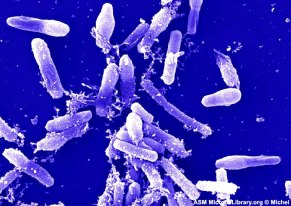
Category Archives: Bacillus cereus

Research – Ultrashort-pulse lasers kill bacterial superbugs, spores

Science Daily

Life-threatening bacteria are becoming ever more resistant to antibiotics, making the search for alternatives to antibiotics an increasingly urgent challenge. For certain applications, one alternative may be a special type of laser.

Researchers at Washington University School of Medicine in St. Louis have found that lasers that emit ultrashort pulses of light can kill multidrug-resistant bacteria and hardy bacterial spores. The findings, available online in the Journal of Biophotonics, open up the possibility of using such lasers to destroy bacteria that are hard to kill by other means. The researchers previously have shown that such lasers don’t damage human cells, making it possible to envision using the lasers to sterilize wounds or disinfect blood products.

“The ultrashort-pulse laser technology uniquely inactivates pathogens while preserving human proteins and cells,” said first author Shaw-Wei (David) Tsen, MD, PhD, an instructor of radiology at Washington University’s Mallinckrodt Institute of Radiology (MIR). “Imagine if, prior to closing a surgical wound, we could scan a laser beam across the site and further reduce the chances of infection. I can see this technology being used soon to disinfect biological products in vitro, and even to treat bloodstream infections in the future by putting patients on dialysis and passing the blood through a laser treatment device.”

Tsen and senior author Samuel Achilefu, PhD, the Michel M. Ter-Pogossian Professor of Radiology and director of MIR’s Biophotonics Research Center, have been exploring the germicidal properties of ultrashort-pulse lasers for years. They have shown that such lasers can inactivate viruses and ordinary bacteria without harming human cells. In the new study, conducted in collaboration with Shelley Haydel, PhD, a professor of microbiology at Arizona State University, they extended their exploration to antibiotic-resistant bacteria and bacterial spores.

The researchers trained their lasers on multidrug-resistant Staphylococcus aureus (MRSA), which causes infections of the skin, lungs and other organs, and extended spectrum beta-lactamase-producing Escherichia coli (E. coli), which cause urinary tract infections, diarrhea and wound infections. Apart from their shared ability to make people miserable, MRSA and E. coli are very different types of bacteria, representing two distant branches of the bacterial kingdom. The researchers also looked at spores of the bacterium Bacillus cereus, which causes food poisoning and food spoilage. Bacillus spores can withstand boiling and cooking.

In all cases, the lasers killed more than 99.9% of the target organisms, reducing their numbers by more than 1,000 times.

Viruses and bacteria contain densely packed protein structures that can be excited by an ultrashort-pulse laser. The laser kills by causing these protein structures to vibrate until some of their molecular bonds break. The broken ends quickly reattach to whatever they can find, which in many cases is not what they had been attached to before. The result is a mess of incorrect linkages inside and between proteins, and that mess causes normal protein function in microorganisms to grind to a halt.

“We previously published a paper in which we showed that the laser power matters,” Tsen said. “At a certain laser power, we’re inactivating viruses. As you increase the power, you start inactivating bacteria. But it takes even higher power than that, and we’re talking orders of magnitude, to start killing human cells. So there is a therapeutic window where we can tune the laser parameters such that we can kill pathogens without affecting the human cells.”

Heat, radiation and chemicals such as bleach are effective at sterilizing objects, but most are too damaging to be used on people or biological products. By inactivating all kinds of bacteria and viruses without damaging cells, ultrashort-pulse lasers could provide a new approach to making blood products and other biological products safer.

“Anything derived from human or animal sources could be contaminated with pathogens,” Tsen said. “We screen all blood products before transfusing them to patients. The problem is that we have to know what we’re screening for. If a new blood-borne virus emerges, like HIV did in the ’70s and ’80s, it could get into the blood supply before we know it. Ultrashort-pulse lasers could be a way to make sure that our blood supply is clear of pathogens both known and unknown.”


Story Source:

Materials provided by Washington University School of Medicine. Original written by Tamara Bhandari. Note: Content may be edited for style and length.
RASFF Alert- Bacillus cereus – Food Supplement

RASFF

Bacillus cereus (Enterotoxin-producing strain) in food supplement from United Kingdom in Finland

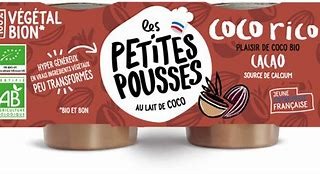
France – Organic cocoa coconut pleasure – Bacillus cereus

Gov france

Identifying information for the recalled product

  • Product category Food
  • Product sub-category Sweet products
  • Product brand name The Little Shoots
  • Names of models or references Les Petites Pousses organic coconut milk and cocoa dessert
  • Product identification
    Lot Dated
    312 Use-by date 12/13/2021
  • Packaging2 jars of 90g ea.
  • Start date / End of marketing From 11/16/2021 to 11/16/2021
  • Storage temperature Product to be stored in the refrigerator
  • Geographical sales area Whole France
  • Distributors Casino, Casino Group, nearby Carrefour, Auchan supermarkets

Practical information regarding the recall

  • Reason for recall Presence of presumptive Bacillus cereus above the alert threshold
  • Risks incurred by the consumer Bacillus cereus

Food Safety – Another record quarter for international food safety network

Food Safety News

A global food safety network was involved in 65 incidents from July to September, which is more than earlier this year.

It is the third successive quarter that events involving the International Food Safety Authorities Network (INFOSAN) have gone up, with 63 from April to June and 56 in the first quarter of this year.

Salmonella was part of 46 incidents involving a biological hazard followed by Listeria with 11. Next was E. coli with four, a couple each for Bacillus cereus, Hepatitis A, Norovirus and Vibrio parahaemolyticus and one each for Clostridium botulinum and Staphylococcus aureus.

RASFF Alert – Bacillus cereus Toxin – Turmeric

RASFF

Salmonella Bareilly and Bacillus cereus (enterotoxin) in Tumeric from Bosnia and Herzegovina in Slovenia

France – Strawberry tart – Bacillus cereus

Gov france

Identifying information for the recalled product

  • Product category Food
  • Product sub-category Others
  • Product brand name WITHOUT BRAND
  • Names of models or references Strawberry tart
  • Product identification
    GTIN Lot Dated
    0000000000 Products sold between 10/22 and 10/23 inclusive Use-by date 10/24/2021
  • Packaging Crystal Box
  • Start date / End of marketing From 10/22/2021 to 10/23/2021
  • Storage temperature Product to be stored in the refrigerator
  • Further information Store manufactured products
  • Geographical sales area62800
  • Distributors Carrefour Liévin ONLY

Practical information regarding the recall

  • Reason for recall Bacillus Cereus
  • Risks incurred by the consumer Bacillus cereus

Research -Detection of Bacillus cereus sensu lato Isolates Posing Potential Health Risks in Mexican Chili Powder 

MDPI

bacillus

The potential presence of spore-forming bacteria related to the Bacillus cereus group in Mexican chili powder elaborated from Capsicum annuum L. is of commercial and clinical interest, because chili powder is an essential spice in the Mexican diet and in diets around the globe. To facilitate detection and isolation of members of this group of spore-forming bacteria from Mexican chili powder samples, we identified colonies that grew on agar medium selective for Bacillus cereus sensu lato, supplemented with polymyxin B (10 µg/mL) and ampicillin (10 to 100 µg/mL). The presumptive B. cereus (s.l.) isolates were tested using a tRNACys-PCR-based approach and the results identified species related phylogenetically to B. cereusB. thuringiensis, and B. toyonensis. Their toxigenic potential was assessed by serological tests to detect enterotoxins (Nhe and Hbl) and by PCR targeting the hemolysin BL (hbl) component C (hblC) and non-hemolytic enterotoxin component A (nheA). The antibiotic profiles of the isolates showed a high resistance to β-lactams (100% of the isolates), trimethoprim-sulfamethoxazole (100%), tetracycline (90%), erythromycin (77%), clindamycin (74%), and chloramphenicol (42%). Our results indicate the presence of B. cereus s.l. with toxigenic characteristics in Mexican chili powder. Because of the potential for these organisms to cause disease through their production of various toxins, and resistance to antibiotics, we recommend that a microbiological risk assessment must be considered in the Mexican regulatory requirements. View Full-Text

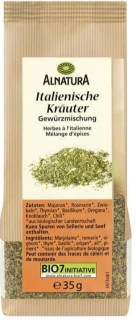
RASFF Alert – Bacillus cereus – Italian Herbs

RASFF

Bacillus cereus in Italian Herbs from Germany in Austria, Croatia, Germany, Hungary, Italy, Luxembourg, Slovenia, Spain and Switzerland

Luxembourg – RECALL: MIX OF SPICES / ITALIAN HERBS FROM THE ALNATURA BRAND – Bacillus cereus

SAP

The Luxembourg food safety authorities recall the following product:

name Mix of spices / Italian herbs
Mark Alnatura
Unity 35 g
Bar code 4104420028326
Date of Minimum Durability (DDM) 07/31/2024
Lot L88974

Danger  : Potential presence of Bacillus cereus

Bacillus cereus can cause symptoms such as vomiting and diarrhea within 16 hours of consumption.

Sale in Luxembourg by: Cactus

A sale by other operators cannot be excluded.

Source of information: RASFF (Rapid Alert System for Food and Feed)

Communicated by: Government Commission for Quality, Fraud and Food Safety

RASFF Alert – Bacillus cereus – Ground Ginger

RASFF

Presumptive Bacillus cereus in ground ginger from Niger in France