Monthly Archives: January 2024

EFSA Research -Persistence of microbiological hazards in food and feed production and processing environments

EFSA

Abstract

Listeria monocytogenes (in the meat, fish and seafood, dairy and fruit and vegetable sectors), Salmonella enterica (in the feed, meat, egg and low moisture food sectors) and Cronobacter sakazakii (in the low moisture food sector) were identified as the bacterial food safety hazards most relevant to public health that are associated with persistence in the food and feed processing environment (FFPE). There is a wide range of subtypes of these hazards involved in persistence in the FFPE. While some specific subtypes are more commonly reported as persistent, it is currently not possible to identify universal markers (i.e. genetic determinants) for this trait. Common risk factors for persistence in the FFPE are inadequate zoning and hygiene barriers; lack of hygienic design of equipment and machines; and inadequate cleaning and disinfection. A well-designed environmental sampling and testing programme is the most effective strategy to identify contamination sources and detect potentially persistent hazards. The establishment of hygienic barriers and measures within the food safety management system, during implementation of hazard analysis and critical control points, is key to prevent and/or control bacterial persistence in the FFPE. Once persistence is suspected in a plant, a ‘seek-and-destroy’ approach is frequently recommended, including intensified monitoring, the introduction of control measures and the continuation of the intensified monitoring. Successful actions triggered by persistence of L. monocytogenes are described, as well as interventions with direct bactericidal activity. These interventions could be efficient if properly validated, correctly applied and verified under industrial conditions. Perspectives are provided for performing a risk assessment for relevant combinations of hazard and food sector to assess the relative public health risk that can be associated with persistence, based on bottom-up and top-down approaches. Knowledge gaps related to bacterial food safety hazards associated with persistence in the FFPE and priorities for future research are provided.

USA – Shigella Outbreak sweeping Spokane

Food Poison Journal

Source Unknown

• Total Cases: 147

• Shigella Species Type:

– 101 (68.7%) sonnei

– 5 (3.4%) flexneri

– 41 (27.9%) species not yet available.

• Severity of Disease:

– 67 (45.6%) of the cases have been hospitalized due to shigella.

– 1 (0.7%) death has been attributed to shigella.

Germany -Raw Milk -CheeseFarmer’s brie Staphylococcal Toxins

Lebensmittelwarnung

Alert type: Groceries
Date of first publication:

January 19, 2024

Product name: Farmer’s brie
Manufacturer (distributor):

Altschulzenhof GbR, Lautertalstr. 50, 72534 Hayingen-Münzdorf

Reason for warning:

There is a possibility that the raw milk cheese contains staphylococcal enterotoxin.

Packaging Unit: loose ware
Additional Information:

These are loose goods that were sold in the period from January 1st, 2024 to January 16th, 2024.

Further information can be found in the recall letter.

Sweden – The Franzén brothers recall Chilibearnaise 200g – may contain Listeria monocytogenes

Livsmedelsverket

2024-01-19

The Franzén brothers are recalling Chilibearnaise 200g with a best before date of 27/03/2024 because there may be a risk that the product contains listeria.

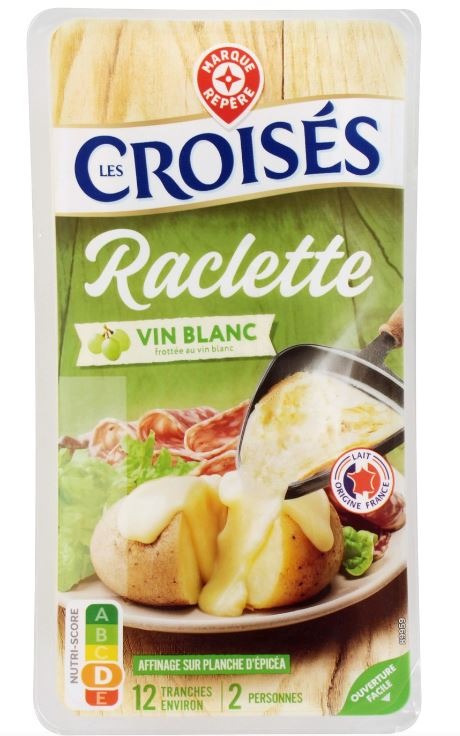
France – Cheese – WHITE WINE RACLETTE 250G – Listeria monocytogenes

Gov France

Product category
Food
Product subcategory
Milk and dairy products
Product brand name
THE CRUSADERS
Model names or references
WHITE WINE RACLETTE 250G
Product identification
GTIN Batch Date
3564700604168 Lot: 042 24 009 02 00:40 to 042 24 009 02 17:10 inclusive Minimum durability date 03/06/2024
Packaging
250G tray
Start/end date of marketing
From 01/11/2024 to 01/18/2024
Storage temperature
Product to keep in the refrigerator
Health mark
FR 52.332.001 CE
Geographical sales area
Whole France
Distributors
E. LECLERC

France – Raw milk farm Munsters Cheese – Listeria monocytogenes

Gov France

Product category
Food
Product subcategory
Milk and dairy products
Product brand name
Unbranded product
Model names or references
Raw milk farm munsters
Product identification
Batch Date
13/12/2023 Use-by date 01/17/2024
Start/end date of marketing
From 12/27/2023 to 01/11/2024
Storage temperature
Product to keep in the refrigerator
Further information
This is a generic photo of the product and not an actual photo of the recalled product.
Geographical sales area
Sales at Christmas markets
Distributors
Direct sale by SARL DE LA SOULTZERSMATT

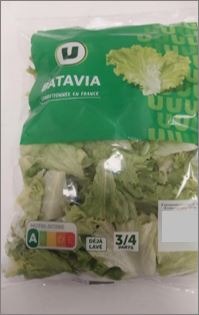
France – BATAVIA U 200 G Lettuce – Listeria monocytogenes

Gov France

Product category
Food
Product subcategory
Fruits and vegetables
Product brand name
u
Model names or references
BATAVIA U 200 G
Product identification
GTIN Batch Date
3256220064101 01V3014 Use-by date 01/13/2024
Storage temperature
Product to keep in the refrigerator
Geographical sales area
Regions: Grand-Est
Distributors
U Stores

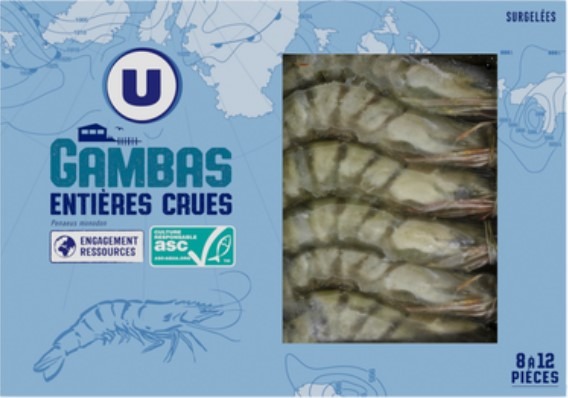
France – WHOLE RAW PRAWNS ASC U 600 G – Vibrio vulnificus

Gov France

Product category
Food
Product subcategory
Fishing and aquaculture products
Product brand name
u
Model names or references
Whole raw prawns ASC U 600 g
Product identification
GTIN Date
3256227108310 Minimum durability date 01/07/2025
3256227108310 Minimum durability date 02/07/2025
3256227108310 Minimum durability date 07/22/2025
Packaging
600 g box
Storage temperature
Product to keep in the freezer
Geographical sales area
Whole France
Distributors
U Stores

France – BATAVIA SALAD – Listeria monocytogenes

Gov France

Product category
Food
Product subcategory
Fruits and vegetables
Product brand name
SIMPL (Carrefour)
Model names or references
Simpl batavia salad – 125g bag
Product identification
GTIN Batch Date
3560071487003 starting with 02 V3014 Use-by date 01/13/2024
Packaging
125g bag
Start/end date of marketing
From 01/05/2024 to 01/13/2024
Storage temperature
Product to keep in the refrigerator
Further information
Packager Code: 71270L
Geographical sales area
Whole France
Distributors
Crossroads

USA – FSIS Issues Public Health Alert for Ready-To-Eat Charcuterie Products Due to Possible Salmonella Contamination

FSIS USDA

WASHINGTON, Jan. 18, 2024 – The U.S. Department of Agriculture’s Food Safety and Inspection Service (FSIS) is issuing a public health alert out of an abundance of caution due to concerns about Salmonella illnesses that may be associated with ready-to-eat (RTE) charcuterie meat products in Busseto brand Charcuterie Sampler and Fratelli Beretta brand Antipasto Gran Beretta.

The Fratelli Beretta brand Antipasto Gran Beretta was sold at Costco in a 24-oz. twin-pack (two 12-oz. trays). The Busseto brand Charcuterie Sampler was sold at Sam’s Club in an 18-oz. twin-pack (two 9-oz. trays). Any lot code associated with either product is potentially contaminated. The products are no longer available for purchase at Costco and Sam’s Club.

The products of concern bear establishment number “EST. 7543B” and/or “EST. #47967” inside the USDA mark of inspection or printed on the package. Label images can be found in the Centers for Disease Control and Prevention (CDC) Food Safety Alert.

FSIS has been working with the CDC and state public health partners to investigate a multistate outbreak of 47 Salmonella I 4:i:- illnesses in 22 states with onset dates ranging from November 20, 2023, through January 1, 2024. In the ongoing outbreak investigation, the state of Minnesota identified the outbreak strain from an unopened Busseto brand charcuterie sampler, which led to recall 01-2024 on January 3, 2024. FSIS will continue the investigation and issue new information as it becomes available.

Consumption of food contaminated with Salmonella can cause salmonellosis, one of the most common bacterial foodborne illnesses. The most common symptoms of salmonellosis are diarrhea, abdominal cramps, and fever within 6 hours to 6 days after eating the contaminated product. The illness usually lasts 4 to 7 days. Most people recover without treatment. In some persons, however, the diarrhea may be so severe that the patient needs to be hospitalized. Older adults, infants, and persons with weakened immune systems are more likely to develop a severe illness. Individuals concerned about an illness should contact their health care provider.

FSIS is concerned that some product may be in consumers’ refrigerators. Consumers who have purchased these products are urged not to consume them. These products should be thrown away or returned to the place of purchase.