Monthly Archives: April 2022

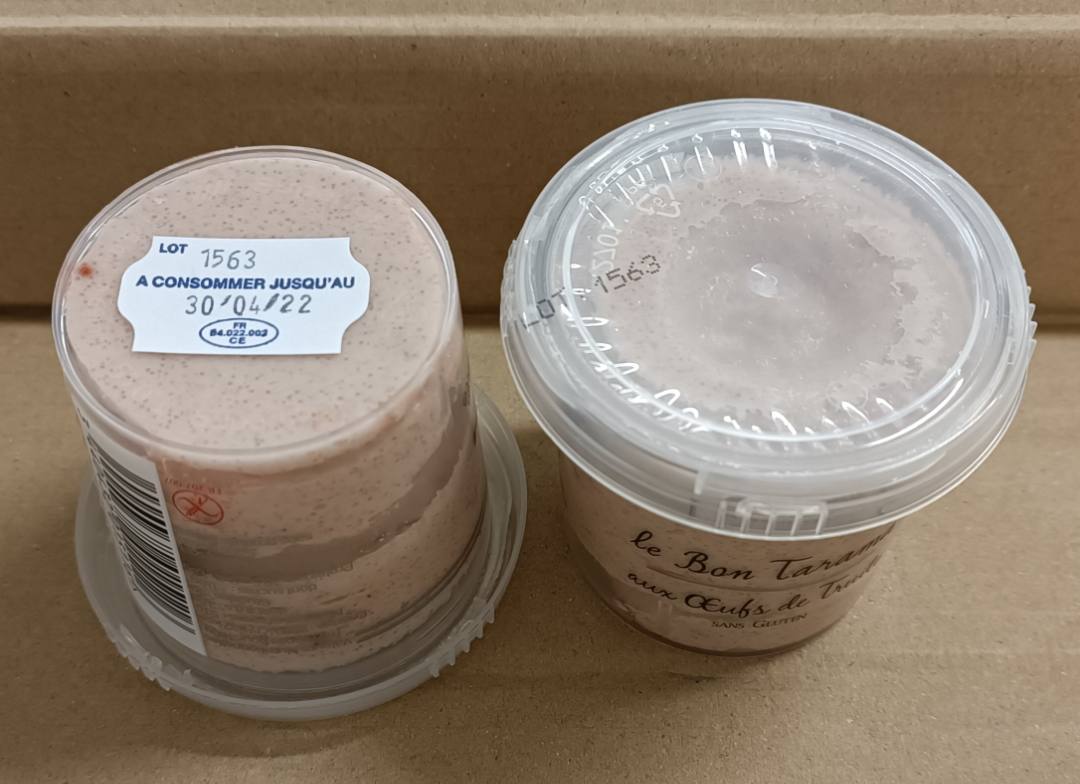
France – TROUT EGGS TARAMA – Listeria monocytogenes

Gov france

Identification information of the recalled product

  • Product category Food
  • Product subcategory Fishery and aquaculture products
  • Product brand name CHOISY SALMONERIE
  • Model names or references jar 100g
  • Identification of products
    GTIN Batch Date
    3440432015116 1563 Use-by date between 30/04/2022 and 21/05/2022
  • Packaging plastic jar
  • Marketing start/end date From 31/03/2022 to 21/04/2022
  • Storage temperature Product to be stored in the refrigerator
  • Health mark EN 94.022.002 EC
  • Geographic area of ​​sale Regions: Ile-de-France
  • Distributors crossroads

Practical information regarding the recall

  • Reason for recall detection of Listeria monocytogenes in a jar of tarama trout eggs (<10 cfu/g) during official sampling
  • Risks incurred by the consumer Listeria monocytogenes (causative agent of listeriosis)

USA – FSIS Issues Public Health Alert for Ground Beef Products Due to Possible E. coli O26 Contamination

FSIS USDA

WASHINGTON April 27, 2022, – The U.S. Department of Agriculture’s Food Safety and Inspection Service (FSIS) is issuing a public health alert due to concerns that specific ground beef products may be adulterated with E. coli O26. A recall was not requested because the products are no longer available for purchase.

The ground beef items for this public health alert were produced on December 16 and 17, 2021. The following products subject to the public health alert are [view labels]:

  • 1-lb. foam trays containing “ALL NATURAL LAURA’S LEAN BEEF 92% LEAN 8% FAT GROUND BEEF.” The product is labeled with 350/(timestamp)/Est.31805/002, with the timestamp ranging from 0602 to 1721.
  • 1-lb. foam trays containing “Kroger GROUND BEEF CARNE MOLIDA 96% LEAN 4% FAT.” The product is labeled with 350/(timestamp)/Est.31805/002, with the timestamp ranging from 0602 to 1721.
  • 1-lb. foam trays containing “Kroger GROUND BEEF CARNE MOLIDA 85% LEAN 15% FAT.” The product is labeled with 350/(timestamp)/Est.31805/002, with the timestamp ranging from 0602 to 1721.
  • 1.3-lb. foam trays containing “PRIVATE SELECTION ANGUS BEEF 90% LEAN 10% FAT GROUND SIRLOIN.” The product is labeled with 350/(timestamp)/Est.31805/002, with the timestamp ranging from 0602 to 1721. Additional product is labeled with 351/(timestamp)/Est. 31805/003, with the timestamp ranging from 1549 to 1651.
  • 1-lb. foam trays containing “Kroger GROUND BEEF CARNE MOLIDA 93% LEAN 7% FAT.” The product is labeled with 350/(timestamp)/Est.31805/002, with the timestamp ranging from 0602 to 1721.
  • 1-lb. foam trays containing “Kroger GROUND BEEF CARNE MOLIDA 80% LEAN 20% FAT.” The product is labeled with 350/(timestamp)/Est.31805/002, with the timestamp ranging from 0602 to 1721.

The ground beef products were distributed to warehouses in Oregon and Washington and sold at retail locations.

The problem was discovered after a consumer submitted a retail package of ground beef produced by Empire Packing bearing a use or freeze by date of “December 24, 2021” to a third-party laboratory for microbiological analysis. The consumer reported previously becoming ill but did not get tested for E coli.  The third-party laboratory confirmed the ground beef sample was positive for E. coli O26.

Anyone concerned about an injury or illness should contact a healthcare provider.

Many clinical laboratories do not test for non-O157 STEC, such as O26 because it is harder to identify than STEC O157:H7. People can become ill from STECs 2–8 days (average of 3–4 days) after consuming the organism.

Most people infected with STEC O26 develop diarrhea (often bloody) and vomiting. Some illnesses last longer and can be more severe. Infection is usually diagnosed by testing of a stool sample. Vigorous rehydration and other supportive care is the usual treatment; antibiotic treatment is generally not recommended. Most people recover within a week, but, rarely, some develop a more severe infection. Hemolytic uremic syndrome (HUS), a type of kidney failure, is uncommon with STEC O26 infection. HUS can occur in people of any age but is most common in children under 5 years old, older adults and persons with weakened immune systems. It is marked by easy bruising, pallor and decreased urine output. Persons who experience these symptoms should seek emergency medical care immediately

FSIS is concerned that some product may be in consumers’ freezers. Consumers who have purchased these products are urged not to consume them. These products should be thrown away or returned to the place of purchase.

FSIS advises all consumers to safely prepare their raw meat products, including fresh and frozen, and only consume ground beef that has been cooked to a temperature of 160 F. The only way to confirm that ground beef is cooked to a temperature high enough to kill harmful bacteria is to use a food thermometer that measures internal temperature, https://www.fsis.usda.gov/safetempchart.

Media and consumers with questions regarding the public health alert can contact Debbie Robinson, Vice President of Customer Service, Empire Packing, at drobinson@empirepk.com.

Consumers with food safety questions can call the toll-free USDA Meat and Poultry Hotline at 888-MPHotline (888-674-6854) or live chat via Ask USDA from 10 a.m. to 6 p.m. (Eastern Time) Monday through Friday. Consumers can also browse food safety messages at Ask USDA or send a question via email to MPHotline@usda.gov. For consumers that need to report a problem with a meat, poultry, or egg product, the online Electronic Consumer Complaint Monitoring System can be accessed 24 hours a day at https://foodcomplaint.fsis.usda.gov/eCCF/.

Product Images

Company Information

ESTABLISHMENT ID
PROCESSING CATEGORY

Raw – Non Intact

Company Contact Information

COMPANY MEDIA CONTACT
Empire Packing
Debbie Robinson, Vice President of Customer Service

FSIS Contact Information

MEDIA CONTACT
Congressional and Public Affairs
Cody Kahlig
(202)720-9113

Australia – Elite confectionery products – Salmonella

FSANZ

Date published: 28 April 2022

Product information

Benedikt Imports Ptd Ltd is conducting a recall of the various Elite branded confectionery products including Elite Chocolate, Elite Cakes, Elite Wafers, Energy Grain Snacks, Energy Chocolate Rice Cakes, Gum and Toffee Candies from all expiration dates. The products have been available for sale nationally at Coles, Woolworths, IGAs, 7/11, Independent Kosher stores and Milk bars.

Date markings

All batches, best before, used by and made on dates are being recalled.  


Problem

The recall is due to potential microbial (Salmonella) contamination.

Food safety hazard

Food products contaminated with Salmonella may cause illness if consumed. ​

Country of origin

Israel

​​What to do​

Consumers should not eat this product. Any consumers concerned about their health should seek medical advice and should return the products to the place of purchase for a full refund.

For further information please contact:

Benedikt Imports Ptd Ltd

03 9577 3000

http://www.benedikts.com

Related links:

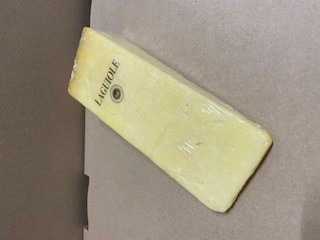
France – Fresh packaged Laguiole – STEC E.coli

Gov france

Identification information of the recalled product

  • Product category Food
  • Product subcategory Milk and dairy products
  • Product brand name Unbranded
  • Model names or references Fresh packaged Laguiole
  • Identification of products
    GTIN Batch Date
    3760038279638 21229113 Use-by date 08/04/2022
    3760038279638 21229123 Use-by date 04/15/2022
    3573230004300 21229134 Use-by date 04/26/2022
  • Packaging portions fresh packed 250g
  • Marketing start/end dateFrom 03/18/2022 to 04/27/2022
  • Storage temperature Product to be stored in the refrigerator
  • Health markFR.63 113 081 EC
  • Geographic area of ​​sale Whole France
  • Distributors Carrefour U express St Saturnin (via Services Included)

Practical information regarding the recall

  • Reason for recall Receipt of an analysis made by a customer on Laguiole lot 21229: non-compliant result detection of STEC strain O26:H11
  • Risks incurred by the consumer Toxigenic Shiga Escherichia coli (STEC)

Research – Shiga toxin-producing Escherichia coli (STEC) data: 2019

UKSHA

Main points for 2019

The main points of the 2019 report are:

1. A total of 539 confirmed cases of Shiga toxin-producing Echerichia coli (STEC) O157 were reported in England and Wales in 2019.

2. The lowest incidence of STEC O157 was in the East Midlands region (0.56 per 100,000 population) and the highest in the Yorkshire and Humber region (1.51 per 100,000 population).

3. Children aged 1 to 4 years had the highest incidence of infection (3.28 per 100,000 population, CI 95% 2.63–4.04).

4. Nearly one-third of confirmed STEC O157 cases in England were hospitalised and 3% were reported to have developed haemolytic ureamic syndrome (HUS).

5. In England and Wales, detection of non-O157 STEC increased in line with the growing number of NHS labs implementing gastrointestinal (GI) diagnostics using polymerase chain reaction (PCR); in 2019, 768 culture-positive non-O157 STEC cases (655 in England, 113 in Wales) were reported.

6. A further 347 specimens in England and 66 in Wales were positive for Shiga toxins (stx) genes on PCR at the Gastrointestinal Bacteria Reference Unit (GBRU) but an organism was not cultured.

7. The most commonly isolated non-O157 STEC serogroup was STEC O26 (England: n=109/655, 17% and Wales: n=28/113, 25%).

8. Five outbreaks of STEC involving 65 cases in England were investigated in 2019.

Cases of STEC in England and Wales in 2019

In 2019, 1,720 confirmed cases of STEC were reported in England and Wales; these comprised 539 culture-confirmed cases of STEC serogroup O157 (515 cases in England and 24 in Wales) and 768 cases (655 in England, 113 in Wales) where a serogroup other than O157 was isolated (non-O157). For a further 413 cases, samples were confirmed as STEC by testing positive by PCR for stx genes, but STEC was not cultured (347 in England, 66 in Wales).

Five confirmed cases were infected with multiple serogroups:

  • O157 and O26
  • O26 and O103
  • O76 and O113
  • O91 and O128ab
  • O146 and O91

There were 13 probable cases with serological evidence of STEC infection, with antibodies detected to O157 lipopolysaccharides in 11 cases (England: 10, Wales: 1), for O111 lipopolysaccharides in one case, and for O26 lipopolysaccharides in another case.

The crude incidence rate of confirmed STEC O157 in England and Wales was 0.91 per 100,000 cases (95% CI 0.83–0.99), continuing the downward trend observed since 2015 (Figure 1). It is the lowest number of cases reported annually since 1996, when testing began in England for STEC O157 on all faecal specimens from patients with suspected gastrointestinal infection (7).

Non-O157 STEC cases in England and Wales
Historically, cases of non-O157 STEC have been under ascertained, with 89 cases of STEC non-O157 reported between 2009 and 2013, prior to PCR being implemented.

Following the increase in recent years in frontline laboratories using PCR, there has been a significant increase in the detection of non-O157 STEC in England. It is not possible to estimate a denominator for incidence calculations for non-O157 STEC because details of contract arrangements for referral of samples from primary care and catchment areas of each diagnostic laboratory using PCR are not known.

In 2019, of 5,760 samples received at GBRU for STEC testing, 1,002 non-O157 STEC cases were confirmed in England. Of the 1,002 non-O157 cases, 655 culture positive cases of 72 different serogroups were confirmed. For 21 isolates, a serotype could not be identified as the genes encoding the somatic O antigen did not match any known sequence in the database. Specimens for a further 347 cases in England were positive for stx genes on PCR at GBRU but an organism was not cultured (PCR positive-culture negative).

In Wales, 113 non-O157 cases of 40 different serotypes were confirmed and a further 66 were PCR positive-culture negative. The most common non-O157 serogroups isolated in 2019 were O26 (28/113, 25%), O146 (15/113, 13%), O128ab (10/113, 9%) and O91 (8/113, 7%) followed by O111 (4/113, 4%), O113 (4/113, 4%) and O156 (4/113, 4%).

Israel – How did salmonella spread in the Strauss production facility? – analysis

Jpost

How does salmonella spread in a food production facility and can it be prevented?

Because salmonella is a pathogen that is prevalent in the gut of many animals and insects, it can spread by the animal’s feces into the soil, water and food. From there it can easily be introduced into and spread throughout a food production facility by way of raw ingredients, as was the case with the Strauss facility. It can also spread through the facility via contaminated packaging, equipment and workers’ hands and clothing.

Salmonella thrives in moist, warm environments such as drains, floors and processing equipment, making a food production facility the perfect environment for it.

However, there are several ways to ensure that the risk of salmonella contamination in a food facility is lessened, according to international cleaning equipment supplier Vikan’s hygiene and compliance manager Stine Lønnerup Bislev.

The first step to controlling the spread of the bacteria is to ensure that only clean and disinfected equipment, tools and utensils are brought into the processing area, Bislev explains on the company’s website. Then, all incoming ingredients and materials that pose a risk for contamination should be tested for salmonella ahead of production.

Ingredients must be cleaned and disinfected properly, using either a wet or dry cleaning method, depending on the moisture content of the ingredient. High moisture ingredients that require wet cleaning include meat, vegetables and dairy products, Bislev notes.

To avoid the spread of contamination, raw and processed foods must be handled in separate areas, using separate tools and equipment. Cleaning equipment should meet the appropriate hygiene standards to facilitate easy cleaning and prevent microbial growth.

Hygenic design features include smooth surfaces, one-piece construction, easy dismantling and a lack of crevices.

Finally, Bislev states, a program should be developed by the production facility’s management in order to routinely sample the space for salmonella.

“An environmental monitoring program will assess the effectiveness of your overall hygienic practices, monitor the environment for transient pathogens and help mitigate potential harborage and growth niches,” she concludes.

Read more at the link above.

Israel – Two children suspected of Salmonella infection after massive Strauss recall

Times of Israel

At least two children and one adult have sought out medical attention with suspected cases of salmonella poisoning following a massive recall of Strauss products ranging from chocolate to ice cream, pudding, cookies and other snacks over contamination fears.

According to Hebrew media reports, two children who recently sought care at the Assuta Medical Center in Ashdod are suspected of being poisoned by salmonella, pending full lab results. In addition, a man who was treated at an urgent care facility in Bnei Brak with relevant symptoms said that he had consumed some of the infected products recently.

Health Minister Nitzan Horowitz said Tuesday that the incident will be fully investigated and the factory will not be allowed to resume operation before it is fully cleared.

USA – CDC issues Health Alert: Investigation of Illness Complaints After Consuming Lucky Charms Cereal

Food Poison Journal

During April 2022, there has been an increase in complaints of gastrointestinal illness (GI) attributed to eating Lucky Charms cereal reported primarily to a crowdsourcing website. Some complaints of illness have also been reported to the U.S. Food and Drug Administration (FDA), state, and local health departments. There are very little data on the clinical presentation of these complaints, e.g., symptom profiles, incubation periods, and illness durations, as well as a lack of laboratory testing of clinical specimens. The scarcity of data and lack of a consistent clinical presentation are making it difficult to ascertain if any of these illnesses are linked to the suspected cereal.

The Centers for Disease Control and Prevention (CDC) is coordinating with state and federal partners to characterize the clinical presentations and epidemiology of recent illness reports. CDC is also collaborating with state and federal partners to evaluate data collected from ill people to determine if an outbreak of GI illnesses is occurring and its potential link to Lucky Charms cereal.

USA – Coachella bus drivers hit with food poisoning from Caterer

Food Poison Journal

At least 24 shuttle bus drivers for the Coachella Valley Music and Arts Festival became ill with food poisoning early Monday, authorities said.

Reports began coming in shortly after midnight after subcontracted drivers dined at an off-site catering location unaffiliated with the festival, the Cal Fire / Riverside County Fire Department said in a press release.

The drivers’ chief complaint was nausea and vomiting, it said.

Some two dozen were taken to hospitals throughout the Coachella Valley.

“This incident did not affect any of the guests attending the festival,” Division Chief Bryan White, the incident commander.

New Zealand – Ours Truly brand Organic Full Cream A3™ Milk – Listeria monocytogenes

MPI

Box of Ours Truly brand Organic Full Cream A3™ Milk (3L)

27 April 2022: Kiwi Organic Dairy Equities Ltd is recalling a specific batch of its Ours Truly brand Organic Full Cream A3™ Milk due to the possible presence of Listeria monocytogenes.

Product identification
Product type Milk
Name of product (size) Ours Truly brand Organic Full Cream A3™ Milk (3L)
Date marking Best Before 30/04/22
Package size and description The product is sold in a 3L bag in a box.
Distribution The product is sold at the following stores within the North Island:

  • Earth Store Whitianga, 65 Albert Street, Whitianga
  • Farro, 223 Orakei Road, Remuera, Auckland
  • Farro, 422 Dominion Road. Mt Eden, Auckland
  • Farro, 446 Manukau Road, Epsom, Auckland
  • Farro, 80 Lunn Avenue, Mt Wellington, Auckland
  • Farro, Corner of Constellation Drive & Parkway Drive, Mairangi Bay, Auckland

The product was also distributed from Go Eco – Kaivolution, 200 Commerce St, Frankton, in Hamilton between 22 April and 26 April 2022.

Notes This recall does not affect any other Ours Truly brand products.

Consumer advice

Customers are asked to check the date mark on the side of the box.

Affected product should not be consumed. There has been no report of associated illness, however if you have consumed any of this product and have any concerns about your health, seek medical advice.

Customers should return the product to their retailer for a full refund.

Who to contact

If you have questions, contact Kiwi Organic Dairy Equities Ltd:

Phone: 027 239 9458
Address: Gallagher Building, Melody Lane, Hamilton.