Monthly Archives: May 2021

USA – FSIS Issues Public Health Alert for Frozen, Cooked Diced Poultry Products Due to Possible Listeria Contamination

FSIS USDA

FSIS Announcement

WASHINGTON, May 24, 2021 – The U.S. Department of Agriculture’s Food Safety and Inspection Service (FSIS) is issuing a public health alert for approximately 130,860 pounds of frozen fully cooked, diced chicken products because they may be contaminated with Listeria monocytogenes.

The frozen, fully cooked, diced chicken items were packed on Jan. 25, 2021, Jan. 26, 2021, March 23, 2021, and March 24, 2021. The following products are subject to the public health alert:

  • 4-lb. plastic bags containing “FULLY COOKED CHICKEN MEAT ¾ DICED WHITE” with code 13530, Est. number P-18237, and pack dates of “01/25/2021” and “01/26/2021.”
  • 4-lb. plastic bags containing “FULLY COOKED CHICKEN MEAT DARK/WHITE ¾ DICED” with code 16598, Est. number P-45638, and pack dates “24/MAR/2021” and “23/MAR/2021.”

The products bear establishment numbers “P-18237” or “P-45638” inside the USDA mark of inspection and were distributed by Big Daddy Foods, Inc., a Houston, Texas firm. These items were further distributed to consumers at local food banks in Florida through the USDA Farmers to Families Food Box program in individual food boxes. The products were distributed between Feb. 25, 2021 through March 1, 2021, and March 29, 2021 through April 8, 2021, at temporary locations.

The problem was discovered during routine FSIS inspection activities when inspection personnel observed products requiring recooking due to possible Lm contamination had been repackaged without being recooked. A subsequent FSIS investigation determined other affected product had been further distributed in commerce. There have been no confirmed reports of adverse reactions due to consumption of these products. Anyone concerned about an illness should contact a health care provider.

Consumption of food contaminated with L. monocytogenes can cause listeriosis, a serious infection that primarily affects older adults, persons with weakened immune systems, and pregnant women and their newborns. Less commonly, persons outside these risk groups are affected.

Listeriosis can cause fever, muscle aches, headache, stiff neck, confusion, loss of balance and convulsions sometimes preceded by diarrhea or other gastrointestinal symptoms. An invasive infection spreads beyond the gastrointestinal tract. In pregnant women, the infection can cause miscarriages, stillbirths, premature delivery or life-threatening infection of the newborn. In addition, serious and sometimes fatal infections can occur in older adults and persons with weakened immune systems. Listeriosis is treated with antibiotics. Persons in the higher-risk categories who experience flu-like symptoms within two months after eating contaminated food should seek medical care and tell the health care provider about eating the contaminated food.

Consumers who have received these products are urged not to consume them. These products should be thrown away.

FSIS advises all consumers to reheat ready-to-eat product until steaming hot.

Consumers with food safety questions can call the toll-free USDA Meat and Poultry Hotline at 1-888-MPHotline (1-888-674-6854) or live chat via Ask USDA from 10 a.m. to 6 p.m. (Eastern Time) Monday through Friday. Consumers can also browse food safety messages at Ask USDA or send a question via email to MPHotline@usda.gov . For consumers that need to report a problem with a meat, poultry, or egg product, the online Electronic Consumer Complaint Monitoring System can be accessed 24 hours a day at https://foodcomplaint.fsis.usda.gov/eCCF/.

Product Images

Company Information

ESTABLISHMENT ID
PROCESSING CATEGORY

Fully Cooked – Not Shelf Stable
Company Contact Information

COMPANY MEDIA CONTACT
Company Media Contact
FSIS Contact Information
MEDIA CONTACT
Congressional and Public Affairs
Maria Machuca

UK- Asda recalls Vegetable Cous Cous 500g because of possible contamination with Salmonella

FSA

Asda has recalled its Vegetable Cous Cous 500g because it may be contaminated with salmonella.

Product details

Asda Vegetable Cous Cous
Pack size 500g
Use by All date codes up to and including 03 June 2021

Risk statement

The presence of Salmonella in the product listed above.

Symptoms caused by Salmonella usually include fever, diarrhoea and abdominal cramps.

Action taken by the company

Asda is recalling the above product. Point of sale notices will be displayed in all retail stores that are selling this product. These notices explain to customers why the product is being recalled and tell them what to do if they have bought the product. Please see the attached notice.

Our advice to consumers

If you have bought any of the above product do not eat it. Instead, return it to the store from where it was bought for a full refund.

USA – Interstate Food Products Recalls Little Hatches Jalapeno Cream Cheese Because of Possible Health Risk – Listeria monocytogenes

FDA

Summary

Company Announcement Date:
FDA Publish Date:
Product Type:
Food & Beverages
Reason for Announcement:
Listeria monocytogenes
Company Name:
Interstate Food Products
Brand Name:
Little Hatches
Product Description:
Jalapeno Cream Cheese

Company Announcement

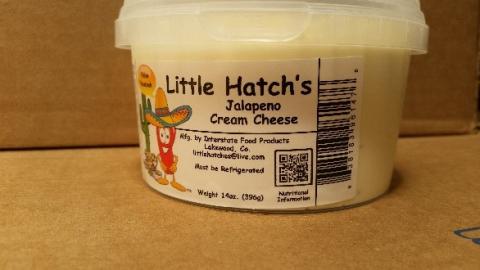
Interstate Food Products of Lakewood Colorado, is recalling its 14 ounce containers of Little Hatches Jalapeno Cream Cheese because they have the potential to be contaminated with Listeria monocytogenes, an organism which may cause serious and sometimes fatal infections in young children, frail or elderly people, and others with weakened immune systems. Although healthy individuals may suffer only short-term symptoms such as high fever, severe headache, stiffness, nausea, abdominal pain and diarrhea, Listeria infection can cause miscarriages and stillbirths among pregnant women.

The recalled Little Hatches Jalapeno Cream Cheese were distributed in 6 Whole Foods stores. UPC code is 63818396147.

The product comes in a 14 ounce, clear plastic package marked with sell by date of 05/21 on top of container.

No illnesses have been reported to date in connection with this problem.

The potential for contamination was noted after routine testing by the FDA revealed the presence of Listeria monocytogenes in 14 ounce packages of Little Hatches Jalapeno Cream Cheese.

Product was delivered to Whole Foods stores in the Denver Colorado Metro area.

Consumers who have purchased 14 ounce containers of ” Little Hatches Jalapeno Cream Cheese are urged to return them to the place of purchase for a full refund. Consumers with questions may contact the company at 720-626-9917, Monday thru Friday 9:00 to 3:00 EDT.


Company Contact Information

Consumers:
Interstate Food Products
 720-626-9917
 

Product Photos

France – Product recall: KERMENE brand superior cooked ham with rind – Listeria monocytogenes

Oulah

Product recall: KERMENE brand superior cooked ham with rind

ENCOUNTERED PROBLEM

Presence of Listeria monocytogenes

PROPOSED SOLUTION

Those in possession of this product are asked not to consume it and to return it to the point of sale where it was purchased.

People who have consumed this product and who present with fever, isolated or accompanied by headaches, are invited to consult their attending physician, notifying him of this consumption.
Pregnant women should pay special attention to these symptoms, as well as immunocompromised people and the elderly. These symptoms may suggest listeriosis, a disease that can be serious and can take up to eight weeks to incubate.

FURTHER INFORMATION

▸ Model names or references
Superior cooked ham with rind


▸ Lot
114008387


▸ DLC – DDM
07/07/2021


▸ Start date / End of marketing
From 04/15/2021 to 04/22/2021


▸ Health mark
FR 22046001CE


LECLERC distributors


▸ Consumer service contact
0247233580


▸ Source
LA MONTGOLFIERE SAS LAMONTGOLFIERE – E.LECLERC AMBOISE

France – Product recall: EARL DE VILLIERS brand fresh and matured goat cheese – Listeria monocytogenes

Oulah

ENCOUNTERED PROBLEM

Presence of Listeria monocytogenes

PROPOSED SOLUTION

Those in possession of this product are asked not to consume it and to return it to the point of sale where it was purchased.

People who have consumed this product and who present with fever, isolated or accompanied by headaches, are invited to consult their attending physician, notifying him of this consumption.
Pregnant women should pay special attention to these symptoms, as well as immunocompromised people and the elderly. These symptoms may suggest listeriosis, a disease that can be serious and can take up to eight weeks to incubate.

FURTHER INFORMATION

▸ Names of models or references
• Pouligny St Pierre
• logs
• farm pavers
• Cinder pyramids


▸ Lot
all lots manufactured from 03/20/2021


▸ Start date / End of marketing
From 03/21/2021 to 05/20/2021


▸ Health mark
FR 36 114 001 CE


Carrefour Contact and Express distributors Lerclerc Super U and U express Nice basket Netto GIE Berry Touraine SCPL Rungis Grocery stores, butchers, cheese makers from Indre Proxi Services and Super Vival Maison des fromages Spar


▸ Consumer service contact
0682704495


▸ Source
EARL DE VILLIERS

USA – Poultry Poop has sickened 163 in 43 states with Salmonella

Food Poison Journal

As of May 20, 2021, a total of 163 people infected with one of the outbreak strains have been reported from 43 states. Illnesses started on dates ranging from February 12, 2021, to April 25, 2021.

Sick people range in age from less than 1 to 87 years, with a median age of 24 years, and 58% are female. Of 109 people with information available, 34 (31%) have been hospitalized. No deaths have been reported.

The true number of sick people in an outbreak is likely much higher than the number reported, and the outbreak may not be limited to the states with known illnesses. This is because many people recover without medical care and are not tested for Salmonella. In addition, recent illnesses may not yet be reported as it usually takes 2 to 4 weeks to determine if a sick person is part of an outbreak.

USA – The Mustard Seed link in Hepatitis A scare

Food Poison Journal

Hepatitis A Vaccination Clinics May 25th and 28th
Sign up for a Free Post-Exposure Hepatitis A Vaccination Clinic

Mayville, NY– People who ate at The Mustard Seed Restaurant (31 E Main Street Fredonia, NY) between April 1 and May 19, 2021 were potentially exposed to hepatitis A. Most people do not get sick when an employee at a restaurant has hepatitis A, but there is still  a risk. People who may have been exposed should receive treatment to prevent infection.

“While the risk of hepatitis A infection is low, we must act prudently to prevent the spread of this very contagious disease,” said Christine Schuyler, County Public Health Director.  “Anyone who may have eaten at this restaurant during this timeframe should check their immunization status and if not already vaccinated against hepatitis A, come to our free clinic this Saturday or visit their healthcare provider if they are experiencing symptoms.”

USA – Cat Food – Recalled: Natural Balance L.I.D. Green Pea & Chicken Formula – Salmonella

Petful

A single “best by” date of this dry cat food is being recalled by Natural Balance because of the potential for salmonella contamination.

Maker: Natural Balance Pet Foods, Inc.
Cause: Potential for salmonella
Announcement: FDA alert dated May 20, 2021 (archived here)
What was recalled: The following specific lot/sizes of dry cat food:

  • Natural Balance L.I.D. Limited Ingredient Diets Green Pea & Chicken Formula Dry Cat Food, 5 lb. bags, UPC #2363300233, Lot #1008080 06:42N811202:20, best by March 10, 2022
  • Natural Balance L.I.D. Limited Ingredient Diets Green Pea & Chicken Formula Dry Cat Food, 10 lb. bags, UPC #2363300235, Lot #1008080 06:42N811202:20, best by March 10, 2022

Only the specific dry cat food listed above is part of this limited recall. No other Natural Balance products are affected.

Research – Presence, seasonal distribution and biomolecular characterization of Vibrio parahaemolyticus and Vibrio vulnificus in shellfish harvested and marketed in Sardinia (Italy) between 2017 and 2018

Journal of Food Protection

Food Illness

In the present study, we aimed to investigate the presence, seasonal distribution and biomolecular characterization of Vibrio parahaemolyticus and Vibrio vulnificus in samples of bivalve molluscs ( Mytilus galloprovincialis, Crassostrea gigas, Ruditapes decussatus, Venus verrucosa and Solen vagina ) and gastropod molluscs (Murex brandaris) harvested and marketed in Sardinia (Italy) between 2017 and 2018. A total of 444 samples were submitted to qualitative determination of Vibrio spp., V. parahaemolyticus and V. vulnificus. Identification and virulence profile of the isolated strains were performed by biomolecular methods. The overall prevalence of Vibrio spp. was 7%. The highest prevalence was pointed out in R. decussatus (8.3%). The prevalence of V. parahaemolyticus and V. vulnificus were 2.7% and 4.7% respectively. Higher levels of V. parahaemolyticus and V. vulnificus prevalence were highlighted in R. decussatus (4.2%) and C. gigas (6.2%) respectively. Potentially pathogenic V. parahaemolyticus strains were a minority ( n. 2 isolates tdh-/trh+ and n. 1 isolate tdh+/trh- ) and were recovered from M. galloprovincialis . None of the isolates was tdh+/ trh+. Pathogenic Vibrios infections are often underestimated and the reports of human infections in Europe are constantly increasing. European data on the true distribution of Vibrionaceae are scarce: the results of the present study highlight the need of constant monitoring plans to update the distribution of potentially pathogenic Vibrios.

Research – Histamine Limits by Country: A Survey and Review

Journal of Food Protection

Histamine is a biogenic amine and a food safety hazard, and it is the only biogenic amine regulated by statute or HACCP Guidance. This paper reviews the regulations for histamine levels in fish in countries around the world, including maximum limits or levels and sampling procedures in different fish preparations. The maximum histamine levels, sampling plans, and fish products are listed. The country-by-country regulations for maximum histamine acceptance levels in some food products vary by a factor of 8, from 50 ppm in some countries to a maximum of 400 ppm in other countries. For similar food products, the maximum histamine levels vary by a factor of 4 (from 50 ppm to 200 ppm) in, for example, fresh tuna. The country-by-country sampling plans vary widely as well and these, too, are covered in detail. Molecules of histamine are formed from L-histidine molecules, an amino acid, by a decarboxylation reaction caused by a bacterial enzyme, histidine decarboxylase. Histamine can form in many different species of saltwater fish that have elevated levels of free L-histidine. Histamine formation is completely preventable, and these methods are described as well. Although there are multiple maximum histamine acceptance levels, rapidly chilling the fish immediately after harvest by any means available is the only method to stop the formation of histamine. Fishermen should rapidly chill the fish using ice, chilled seawater, dense cold brine, or air blast freezers as quickly as possible.