Monthly Archives: June 2020

Hong Kong – Not to consume a batch of bottled apple juice drink contaminated with patulin

CFS

Issue Date 29.5.2020
Source of Information Routine Surveillance Programme of the Centre for Food Safety
Food Product A bottled apple juice drink imported from Australia
Product Name and Description Product name: Cold Pressed Granny Smith Apple

Brand: Presha Fruit

Country of origin: Australia

Importer/Distributor: A.S. Watson Group (HK) Ltd.

Volume: 350ml per bottle

Best-before date: August 7, 2020

Reason For Issuing Alert
  • The test result showed that a sample collected from a supermarket in To Kwa Wan contained patulin at a level of 110 parts per billion (ppb), exceeding the action level of 50 ppb adopted by the CFS. The action level is the same as the standard of the Codex Alimentarius Commission on patulin in apple or apple juice.
  • Patulin mostly occurs in rotten apple and its products. Animal studies showed that ingesting high doses of patulin can induce liver, spleen and kidney damage, as well as toxicity to the immune system. For humans, nausea, gastrointestinal disturbances and vomiting have been reported.
Action Taken by the Centre for Food Safety
  • The CFS has informed the importer, PARKnSHOP (HK) Limited and distributor concerned of the irregularity. The importer and distributor have stopped sale and removed from shelves all batches of the affected product and initiated a recall of the affected batch of the product according to the CFS’ instruction.
  • The CFS will alert the trade, continue to follow up on the case and take appropriate action to safeguard food safety and public health. Investigation is ongoing.
Advice to the Trade Stop using or selling the affected products immediately if they possess them.
Advice to Consumers Not to consume the affected products.
Further Information The CFS press release

Members of the public may call the distributor’s hotline at 2606 8658 for enquiries about the recall during office hours.

Malaysia – 99 Food Poisoning Cases in Malaysia Attributed to Spoiled Eggs in Pudding

Food Poisoning News

In the city of Kuala Terengganu, Malaysia, there have been 99 food poisoning cases as a result of the consumption of ‘puding buih’ which contained eggs that were two weeks past their expiration date. According to the Center for Disease Control (CDC), refrigerated raw eggs in the shell are safe to eat for up to 3 to 5 weeks. After investigation, the State Local Government, Housing, Health and Environment Committee Chairman, Dr Alias Razak, said that the supplier of the spoiled pudding is a private, small-scale food trader, operating out of his or her own home, like many others who are trying to make an income during this time.

The spoiled ‘puding buih’ was consumed on or around May 22, 2020, by those who reported adverse effects from it. The pudding affected around 20 families and even caused some of them to seek medical attention from nearby public and private hospitals. Most of the people affected by the pudding reported experiencing mild symptoms like stomach aches and diarrhea. However, one person was admitted to an intensive care unit (ICU), but was declared stable shortly after.

Research – Survival of Salmonella in Bathrooms and Toilets in Domestic Homes Following Salmonellosis

Pub Med

Salmonella

Image CDC

The survival and environmental spread of Salmonella bacteria from domestic toilets was examined in homes, where a family member had recently suffered an attack of salmonellosis. In four out of six households tested, Salmonella bacteria persisted in the biofilm material found under the recess of the toilet bowl rim which was difficult to remove with household toilet cleaners. In two homes Salmonella bacteria became incorporated into the scaly biofilm adhering to the toilet bowl surface below the water line. Salmonella enteritidis persisted in one toilet for 4 weeks after the diarrhoea had stopped, despite the use of cleaning fluids. Salmonellas were not isolated from normally dry areas such as, the toilet seat, the flush handle and door handle. Toilet seeding experiments were set up with Salmonella enteritidis PT4 to mimic environmental conditions associated with acute diarrhoea. Flushing the toilet resulted in contamination of the toilet seat and the toilet seat lid. In one out of three seedings, Salmonella bacteria were also isolated from an air sample taken immediately after flushing, indicating that airborne spread of the organism could contaminate surfaces in the bathroom. In the seeded toilet Salmonella bacteria were isolated from the biofilm in the toilet bowl below the waterline for up to 50 d after seeding, and also on one occasion from the bowl water. The results suggest that during diarrhoeal illness, there is considerable risk of spread of Salmonella infection to other family members via the environment, including contaminated hands and surfaces in the toilet area.

Luxembourg – SEA SNAPPER STEAKS – (LUTJANUS BOHAR) FROM THE SEAPRO BRAND – CIGUATERA POISONING

SAP

 Product recalls • Alerts

Information Source: European Commission Rapid Alert System for Food and Feed (RASFF)

Distribution in Luxembourg: Tandoori Market

The Luxembourg food safety authorities inform about the following recall:

Danger : ciguatera poisoning

Last name Snapper steaks (Lutjanus bohar)
Mark Seapro
Aspect Plastic packaging
Lot 85205-2217

Only the products listed in the table are affected.

The information provided does not exclude that part of the products have been sold to the end consumer.

Ciguatera usually involves a combination of gastrointestinal, neurological and, sometimes, cardiovascular disorders. The symptoms defined in these general categories vary depending on the geographic origin of the toxic fish and, to some extent, the species of fish. People who have consumed the products mentioned above and who present this type of symptoms are invited to consult a doctor and report this consumption.

Research – Prevalence of E. coli , Salmonella , and Listeria spp. as potential pathogens: A comparative study for biofilm of sink drain environment

Wiley Online

Abstract

Since knowledge and understanding of waterborne pathogens and their diseases are well illuminated, a few research publications on the prevalence of pathogenic microorganisms in various household sink drain pipes are often not extensively examined. Therefore, this study aims to (a) assess and monitor the densities of the bacterial community in the different natural biofilm that grow on plastic pipelines, (b) to detect Escherichia coli Salmonella , and Listeria spp. from natural biofilm samples that are collected from the kitchen (= 30), bathroom (= 10), laboratories (= 13), and hospital (= 8) sink drainage pipes. Three bacterial species selected were assessed using a culture‐dependent approach followed by verification of isolates using both BIOLOG GEN III and polymerase chain reaction. The estimated number of each bacterium was 122 isolates, while 60, 20, 26, and 16 isolates were obtained from the natural biofilm samples, kitchen, bathroom, laboratories, and hospital, respectively. As for the tests, in all types of biofilm samples, the overall bacterial counts at low temperature (22°C) were higher than those at high temperature (37°C). Meanwhile, coli had the most significant number of bacterial microorganisms compared to the other two pathogens. Additionally, the most massive cell densities of coli Salmonella , and Listeria species were discovered in the biofilm collected from the kitchen, then the hospital. Statistically, the results reveal that there is a positive correlation (≥ .0001) with significance between the sources of biofilm. This work certainly makes the potential of household sink drain pipes for reservoir contagious pathogens more explicitly noticeable. Such knowledge would also be beneficial for prospective consideration of the threat to human public health and the environment.

Research – Modeling dependence of growth inhibition of Salmonella Typhimurium and Listeria monocytogenes by oregano or thyme essential oils on the chemical composition of minced pork

Wiley Online

The aim of this study was to compare the antimicrobial effect of selected essential oils (EOs) at concentration of 1% in minced pork from five different meat cuts (loin, ham, shoulder, neck, and belly) and to assess the influence of the chemical parameters of meat on EO efficiency, determined by the decrease of pathogens in comparison to a control in samples after storage at 3°C/7 d in a vacuum. The inhibition was significant ( < .05) only in minced pork from meat cuts with a fat content lower than 5% (leg, loin and shoulder). Salmonella enterica serovar Typhimurium was more sensitive than Listeria monocytogenes and oregano was more effective than thyme ( < .001). The inhibition of . Typhimurium depended mainly on the fat content (logarithmic dependence) and to a lesser degree on the pH, whereas pH was not found to be a significant predictor in the case of L. monocytogenes . The results of this study show that only lean minced meat (with a fat content max. 5%) is a suitable matrix for pathogen control by EOs.

Malaysia – Bad eggs in pudding caused food poisoning, says exco man

Free Malaysia Today

KUALA TERENGGANU: Eggs that were two weeks beyond the expiry date were used to make the “puding buih” dessert which caused food poisoning in 99 people last week.

State executive councillor Alias Razak said the health department had shut down the petty trader’s kitchen for 14 days until June 7.

Last week, people in 20 families in Kuala Terengganu (77 patients ) and Marang (22 cases) came down with food poisoning, with some being admitted to hospital.

Alias said the state government would conduct a detailed study on hygiene for home-based food traders to prevent such occurrences in the future.

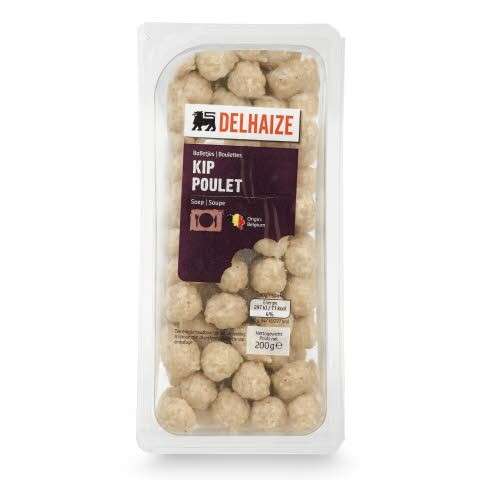
Luxembourg – REMINDER: DELHAIZE BRAND SMALL POULTRY MEATBALLS – POSSIBLE PRESENCE OF LISTERIA MONOCYTOGENES

SAP

Source of information: Notification by the company Delhaize

Distribution in Luxembourg: Delhaize

The Luxembourg food safety authorities inform about the following recall:


Danger  : Possible presence of Listeria monocytogenes


Last name Small poultry meatballs
Mark Delhaize
Unit 200g
Barcode EAN code: 5400112586006
Date of minimum durability (MDD) 06/12/2020;

06/15/2020

Lot 06/12/2020 – Lot 2014;

06/15/2020 – Lot 2119

Only the products listed in the table are affected.


The products in question were withdrawn from sale in the stores concerned, but part of the products were sold to the final consumer.

Hong Kong – Hong Kong outbreak linked to sandwiches sickens 200 – Salmonella

Food Safety News

More than 220 people are part of an outbreak in Hong Kong linked to sandwiches.

The Centre for Health Protection (CHP) of the Department of Health reported 229 people were sick and 45 needed hospital treatment after eating the implicated sandwiches. It was previously reported that 27 people were sick and five needed hospital treatment.

The CHP has identified 96 clusters of suspected food poisoning. Among them, stool specimens from 12 sick people and one food sample tested positive for Salmonella. All those affected are now in stable condition.

The Centre for Food Safety (CFS) of the Food and Environmental Hygiene Department (FEHD), previously said that while following up on suspected food poisoning involving sandwiches, it was found they were produced by an unlicensed food factory in Hong Kong.