Monthly Archives: August 2019

Research – How E. coli knows how to cause the worst possible infection

Science Daily

Ecoli Istock

Image CDC

A pair of University of Virginia School of Medicine scientists have revealed how E. coli seeks out the most oxygen-free crevices of your colon to cause the worst infection possible. The discovery could one day let doctors prevent the infection by allowing E. coli to pass harmlessly through the body.

The new discovery shows just how the foodborne pathogen knows where and when to begin colonizing the colon on its way to making you sick. By recognizing the low-oxygen environment of the large intestine, the dangerous bacterium gives itself the best odds of establishing a robust infection — one that is punishing for the host.

“Bacterial pathogens typically colonize a specific tissue in the host. Therefore, as part of their infection strategies, bacterial pathogens precisely time deployment of proteins and toxins to these specific colonization niches in the human host. This allows the pathogens to save energy and avoid detection by our immune systems and ultimately cause disease,” said researcher Melissa Kendall, PhD, of UVA’s Department of Microbiology, Immunology and Cancer Biology. “By knowing how bacterial pathogens sense where they are in the body, we may one day be able to prevent E. coli, as well as other pathogens, from knowing where it is inside a human host and allow it to pass through the body without causing an infection.”

A Bacterial Goldilocks

E. coli naturally lives in our colons, and most strains do us no harm. But there are several strains that can cause cramps, diarrhea, vomiting, even kidney failure and death. Children are at particular risk. As such, E. coli outbreaks appear periodically in the news. In July, for example, people in several states were sickened by E. coli linked to ground bison meat.

Kendall and graduate student Elizabeth M. Melson have shed important light on how harmful E. coli infections establish themselves in the body. The researchers outlined a process the bacteria use to detect low oxygen levels in the large intestine and then produce proteins that allow E. coli to attach to host cells and establish infection.

Oxygen actually diffuses from the intestinal tissue into the gut, and there are comparably higher levels in the small intestine than the large. E. coli specifically waits until it has reached the-low oxygen large intestine before striking.

E. coli‘s vital asset is a small form of RNA that activates particular genes when oxygen levels are low enough, the researchers reveal. It’s at this point that the infection really gets established. Thanks to this natural sensing process, the bacteria are able to establish infection and begin to manufacture harmful Shiga toxins.

The researchers believe that other bacterial pathogens, such as Shigella and Salmonella, likely employ a similar control mechanism, though more work needs to be done to establish that.

“If scientists can figure how to block oxygen sensing, we may be able to prevent E. coli from making proteins that allow it to stick to our guts,” Kendall said. “This may be an effective strategy to limit infection, and because we are not targeting growth or survival, E. coli may not develop drug resistance — it just doesn’t know where it is.”

Research – Ozone-based treatments for inactivation of Salmonella enterica in tree nuts: Inoculation protocol and surrogate suitability considerations

Science Direct

Abstract

The feasibility of using gaseous ozone, alone or in combination with other treatments, to decontaminate in-shell almonds and pistachios, prepared under different pathogen-inoculation conditions, was explored. Nuts were inoculated with either Salmonella enterica serovar Enteritidis or a potential Salmonella surrogate, Enterococcus faecium OSY 31284. The effect of inoculation method (with or without vacuum application), and of drying inoculated nuts (up to three days) on treatment efficacy was investigated. Inoculated nuts were subjected to gaseous ozone alone (almonds, pistachios) or ozone in combination with heating in brine solution (pistachios). Ozone treatment included application of vacuum (10 in Hg), followed by vessel pressurization to 12.5 psig with ozone‑oxygen mixture (160 g ozone/m3 gas mixture) and holding for 30 min. Heating was conducted in a brine solution (5% NaCl) at 70 °C, for 10 min. Ozone-based treatments were significantly more effective (P < 0.05) on almonds than pistachios, with maximum S. Enteritidis reduction of 2.9 vs. 0.8 log CFU/g, regardless of inoculation method or the drying time. Treatment of inoculated pistachios with heated brine and gaseous ozone reduced S. Enteritidis population by 5.0 to 7.0 log CFU/g and was not significantly more effective than treatment with heated brine alone (reduction of 4.8 to 7.1 log CFU/g). Application of vacuum during inoculation increased bacterial population on nut kernels by approximately 1.2 log CFU/g, but the increase in inoculum population had no effect on inactivation of either species of inoculated bacteria. Decontamination treatments were less effective against both bacteria by up to 2 log CFU/g when drying time of inoculated nuts increased. Efaecium was significantly more resistant to heat and ozone treatment (P < 0.05) than was S. Enteritidis on pistachios, but not on almonds. Results of this study show that laboratory methodology affects observed treatment effectiveness. Considering its high resistance to the heat-ozone combination, Efaecium may not be a suitable surrogate for S. Enteritidis during processing of pistachios by this treatment. Efficacy of ozone gas to decontaminate S. Enteritidisinoculated nuts depends heavily on the type of nut. Although reductions of S. Enteritidis populations on in-shell pistachios are low, treatment of in-shell almonds resulted in greater reductions, indicating the promise of this technology to enhance the safety of specific nut products.

Contagion Live – Outbreak Monitor – Listeria monocytogenes

Contagion Live111111


Canada – Food Worker with Hepatitis A

So not just in the USA, Canada as well. Is it time for all food workers to be immunised?

Food Poison Journal

Southwestern Public Health advises any patrons who ate at TA Travel Centre’s restaurant at 535 Mill Street (401 exit 230) in Woodstock, ON, between August 6, 2019 and August 22, 2019 that they may have been exposed to the hepatitis A virus.

“Unfortunately, an individual may have hepatitis A and not know it. That is what occurred in this situation. The food service worker handled food in the restaurant, so this communication is relevant to anyone who ordered off the menu in the restaurant or ordered take out.

USA – Papaya importer fires back at FDA; says it isn’t linked to outbreaks – FDA Statement Letter

Food Safety News kswfoodworld

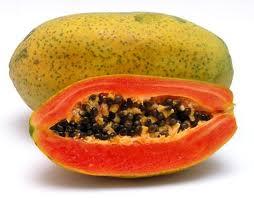
A firm that the government says has been importing contaminated papayas since at least 2011 is vehemently denying statements made in an FDA warning, despite evidence that Cavi brand papayas have been linked to several Salmonella outbreaks, including a current one.

The warning letter, sent yesterday by the Food and Drug Administration and posted for the public today, cites numerous times from 2011 through this year when papayas imported by Agroson’s LLC in the Bronx, NY, were linked to outbreaks that sickened hundreds of people.

FDA

Statement calling on all sectors of the papaya industry to improve practices to better protect consumers.

Every day Americans enjoy an abundant food supply that is among the safest in the world. The U.S. Food and Drug Administration works tirelessly to ensure that foods available to consumers, whether they are produced domestically or abroad, meet the FDA’s food safety requirements and that we are using all available tools to ensure compliance.

As demand and tastes continue to drive change in the market, consumers’ desire for a variety of products available year-round have increased the number of imported foods offered for sale in the U.S. To keep up with this trend, we have doubled down on our efforts to ensure the safety of imported food. This includes issuing a new Strategy for the Safety of Imported Food and requesting new funding from Congress to support our efforts.

While we continue to focus on shifting our work upholding food safety from response to prevention, we know that there are times where we will still need to respond to problems when they arise, including outbreaks of foodborne illness. This is especially important when we see recurrent patterns of illness associated with particular commodities. For example, fresh papayas. This commodity is most often eaten raw, without cooking or processing to eliminate microbial hazards; and therefore, the way they are grown, harvested, packed, held, processed and distributed is crucial to minimizing the risk of contamination with human pathogens.

Unfortunately, since 2011, American consumers have been exposed to eight outbreaks caused by Salmonella serotypes linked to imported, fresh papaya. And, just this June we started an investigation into an outbreak of Salmonella Uganda illnesses tied to the consumption of whole, fresh papaya imported from Mexico. While the 2019 outbreak is ongoing, the first seven outbreaks accounted for almost 500 reported cases of illness, more than 100 hospitalizations, and two deaths.

This trend has to stop. The pattern of recurrent outbreaks we have observed since 2011, including the 2019 illnesses, have involved Salmonella infections traced back to, or are suspected of being associated with, papaya grown in Mexico. The recurring nature of these outbreaks is a clear indication that more must be done within all sectors of the papaya industry to protect its customers and to meet its legal obligations. This includes growers, importers and even retailers that can and must do more.

This is why today we have issued a letter calling on all sectors of the papaya industry to take actions to prevent these outbreaks in the future. We are urging growers, packers, shippers and retailers in the papaya industry to review their operations and make all necessary changes to strengthen public health safeguards.

Our letter calls on the papaya industry to assess the factors that make their crops vulnerable to contamination. If a foodborne pathogen is identified in the crop or growing environment, a root cause analysis should be performed to determine the likely source of contamination. Procedures and practices that minimize that contamination must be implemented.

We are strongly encouraging the papaya industry to examine the use and monitoring of water used to grow, spray (pesticides, fungicides), move, rinse or wax crops to identify and minimize risks from potential hazards. All sectors of the industry should adopt tools and practices needed to enhance traceability since papayas are a perishable commodity, to more rapidly facilitate the tracking of involved product to expedite its removal from commerce, prevent additional consumer exposures, and properly focus any recall actions.

And finally, they should fund and actively engage in food safety research to identify the potential sources and routes of contamination by microbial pathogens and develop data-driven and risk-based preventive controls.

In response to this most recent Salmonella Uganda outbreak, the FDA deployed an inspection team to the packing house and farm that was linked to the contaminated papayas via traceback and epidemiological evidence. The findings of those visits will be made public when their investigation is complete. We have also increased sampling and screening of papayas at the border. In addition, the FDA is actively collaborating with our counterparts in the Mexican government regarding this current outbreak through the agency’s Latin America Office to determine ways to further our collaborative prevention efforts.

The U.S. Federal Food, Drug, and Cosmetic Act prohibits food producers from introducing, or delivering for introduction, into interstate commerce adulterated foods (meaning foods that are potentially harmful to consumers). Additionally, there are new requirements under the FDA Food Safety Modernization Act (FSMA). The Produce Safety Rule under FSMA sets science- and risk-based minimum standards for domestic and foreign farms for the safe growing, harvesting, packing and holding of covered produce, which includes papayas. Another FSMA rule, the Foreign Supplier Verification Program(FSVP) makes importers responsible for verifying that the foods they bring into the U.S., including papayas, have been produced in a manner that meets applicable U.S. safety standards.

We take our responsibility to protect public health very seriously and will continue to use all of our regulatory authorities and enforcement tools available to do so. So, today we issued a warning letter to a papaya importer, Agroson’s LLC, following an FDA investigation at the facility in conjunction with the current outbreak. This investigation uncovered significant violations of the Federal Food, Drug, and Cosmetic Act. Rest assured that the FDA will continue to strengthen safeguards and prevent contaminated papayas from being imported into the U.S. Our efforts also include education, outreach, training and research activities designed to support farmers’ efforts to keep their crops safe for consumers.

Although today’s actions focus on the papaya industry, recurring outbreaks taking place with any commodity are unacceptable from a public health perspective. We know that more must be done by industry as repeated illness outbreaks are a threat to public health. In such situations, it is incumbent upon all sectors of the industry to work together to investigate the cause, review food safety procedures and practices, and take action to prevent further outbreaks.

We must take collective steps to eliminate the threat that recurring outbreaks pose to consumers and look forward to working with the papaya industry as well as all food producers to ensure that America’s food supply remains among the safest in the world.

The FDA, an agency within the U.S. Department of Health and Human Services, protects the public health by assuring the safety, effectiveness, and security of human and veterinary drugs, vaccines and other biological products for human use, and medical devices. The agency also is responsible for the safety and security of our nation’s food supply, cosmetics, dietary supplements, products that give off electronic radiation, and for regulating tobacco products.


USA – Outpost Natural Foods having a Salmonella Recall

Food Poison Journal

kswfoodworld Salmonella

Image CDC

Outpost Natural Foods is recalling certain products made at their central production facility which is located at the same address but separate from the Bay View store.

Sample batches for the State Department of Agriculture, Trade and Consumer Protection tested positive for Salmonella bacteria. The ready to eat products affected are:

cold salads, pizzas, wraps, ready-to-heat entrees such as burritos, pot pies, savory turnovers, select hot bar items and Outpost labeled bakery items.

USA- Canada – Has the USDA Found a Link in the Chicken Listeria Outbreak?

Outbreak News Today

The United States Department of Agriculture’s Food Safety and Inspection Service announced a recall of fully cooked poultry products that may be contaminated with Listeria.

This recall comes very soon after the announcement of a Canadian Chicken Listeria Outbreak as well as a lingering question of whether this outbreak and the mystery source of the Listeria cases in the US are one in the same. Has the USDA confirmed the US link in the Listeria Outbreak? There is some compelling information that has recently come to light.

According to the USDA’s announcement, “The problem was discovered on August 17, 2019, when the Canadian Food Inspection Agency (CFIA) notified FSIS that a sample of product produced by Tip Top Poultry, Inc. confirmed positive for the presence of Listeria monocytogenes. Canadian public health and food safety partners, including the Public Health Agency of Canada and the Canadian Food Inspection Agency, have been investigating an outbreak of Listeria monocytogenes. A ready-to-eat diced chicken product collected as part of the investigation tested positive for Listeria monocytogenes. The investigation is ongoing.”

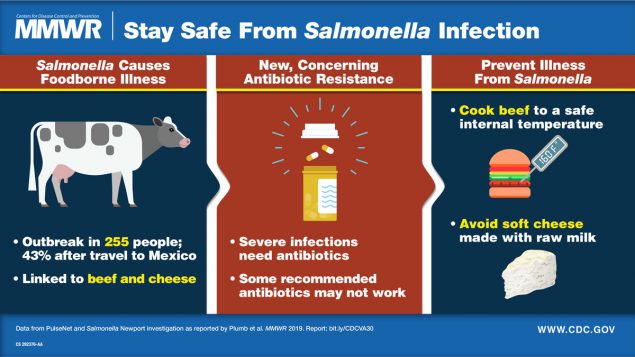
USA – Outbreak of Salmonella Newport Infections with Decreased Susceptibility to Azithromycin Linked to Beef Obtained in the United States and Soft Cheese Obtained in Mexico — United States, 2018–2019

CDC

Summary

What is already known about this topic?

Decreased susceptibility to azithromycin is rare among Salmonella serotypes that cause human infections in the United States. If antibiotic treatment is indicated, azithromycin is recommended as an oral therapy.

What is added by this report?

During June 2018–March 2019, an outbreak caused by multidrug-resistant Salmonella Newport with decreased susceptibility to azithromycin led to 255 infections and 60 hospitalizations. Infections were linked to Mexican-style soft cheese obtained in Mexico and beef obtained in the United States.

What are the implications for public health practice?

Whole genome sequencing can be used in Salmonella outbreak investigations for rapid prediction of antimicrobial resistance and can link cases to each other and to possible sources of infection.

Article Metrics

The visual abstract discusses a salmonella outbreak and offers information on how to prevent illness.

USA -Colorado Adds Marijuana Fungus Testing Requirements

Westword

Commercial marijuana products in Colorado will soon be subject to further testing for dangerous fungus, according to the state Marijuana Enforcement Division. In a bulletin recently sent to the state’s marijuana industry, the MED announced that mycotoxins will be added to the microbial testing requirements for concentrates by September 15.

A toxic metabolite produced by fungi, mycotoxins colonize crops and can be found in various forms of mold. Symptoms that appear after consuming mycotoxins include coughing, wheezing, nose stuffiness and irritated eyes and skin — but mycotoxins can also cause severe respiratory damage, and are capable of giving animals and humans chronic, deadly diseases if consumed at high levels for long periods of time.

The new requirements will only be mandatory for batches of concentrate produced from marijuana plant material that already failed microbial testing.

USA – More than 70 cases of foodborne illness reported in Hidalgo County

The Monitor cyclo

EDINBURG — Hidalgo County health officials are warning residents about the growing number of parasites found in leafy vegetables that could cause medical concerns for vulnerable populations.

More than 70 cases of cyclosporiasis have been reported to the Hidalgo County Health and Human Services office, chief administrative officer Eddie Olivarez said Monday.

“It’s a public health concern we not only have in the Rio Grande Valley, but in the state of Texas, and even throughout the nation,” Olivarez said. “We’ve had over 70 cases in Hidalgo County; over 300 cases in the state of Texas and there’s over 1,200 cases in the United States. So much so, that the CDC (Centers for Disease Control) is concerned about it and putting out alerts in reference to this particular parasite.”