Monthly Archives: June 2019

USA – Burger Boy Restaurant in Caribou Maine link in 9 person Hepatitis A Outbreak

Food Poison Journal

The Maine Center for Disease Control and Prevention (Maine CDC) has identified three additional cases of hepatitis A virus infection in Aroostook County since the last update on June 18, 2019. There is now a total of nine confirmed hepatitis A cases in Aroostook County since May 17, 2019. All nine cases are linked to exposures at a restaurant (Burger Boy) in Caribou. There is no ongoing risk to the public from eating at this restaurant, nor is there any ongoing risk to the public as a result of the original case.

USA- Hepatitis – Hardee’s, 451 Killian Road, Richland County link in another Hepatitis A scare

Food Poison Journal

In a continuing effort to provide the public vital information about the spread of hepatitis A in South Carolina in the most efficient and appropriate manner, DHEC will report cases involving potential exposures at restaurants on our agency website.

Customers who ate at Hardee’s at 451 Killian Road, Richland County, between June 4 and June 20, 2019, might have been exposed to the hepatitis A virus. DHEC was notified on June 21, 2019, that an employee of the restaurant tested positive for hepatitis A. DHEC is working with Hardee’s to investigate possible exposures and provide guidance for preventive treatment for anyone who may be affected.

This illness is not a foodborne outbreak. The concern is not the restaurant. It is with a food handler who has hepatitis A infection, and they can spread the virus up to two weeks before they know they are sick.

Research – Food Safety Management Systems, Certified Food Protection Managers, and Compliance with Food Safety Practices Associated with the Control of Listeria monocytogenes in Foods at Restaurants

Journal of Food Protection Listeria cdc

ABSTRACT

Listeria monocytogenes is a widespread pathogen of public health concern that is capable of persisting in food processing and retail food environments. Both industry and regulatory agencies continually look for ways to eliminate or prevent the growth of this pathogen. This study investigated the effect of food safety management systems (FSMS) and the presence of a certified food protection manager (CFPM) on the occurrence of proper cold holding and date marking—two food safety practices associated with the control of L. monocytogenes in restaurants. Observational data collected as part of a national study of randomly selected fast food and full-service restaurants were analyzed. Regression analysis found FSMS was the strongest predictor of out-of-compliance observations. Although CFPM was not a significant predictor of out-of-compliance observations when FSMS was taken into account, restaurants with no CFPM employed had a significantly higher mean number of out-of-compliance observations than did restaurants with a CFPM employed but not present and than restaurants with a CFPM present. Having sufficient refrigeration capacity and accessible temperature measuring devices was associated with better cold-holding compliance. Establishments located in jurisdictions requiring the date marking of time-temperature control for safety foods were more likely to properly date mark those foods than those not located in such jurisdictions.

HIGHLIGHTS
  • Proper cold holding and date marking practices help control Lm growth in foods.

  • Most restaurants had ≥1 instance of improper cold holding.

  • Less than 50% of all cold holding observations were found to be out of compliance.

  • Restaurants in areas requiring date marking of food were more likely to date mark.

  • CFPM did not predict out-of-compliance observations when FSMS effects were considered.

Information – Norovirus: UNC breakthrough brings us closer to a vaccine

Outbreak News Today 

Food Borne Illness - Norovirus -CDC Photo

Image CDC

Researchers at the University of North Carolina at Chapel Hill Gillings School of Global Public Health and their colleagues at the University of Texas at Austin and the National Institutes of Health Vaccine Research Center have discovered an antibody that broadly inhibits multiple strains of pandemic norovirus, a major step forward in the development of an effective vaccine for the dreaded stomach virus.

Australia – Coles Express — Coles Fresh Full Cream Milk 2L

ACCC

Photograph of Coles Fresh Full Cream Milk 2L

What are the defects?

The recall is due to microbial (E. coli) contamination.

What are the hazards?

Food products contaminated with E. coli may cause illness if consumed.

What should consumers do?

Consmers must not consume this product and should return the product or proof of purchase to any Coles Supermarket or Coles Express for a full refund.

Any consumers concerned about their health should seek medical advice.

For further information, please contact on Coles Customer Care on 1800 061 562.

Traders who sold this product

Victorian Coles Express sites
Four Coles Express stores in southern NSW – Deniliquin North, Tocumwal, Albury and Albury North

Where the product was sold
New South Wales
Victoria

Recall advertisements and supporting documentation

Information – FDA issues new draft guidance to improve the safety of seeds for sprouting

FDA alfalfa

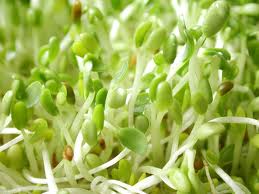
“Over the past 22 years, the FDA has investigated 50 reported outbreaks of foodborne illness associated with contaminated sprouts. Together, these outbreaks resulted in more than an estimated 2,600 cases of illness. Last year, there were two reported outbreaks associated with sprouts, resulting in more than an estimated 100 illnesses. Studies indicate that contaminated seed is the likely source of most sprout-related outbreaks, as this commodity is inherently more susceptible to these issues because they are grown in warm and humid conditions that are favorable for bacteria like Salmonella, Listeria and E. coli,” said FDA Deputy Commissioner for Food Policy and Response Frank Yiannas. “The FDA is committed to taking swift action to respond to outbreaks related to sprouts and keep our food supply safe, but we also know that measures to prevent issues from happening in the first place are an important element of protecting consumers. By studying outbreaks related to sprouts over the years, we have been able to recommend changes in the industry to help lower the incidence of sprout-related outbreaks. Today’s new draft guidance is another critical step, like the Sprout Safety Alliance or sprout-specific requirements of the Produce Safety Rule, the agency is taking to prevent illnesses related to sprouts.”

The U.S. Food and Drug Administration today released a proposed draft guidance, “Reducing Microbial Food Safety Hazards in the Production of Seed for Sprouting,” intended to make the sprout seed industry (seed growers, conditioners, packers, holders, suppliers, and distributors) aware of the agency’s serious concerns with the continuing outbreaks of foodborne illness associated with the consumption of raw and lightly-cooked sprouts.

Incorporating aspects of the Codex Code of Hygienic Practice for Fresh Fruits and Vegetables Annex II, Annex for Sprout Production; the International Sprout Growers Association-Institute for Food Safety and Health’s “U.S. Sprout Production Best Practices”; and Good Agricultural Practices, the FDA’s draft guidance issued today provides the agency’s recommendations to firms throughout the production chain of seed for sprouting. It states that if a grower, holder, conditioner, or distributor reasonably believes that its seeds are expected to be used for sprouting, we recommend that the grower, holder, conditioner, or distributor take steps that are reasonably necessary to prevent those seeds from becoming contaminated. We also recommend that firms throughout the supply chain – from seed production and distribution through sprouting – review their current operations related to seeds for sprouting.

During the 60-day comment period for this draft guidance, stakeholders will be able to provide comments on the draft provisions. For more information on this guidance, as well as instructions on how to submit your comments, please visit Draft Guidance for Industry: Reducing Microbial Food Safety Hazards in the Production of Seed for Sprouting.


Research – Staph aureus found on 40 percent of cell phones at one university: Study

Outbreak News Today Staph

New research has demonstrated the presence of S. aureus in 40% of the cell phones of students sampled at a university. S. aureus is a common cause of hospital and community-based infections and is currently considered an important pathogen because of its level of antibiotic resistance. The research, conducted at the Western University of São Paulo, Brazil, is presented at ASM Microbe, the annual meeting of the American Society for Microbiology.

Of the bacteria isolated, 85% were resistant to the antibiotic penicillin and 50% had the ability to adhere to surfaces. In addition, the presence of genes related to adhesion, antimicrobial resistance and toxins were present a high level. Samples were collected from 100 cell phones of students from the Biomedicine (20), Pharmacy (20), Dentistry (20), Nutrition (20), and Nursing (20) courses. The vast majority of the bacteria isolated belonged to students of the nursing course.

Nursing students are very likely to become carriers of S. aureus since clinical practice in hospital settings is part of their coursework and exposure to occupational hazards is inherent to this setting, which could favor the colonization and contamination of the surface of cell devices. Cell phones used in healthcare environments allow for the transmission of bacteria that harbor genes of virulence and resistance, contributing to increasing the infection rates as well as an increase in the morbidity/mortality from these infections.

USA – Raw Oysters link in Shigella Outbreak

Food Poison Journal


Audience

  • Consumers who recently experienced symptoms of foodborne illness after eating raw oysters
  • Restaurants that sell raw oysters in California, Nevada, New York, and Arizona

Product

  • Oysters harvested from Estero El Cardon, Baja California Sur, Mexico
  • Oysters were distributed primarily to California, Nevada, New York, and Arizona
  • Oysters were sold to wholesale distributors with direct sales to restaurants and not to grocery retail outlets.

Purpose

Consumers should not purchase oysters marketed as being harvested from Estero El Cardon, in Baja California Sur, Mexico from restaurants. Consumers who have recently experienced symptoms of foodborne illness should contact their healthcare provider and report their symptoms and receive care.

Restaurants and retailers should not serve oysters from the Estero El Cardon harvest area in Baja California Sur, Mexico. Restaurants and retailers should dispose of any products with harvest tags that indicate a growing area of Estero El Cardon by throwing them away.


USA – Tequila’s Mexican Grill closed due to Food Poisoning

Food Poison Journal

The Barry-Eaton District Health Department (BEDHD) in Hastings, Michigan has closed Tequila’s Mexican Grill again as of 11:45 AM on Friday, June 21st.

BEDHD received additional information from the investigation and from epidemiology that suggests the 39 individual illnesses is not norovirus. Based on this information, BEDHD staff reviewed additional food handling procedures at the restaurant and determined it was in the best interest of public health to close the restaurant. BEDHD staff will continue working with Tequila’s Mexican Grill to assure food handling standards are being met. Once all requirements are implemented, BEDHD will consider re-opening the restaurant.

UK – Inquests launched into deaths of victims of Listeria Sandwiches

Food Poison Journal

According to British press reports, Enid Heap and Beverley Sowah both died at Manchester Royal Infirmary, likely from eating Listeria tainted sandwiches.

Ms. Heap, from Beswick, died with her family at her bedside on May 6 after she was admitted to the hospital in March when suffering breathing difficulties, Manchester Coroner’s Court heard. Mrs. Sowah, who was born in Jamaica and lived in Manchester, was admitted to the same hospital on April 15 and died on April 26. Coroner Nigel Meadows confirmed before the listeria deaths were uncovered an inquest had already been held into Mrs. Sowah’s death and he had concluded no inquest hearing was needed for Ms. Heap’s death.

In other news, a Derbyshire man, Ian Hitchcock, with liver cancer, who was diagnosed with Listeria at the Royal Derby Hospital, was later transferred to Nottingham City Hospital where he died on June 8. An inquest into Mr. Hitchcock’s death has been opened at Derby Coroner’s Court.