France – Merguez – Salmonella

Gov france

Identification information of the recalled product

  • Product category Feed
  • Product subcategory Meats
  • Product brand name without
  • Model names or references Merguez sold at the traditional stand Merguez sold in trays of 5/6 pieces (+-500gr) at the self-service counter
  • Identification of products
    Batch Date
    Merguez sausage sold at the traditional stand Use-by date between 07/03/2023 and 12/03/2023
    Merguez sausage sold in trays of 5/6 pieces (+-500gr) in the self-service department Use-by date between 07/03/2023 and 12/03/2023
  • Products ListMerguez_sold_at_the_traditional_stand.pdfAttachment
  • Packaging Merguez sold by kg at the traditional stand Merguez sold in trays of 5/6 pieces (+-500gr) at the self-service counter
  • Marketing start/end date From 07/03/2023 to 12/03/2023
  • Storage temperature Product to be stored in the refrigerator
  • Health mark without
  • Geographic area of ​​sale Jeumont
  • Distributors Intermarché Jeumont

Practical information regarding the recall

  • Reason for recall presence of salmonella
  • Risks incurred by the consumer Salmonella spp (causative agent of salmonellosis)

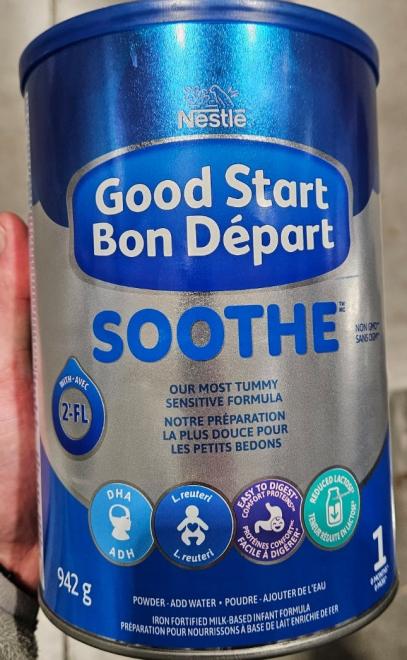
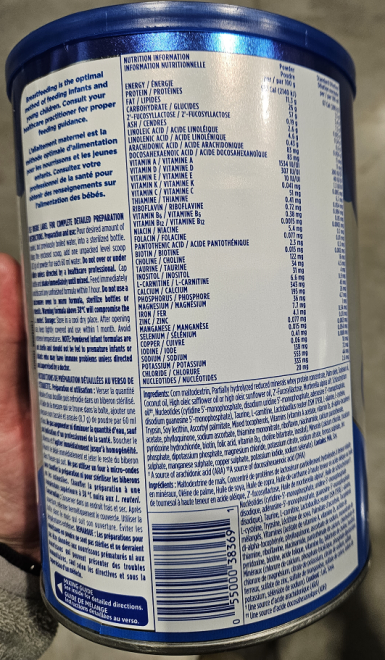
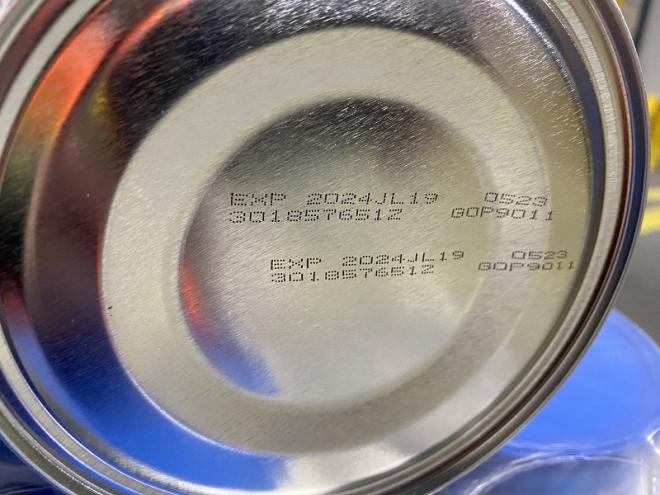
Canada – Nestlé Good Start – Soothe (infant formula) recalled due to possible presence of Cronobacter sakazakii

CFIA

Summary

Product
Nestlé Good Start Soothe (infant formula)
Issue
Food – Microbial Contamination – Other
What to do

Do not consume, use, sell, serve, or distribute recalled products

Affected products

Issue

The affected product is being recalled from the marketplace due to possible Cronobacter sakazakii contamination.

The recalled product has been sold nationally.

What you should do

  • If you think you became sick from consuming a recalled product, call your doctor
  • Check to see if you have the recalled products in your home or establishment
  • Do not consume the recalled products
  • Do not serve, use, sell, or distribute the recalled products
  • Recalled products should be thrown out or returned to the location where they were purchased

Food contaminated with Cronobacter sakazakii may not look or smell spoiled but can still make you sick. Although Cronobacter sakazakii is not commonly linked to human illness, in rare cases it can cause serious or fatal infections. Cronobacter sakazakii can cause rare bloodstream and central nervous system infections and has been associated with severe intestinal infection (necrotizing enterocolitis) and blood poisoning (sepsis), especially in newborns.

Singapore – Downgrading of food shop Rasel Catering Singapore Pte Ltd (253 Pandan Loop, Singapore 128432) due to food poisoning incident

SFA

345 persons were reported to have developed gastroenteritis symptoms after consuming food prepared by Rasel Catering Singapore Pte Ltdbetween 8 and 16 November 2022. None of them were hospitalised.
A joint investigation by the Ministry of Health and the Singapore Food Agency (SFA) was conducted following the incident. Several hygiene lapses were identified during the inspections of the food shop on 10 and 18 November 2022, and SFA will be taking enforcement actions against the licensee for these lapses.
SFA has adjusted the food shop’s food hygiene grade from “A” to “C” with effect from 17 March 2023, to be reviewed in 12 months. The premises will also be kept under surveillance.
Food operators are reminded to adhere to good food hygiene and safety processes. Good hygiene practices such as the washing of hands before handling food can greatly reduce the incidence of gastroenteritis when adopted by all key stakeholders, including the industry and public
The information provided on this website should not be used as basis for any legal proceedings. Neither SFA nor any of its employees involved in the supply of the above information shall be liable for any loss or damage suffered by any member of the public by reason of any error or omission of whatever nature appearing therein or however caused.

 Italy – Beef Shredded 80g atm – Listeria monocytogenes

Salute

Brand : very fresh

Denomination : beef shredded 80g atm

Reason for reporting : Remind for microbiological risk

Date of publication : 18 March 2023

Documentation

Documentation

Italy- Beef Strips 100g atm – Listeria monocytogenes

Salute

Brand : Coppiello Giovanni srl

Name : beef strips 100g atm

Reason for reporting : Remind for microbiological risk

Date of publication : 18 March 2023

Documentation

Documentation

USA – Perrigo Announces Voluntary Recall of Limited Quantity of Gerber® Good Start® SootheProTM Powdered Infant Formula – Cronobacter?

FDA

Gerber® Good Start® SoothePro Powdered Infant Formula, Product photo

Company Announcement

Dublin, Ireland – March 17, 2023 – Perrigo Company plc is issuing a voluntary recall of certain lots of Gerber® Good Start® SootheProTM Powdered Infant Formula in the U.S., that were manufactured at the Company’s Gateway Eau Claire, Wisconsin manufacturing facility from January 02, 2023 to January 18, 2023. This product is being recalled out of an abundance of caution due to the potential presence of Cronobacter sakazakii

Importantly, no distributed product has tested positive for the presence of this bacteria, no adverse events have been reported and no other products manufactured at this facility or any other of Perrigo’s facilities are affected by this recall.

Cronobacter sakazakii is a bacteria commonly found in the environment. In most people it causes no symptoms but in some, particularly premature infants, infants under 2 months of age or infants with weakened immune systems fever, poor feeding, excessive crying or low energy as well as other serious symptoms can occur.

This product is sold at retailers across the U.S. Consumers who purchased the product after March 5, 2023 should look for the following Lot Codes and “use by” dates, which can be found on the bottom of the package. No other lot codes are impacted by this recall. Any consumers who purchased product with matching codes should discontinue use and dispose of the product.

Gerber® Good Start® SootheProTM 12.4 oz:
300357651Z – USE BY 04JUL2024
300457651Z – USE BY 05JUL2024
300557651Z – USE BY 06JUL2024
300557652Z – USE BY 06JUL2024
300757651Z – USE BY 08JUL2024
300857651Z – USE BY 09JUL2024
301057651Z – USE BY 11JUL2024
301057652Z – USE BY 11JUL2024
301157651Z – USE BY 12JUL2024

Gerber® Good Start® SootheProTM 30.6 oz:
301357652Z – USE BY 14JUL2024
301457652Z – USE BY 15JUL2024
301557651Z – USE BY 16JUL2024

Gerber Good® Start® SootheProTM 19.4 oz:
301557652Z – USE BY 16JUL2024I

Consumers can request refunds for impacted products and find more information about Gerber® Good Start® by contacting the Gerber Parent Resource Center on behalf of Perrigo at 1-800-777-7690 anytime 24/7. Consumers with any health-related questions should contact their healthcare provider.

This recall is being conducted in consultation with the U.S. Food and Drug Administration (FDA).

USA – Updated – Scenic Fruit Company Recalls Frozen Organic Strawberries and Frozen Organic Tropical Blend Because of Possible Health Risk – Hepatitis A

FDA

Company Announcement

‘The company has issued a correction to the previous announcement’.

March 17, 2023, this press release is updated to include the states that Aldi sold Simply Nature frozen organic strawberries.

Scenic Fruit Company of Gresham, Oregon is recalling frozen organic strawberries sold to Costco, Aldi, KeHE, Vital Choice Seafood, PCC Community Markets and frozen organic tropical blend sold to Trader Joe’s due to an outbreak of Hepatitis A illnesses.

Hepatitis A is a contagious liver disease that results from exposure to the Hepatitis A virus, including from food. It can range from a mild illness lasting a few weeks to a serious illness lasting several months. In rare cases, particularly consumers who have a pre-existing severe illness or are immune compromised, Hepatitis A infection can progress to liver failure.

Illness occurs within 15 to 50 days of exposure and includes fatigue, abdominal pain, jaundice, abnormal liver tests, dark urine and pale stool. Hepatitis A vaccination can prevent illness if given within two weeks of exposure to a contaminated food. Persons who may have consumed affected product should consult with their health care professional or local health department to determine if a vaccination is appropriate, and consumers with symptoms of Hepatitis A should contact their health care professionals or the local health department immediately.

The following products are subject to this recall. The lot codes and best by dates are found on the back of each bag (see attached pictures below):

Brand Name Product Name Net Wt. UPC Best By Dates
Best If Use Dates
Best Before Date
Distributed in States
Simply Nature Organic Strawberries 24 oz. 4099100256222 6/14/2024 Arizona,
Arkansas,
California,
Illinois, Iowa,
Michigan,
Minnesota,
Missouri, North
Dakota, South
Dakota, Ohio,
Wisconsin
Vital Choice Organic Strawberries 16 oz. 834297005024 5/20/2024 Washington
Kirkland Signature Organic Strawberries 4 lbs. 96619140404 10/8/2024 Alaska, Idaho, Montana,
Oregon, Utah, Washington.
Made With Organic Strawberries 10 oz. 814343021390 11/20/2024 Illinois, Maryland
PCC Community
Markets
Organic Strawberries 32 oz. 22827109469 10/29/2024 Washington
Trader Joe’s Organic Tropical Fruit
Blend Pineapple,
Bananas, Strawberries &
Mango
16 oz 00511919 04/25/24
05/12/24
05/23/24
05/30/24
06/07/24
Nationwide

Although Hepatitis A has not been detected on this product, out of an abundance of caution, consumers should stop consuming the product and return it to their local store for a refund. The company has ceased the production and distribution of the product as FDA and the company continue their investigation as to what caused the problem.

All inventories of the affected lot should be removed from sale. Consumers who have purchased the products are urged to destroy or return it to the place of purchase for a full refund. Consumers with questions may contact the company at customer.service@scenicfruit.com

FDA Outbreak Advisory

Organic Strawberries Hepatitis A Outbreak | CDC

Research – Microbiological Quality and Safety of Fresh Turkey Meat at Retail Level, Including the Presence of ESBL-Producing Enterobacteriaceae and Methicillin-Resistant S. aureus

MDPI

Abstract

The aim of this work was to study the microbiological safety and quality of marketed fresh turkey meat, with special emphasis on methicillin-resistant S. aureus, ESBL-producing E. coli, and K. pneumoniae. A total of 51 fresh turkey meat samples were collected at retail level in Spain. Mesophile, Pseudomonas spp., enterococci, Enterobacteriaceae, and staphylococci counts were 5.10 ± 1.36, 3.17 ± 0.87, 2.03 ± 0.58, 3.18 ± 1.00, and 2.52 ± 0.96 log CFU/g, respectively. Neither Campylobacter spp. nor Clostridium perfringens was detected in any sample. ESBL-producing K. pneumoniae and E. coli were detected in 22 (43.14%), and three (5.88%) samples, respectively, all of which were multi-resistant. Resistance to antimicrobials of category A (monobactams, and glycilcyclines) and category B (cephalosporins of third or fourth generation, polymixins, and quinolones), according to the European Medicine Agency classification, was found among the Enterobacteriaceae isolates. S. aureus and methicillin-resistant S. aureus were detected in nine (17.65%) and four samples (7.84%), respectively. Resistance to antimicrobials of category A (mupirocin, linezolid, rifampicin, and vancomycin) and category B (cephalosporins of third- or fourth generation) was found among S. aureus, coagulase-negative staphylococci, and M. caseolyticus isolates.

Research – Evaluation of Biofilm Cultivation Models for Efficacy Testing of Disinfectants against Salmonella Typhimurium Biofilms

MDPI

Abstract

Within the European Union, Salmonella is frequently reported in food and feed products. A major route of transmission is upon contact with contaminated surfaces. In nature, bacteria such as Salmonella are often encountered in biofilms, where they are protected against antibiotics and disinfectants. Therefore, the removal and inactivation of biofilms is essential to ensure hygienic conditions. Currently, recommendations for disinfectant usage are based on results of efficacy testing against planktonic bacteria. There are no biofilm-specific standards for the efficacy testing of disinfectants against Salmonella. Here, we assessed three models for disinfectant efficacy testing on Salmonella Typhimurium biofilms. Achievable bacterial counts per biofilm, repeatability, and intra-laboratory reproducibility were analyzed. Biofilms of two Salmonella strains were grown on different surfaces and treated with glutaraldehyde or peracetic acid. Disinfectant efficacy was compared with results for planktonic Salmonella. All methods resulted in highly repeatable cell numbers per biofilm, with one assay showing variations of less than 1 log10 CFU in all experiments for both strains tested. Disinfectant concentrations required to inactivate biofilms were higher compared to planktonic cells. Differences were found between the biofilm methods regarding maximal achievable cell numbers, repeatability, and intra-laboratory reproducibility of results, which may be used to identify the most appropriate method in relation to application context. Developing a standardized protocol for testing disinfectant efficacy on biofilms will help identify conditions that are effective against biofilms.

Research – Joint FAO/WHO Expert Meeting on the pre-and post-harvest control of Campylobacter spp. in poultry meat

FAO

The Joint FAO/WHO Expert Meeting on Microbial Risk Assessment (JEMRA) on the pre-and post-harvest control of Campylobacter spp. in poultry meat was convened to review recent data and evidence on the topic and to provide scientific advice on control measures for thermotolerant Campylobacter species C. jejuni and C. coli in the broiler production chain. This  document summarizes the  conclusions  of  the  meeting  on  the  pre-and  post-harvest  control  of Campylobacter spp.  in  poultry  meat  and  is being made  available  to facilitate the  deliberations  of  the upcoming Codex Committee on Food Hygiene (CCFH). The full report will be published as part of the Food and Agriculture Organization   (FAO)and World   Health Organization(WHO)Microbiological   Risk Assessment (MRA) Series.