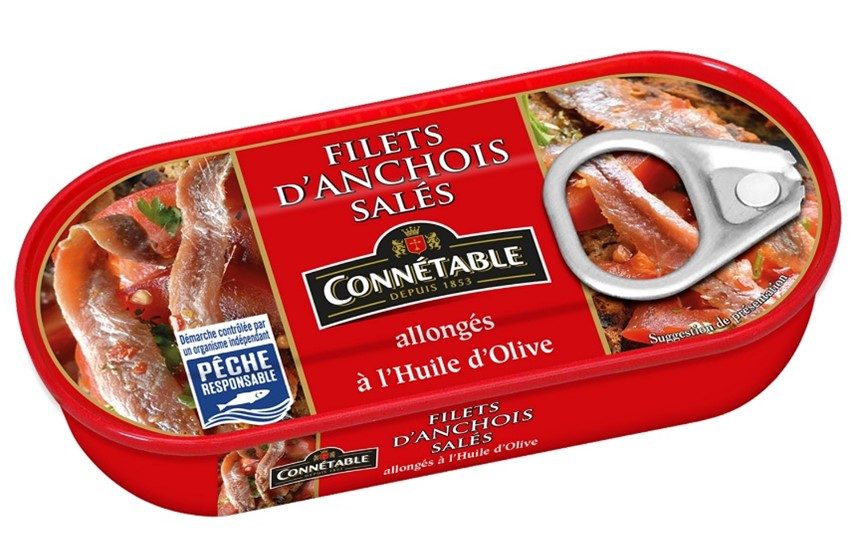
France – Anchovy fillets salted in extra virgin olive oil – Histamine

Gov France

Product category
Food
Product subcategory
Fishing and aquaculture products
Product brand name
Constable
Model names or references
50g
Product identification
GTIN Batch Date
3263670008395 All lots Minimum durability date between 11/25/2023 and 09/27/2024
Packaging
50g metal box
Start/end date of marketing
Since 06/08/2023
Storage temperature
Product to be stored at room temperature
Health mark
ES 12.10544/SS CE
Geographical sales area
Whole France
Distributors
E.LECLERC, AUCHAN, SYSTEM U, MONOPRIX, CORA, MAXIMO

France – Red Label parsley ham – Salmonella

Gov France

  • Product category Food
  • Product subcategory Meats
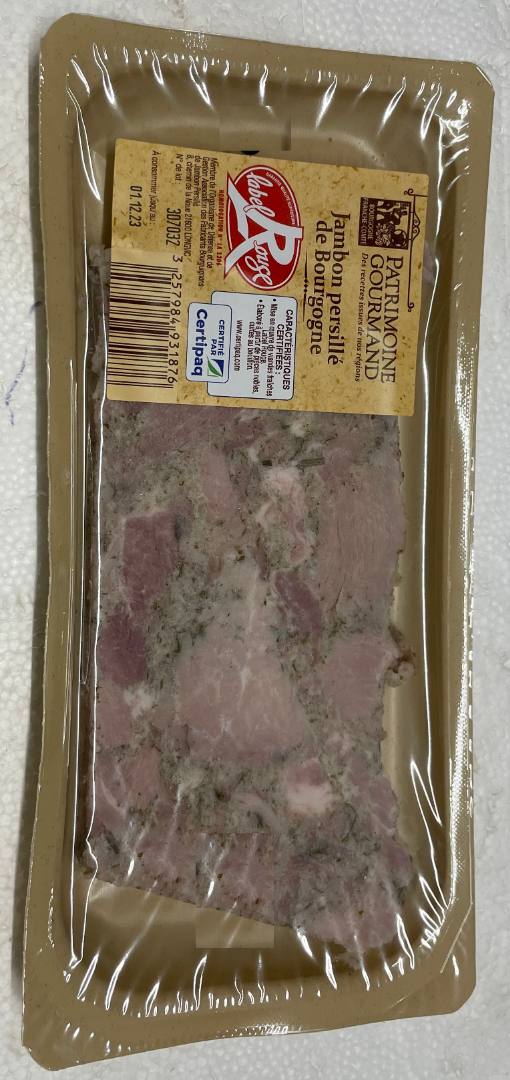
  • Product brand name Gourmet Heritage – Cora
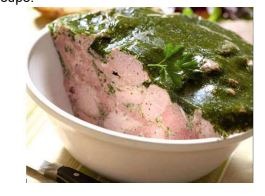
  • Model names or references Red Label parsley ham
  • Product identification
    GTIN Batch Date
    3257984931876 307032 Use-by date 01/12/2023
  • Packaging Fresh Packaged Slices, Modified Atmosphere
  • Start/end date of marketing Since 08/11/2023
  • Storage temperature Product to keep in the refrigerator
  • Health mark FR 21 231 005 CE
  • Geographical sales area Whole France
  • Distributors Cora

France – Old-fashioned country terrine with shallots – Salmonella

Gov France

  • Product category Food
  • Product subcategory Meats
  • Product brand name Antoine Sabatier
  • Model names or references Old-fashioned country terrine with sliced ​​shallot
  • Product identification
    GTIN Batch Date
    3441700283374 306072 Use-by date 06/12/2023
  • Packaging Slice in tray under ATM
  • Start/end date of marketing Since 11/13/2023
  • Storage temperature Product to keep in the refrigerator
  • Health mark FR 21 231 005 CE
  • Geographical sales area Whole France
  • Distributors Auchan, Disfrais, Leclerc, Colruyt, U brand, Salaisons Dijonnaises factory shop

USA – Gills diced Onions recalled after 73 with Salmonella – California and Utah hardest hit

Food Poison Journal

Screenshot-2023-10-24-at-3.42.16 PM

CDC, public health and regulatory officials in several states, and the U.S. Food and Drug Administration (FDA) are collecting different types of data to investigate a multistate outbreak of Salmonella Thompson infections.

Epidemiologic and traceback data show that onions processed at Gills Onions may be contaminated with Salmonella and may be making people sick.

As of October 24, 2023, a total of 73 people infected with the outbreak strain of Salmonella have been reported from 22 states. Illnesses started on dates ranging from August 2, 2023, to September 25, 2023. Of the 65 people with information available, 15 (23%) have been hospitalized. No deaths have been reported.

France – REAL BURGUNDY PERSILLE HAM – Salmonella

Gov France

  • Product category Food
  • Product subcategory Meats
  • Product brand name CROSSROADS
  • Model names or references These products were sold – in the cold cuts section (traditional) – or packaged by the store and sold self-service in the section adjoining the traditional section
  • Product identification
    GTIN Batch Date
    1111111111116 Lot sold between 11/13/2023 to 11/16/2023 Use-by date 12/19/2023
  • Packaging Salad bowl 3kg
  • Start/end date of marketing From 11/13/2023 to 11/16/2023
  • Storage temperature Product to keep in the refrigerator
  • Health mark FR 21 231 005 CE
  • Further information Concerns EANs starting with 2235038 or 0209011.
  • Geographical sales area Whole France
  • Distributors Crossroads

France – REAL BURGUNDY PERSILLE HAM – Salmonella

Gov France

  • Product category Food
  • Product subcategory Meats
  • Product brand name SELECTED BY OUR CHARCUTERS!
  • Model names or references REAL BURGUNDY PERSILLE HAM 1 SLICE Fresh packaged
  • Product identification
    GTIN Batch Date
    3441700270589 313032 Use-by date 13/12/2023
  • Packaging1 slice tray, variable weight
  • Start/end date of marketing From 11/13/2023 to 11/16/2023
  • Storage temperature Product to keep in the refrigerator
  • Health mark FR 21 231 005 CE
  • Geographical sales area Whole France
  • Distributors Crossroads

New Zealand – Public health warning: shellfish biotoxin alert for East Coast of North Island further extended

MPI

New Zealand Food Safety is extending its advisory to the public not to collect or consume shellfish gathered from the East Coast of the North Island due to the presence of paralytic shellfish toxins.

“We have extended the existing warning north to now span from Cape Runaway all the way south to Blackhead Point, which is just north of Pōrangahau. Follow-up tests on mussels from Hicks Bay Beach showed levels of paralytic shellfish toxins three times the safe limit,” says New Zealand Food Safety deputy director-general Vincent Arbuckle.

“Please do not gather and eat shellfish from this area because anyone doing so could get sick. Affected shellfish include bivalve shellfish such as mussels, oysters, tuatua, pipi, toheroa, cockles, and scallops, as well as pūpū (cat’s eyes), Cook’s turban and kina (sea urchin).

“We are monitoring an algal bloom off the East Coast, which is spreading. This type of algae produces a dangerous toxin and when shellfish filter-feed, these toxins can accumulate in their gut and flesh. Generally, the more algae there are in the water, the more toxic the shellfish get.

“Cooking the shellfish does not remove the toxin, so shellfish from this area should not be eaten.”

Symptoms of paralytic shellfish poisoning usually appear within 10 minutes to 3 hours of eating and may include:

  • numbness and a tingling (prickly feeling) around the mouth, face, hands, and feet
  • difficulty swallowing or breathing
  • dizziness and headache
  • nausea and vomiting
  • diarrhoea
  • paralysis and respiratory failure and, in severe cases, death.

Pāua, crab, and crayfish may still be eaten if the gut has been completely removed prior to cooking, as toxins accumulate in the gut. If the gut is not removed, its contents could contaminate the meat during the cooking process.

Finfish are not affected by this public health warning, but we advise gutting the fish and discarding the liver before cooking.

New Zealand Food Safety has had no notifications of associated illness.

If anyone becomes ill after eating shellfish from an area where a public health warning has been issued, phone Healthline for advice on 0800 61 11 16, or seek medical attention immediately. You are also advised to contact your nearest public health unit and keep any leftover shellfish in case it can be tested.

“We are monitoring shellfish in the region and will notify the public of any changes to the situation,” says Mr Arbuckle.

Commercially harvested shellfish – sold in shops and supermarkets or exported – is subject to strict water and flesh monitoring programmes by New Zealand Food Safety to ensure they are safe to eat.

France – BURGUNDY PERSILLE HAM – Salmonella

Gov France

  • Product category Food
  • Product subcategory Meats
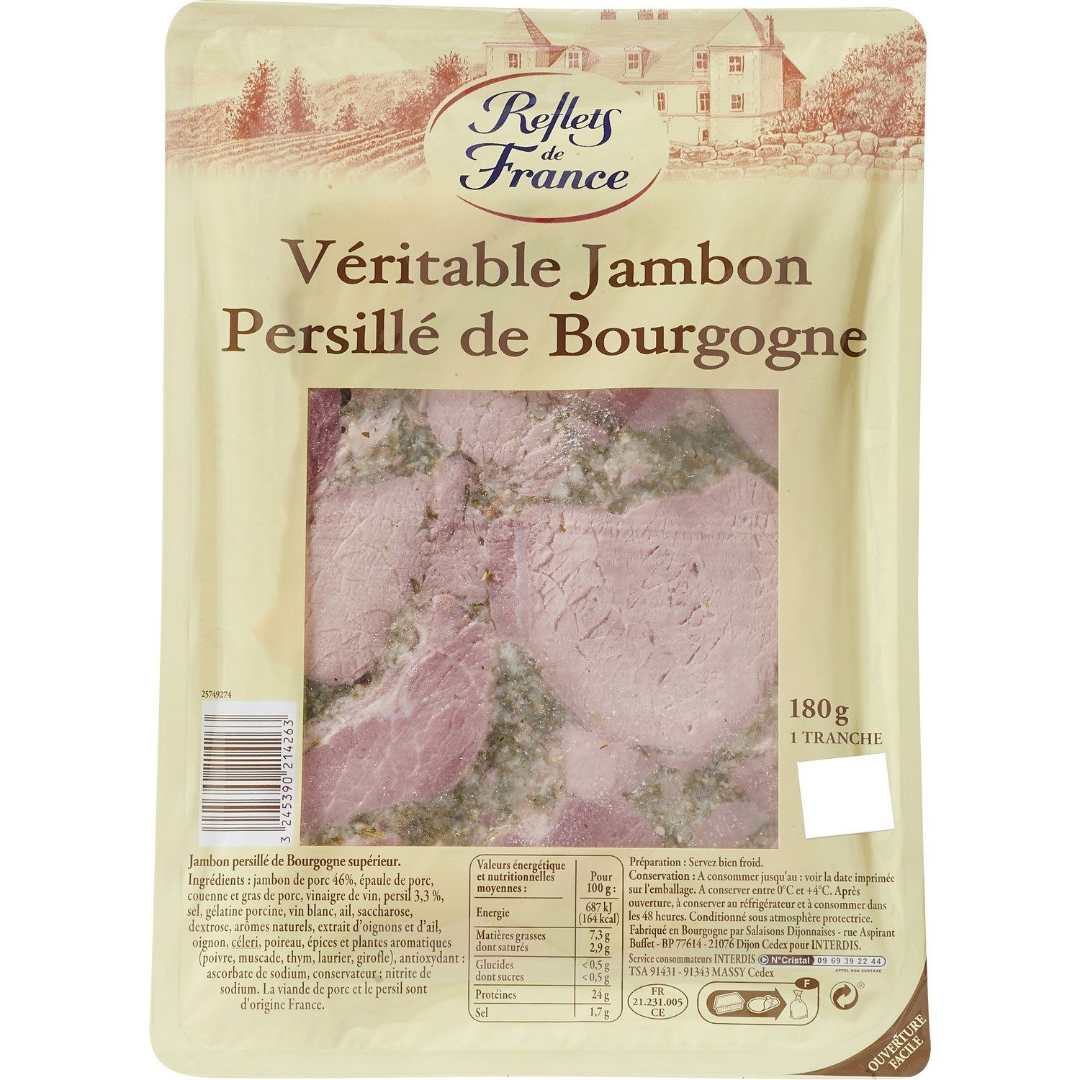
  • Product brand name REFLECTIONS OF FRANCE
  • Model names or references BURGUNDY PERSILLE HAM 180G – 1 slice
  • Product identification
    GTIN Batch Date
    3245390214263 313015 Use-by date 13/12/2023
  • Packaging 180g tray, 1 slice
  • Start/end date of marketing From 11/13/2023 to 11/16/2023
  • Storage temperature Product to keep in the refrigerator
  • Health mark FR 21 231 005 CE
  • Geographical sales area Whole France
  • Distributors Crossroads

FDA – Outbreak Investigation of Listeria monocytogenes: Peaches, Plums, & Nectarines (November 2023)

FDA

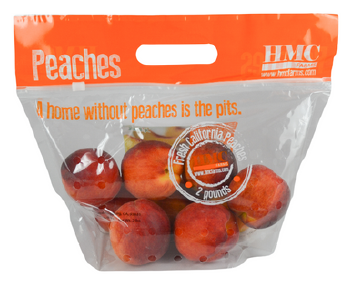
HMC Peaches

Product

Recalled conventional (non-organic) peaches, plums, and nectarines sold in retail stores from May 1, 2022 through November 15, 2022 and from May 1, 2023 through November 15, 2023. The recalled fruit was sold at retail stores nationwide in bags or as individual pieces of fruit with PLU stickers, under multiple brand names, including HMC Farms and Signature Farms. Additionally, the recalled fruit was sold to other manufacturers who may have frozen and/or relabelled the recalled fruit for resale under another brand. The firm has directly notified their customers who received recalled product and this advisory will be updated as more information becomes available.

Recalled fruit is past expiration and no longer available for sale in retail stores but could have been frozen by consumers. Fresh whole peaches, plums, and nectarines currently available for sale at retail are not included in this recall.

Stores Affected

The recalled fruit was distributed nationwide and sold at retail stores in bags or as individual pieces of fruit bearing PLU stickers, under multiple brand names, including HMC Farms and Signature Farms.

Symptoms of Listeriosis (Listeria Infection)

Symptoms usually start within 2 weeks after eating food contaminated with Listeria, but may start as early as the same day or as late as 10 weeks after. Mild symptoms may include a fever, muscle aches, nausea, tiredness, vomiting, and diarrhea. If the more severe form of listeriosis develops, symptoms may include headache, stiff neck, confusion, loss of balance, and convulsions.

Status

Ongoing: Updates to this advisory will be provided as they become available.

Recommendation

  • Do not eat, sell, or serve recalled peaches, plums, or nectarines. The recalled fruit is no longer available for sale and any previously purchased fruit should be past shelf life.
  • If you previously purchased fresh peaches, plums, and nectarines and then froze them, you should throw them away if they are part of the recall or if you cannot tell if they are part of the recall.
  • Anyone who received or purchased recalled peaches, plums and nectarines should use extra vigilance in cleaning and sanitizing any surfaces and containers that may have come in contact with the recalled fruit to reduce the risk of cross-contamination. This includes baking or canning tools, cutting boards, knives, countertops, refrigerators, freezers, and storage bins.
  • If you have symptoms of listeriosis you should contact your health care provider to report your symptoms and receive care.

Recommendations for At-Risk Groups

  • Listeria is most likely to sicken pregnant people and newborns, adults aged 65 or older, and people with weakened immune systems. Other people can be infected with Listeria, but they rarely become seriously ill.
  • Pregnant people typically experience only fever, fatigue, and muscle aches. However, Listeria infection during pregnancy can lead to miscarriage, stillbirth, premature delivery, or life-threatening infection of the newborn.
  • Call your healthcare provider right away if you have symptoms of a Listeria infection.

USA – FDA Leafy Greens STEC Action Plan Updated

FDA

Introduction

Leafy greens are among the most widely consumed vegetables and an important part of an overall healthy diet. However, while millions of servings are consumed safely every day, leafy greens have been repeatedly associated with illnesses caused by Shiga toxin-producing E. coli (STEC), the most common of which is E. coli O157:H7. FDA is committed to breaking this cycle of reoccurring outbreaks.

Over the last several years, the FDA and partners in the public and private sectors have worked to enhance the safety of leafy greens through the development and implementation of the Leafy Greens STEC Action Plan (LGAP). This work includes prioritized inspections, focused sampling, stakeholder engagement and collaboration, data sharing, root cause investigations, and advancements in the science of detection and prevention.

Collectively, this work has expanded our body of knowledge about how and why outbreaks linked to leafy greens have occurred, which has guided and informed the evolution of the action plan over the years. Still, we know that we cannot fix the issue of leafy green contamination on our own. Industry leadership, along with collaboration among growers, processors, retailers, state partners, and the broader agricultural community, is critical to preventing foodborne illness.

The link above goes to a  table that provides the approaches for three priority areas: Prevention, Response, and Addressing Knowledge Gaps, as well as accomplishments that have been made since the action plan launched in March 2020 (updated and current as of October 2023)