Germany – North Sea cheese 55% slices in the 160g bowl -Listeria monocytogenes

Lebensmittelwarnung

Alert type: Groceries
Date of first publication: April 16, 2024
Product name:

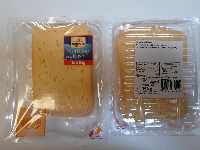
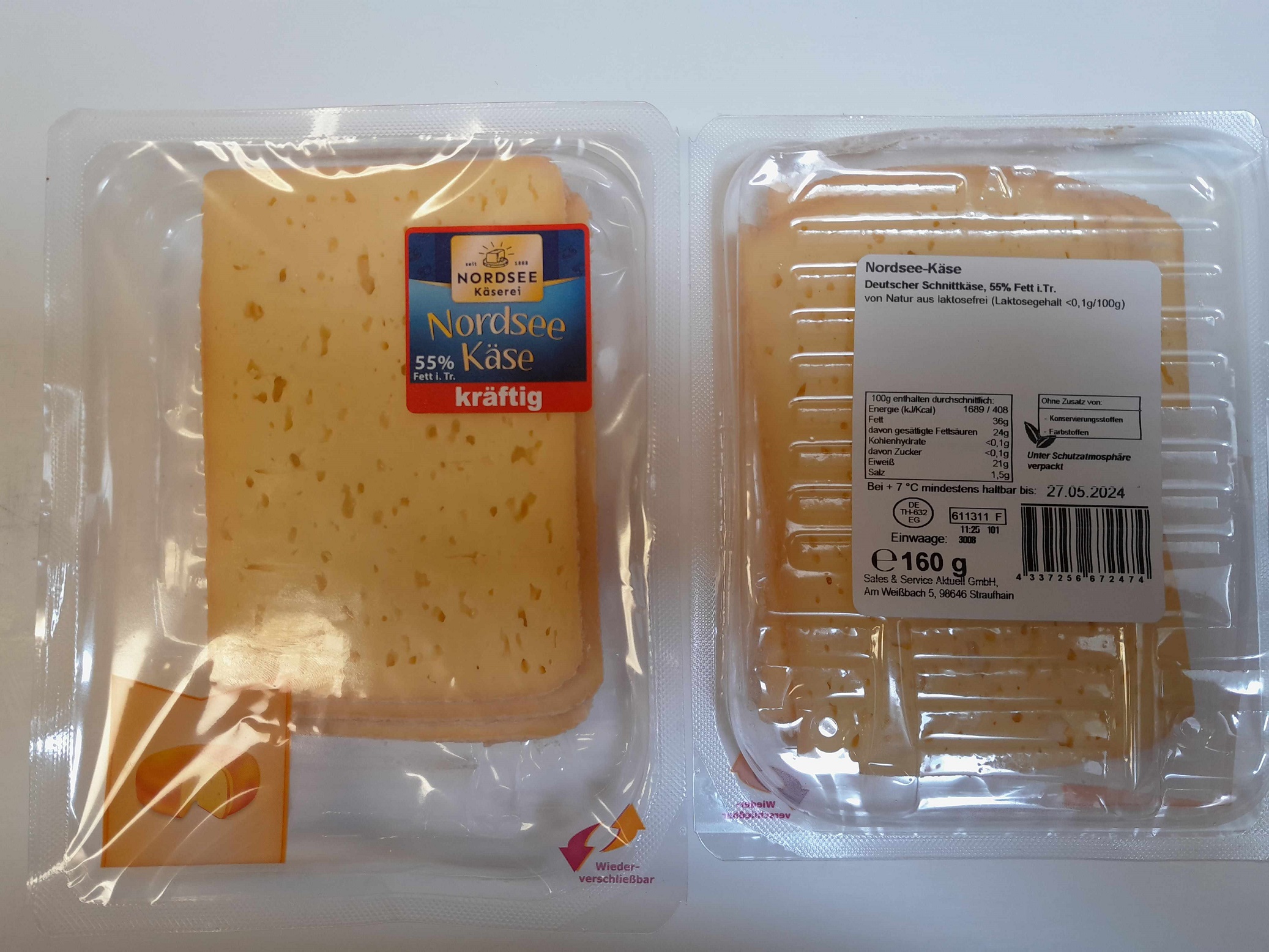
North Sea cheese 55% slices in the 160g bowl

Product images:

20240412_154809 _2.jpg

Product image of North Sea cheese – slices in a 160g bowl

Manufacturer (distributor):

Sales & Service Aktuell GmbH Am Weißbach 5 98646 Straufhain

Reason for warning:

Listeria monocytogenes – bacteria

Packaging Unit: 160g
Durability: May 16, 2024, May 22, 2024 and May 27, 2024
Additional Information:

The company Sales & Service Aktuell GmbH in 98646 Straufhain is carrying out a voluntary recall of the North Sea cheese product.

Unfortunately, microbiological contamination (Listeria monocytogenes) cannot be ruled out.  Due to the suspicion of microbiological contamination, it cannot be ruled out that consumption of the product could lead to health problems.

Click to access 20240412_Marktaushang_S&S_Produktr%FCckruf_Nordseek%E4se-Scheiben.pdf

Germany – North Sea cheese 55% slices in a multi-layer pack, 150g – Listeria monocytogenes

Lebensmittelwarnung

Alert type: Groceries
Date of first publication: April 16, 2024
Product name:

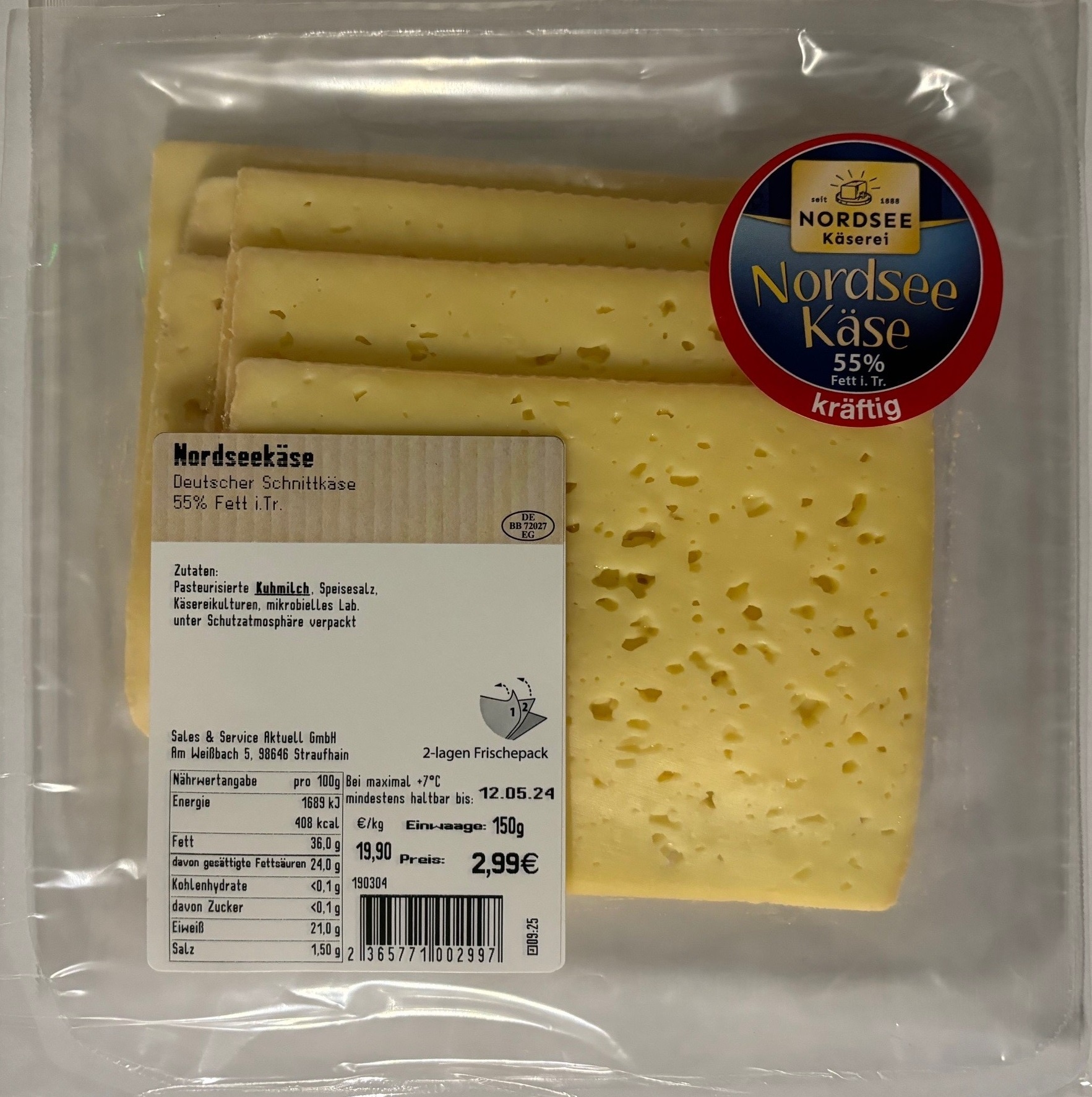
North Sea cheese 55% slices in a multi-layer pack, 150g

Product images:

North Sea Cheese Edeka.jpg

Product image of North Sea cheese – slices in a multi-layer pack, approx. 150 grams

Manufacturer (distributor):

Sales & Service Aktuell GmbH Am Weißbach 5 98646 Straufhain

Reason for warning:

Listeria monocytogenes – bacteria

Packaging Unit: 150g
Durability: 05/11/2024, 05/12/2024, 05/13/2024, 05/14/2024
Lot identification:

320304, 190304, 730304, 300304

Additional Information:

The company Sales & Service Aktuell GmbH in 98646 Straufhain is carrying out a voluntary recall of the North Sea cheese product.

Unfortunately, microbiological contamination (Listeria monocytogenes) cannot be ruled out.  Due to the suspicion of microbiological contamination, it cannot be ruled out that consumption of the product could lead to health problems.

Click to access 20240412_Marktaushang_SS_Produktr%FCckruf_Nordseek%E4se-Scheiben.pdf

France – Cholera: the disease

Sante Publique

Digestive toxic infection , cholera is a notifiable disease due to the ingestion of water or food contaminated by the toxigenic Vibrio cholerae bacilli of serogroups O1 and O139.

Our missions

  • Monitor the epidemiological evolution of cholera and detect cases as soon as they are suspected
  • Allow preventive measures to be adapted to prevent the spread of the disease
  • Inform the general public.

Cholera is an acute digestive toxic infection due to the ingestion of water or food contaminated by toxigenic Vibrio cholerae bacilli of serogroups O1 and O139 (cholera vibrions).

Today, collective and individual sanitation and hygiene measures have led to the disappearance of cholera in France (excluding Guyana and Mayotte, where sporadic and limited epidemics were described in the decades 1990-2000 in the two previous decades). In mainland France, cholera, which is subject to mandatory notification , is in fact a rare imported pathology. Symptomatic cases of cholera are mainly linked to the consumption of contaminated drinks or food abroad.

Early reporting of suspected and confirmed cases, and notification of confirmed cases, takes place from a single case. They enable the management of imported cholera cases as quickly as possible. Between 0 and 2 cases of cholera have been declared each year in France since 2000, they concern travelers returning from endemic areas . This is a low and decreasing number.

Although rare in France, cholera can cause severe digestive symptoms and dehydration. Even if the risks of contamination and epidemic are very limited on French territory, the epidemiological surveillance of Public Health France requires the early reporting of cases as soon as this infection is suspected in order to prevent its spread.

France – THYME LEMON 30GRX2 METRO CHEF – Salmonella

Gov France

Product category
Food
Product subcategory
Herbs and spices
Product brand name
METRO CHEF
Model names or references
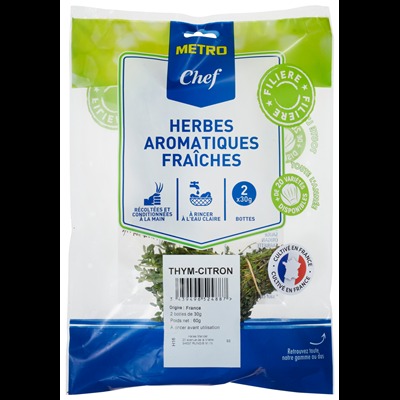
THYME LEMON 30GRX2 METRO CHEF
Product identification
Batch
LF24097; LF24100; LF24101; LF24102; LF24103
Start/end date of marketing
From 04/07/2024 to 04/15/2024
Storage temperature
Product to be stored at room temperature
Geographical sales area
Whole France
Distributors
METRO FRANCE

France – Ham – Listeria monocytogenes

Gov France

Product category
Food
Product subcategory
Meats
Product brand name
LEFORGEAIS
Model names or references
Whole cooked ham 600gr Half ham 380gr ham Stainless steel ham nuts
Product identification
Batch Date
24087; 24088; 24089; 24093 Use-by date between 04/24/2024 and 05/09/2024
Start/end date of marketing
From 03/28/2024 to 04/11/2024
Storage temperature
Product to keep in the refrigerator
Health mark
FR 50-499-001 EEC
Further information
Whole cooked ham 600g (traditional section) Half ham (self-service section) 380g ham (traditional section) Stainless steel ham nuts (traditional section)
Geographical sales area
Whole France
Distributors
LOSTE;LBRV;MLD;FLAVORS OF ANTOINE;;VALLEGRAIN;CANTREL;LES DELICES DU PALAIS;DIPSA;HARCOURTOISE;LE DELAS;PROMO SALE;;SOCOBOMA;ARTHUR;LA RESERVE DU GOUT;FRANCE FRES AUVERGNE;LEDUC;SOCODN;SOUTIFRAIS ;JEANCHARLES;DISFRAIS

UK – Waitrose points to ‘external factors’ for high Campylobacter results

Food Safety News

The Waitrose grocery chain blamed factors outside the control of the retailer and its supply base for poor Campylobacter in chicken results.

The Food Standards Agency (FSA) maximum target level is up to 7 percent of birds with more than 1,000 colony-forming units per gram (CFU/g) of Campylobacter.

Waitrose and Partners reported that 7.1 percent of chickens tested positive for Campylobacter above 1,000 CFU/g from October to December 2023.

Data from the retailers covers the second half of 2023 on high findings of Campylobacter in fresh, shop-bought, UK-produced chickens.

The Sainsbury’s chain has joined retailer Tesco in stopping publishing related data.

“The safety of our products is extremely important to us and we have a range of processes in place to monitor and limit levels of Campylobacter in our fresh chicken. We have consistently achieved the FSA target for Campylobacter levels for several years, so we will no longer be formally reporting on this,” said a Sainsbury’s spokesperson.

Sainsbury’s Campylobacter results for Q2 2023 showed that 1 percent of chickens had levels above 1,000 CFU/g compared to 3 percent in Q1.

Aldi has not updated its related webpage or provided the figures when Food Safety News asked it to do so. The latest data from Q4 2022 shows that 1.7 percent of chickens had levels above 1,000 CFU/g.

Co-op reported chickens contaminated at levels greater than 1,000 CFU/g for the first time since Q3 2021. In Q3 2023, 3.5 percent were above 1,000 CFU/g; in Q4, the figure was 2.6 percent.

Lidl recorded 4 percent of birds in the highest category from July to September and above 2 percent from October to December 2023. The figures were almost 2 percent in the highest category from April to June and 4 percent from January to March.

Marks and Spencer had 1 percent of samples in the top threshold in July, none in August, and 4 percent in September from 376 samples. The retailer also had 3 percent above 1,000 CFU/g in October, none in November, and 3.85 percent in December.

Marks and Spencer had no samples at the highest level from April to June. It also had none above 1,000 CFU/g in January and 1 percent each in February and March 2023 from 376 samples.

Asda reported that 2.42 percent of samples were above 1,000 CFU/g in the third quarter of 2023 and 3.33 percent in the fourth quarter. This compares to 3.6 percent in the first quarter and 3.5 percent in the second quarter.

Morrisons had no chickens contaminated above 1,000 CFU/g for both quarters, compared to 2.3 percent from April to June and 2.4 percent from January to March 2023.

Read in full at the link above.

EU – Listeria monocytogenes in ready-to-eat foods – update of safety criteria –

EC Europa

About this initiative

Summary

This initiative aims to align EU rules with international ‘Codex alimentarius’ standards on the acceptable level of contamination by Listeria monocytogenes of certain categories of ready-to eat food sold on the EU market.

The main objective is to protect consumers’ health while facilitating official controls carried out by the competent authorities in EU countries.

Topic
Food safety
Type of act
Regulation
Committee

Draft act

FEEDBACK: OPEN
Feedback period
10 April 2024 – 08 May 2024  (midnight Brussels time)

The Commission would like to hear your views.

This draft act is open for feedback for 4 weeks. Feedback will be taken into account for finalising this initiative. Feedback received will be published on this site and therefore must adhere to the feedback rules.

In order to contribute you’ll need to register or login using your existing social media account.

Give feedback

Draft regulation – Ares(2024)2627325
English
(362.3 KB – PDF – 3 pages)

Download  

Annex – Ares(2024)2627325
English
(314.1 KB – PDF – 3 pages)

Download  

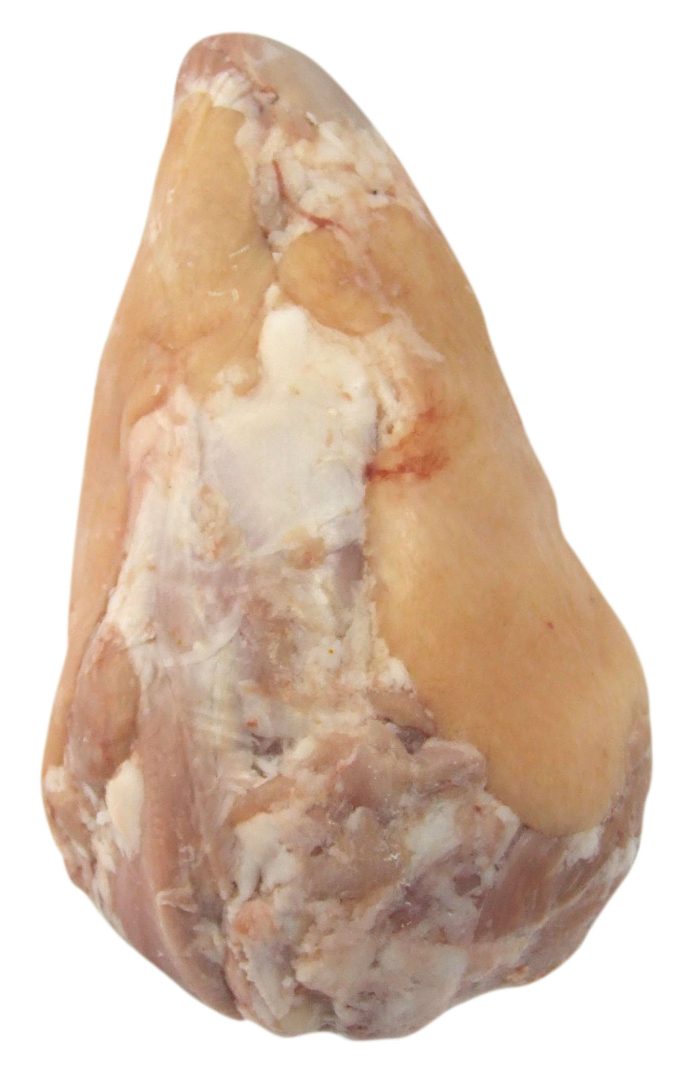
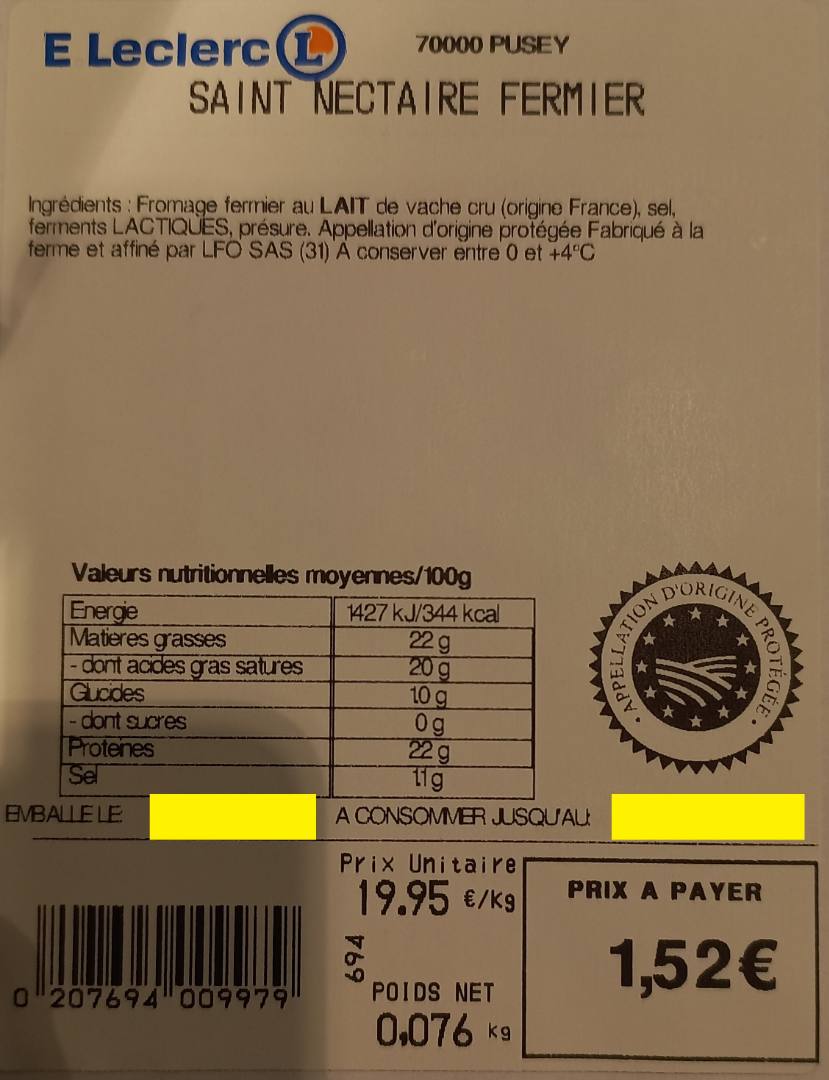
France – SAINT NECTAIRE FARMER – Listeria monocytogenes

Gov France

Product category
Food
Product subcategory
Milk and dairy products
Product brand name
UNBRANDED – CUT AND PACKAGED ON SITE
Model names or references
SAINT NECTAIRE FARMER
Product identification
GTIN Batch Date
0207694000000 Packed on: 03/15/2024 Packed on: 03/19/2024 Use-by date between 03/30/2024 and 04/03/2024
Products List
Posterette_rappel_st_nectaire_fermier_15042024.pdfAttachment
Packaging
Under film
Start/end date of marketing
From 03/15/2024 to 04/03/2024
Storage temperature
Product to keep in the refrigerator
Health mark
/
Geographical sales area
Whole France
Distributors
E. LECLERC PUSEY (70000)

Denmark – Outbreak of invasive Listeria infection Sequence Type 1607

SSI

The Statens Serum Institut is currently investigating a protracted disease outbreak with Listeria monocytogenes in collaboration with the Danish Veterinary and Food Administration and the Norwegian Food Institute DTU.

Listeria infection is a foodborne illness that can cause blood poisoning or meningitis in people who have a weakened immune system. The disease can also be dangerous for pregnant women and their unborn child.

Listeria outbreaks are often long-lasting, the infection can occur for a period of up to several years. The current outbreak includes 17 people who have become ill over a six-year period. Two cases of illness have provisionally been registered in 2024.

A total of 17 people have been infected with the same type of listeria since the summer of 2019. The patients are 13 women and 4 men with a median age of 73 years, with one patient in their 20s and four in their 80s. The patients live throughout the country. All have been hospitalized. Two people have died within 30 days of detection of the infection.

The bacteria is of the type Listeria monocytogenes . By whole-genome sequencing of the Listeria monocytogenes bacteria isolated from the patients, it can be seen that they are very closely related and belong to sequence type 1607.

No source has been identified yet.

Iceland – Salmonella in chicken

MAST

Matvælastofnun warns against the consumption of one batch of fresh chicken from Matfugli ehf. due to suspected salmonella infection. The company has recalled the product and sent out a press release.

The recall only applies to the following production batch:

  • Product name: Ali, Bonus, FK
  • Producer: Matfugl ehf, Völuteigi 2, 270 Mosfellsbær
  • Batch number: 011-24-10-3-64 (whole chicken, breast, tenderloin, thigh meat, pieces, seasoned breast), packing date 09.04.2024 – 11.04.2024
  • Distribution: Bonus stores, Krono stores, Fjarðarkaup, Hagkaup

Customers who have purchased the product in question are encouraged not to consume it, dispose of it or return it to the relevant store or to Matfugl efh, Völuteigi 2, Mosfellsbær.

Advanced material