Category Archives: VTECH

Germany – House brand Italian herb cheese, raw milk cheese – STEC/VTEC E.coli

LMW

Alert type:

Food

Date of first publication:

13.12.2022

Product name:

House brand Italian herb cheese, raw milk cheese

Manufacturer (distributor):

Cattle and horse farm Köber Merkendorf No. 41 07950 Zeulenroda-Triebes

Reason for warning:

Verotoxin-producing Escherichia coli (VTEC) detection

Durability:

03/03/2023

Further information:

For reasons of preventive consumer protection, Rinder- und Pferdehof Köber is recalling the product house brand Italian herb cheese, raw milk cheese (see recall letter in the attachment). Verotoxin-producing Escherichia coli (VTEC) was detected in the product. 

The product was sold from December 3rd, 2022 exclusively via the machines in Silberfeld  .  

Click to access R%FCckruf.pdf

Germany – Salami with Wild Boar – STEC E.coli

LMW

Alert type: Food
Date of first publication: 11/25/2022
Product name:

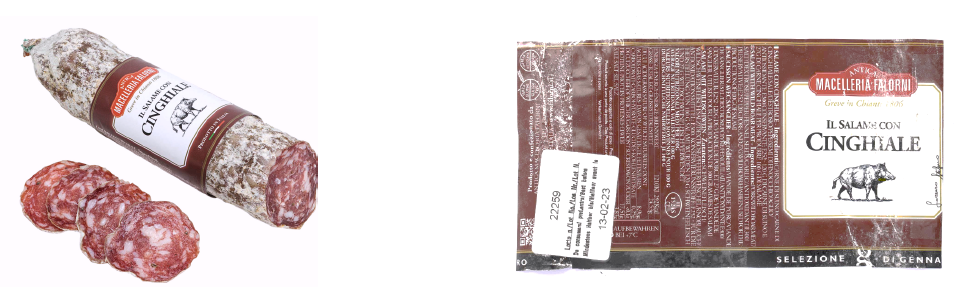
Salame con cinghiale, salami with wild boar, approx. 350 g

Product images:

Unnamed.PNG

recall/press release

Manufacturer (distributor):

Manufacturer: Anitca Macelleria Falorni srl, Piazza G. Matteotti 71, IT-50022 Greve in Chianti (IT) Distributor: Di Gennaro Feinkost- und Weinhandelsgesellschaft mbH

Reason for warning:

The affected product with the batch mentioned should no longer be consumed, as it could possibly be contaminated with verotoxin-forming E. coli (EHEC).

Packaging Unit: 350g
Durability: 02/13/2023
Lot identification: 22259
Further information:

Reference is made to the attached press release from the food company.

Click to access Produktru%08ckruf_Falorni_final.pdf

RASFF Alerts – STEC E.coli – Boneless Beef – Dough for Cookies

RASFF

STEC stx2 in Chilled boneless beef from Brazil in Belgium and Netherlands

RASFF

VTEC/STEC in ready dough for cookies from Germany in Austria

RASFF Alerts- STEC E.coli – Raw Milk Goats Cheese – Boneless Beef – Roe Deer Meat – VP Beef

RASFF-Logo

RASFF-shigatoxin-producing Escherichia coli (O103:H2 stx1+, eae+) in raw milk goat’s cheese from France in France

RASFF-shigatoxin-producing Escherichia coli in frozen boneless beef from Brazil in Italy

RASFF-shigatoxin-producing Escherichia coli (stx1+ /25g) in frozen roe deer meat from the United Kingdom in Italy

RASFF-shigatoxin-producing Escherichia coli (stx2+ /25g) in chilled vacuum packed beef from Argentina in the Netherlands

RASFF Alerts – E.coli – Raw Milk – Minced Beef

RASFF – High count of Escherichia coli (1500 000 CFU/g) in raw milk cheese from France

RASFF – Shigatoxin-producing Escherichia coli (0 26 H 11, STEC or VTEC) in minced beef meat from Italy in France

Central America – 4 Dead E.coli Outbreak

Food Safety NewsEcoli Istock

At least 96 people have been hospitalized and 4 have died in an E. coli outbreak in Guatemala linked to fresh produce.

The outbreak, which has affected residents of the town of Santo Domingo Xenacoj in South Central Guatemala, is thought to have originated with contaminated fruits and vegetables, reported the Associated Press Thursday.

A male resident of the town reported that two of his children, ages 9 and 12, had died in the outbreak, according to AP.

Specimen taken from the four victims who died linked their deaths to E. coli, said health officials.

EFSA – VTEC E.coli Strains

EFSAefsa

EFSA’s scientific experts say that it is currently not possible to identify which VTEC bacteria strains have the potential to cause human diseases. In order to help risk managers to identify human health risks, EFSA has proposed a scheme to categorise VTEC strains according to their potential to cause disease. This work has been carried out in response to a request of the Austrian Federal Ministry of Health.

VTEC (verocytotoxin-producing Escherichia coli) is a group of pathogenic E. coli bacteria that can cause bloody diarrhoea and haemolytic uremic syndrome in humans, a serious condition that can lead to kidney failure and be fatal [1].

EFSA’s Panel on Biological Hazards (BIOHAZ) has evaluated data from the EU on different VTEC strains with respect to their reported frequency, severity of human disease caused by the strains, and association with outbreaks. The Panel concluded that it is currently not possible to fully predict the potential of a VTEC strain found in food to cause human disease.

However the Panel has provided guidance to assist public health authorities in assessing risks related to VTEC strains. They proposed a scheme that considers the detection of specific genes in VTEC strains from humans, food and animals. EFSA will regularly review this scheme to improve future risk assessments.

Due to under-reporting of human cases and the unavailability of complete information, EFSA’s scientific experts also recommended that all Member States collect comprehensive data on VTEC strains when these are detected. Accurate reporting will help in predicting the factors responsible for the severity of human infections and outbreaks.

To carry out this evaluation, the Panel used data from the European Surveillance System (TESSy data) provided by the European Centre for Disease Prevention and Control and from the EU Summary Report on Trends and Sources of Zoonoses, Zoonotic Agents and Food-borne Outbreaks in 2011published today as well as data from relevant scientific literature.