Category Archives: Virus

USA – Scenic Fruit Company Recalls Frozen Organic Strawberries and Frozen Organic Tropical Fruit Blend Because of Possible Health Risk – Hepatitis A

FDA

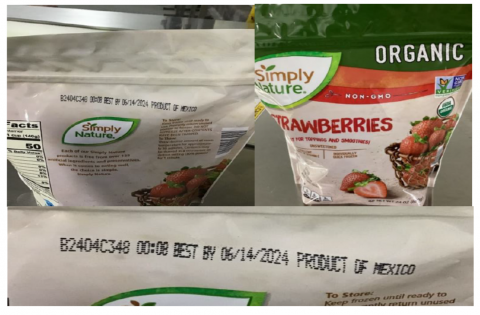
Simply Nature

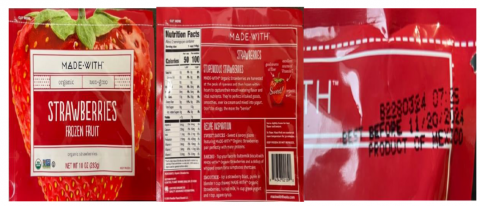
Made With

Kirkland Signature

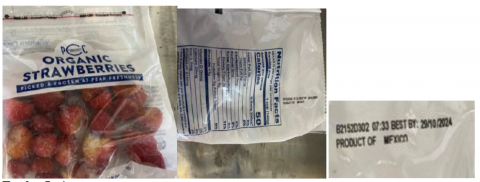
PCC Community Markets

Trader Joe’s

March 16, 2023, Scenic Fruit Company of Gresham, Oregon is recalling frozen Organic Strawberries sold to Costco, Aldi, KeHE, Vital Choice Seafood, PCC Community Markets and frozen Organic Tropical Fruit Blend sold to Trader Joe’s due to an outbreak of Hepatitis A illnesses.

Hepatitis A is a contagious liver disease that results from exposure to the Hepatitis A virus, including from food. It can range from a mild illness lasting a few weeks to a serious illness lasting several months. In rare cases, particularly consumers who have a pre-existing severe illness or are immune compromised, Hepatitis A infection can progress to liver failure.

Illness occurs within 15 to 50 days of exposure and includes fatigue, abdominal pain, jaundice, abnormal liver tests, dark urine, and pale stool. Hepatitis A vaccination can prevent illness if given within two weeks of exposure to a contaminated food. Persons who may have consumed affected product should consult with their health care professional or local health department to determine if a vaccination is appropriate, and consumers with symptoms of Hepatitis A should contact their health care professionals or the local health department immediately.

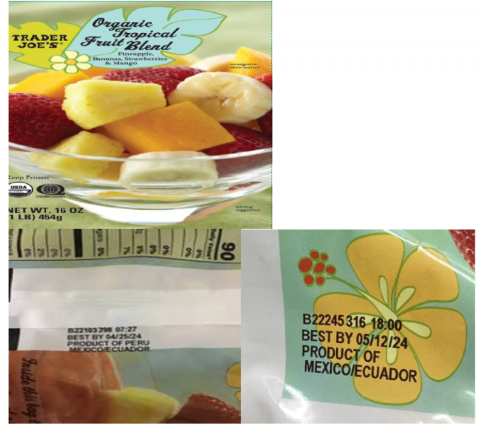
The following products are subject to this recall. The lot codes and best by dates are found on the back of each bag (see attached pictures below):

Brand Name Product Name Net Wt. UPC Best By Dates
Best If Use Dates
Best Before Date
Distributed in States
Simply Nature Organic Strawberries 24 oz. 4099100256222 6/14/2024 California, Minnesota,
Missouri, Ohio, Wisconsin.
Vital Choice Organic Strawberries 16 oz. 834297005024 5/20/2024 Washington
Kirkland Signature Organic Strawberries 4 lbs. 96619140404 10/8/2024 Alaska, Idaho, Montana,
Oregon, Utah, Washington.
Made With Organic Strawberries 10 oz. 814343021390 11/20/2024 Illinois, Maryland
PCC Community
Markets
Organic Strawberries 32 oz. 22827109469 29/10/2024 Washington
Trader Joe’s Organic Tropical Fruit
Blend Pineapple,
Bananas, Strawberries
& Mango
16 oz 00511919 04/25/24
05/12/24
05/23/24
05/30/24
06/07/24
Nationwide

Although Hepatitis A has not been detected on this product, out of an abundance of caution, consumers should stop consuming the product and return it to their local store for a refund. The company has ceased the production and distribution of the product as FDA and the company continue their investigation as to what caused the problem.

All inventories of the affected lot should be removed from sale. Consumers who have purchased the products are urged to destroy or return it to the place of purchase for a full refund. Consumers with questions may contact the company at customer.service@scenicfruit.com
USA – Another Hepatitis A recall linked to Strawberries

Food Poison Journal

We have been alerted by our supplier of Trader Joe’s Organic Tropical Fruit Blend (SKU# 51191) that product with BEST BY dates of 04/25/24, 05/12/24, 05/23/24, 05/30/24, and 06/07/24 may have the potential to be contaminated with Hepatitis A.

No illnesses have been reported to date, and all potentially affected product has been removed from sale and destroyed.

If you purchased any Organic Tropical Fruit Blend, please do not eat it. We urge you to discard the product.

USA – California Splendor, Inc. Recalls Kirkland Brand Bags of Frozen Organic Whole Strawberries Distributed by Costco in Los Angeles, Hawaii, and in Two San Diego Business Centers Because of Possible Health Risk – Hepatitis A

FDA

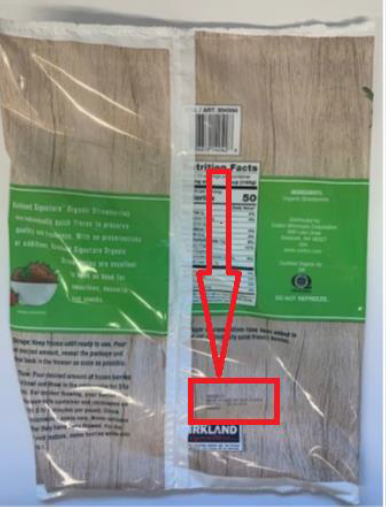
Kirkland Signature Frozen Organic Strawberries, back of bag label

California Splendor, Inc. of San Diego, California is recalling certain lots of 4-lb. bags of Kirkland Signature Frozen Organic Strawberries that were sold at Costco stores in Los Angeles, Hawaii and two San Diego business centers, due to an outbreak of Hepatitis A illnesses. Although, Hepatitis A has not been detected on this product, out of an abundance of caution, consumers should stop consuming the food and return it to their local Costco store for a refund.

Hepatitis A is a contagious liver disease that results from exposure to the Hepatitis A virus, including from food. It can range from a mild illness lasting a few weeks to a serious illness lasting several months. Illness generally occurs within 15 to 50 days of exposure and includes fatigue, abdominal pain, jaundice, abnormal liver tests, dark urine and pale stool. In rare cases, particularly consumers who have a pre-existing severe illness or are immune compromised, Hepatitis A infection can progress to liver failure.

Illness occurs within 15 to 50 days of exposure and includes fatigue, abdominal pain, jaundice, abnormal liver tests, dark urine and pale stool. Hepatitis A vaccination can prevent illness if given within two weeks of exposure to a contaminated food. Persons who may have consumed affected product should consult with their health care professional or local health department to determine if a vaccination is appropriate, and consumers with symptoms of Hepatitis A should contact their health care professionals or the local health department immediately.

The lots subject to this recall are as follows:

140962-08 142222-23 142792-54 142862-57 142912-59
142162-20 142202-21 142782-53 142852-56 142902-58
142212-22 142232-24 142842-55

The lot number can be identified on the back of the bag as shown below:

The company has ceased the production and distribution of the affected product as FDA and the company continue their investigation as to what caused the problem.

Consumers with questions may email the company at consumerinformation@calsplendor.com.


Company Contact Information

Consumers:
California Splendor, Inc.
 consumerinformation@calsplendor.com

RASFF Alert – Food born outbreak due to Norovirus in mussels

RASFF

Food born outbreak due to norovirus in mussels from Sweden in Norway

RASFF Alerts – Norovirus – Oysters

RASFF

Norovirus in oysters from France in Italy

RASFF

Norovirus in oysters ((Crassostrea gigas) in Sweden and Finland origin unknown

RASFF

Norovirus in oysters from France in Sweden

Food Safety News – USA- Publisher’s Platform: It’s time to deal with hepatitis A and food service workers

Food Safety News

The Advisory Committee on Immunization Practices (ACIP) provides advice and guidance to the Director of the CDC regarding use of vaccines and related agents for control of vaccine-preventable diseases in the civilian population of the United States. Recommendations made by the ACIP are reviewed by the CDC Director and, if adopted, are published as official CDC/HHS recommendations in the Morbidity and Mortality Weekly Report (MMWR).

Presently, approximately 5% of all hepatitis A outbreaks are linked to infected food-handlers.

Here is what the CDC continues to say about vaccinating food-handlers:

Why does CDC not recommend all food handlers be vaccinated if an infected food handler can spread disease during outbreaks?

Research- Development of an Extraction Method to Detect Hepatitis A Virus, Hepatitis E Virus, and Noroviruses in Fish Products

MDPI

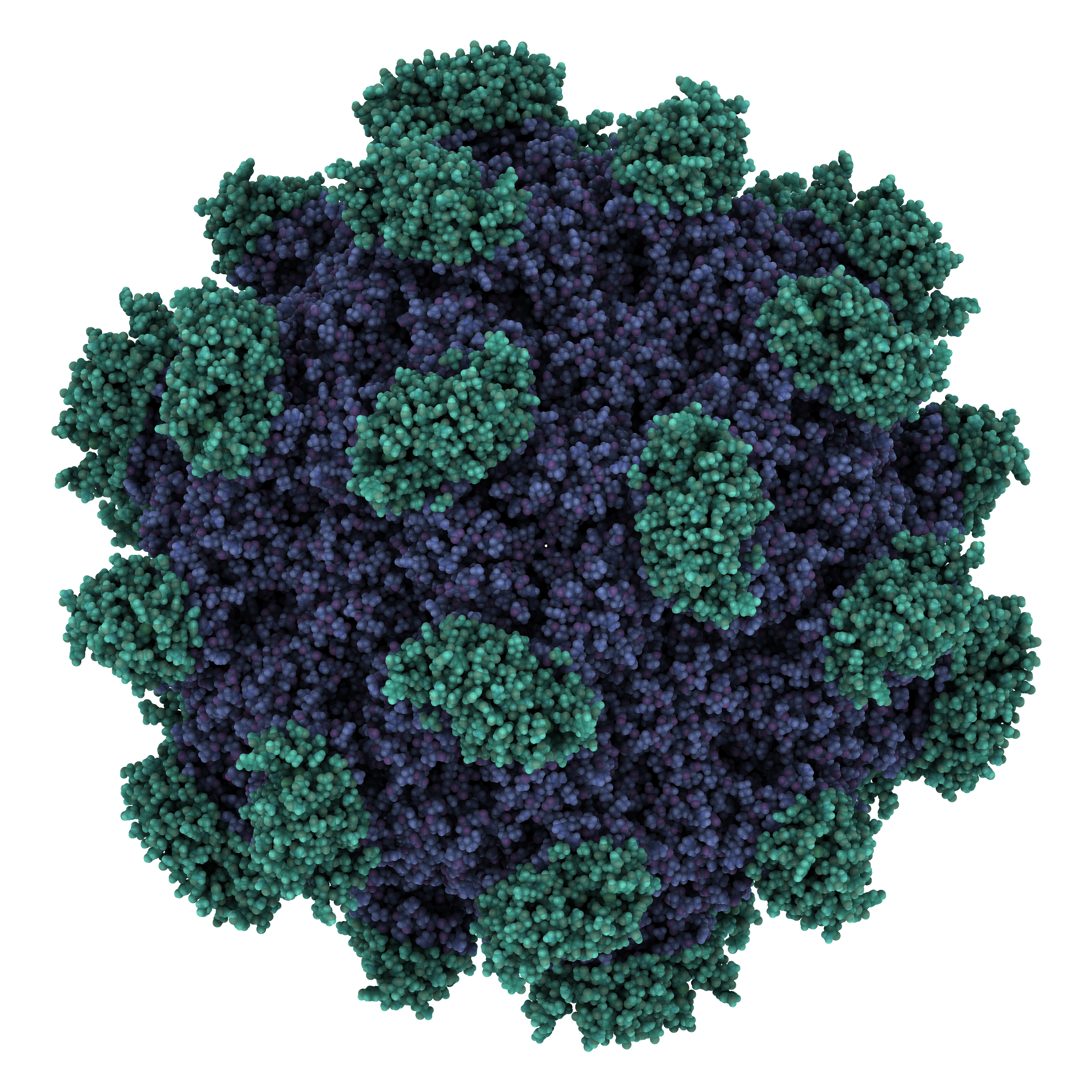
Hepatitis E virus capsid structure. HEV infection causes viral hepatitis. Atomic-level structure.

Abstract

Viruses are a leading cause of foodborne disease worldwide. Hepatitis viruses (hepatitis A (HAV) and hepatitis E (HEV)) and human norovirus are recognized as the main viruses of public health concern in food hygiene. ISO 15216 approved procedures are not validated for detection of HAV and human norovirus in foodstuffs, such as fishes, leading to an inability to ensure the safety of these products. This study aimed to provide a rapid and sensitive method for detecting these targets in fish products. An existing method that includes proteinase K treatment was selected for further validation using artificially contaminated fish products, according to the recent international standard ISO 16140-4. Recovery efficiencies in pure RNA extracts of viruses ranged from 0.2% to 66.2% for HAV, 4.0% to 100.0% for HEV, 2.2% to 100.0% for norovirus GI, and 0.2% to 12.5% for norovirus GII. LOD50 values were between 144 and 8.4 × 10⁴ genome copies/g for HAV and HEV, and 104 and 2.0 × 10³ copies/g for norovirus GI and norovirus GII, respectively. LOD95 values were between 3.2 × 10³ and 3.6 × 10⁵ genome copies/g for HAV and HEV, and between 8.8 × 10³ and 4.4 × 10⁴ genome copies/g for norovirus GI and norovirus GII, respectively. The method developed here was successfully validated in various fish products and can be applied for routine diagnostic needs.

USA – New Hepatitis A outbreak discovered; other outbreak investigations continue

Food Safety News

Federal officials have identified a new outbreak of hepatitis A infections suspected to be from a food source.

The Food and Drug Administration reports that it has begun product traceback efforts, but the agency has not named the product or products being traced.

As of March 1 there have been nine patients identified. The FDA has not reported where the patients live or their ages.

Hepatitis A can be transmitted when food handlers have contaminated hands. This contamination usually comes from microscopic amounts of feces. Thorough hand washing is one of the best ways to prevent transmission of the disease. Food surfaces can become contaminated as well as foods and beverages.

RASFF Alerts – Norovirus – Oysters – Lettuce

RASFF

Presence of viral genome (NOROVIRUS GENOGRUPS I – II) in CONCAVE OYSTER (Crassostrea gigas) from SPAIN in Ital

RASFF

Norovirus in oysters from The Netherlands in Belgium

RASFF

Presence of Norovirus GII in lettuce produced in Italy with raw material from Spain in Italy

RASFF

Norovirus (GI and GII /2g) in live oysters (Crassostrea gigas) from France in Italy

Research – Prevalence of Foodborne Viruses in Berries Harvested in Canada

MDPI

Abstract

It is known that the transmission of different foodborne viruses can occur either via discharge of contaminated water close to the production environment or via close contact with animal feces. Cranberries are intimately associated with water throughout their production cycle, and blueberries grow close to the ground which could lead to contact with wildlife. The aim of this study was to evaluate the prevalence of human norovirus (HuNoV GI and GII), hepatitis A virus (HAV) and hepatitis E virus (HEV) in two berries produced commercially in Canada. The detection of HuNoV and HAV on RTE cranberries and of HEV on wild blueberries was evaluated using the ISO method 15216-1:2017. Only 3 of 234 cranberry samples tested positive for HuNoV GI (3.6, 7.4, 5.3 genome copies/g, respectively) and all were negative for HuNoV GII and HAV. PMA pre-treatment and sequencing confirmed the absence of potential intact HuNoV GI particles on cranberries. None of the 150 blueberry samples tested positive for HEV. Overall, the prevalence of foodborne viruses in RTE cranberries and wild blueberries harvested in Canada is low, making these products relatively safe for consumers.