Category Archives: Vibrio

France – Refrigerated thawed raw shrimp – Vibrio vulnificus

Gov France

Product Category
Food
Product subcategory
Fishery and aquaculture products
Product brand name
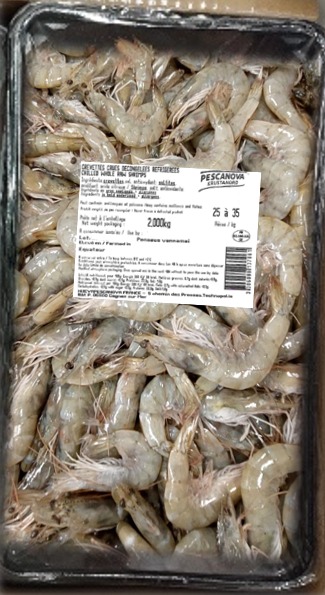
PESCANOVA KRUSTANORD
Model names or references
Whole raw shrimp 25/35
Product identification
GTIN Batch Date
3306080137061 74366 Expiry date 09/09/2024
3306080137061 74700 Expiry date 09/15/2024
3306080137061 74844 Expiry date 09/16/2024
Packaging
2kg plastic tray
Start/End of marketing date
From 03/09/2024 to 06/09/2024
Storage temperature
Product to be kept in the refrigerator
Health mark
FR 62.160.121 CE
Additional information
Products sold in the traditional section
Geographic area of ​​sale
Whole France
Distributors
Intermarche

Hong Kong – CFS found excessive Vibrio parahaemolyticus in sample of clam in preserved fish sauce.

Gov HK

The Centre for Food Safety (CFS) of the Food and Environmental Hygiene Department said today (September 5) that it is actively following up on food poisoning clusters involving clam in preserved fish sauce, including inspecting the food premises concerned. A sample of clam in preserved fish sauce collected from the food premises concerned was found to contain an excessive amount of Vibrio parahaemolyticus. The CFS is following up on the case.

“Upon notification by the Centre for Health Protection of the Department of Health earlier, the CFS immediately sent staff to the food premises concerned in Mong Kok to conduct an investigation and collected a sample of clam in preserved fish sauce and sent to laboratory for testing. The test result showed that the sample contained Vibrio parahaemolyticus at a level of 1 400 000 per gram. According to the Microbiological Guidelines for Food, if ready-to-eat food contains Vibrio parahaemolyticus at a level of more than 1 000 per gram, it is considered unsatisfactory,” a CFS spokesman said.

The CFS has informed the food premises concerned of the irregularity. The food premises concerned have already stopped selling and discarded the affected product according to the CFS’s advice. The CFS has also provided health education on food safety and hygiene to the person-in-charge and staff of the food premises concerned, and requested that they review and improve the food production process and carry out thorough cleaning and disinfection. Prosecution will be instituted should there be sufficient evidence.

According to section 54 of the Public Health and Municipal Services Ordinance (Cap. 132), all food available for sale in Hong Kong, imported or locally produced, should be fit for human consumption. An offender is subject to a maximum fine of $50,000 and imprisonment for six months upon conviction.

“Vibrio parahaemolyticus, a common bacterium that can cause food poisoning, is naturally present in seawater and often found in seafood. Food poisoning caused by this pathogenic bacterium is usually associated with consumption of undercooked or raw seafood, in particular shellfish, or improperly handled food that is contaminated with bacteria. Common symptoms of food poisoning caused by Vibrio parahaemolyticus, including diarrhoea, vomiting, mild fever and abdominal pain, usually occur within one or two days after consumption of contaminated food. Recovery is usually within a few days. Nonetheless, children, the elderly, pregnant women and those with a weaker immune system are more likely to develop severe symptoms,” the spokesman said.

​The CFS will continue to follow up on the incident and take appropriate action to safeguard food safety and public health.

Ends/Thursday, September 5, 2024
Issued at HKT 18:26

Hong Kong – CHP investigates two food poisoning clusters

Gov HK

The Centre for Health Protection (CHP) of the Department of Health is today (August 30) investigating two epidemiologically linked food poisoning clusters affecting nine persons, and reminded the public to maintain personal, food and environmental hygiene to prevent foodborne diseases.

The first cluster involved two males and four females, aged between 36 and 46, who developed abdominal pain, diarrhoea, nausea, vomiting, and fever about 10 to 15 hours after having dinner at a restaurant in Mong Kok on August 28.

The other cluster involved one male and two females, aged between 28 and 30, who developed similar symptoms about nine to 31 hours after having dinner at the same restaurant on the same day.

Among the nine affected persons, five of them sought medical advice. Two of them required hospitalisation. The stool specimen of one affected person was positive for Vibrio parahaemolyticus upon laboratory testing. All patients are in stable condition.

Initial investigations by the CHP revealed that the affected persons had consumed common food and the food concerned was clam in preserved fish sauce. The incident might have been caused by Vibrio parahaemolyticus.

Personnel from the Centre for Food Safety (CFS) of the Food and Environmental Hygiene Department conducted an inspection at the restaurant, took food sample for examination, and instructed the premises concerned to suspend the sale of relevant food as well as carry out cleaning and disinfection of the premises. The CFS has also provided health education related to food safety and environmental hygiene to the staff of the premises. The investigations of the CHP and the CFS are ongoing.

Research – Public health aspects of Vibrio spp. related to the consumption of seafood in the EU

EFSA

Abstract

Vibrio parahaemolyticus, Vibrio vulnificus and non‐O1/non‐O139 Vibrio cholerae are the Vibrio spp. of highest relevance for public health in the EU through seafood consumption. Infection with V. parahaemolyticus is associated with the haemolysins thermostable direct haemolysin (TDH) and TDH‐related haemolysin (TRH) and mainly leads to acute gastroenteritis. V. vulnificus infections can lead to sepsis and death in susceptible individuals. V. cholerae non‐O1/non‐O139 can cause mild gastroenteritis or lead to severe infections, including sepsis, in susceptible individuals. The pooled prevalence estimate in seafood is 19.6% (95% CI 13.7–27.4), 6.1% (95% CI 3.0–11.8) and 4.1% (95% CI 2.4–6.9) for V. parahaemolyticus, V. vulnificus and non‐choleragenic V. cholerae, respectively. Approximately one out of five V. parahaemolyticus‐positive samples contain pathogenic strains. A large spectrum of antimicrobial resistances, some of which are intrinsic, has been found in vibrios isolated from seafood or food‐borne infections in Europe. Genes conferring resistance to medically important antimicrobials and associated with mobile genetic elements are increasingly detected in vibrios. Temperature and salinity are the most relevant drivers for Vibrio abundance in the aquatic environment. It is anticipated that the occurrence and levels of the relevant Vibrio spp. in seafood will increase in response to coastal warming and extreme weather events, especially in low‐salinity/brackish waters. While some measures, like high‐pressure processing, irradiation or depuration reduce the levels of Vibrio spp. in seafood, maintaining the cold chain is important to prevent their growth. Available risk assessments addressed V. parahaemolyticus in various types of seafood and V. vulnificus in raw oysters and octopus. A quantitative microbiological risk assessment relevant in an EU context would be V. parahaemolyticus in bivalve molluscs (oysters), evaluating the effect of mitigations, especially in a climate change scenario. Knowledge gaps related to Vibrio spp. in seafood and aquatic environments are identified and future research needs are prioritised.

Hong Kong – CHP investigates two food poisoning clusters

Gov HK

  The Centre for Health Protection (CHP) of the Department of Health is today (July 25) investigating two epidemiologically linked food poisoning clusters affecting tourists of inbound tour groups from the Mainland. The CHP reminded the public to maintain personal, food and environmental hygiene to prevent foodborne diseases.

     All affected persons had meals in Hong Kong and subsequently travelled to Macao with the tour groups and sought medical advice there. According to the epidemiological investigations by the CHP and Macao authorities, two clusters with 13 affected persons were identified.

     The first cluster involved five males and three females aged between 48 and 68, who developed abdominal pain, nausea, vomiting and diarrhoea about 14 hours after having lunch in a restaurant in To Kwa Wan on July 22. The stool sample of one of the patients tested positive for Vibrio parahaemolyticus.

     The other cluster involved two males and three females aged between 26 and 57, who developed similar symptoms about nine hours after having lunch in the same restaurant on the same day.

     All affected persons have sought medical advice in Macao. None of them required hospitalisation and all of them are in stable condition.

     Initial investigations revealed that the affected persons aforementioned had consumed common food, while some other tour groups also patronised the restaurant. The CHP is currently contacting other tour groups to find out if they are being affected. The personnel from the Centre for Food Safety (CFS) of the Food and Environmental Hygiene Department have conducted an inspection at the restaurant. The investigations of the CHP and the CFS are ongoing.

Research – EFSA – Vibrio bacteria in seafood: increased risk due to climate change and antimicrobial resistance

EFSA

The prevalence of Vibrio in seafood is expected to increase both globally and in Europe because of climate change, especially in low-salinity or brackish waters, according to EFSA’s latest assessment. Additionally, resistance to last-resort antibiotics is increasingly found in some Vibrio species .

Research – Public health aspects of Vibrio spp. related to the consumption of seafood in the EU

EFSA

Abstract

Vibrio parahaemolyticus, Vibrio vulnificus and non- O1/non- O139 Vibrio cholerae are the Vibrio spp. of highest relevance for public health in the EU through seafood consumption. Infection with V. parahaemolyticus is associated with the haemolysins thermostable direct haemolysin (TDH) and TDH-related haemolysin (TRH)and mainly leads to acute gastroenteritis. V. vulnificus infections can lead to sepsis and death in susceptible individuals. V. cholerae non- O1/non- O139 can cause mild gastroenteritis or lead to severe infections, including sepsis, in susceptible individuals. The pooled prevalence estimate in seafood is 19.6% (95% CI 13.7–27.4),6.1% (95% CI 3.0–11.8) and 4.1% (95% CI 2.4–6.9) for V. parahaemolyticus, V. vulnificus and non-choleragenic V. cholerae, respectively. Approximately one out of five V. parahaemolyticus-positive samples contain pathogenic strains. A large spectrum of antimicrobial resistances, some of which are intrinsic, has been found in vibrios isolated from seafood or food-borne infections in Europe. Genes conferring resistance to medically important antimicrobials and associated with mobile genetic elements are increasingly detected in vibrios. Temperature and salinity are the most relevant drivers for Vibrio abundance in the aquatic environment. It is anticipated that the occurrence and levels of the relevant Vibrio spp. in seafood will increase in response to coastal warming and extreme weather events, especially in low-salinity/brackish waters. While some measures, like high-pressure processing, irradiation or depuration reduce the levels of Vibrio spp. in seafood, maintaining the cold chain is important to prevent their growth. Available risk assessments ad-dressed V. parahaemolyticus in various types of seafood and V. vulnificus in raw oysters and octopus. A quantitative microbiological risk assessment relevant in an EU context would be V. parahaemolyticus in bivalve molluscs (oysters), evaluating the effect of mitigations, especially in a climate change scenario. Knowledge gaps related to Vibrio spp. in seafood and aquatic environments are identified and future research needs are prioritised.

USA- Research – Reported Incidence of Infections Caused by Pathogens Transmitted Commonly Through Food: Impact of Increased Use of Culture-Independent Diagnostic Tests —Foodborne Diseases Active Surveillance Network, 1996–2023

CDC

Reducing foodborne disease incidence is a public health priority. This report summarizes preliminary 2023 Foodborne Diseases Active Surveillance Network (FoodNet) data and highlights efforts to increase the representativeness of FoodNet. During 2023, inci-
dences of domestically acquired campylobacteriosis, Shiga toxin- producing Escherichia coli infection, yersiniosis, vibriosis, and cyclosporiasis increased, whereas those of listeriosis, salmonellosis, and shigellosis remained stable compared with incidences during 2016–2018, the baseline used for tracking progress towards federal disease reduction goals. During 2023, the incidence and percent- age of infections diagnosed by culture-independent diagnostic
tests (CIDTs) reported to FoodNet continued to increase, and the percentage of cases that yielded an isolate decreased, affecting observed trends in incidence. Because CIDTs allow for diagnosis of infections that previously would have gone undetected, lack of progress toward disease reduction goals might reflect changing diagnostic practices rather than an actual increase in incidence. Continued surveillance is needed to monitor the impact of chang-
ing diagnostic practices on disease trends, and targeted prevention efforts are needed to meet disease reduction goals. During 2023, FoodNet expanded its catchment area for the first time since 2004. This expansion improved the representativeness of the FoodNet
catchment area, the ability of FoodNet to monitor trends in disease incidence, and the generalizability of FoodNet data.

RASFF Alert- Vibrio parahaemolyticus – Frozen Prawns

RASFF

Vibrio parahaemolyticus in frozen prawns from Vietnam in France

France – FROZEN WHOLE RAW TROPICAL SHRIMP 400G – Vibrio vulnificus

Gov France

Product Category
Food
Product subcategory
Fishing and aquaculture products
Product brand name
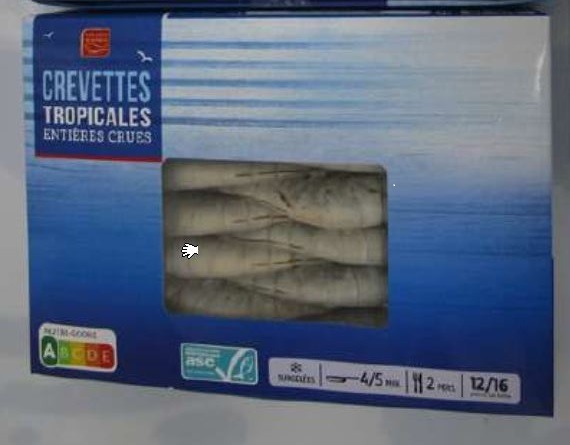
GOLDEN SEAFOOD
Model names or references
FROZEN WHOLE RAW TROPICAL SHRIMP 400G
Product identification
GTIN Batch Date
26048741 VN 089 V 101NTSF17 ALDIFR 23057B Minimum durability date 10/22/2025
Packaging
400G
Start/End of marketing date
From 03/18/2024 to 06/05/2024
Storage temperature
Product to be stored in the freezer
Health mark
DL 89
Geographic area of ​​sale
Whole France
Distributors
ALDI