Category Archives: Vibrio

RASFF Alert- Vibrio parahaemolyticus – Shrimps

RASFF

Presence of vibrio parahaemolyticus in frozen aquaculture shrimps from Ecuador in Greece

RASFF Alert – Vibrio cholerae – Shrimps

RASFF

Detection of Vibrio cholerae in shrimps from Ecuador in Spain

Research – Climate warming and increasing Vibrio vulnificus infections in North America

Nature.com

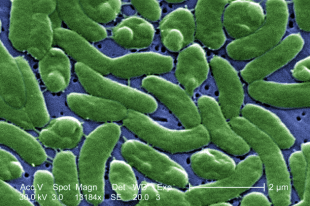
Vibrio_vulnificus_01

Vibrio vulnificus is an opportunistic bacterial pathogen, occurring in warm low-salinity waters. V. vulnificus wound infections due to seawater exposure are infrequent but mortality rates are high (~ 18%). Seawater bacterial concentrations are increasing but changing disease pattern assessments or climate change projections are rare. Here, using a 30-year database of V. vulnificus cases for the Eastern USA, changing disease distribution was assessed. An ecological niche model was developed, trained and validated to identify links to oceanographic and climate data. This model was used to predict future disease distribution using data simulated by seven Global Climate Models (GCMs) which belong to the newest Coupled Model Intercomparison Project (CMIP6). Risk was estimated by calculating the total population within 200 km of the disease distribution. Predictions were generated for different “pathways” of global socioeconomic development which incorporate projections of greenhouse gas emissions and demographic change. In Eastern USA between 1988 and 2018, V. vulnificus wound infections increased eightfold (10–80 cases p.a.) and the northern case limit shifted northwards 48 km p.a. By 2041–2060, V. vulnificus infections may expand their current range to encompass major population centres around New York (40.7°N). Combined with a growing and increasingly elderly population, annual case numbers may double. By 2081–2100 V. vulnificus infections may be present in every Eastern USA State under medium-to-high future emissions and warming. The projected expansion of V. vulnificus wound infections stresses the need for increased individual and public health awareness in these areas.

RASFF Alert- Vibrio cholerae – Shrimp

RASFF

Presence of Vibrio cholerae in Penaeus (Litopaneaus) vannamei from Ecuador in Spain

Research – Surveillance of Vibrio parahaemolyticus pathogens recovered from ready-to-eat foods

Nature.com

This study examined the occurrence of V. parahaemolyticus from ready-to-eat (RTE) food in Delta State, Nigeria. It also characterized antibiotic resistance and virulence gene profile patterns to determine the associated health risk hazard. Food samples total of 380 were collected randomly and assessed for V. parahaemolyticusV. parahaemolyticus isolates were characterized for their virulence and antibiogram potentials using a phenotypic and polymerase chain reaction (PCR) approach. A total of 42 (11.1%) samples were contaminated with V. parahaemolyticus. In 17/42 (40.5%) of the V. parahaemolyticus-positive samples, the densities were < 10 MPN/g. However, 19/42 (45.2%) and 6/42 (14.3%) of the samples had densities of 10 – 102 and > 102 MPN/g, respectively. A total of 67 V. parahaemolyticus isolates were identified using PCR; 54(80.6%) isolates were multidrug resistant. A total of 22 (32.8%), 39 (58.2%), and 67 (100%) of the V. parahaemolyticus harbored the tdhtrh, and tlh toxin genes, respectively. The T3SS1 gene (vcrD1) was detected in 67 (100%) of the isolates. The T3SS2α genes which were vcrD2vopB2, and vopT were detected in 21 (31.3%), 11 (16.4%) and 30 (44.8%) of the isolates respectively. Some of the V. parahaemolytics strains harbored the orf8 gene 20 (29.9%), and a combination of orf8 + tdh genes 12 (17.9%), categorized as pandemic strains. The antibiotic resistance genes detected in this study include blaTEM 33 (49.3), tetM 19 (28.4), cmlA 32(47.8) and sul1 14 (20.9). The concentration levels and prevalence of V. parahaemolyticus in RTE foods indicate contamination of ready-to-eat foods, particularly street foods consumed in the Delta State of Nigeria, threatening public health and consumer safety.

RASFF Alert – Vibrio cholerae – Frozen Shrimps

RASFF

Presence of Vibrio Cholerae in frozen shrimps from Ecuador in Spain

Research – Correlation of High Seawater Temperature with Vibrio and Shewanella Infections, Denmark, 2010–2018

CDC

Abstract

During 2010–2018 in Denmark, 638 patients had Vibrio infections diagnosed and 521 patients had Shewanella infections diagnosed. Most cases occurred in years with high seawater temperatures. The substantial increase in those infections, with some causing septicemia, calls for clinical awareness and mandatory notification policies.

Vibrio and Shewanella spp. bacteria cause a variety of human infections, including wound infections, ear infections, septicemia, and gastroenteritis (1). Domestically acquired Vibrio and Shewanella infections occur only sporadically in countries in northern Europe because the coastal seawater temperature tends to be too cold to support growth and high bacterial pathogen concentration levels (2,3). However, the warming of low-salinity coastal waters of the Baltic Sea has promoted the growth of Vibrio and Shewanella spp. and consequently increased the risk of disease for humans exposed to such seawater (4). In the unusually warm summer of 1994 in Denmark, several V. vulnificus and S. algae infections were seen among patients who reported bathing in seawater (5,6). Furthermore, during 2014–2018, more than 1,055 cases of vibriosis were reported in northern Europe countries, including Denmark (7).

Considering the annual increase in infections during recent summer seasons in Denmark and the recurring heatwaves across Europe, this emerging public health threat requires more investigation to provide decision-makers with evidence for action. The aim of our nationwide study was to describe the distribution of Vibrio and Shewanella infections in Denmark during 2010–2018 and investigate a possible correlation between infections and sea surface temperature.

Research – Systematic Survey of Vibrio spp. and Salmonella spp. in Bivalve Shellfish in Apulia Region (Italy): Prevalence and Antimicrobial Resistance

MDPI

Abstract

The emergence of antimicrobial resistance (AMR) is increasingly common across the globe and aquatic ecosystems could be considered a reservoir of antibiotic-resistant bacteria. This study aimed to determine prevalence and antibiotic susceptibility of the potential pathogenic bacteria Salmonella spp. and Vibrio spp. in bivalve molluscs intended for human consumption, collected over a period of 19 months along the northern coast of Apulia region. The AMR profile was also determined in non-pathogenic Vibrio species, common natural inhabitants of seawater and a useful indicator for the surveillance of AMR in the environment. The current study presents data on the AMR of 5 Salmonella and 126 Vibrio isolates by broth microdilution MIC. Multidrug resistance (MDR) was observed in one S. Typhimurium strain towards sulfamethoxazole, trimethoprim, tetracycline, gentamicin, and ampicillin and in 41.3% of the Vibrio strains, mostly towards sulphonamides, penicillin, and cephems. All Vibrio isolates were sensitive to azithromycin, chloramphenicol, tetracycline, amoxicillin/clavulanic acid, gentamicin, streptomycin, amikacin, and levofloxacin. The AMR phenomenon in the investigated area is not highly worrying but not entirely negligible; therefore, in-depth continuous monitoring is suggested. Results concerning the antibiotic agents without available specific clinical breakpoints could be useful to upgrade the MIC distribution for Vibrio spp. but, also, the establishment of interpretative criteria for environmental species is necessary to obtain a more complete view of this issue.

Research – Repeated cross-sectional study identifies differing risk factors associated with microbial contamination in common food products in the United Kingdom

Science Direct

Abstract

All foods carry microbes, many of which are harmless, but foods can also carry pathogens and/or microbial indicators of contamination. Limited information exists on the co-occurrence of microbes of food safety concern and the factors associated with their presence. Here, a population-based repeated cross-sectional design was used to determine the prevalence and co-occurrence of Escherichia coli, Klebsiella spp., Salmonella spp. and Vibrio spp. in key food commodities – chicken, pork, prawns, salmon and leafy greens. Prevalence in 1,369 food samples for these four target bacterial genera/species varied, while 25.6% of all samples had at least two of the target bacteria and eight different combinations of bacteria were observed as co-occurrence profiles in raw prawns. Imported frozen chicken was 6.4 times more likely to contain Salmonella than domestic chicken, and imported salmon was 5.5 times more likely to be contaminated with E. coli. Seasonality was significantly associated with E. coli and Klebsiella spp. contamination in leafy greens, with higher detection in summer and autumn. Moreover, the odds of Klebsiella spp. contamination were higher in summer in chicken and pork samples. These results provide insight on the bacterial species present on foods at retail, and identify factors associated with the presence of individual bacteria, which are highly relevant for food safety risk assessments and the design of surveillance programmes.

Research- Repeated cross-sectional study identifies differing risk factors associated with microbial contamination in common food products in the United Kingdom

Science Direct

Highlights

E. coli was found in 29–99% of the five food types studied.

Salmonella was higher in imported frozen chicken than domestic chilled chicken.

E. coli and Klebsiella detection were higher in summer and autumn for leafy greens.

Klebsiella detection was higher in summer for chicken and pork.

Vibrio contamination was common in raw prawns at 60.4%.

Abstract

All foods carry microbes, many of which are harmless, but foods can also carry pathogens and/or microbial indicators of contamination. Limited information exists on the co-occurrence of microbes of food safety concern and the factors associated with their presence. Here, a population-based repeated cross-sectional design was used to determine the prevalence and co-occurrence of Escherichia coli, Klebsiella spp., Salmonella spp. and Vibrio spp. in key food commodities – chicken, pork, prawns, salmon and leafy greens. Prevalence in 1,369 food samples for these four target bacterial genera/species varied, while 25.6% of all samples had at least two of the target bacteria and eight different combinations of bacteria were observed as co-occurrence profiles in raw prawns. Imported frozen chicken was 6.4 times more likely to contain Salmonella than domestic chicken, and imported salmon was 5.5 times more likely to be contaminated with E. coli. Seasonality was significantly associated with E. coli and Klebsiella spp. contamination in leafy greens, with higher detection in summer and autumn. Moreover, the odds of Klebsiella spp. contamination were higher in summer in chicken and pork samples. These results provide insight on the bacterial species present on foods at retail, and identify factors associated with the presence of individual bacteria, which are highly relevant for food safety risk assessments and the design of surveillance programmes.