Category Archives: Vibrio vulnificus

USA – Man dies after contracting Vibrio vulnificus bacteria from fresh oysters in Texas restaurant

Detroit Free Press

Food Illness

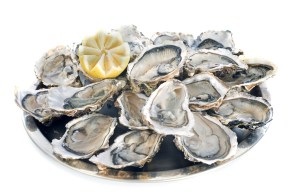
The consumption of raw oysters at a Texas restaurant led to the untimely death of a relatively healthy man in his 30s.

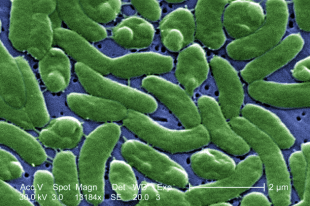
The man, contracted a bacterial infection known as Vibrio vulnificus that thrives in warm coastal waters. Bacterial infections like this one are on the rise as water temperature continues to increase in response to climate change.

Vibrio vulnificus bacteria can be found in raw or undercooked seafood, but also naturally occurs in saltwater and brackish water.

You can be infected with Vibrio when an open wound comes into contact with raw or undercooked seafood, its juices, or its drippings or with saltwater or brackish water, the CDC reported.

RASFF Alert – Vibrio – Pilled Shrimp – Shrimps

RASFF

Vibrio vulnificus in frozen pilled shrimp from Ecuador in France

RASFF

Vibrio cholerae in shrimps from Ecuador in Spain

USA – Vibrio and Food

CDC

You can get a Vibrio infection by eating raw or undercooked seafood, particularly oysters. You also can get an infection if you have an open wound that comes in contact with raw or undercooked seafood, their juices, or their drippings.

If you enjoy eating seafood, fishing in coastal waters, or crabbing off the pier, learn more about how you can protect yourself and family from a Vibrio infection.

What foods are commonly linked to Vibrio?

Vibrio bacteria naturally live in coastal waters and can concentrate inside shellfish and other seafood that live in these waters.

  • Oysters: Oysters feed by filtering water. As oysters feed, Vibrio, norovirus, and other germs can concentrate in them. When you eat raw or undercooked oysters, germs that may be in them can make you sick. Get the facts about Vibrio and oysters >
  • Other shellfish: Oysters aren’t the only shellfish that can carry Vibrio and other germs. Vibrio illnesses have also been linked to crawfish, crab meat, and other shellfish including clams, mussels, and scallops. Stay safe by following CDC’s tips for cooking shellfish and preventing wound infections.
  • Fish: Although Vibrio infections from fish aren’t as common as infections from shellfish, they do happen from time to time. Other harmful germs can be found in fish, too. To help prevent infection, cook fish to 145°F or until its flesh is opaque.

How many people get a Vibrio illness (vibriosis) from food each year?

CDC estimates that vibriosis causes 80,000 illnesses each year in the United States. An estimated 52,000 of those illnesses are caused by eating food containing Vibrio. Most people with a foodborne Vibrio infection have watery diarrhea. Some people may also have stomach cramping, nausea, vomiting, fever, and chills. Symptoms usually start within 1 day after infection and last about 3 days.

USA – DPH warns residents about severe Vibrio infections caused by consumption of raw shellfish or exposure to salt or brackish water

CT Portal

The Connecticut Department of Public Health (DPH) is warning residents about the potential dangers of consuming raw shellfish and exposure to salt or brackish water along Long Island Sound, due to severe Vibrio vulnificus infections.

 Since July 1, three cases of V. vulnificus infections have been reported to DPH. The three patients are between 60-80 years of age. All three patients were hospitalized and one died.  One patient reported consuming raw oysters from an out-of-state establishment. Two patients reported exposure to salt or brackish water in Long Island Sound. Both patients had pre-existing open cuts or wounds or sustained new wounds during these activities which likely led to the infections. 

 “The identification of these severe cases, including one fatality, due to V. vulnificus is concerning,” said DPH Commissioner Manisha Juthani, MD. “People should consider the potential risk of consuming raw oysters and exposure to salt or brackish water and take appropriate precautions. Particularly during the hottest months of the summer, bacteria are more likely to overgrow and contaminate raw shellfish. Given our current heat wave, this may be a time to exercise particular caution in what you consume.”

RASFF Alert- Vibrio vulnificus – Frozen Prawns from Ecuador

RASFF

Presence of vibrio vulnificus in frozen prawns of Ecuador in Italy

USA – Man dies after contracting flesh-eating bacteria from raw oysters – Vibrio vulnificus

National Post

A Missouri man died after contracting a flesh-eating bacteria from eating raw oysters from a seafood stand, U.S. health officials said.

The 54-year-old man, whom authorities have not publicly identified, became infected after he ate oysters bought from The Fruit Stand & Seafood in Manchester, Mo., the St. Louis County Public Health Department said last week.

He died after being infected with the bacteria Vibrio vulnificus, which is contracted by consuming raw or undercooked oysters and other shellfish.

Research – Scientists Discover How Foodborne Vibrio Infects People, Could Lead to New Treatments

Food Safety.Com

Food Illness

Researchers at the University of Texas (UT) Southwestern Medical Center have discovered how foodborne pathogen Vibrio parahaemolyticus infects people after eating raw or undercooked shellfish. The findings could lead to new ways to treat illness caused by the enteric bacteria.

The study provides the first visual evidence of how a gut bacterial pathogen uses an “assembly method” to build syringe-like structures to inject toxins into intestinal cells, giving a new view of how enteric bacteria, when exposed to bile acids, efficiently respond and build a virulence system.

Research – Climate warming and increasing Vibrio vulnificus infections in North America

Nature.com

Vibrio_vulnificus_01

Vibrio vulnificus is an opportunistic bacterial pathogen, occurring in warm low-salinity waters. V. vulnificus wound infections due to seawater exposure are infrequent but mortality rates are high (~ 18%). Seawater bacterial concentrations are increasing but changing disease pattern assessments or climate change projections are rare. Here, using a 30-year database of V. vulnificus cases for the Eastern USA, changing disease distribution was assessed. An ecological niche model was developed, trained and validated to identify links to oceanographic and climate data. This model was used to predict future disease distribution using data simulated by seven Global Climate Models (GCMs) which belong to the newest Coupled Model Intercomparison Project (CMIP6). Risk was estimated by calculating the total population within 200 km of the disease distribution. Predictions were generated for different “pathways” of global socioeconomic development which incorporate projections of greenhouse gas emissions and demographic change. In Eastern USA between 1988 and 2018, V. vulnificus wound infections increased eightfold (10–80 cases p.a.) and the northern case limit shifted northwards 48 km p.a. By 2041–2060, V. vulnificus infections may expand their current range to encompass major population centres around New York (40.7°N). Combined with a growing and increasingly elderly population, annual case numbers may double. By 2081–2100 V. vulnificus infections may be present in every Eastern USA State under medium-to-high future emissions and warming. The projected expansion of V. vulnificus wound infections stresses the need for increased individual and public health awareness in these areas.

Research – Advances in science and risk assessment tools for Vibrio parahaemolyticus and V. vulnificus associated with seafood: meeting report

WHO

Globally, the Vibrio parahaemolyticus and Vibrio vulnificus represent important human pathogens associated with the consumption of seafood. In response to the requests for scientific advice from Codex Committee on Food Hygiene (CCFH), risk assessments for the pathogens V. vulnificus, V. cholerae, V. parahaemolyticus and guidance on methods for the detection of Vibrio spp. with seafood have been conducted and published previously by JEMRA. In order to provide an update on the state-of-the-art advice regarding risk assessment for V. parahaemolyticus and V. vulnificus in seafood, an expert meeting was convened.

Several critical developments in the last decade were subsequently noted by the expert working group: 1) The emergence of highly pathogenic strains; 2) In response to climate change, there has been a significant geographical spread regarding when and where these seafood-associated Vibrio infections; 3) Demographic considerations are very important; 4) A range of new approaches for best practice; and 5) A range of new methods, such as those utilising genomics and satellite imagery. This report describes the output of that expert meeting.

New Zealand – Collecting shellfish this summer? Cook it to keep your whānau safe from Vibrio

MPI

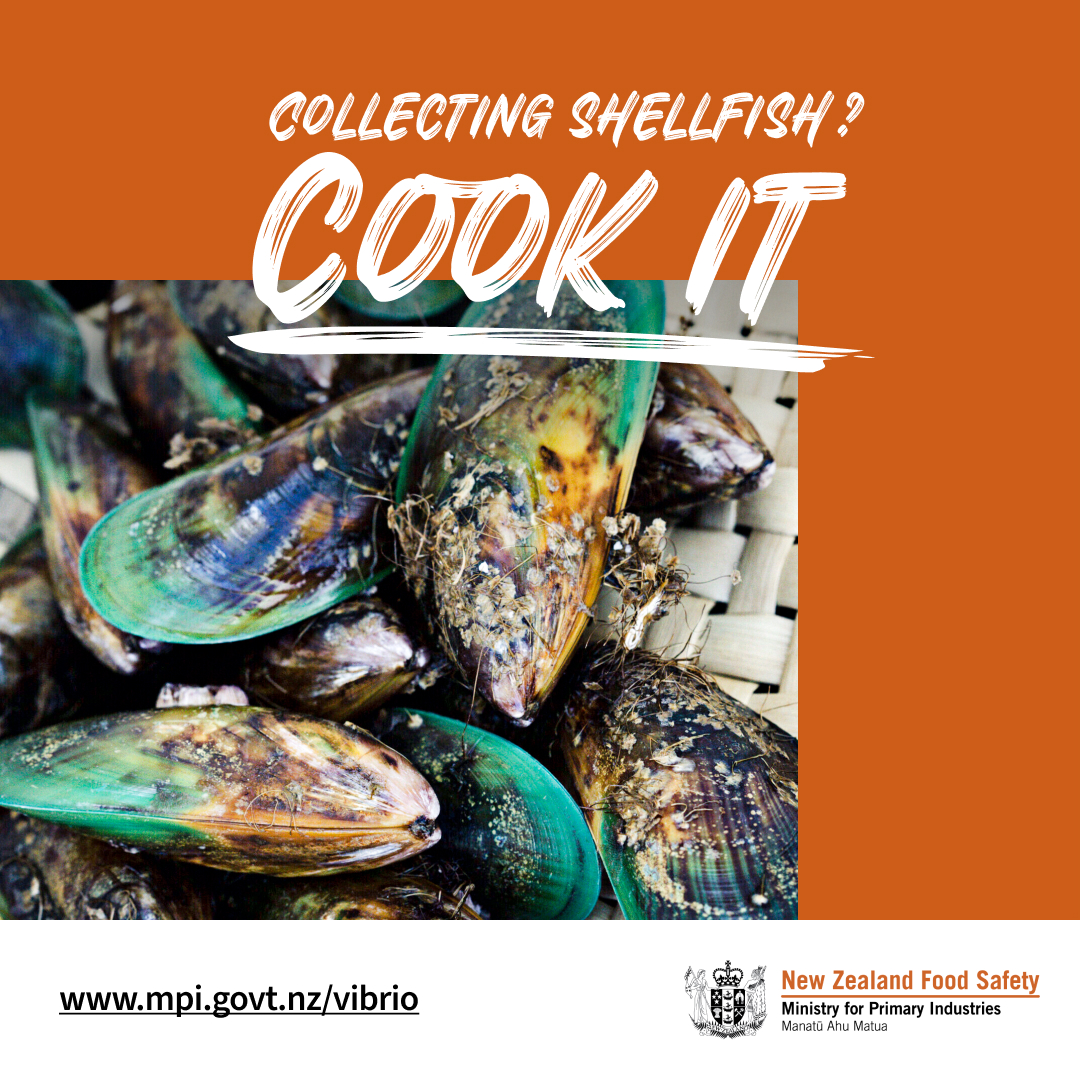
New Zealand Food Safety is calling on Kiwis to thoroughly cook the shellfish they collect this summer following an increase in cases of Vibrio parahaemolyticus illness in previous summer months.

Vibrio is a type of bacteria naturally living in the sea, and some strains can make people sick with gastroenteritis when consumed in raw or undercooked shellfish.

“Our message to those who want to eat raw or lightly cooked shellfish – like mussels, kina and pipi – is to be aware there are increased risks of illness and the simple precautions you can take to protect yourselves and your families,” says New Zealand Food Safety deputy director-general Vincent Arbuckle.

“We are starting to see more cases of illness from Vibrio parahaemolyticus. While we can’t definitively identify the cause, it is possibly because of rising sea temperatures, making it easier for bacteria to spread.

“So, as we gear up for summer, and enjoy time with family and friends over the holidays, we need to make sure to take extra care when collecting and preparing shellfish.

“In the most recent outbreak, there were 60 reported cases of Vibrio parahaemolyticus, between November 2021 and May 2022. Of particularly of concern is the high hospitalisation rate of almost 42%.

“It’s a notable increase in reported cases from previous years, with 24 cases reported earlier in 2021, 16 cases in 2020 and 23 cases in 2019. The reason for the increase is unclear at this stage – it could be caused by environmental change, increased testing and reporting, or a combination of these and other factors – but it is clear, that cooking your shellfish kills the bacteria that makes you sick.

Vibrio bacteria can cause illnesses like gastroenteritis – with symptoms including diarrhoea, abdominal cramps, nausea, vomiting and fever – blood poisoning and wound infections.

“It’s especially important for those with underlying health conditions, pregnant and older people, and younger children to avoid eating raw shellfish,” Mr Arbuckle said.

“The more people know how to collect, store, prepare and cook shellfish safely, the more they can look out for both themselves and others in our communities who may be more vulnerable.

“We want people to know there are easy, tasty ways to make the kai moana you collect safe for eating, so we’ve released a series of simple recipes, created by a community chef. These are available on the website to download and enjoy.

“On our own, we can’t control the changing environmental factors, but we can all help look after our whānau and reduce the risk of them falling sick from Vibrio by taking some simple precautions – and by spreading the word on safe ways to cook shellfish.”

What you can do to help keep your whānau safe:

  • Don’t eat shellfish raw or undercooked. Cook shellfish thoroughly (until they open and are firm to the touch) or so they get to at least 65°C for 1 minute. 
  • Avoid gathering shellfish after heavy rainfall or if the water is unusually dirty.
  • Keep shellfish alive and cool.
  • Refrigerate your shellfish as soon as possible and, ideally, eat it on the day of collection or within 2 days.
  • To avoid cross-contamination, keep hands and utensils clean to prepare raw shellfish, and keep raw shellfish separated from cooked or ready-to-eat products.

What to do if someone falls sick after eating shellfish:

  • phone healthline on 0800 61 11 16, or
  • seek medical attention immediately.

If possible, store and refrigerate any leftover shellfish for testing.

More information on Vibrio and shellfish food safety tips