Category Archives: Uncategorized

RASFF Alert – Ochratoxin – Porridge Cereal for Babies – Mycotoxin

RASFF-Logo

RASFF-ochratoxin A (1.16 µg/kg – ppb) in porridge cereal for babies from Switzerland in Spain

RASFF Alerts – Salmonella – Forzen Poultry Meat – Salted Chicken Breasts – MRM – Sesame Seeds – Sausages – Tahini Halva – Duck – Chicken

RASFF-Logo

RASFF-Salmonella enterica ser. Bovismorbificans (presence /25g) in frozen poultry meat preparation from Thailand in Belgium

RASFF-Salmonella enterica ser. Agona (presence in 1 out of 5 samples) in frozen poultry meat preparation from Thailand in Belgium

RASFF-Salmonella (1 out of 5 samples /25g) in frozen salted chicken half breasts from Brazil in the UK

RASFF-Salmonella in frozen chicken breast caps from Belgium in the Netherlands

RASFF -Salmonella enterica ser. Typhimurium (presence) in frozen mechanically separated meat from Belgium in Belgium

RASFF-Salmonella (presence in 1 out of 5 samples) in sesame seeds from Nigeria in Poland

RASFF-Salmonella (presence /25g) in frozen seasoned chicken from Poland in France

RASFF-Salmonella (presence /25g) in sausages from Spain in Belgium

RASFF-Salmonella (present /25g) in hulled sesame seeds from India in Spain

RASFF-Salmonella (present /25g) in tahini halva from the Czech Republic in Germany

RASFF-Salmonella enterica ser. Newport (presence /25g) and Salmonella enterica ser. Typhimurium monophasic (1 ,4, [5], 12:i:-) (presence /25g) in frozen eviscerated ducks from Hungary in Italy

RASFF-Salmonella enterica ser. Enteritidis in frozen and chilled chicken fillets from Poland in Italy

RASFF-Salmonella (presence /25g) in fresh boiled chicken fillet (A class) from Poland in Lithuania

RASFF-Salmonella enterica ser. Enteritidis (presence /25g) in chicken legs from Poland in Lithuania

RASFF-Salmonella (presence /25g) in fresh boiled chicken legs from Poland in Lithuania

RASFF Alerts – Animal Feed – Salmonella – Dog Chews – Turkey Meat Meal

RASFF-Logo

RASFF-Salmonella enterica ser. Infantis (presence /25g) in dog chews from France, with raw material from Denmark, packaged in Germany in Germany

RASFF-Salmonella (presence /25g) and Salmonella enterica ser. Mbandaka (presence /25g) in turkey meat meal from Poland in Belgium

RASFF Alerts – Animal Feed – Aflatoxin – Gluten Corn

RASFF-Logo

RASFF-aflatoxins (B1 = 34 µg/kg – ppb) in gluten corn from China, via the Netherlands in Iceland

USA – Wegmans Issues Voluntary Recall of Fresh Cauliflower Rice, Veggie/Cauliflower Rice Blend and Stir-Fry Mix with Cauliflower – E.coli O157

FDA

Wegmans Food Markets, Inc. has issued a voluntary recall of fresh Cauliflower Rice, Veggie Cauliflower Rice Blend and Stir-Fry Mix with Cauliflower, sold in the produce department between 12/7/18 and 12/18/18, because it may be contaminated with Escherichia coli O157:H7 bacteria (E. Coli O157:H7). E. coli O157:H7 causes a diarrheal illness often with bloody stools. Although most healthy adults can recover completely within a week, some people can develop a form of kidney failure called Hemolytic Uremic Syndrome (HUS). HUS is most likely to occur in young children and the elderly. The condition can lead to serious kidney damage and even death.

The recalled products (with use-by dates of 12/11/18 through 12/22/18) are as follows:

Wegmans Cauliflower Rice, 1 lb. pkg. UPC #25313500000
Wegmans Cauliflower Rice, 8 oz. pkg. UPC #25307200000
Wegmans Stir Fry Blend (with cauliflower), 1 lb. pkg. UPC #25335800000
Wegmans Veggie (cauliflower) Rice Blend (sold by the pound), UPC #253162000000

The recalled products were distributed to 98 Wegmans stores in N.Y., N.J., Pa., Md., Va. and Mass.

No illnesses have been reported to date.

The recall was initiated by Produce Packaging, Inc. based in Cleveland, OH, which supplies these products to Wegmans and notified Wegmans that the product may have been contaminated.

Europe – Campylobacteriosis – Annual Epidemiological Report for 2016

ECDC

Publication series: Annual Epidemiological Report on Communicable Diseases in Europe

Time period covered: This report is based on data for 2016 retrieved from The European Surveillance System (TESSy) on 15 March 2018.

Research – Potatoes and Food Poisoning Outbreaks: Botulism and Listeria Monocytogenes

Food Poisoning Bulletin

Potatoes aren’t often thought of when people think about food poisoning. This root vegetable is, after all, always cooked before it’s eaten, which would kill off any pathogenic bacteria. But this vegetable grows in soil and can be contaminated at any point along the supply chain.

But there have been some outbreaks linked to potatoes. Clostridium botulinum outbreaks have been linked to baked potatoes that are wrapped in aluminum foil. The spores that produce this deadly toxin are found in the soil, and they can contaminate the spuds. The spores can sometimes survive the baking process. If the potatoes are baked while tightly wrapped in aluminum foil, that creates an anaerobic (oxygen-free) environment. And that creates the perfect conditions for botulism spores to germinate, grow, and produce the botulism toxin.

Research – Spokane Produce Linked to E. coli Recall

Food Poison Journal

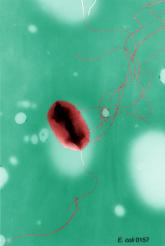
kswfoodworld E.coli O157

Image CDC


Spokane Produce Inc. of Spokane, WA initiates a voluntary recall of sandwiches containing green leaf lettuce and foodservice lettuce filets following notice of a produce industry ingredient recall by Adam Bros. Farming Inc. Sandwich products bearing the Northwest Cuisine Creations and Fresh&Local labels. These products are recalled because they may be contaminated with Escherichia coli O157:H7 bacteria (E. coli O157:H7).

Research – How to kill pathogens on seafood

Food Processing

Controlled release antimicrobial film makes seafood safer.

Seafood may be contaminated with bacterial pathogens, such as Vibrio and Salmonella, which can survive long-term freezing conditions. Vibrio naturally occur in marine environments and Salmonella can contaminate seafood during production or processing and both are concerns for the seafood industry.

However, a solution may be at hand. A biodegradable, edible film made with plant starch and antimicrobial compounds may control the growth of foodborne pathogens on seafood, according to a group of international researchers.

Catherine Cutter, professor of food science, Penn State, explained, “We have the ability to develop a film with antimicrobial activity that can kill foodborne pathogens on food surfaces. Given the recent outbreaks that we have seen with a number of food products, coming up with something that can be used by the industry to kill microorganisms on the surfaces of food is a noble area of research to investigate.

“Vibrio and Salmonella are somewhat susceptible to freezing,” Cutter said. “So, if you treat bacterial cells with antimicrobials and then freeze them, the approach can be more lethal.”

Freezing does not kill bacteria. However, when freezing food, ice crystals can form from the water in food. The ice crystals, Cutter said, can act like “daggers” and pierce the bacterial cell wall, causing damage to the cell.

Researchers used a blend of thermoplastic starch, a biodegradable polymer made from tapioca powder and a gelatin coating containing antimicrobials known as Nisin Z and lauric arginate (LAE).


 

Europe -Cryptosporidiosis – Annual Epidemiological Report for 2016

ECDC

Publication series: Annual Epidemiological Report on Communicable Diseases in Europe

Time period covered: This report is based on data for 2016 retrieved from The European Surveillance System (TESSy) on 15 March 2018.