Category Archives: Uncategorized

USA – E. coli O26 outbreak associated with Sodexo’s Café Mario sickens 22

Food Poison Journal

Public Health investigated an outbreak of Shiga toxin-producing E. coli (STEC) associated with I Love Sushi and Café Mario at Nintendo of America campus in Redmond. Café Mario is operated by Sodexo and is not open to the public. I Love Sushi is a food establishment that operates out of Café Mario once a week.

This outbreak appears to be over. After a thorough investigation, we do not have enough evidence to connect I Love Sushi to this outbreak.. No single food item prepared by Café Mario has been identified as the source of the illnesses. Everyone who reported illness has recovered.

Research – High levels of potentially harmful bacteria found in raw meat dog food products: study

Science Daily 260px-YellowLabradorLooking_new

Many raw meat dog food products contain high levels of bacteria that pose potential health risks to both animals and people, finds research published online in Vet Record.

This is a particular issue for infants, the elderly, and those with poor immunity, warn the researchers.

A raw meat-based diet has become increasingly popular for dogs in recent years, because it is seen as a ‘healthier’ and more ‘natural alternative’ to widely available commercial products.

But, unlike commercial feeds, raw meat products are not heat treated or freeze dried to pasteurise their content.

To try and gauge the levels of bacteria in these products, the researchers took samples from 60 packs of raw meat products, bought from a range of stores within a 200 km radius of their laboratory between March and September 2017.

The products, which were all intended for dogs, contained at least one of: uncooked meat; and edible bones and/or organs from cattle, chicken, lamb, turkeys, pigs, ducks, reindeer or salmon. Some of the products also included vegetables, vegetable fibre, and minerals.

All the products, made by 10 different manufacturers, originated from Sweden, Norway, Finland, Germany or England.

The samples were analysed for bacteria that could potentially pose a health risk to animals and people: Enterobacteriaceae species; Clostridium perfringens, Salmonella and Campylobacter species.

All 60 samples contained Enterobacteriaceae species, which are indicators of faecal contamination and hygiene standards.

Levels varied widely among the different manufacturers, and in some cases, among the different products from the same manufacturer.

But 31 (52%) of the samples contained levels that exceeded the maximum threshold set by European Union (EU) regulations of 5000 bacteria per gram.

Most of the species identified are not known to cause infection, apart from E coli, which was found in about a third of the samples.

C perfringens, another marker of faecal contamination and hygiene standards, was found in 18 samples (30%); two of the samples exceeded the maximum limits set by Swedish guidelines.

Salmonella and Campylobacter are zoonotic species of bacteria-capable of passing from animals to people and causing infection. EU regulations don’t permit Salmonella in any animal feed.

Salmonella species were found in 4 (7%) of the 60 samples, while Campylobacter species were found in three samples from three different manufacturers. This is a relatively low level, but possibly because Campylobacter species are very sensitive to freezing, say the researchers.

“It is most likely that Campylobacter was present in more samples before freezing, and that those samples in which Campylobacter was isolated contained very high levels of Campylobacter species before the freezing process, as some managed to survive the freezer,” they write.

The findings prompt the researchers to highlight the importance of careful storage, handling, and feeding of raw meat dog food products because of the potential health risks they pose.

They make several recommendations, designed to curb the risk of infection and antibiotic resistance. Raw meat dog food should be:

    • Kept frozen until use, and thawed at 10 degrees C

Kept separate from other food

Handled with separate kitchen equipment or with equipment that is washed thoroughly after use

Good hygiene is essential, they emphasise: bacteria in the juices from raw meat dog food can splash and spread to other foods and surfaces, and dogs can transfer potentially harmful and/or antibiotic resistant bacteria by ‘kissing’ faces immediately after eating.

Dogs shouldn’t be fed raw meat products while being treated with antibiotics as this could increase the risk of antibiotic resistance, they say.

“Dogs in families with infants, elderly people or immunocompromised individuals should also not be fed [raw meat products], as these groups are more susceptible to infections,” they warn.

British Veterinary Association Junior Vice President Daniella Dos Santos commented: “This research offers further compelling evidence to support vets’ concerns about the potential animal and public health risks associated with feeding pets a raw meat-based diet.

“Bacteria such as E coli and Salmonella can cause significant gastrointestinal disease in animals. Pets can also shed potentially harmful pathogens present in raw food into their environment, so there is a risk to owners both in handling the food and coming into contact with the animal. Pet owners who choose to feed a raw food diet should be aware of the potential health risks and take full precautions while storing and handling the food.

“BVA would also not recommend making a raw food diet at home without veterinary guidance due to the potential for nutritional deficiencies in homemade diets.

“We would advise any owner wanting to try a raw meat-based diet for their pet to first consult a veterinary surgeon.”

Story Source:

Materials provided by BMJ. Note: Content may be edited for style and length.


Journal Reference:

  1. Josefin Hellgren, Lovisa Staaf Hästö, Camilla Wikström, Lise-Lotte Fernström, Ingrid Hansson. Occurrence of Salmonella, Campylobacter, Clostridium and Enterobacteriaceae in raw meat-based diets for dogs. Veterinary Record, 2019; vetrec-2018-105199 DOI: 10.1136/vr.105199

USA – Salmonella outbreak linked to pet hedgehogs continues; 6 additional people sickened, CDC says

Fox 32 

File:Igel.JPG

Image GIBE

 – Six additional people have been sickened as a result of a salmonella outbreak that the Centers for Disease Control and Prevention (CDC) says is likely tied to pet hedgehogs.

A total of 17 people across 11 states have now been infected with salmonella typhimurium, an increase from January, when 11 people in eight states were sickened, the federal health agency said Friday in its first update since announcing the outbreak.

Nearly all (87 percent) of those who were sickened told the CDC they had contact with a hedgehog before falling ill. At least two people have been hospitalized as a result, but no deaths have been reported.

UK – FSA – Food and You Survey

FSA

This summary presents the key findings from Wave 5 of the Food and You survey, commissioned by the Food Standards Agency (FSA). Food and You is the FSA’s principal source of methodologically robust and representative evidence on consumers’ self- reported food-related activities and attitudes. The survey has been running on a biennial basis since 2010. These findings are based on 2,241 interviews from a representative
sample of adults aged 16 and over across England, Wales and Northern Ireland. Fieldwork was carried out between June and November 2018. Additional interviews were carried out in Wales and Northern Ireland in order to enable country-level analyses of the findings and these are published separately.

Cambodia – Students sent to hospital over food poisoning

Khmer Times

The Banteay Meanchey provincial health department yesterday said nearly 40 students at the O’Ambel Primary School in Serey Sophorn city fell sick during a roadshow held by Angkormilk.

Che Pichet, deputy director of the health department, said the incident happened on Friday as dairy company Angkormilk held a roadshow at the school and distributed milk to small children.

Mr Pichet said 33 students experienced headaches, vomiting and stomachaches, causing a panic and trips to state and private hospitals.

“The condition of those young children is currently better. They returned home on Friday and Saturday,” he said. “We are doing more research on what caused the poisoning. We took samples of the milk for testing at the national laboratory, but the result is still unknown.”

Australia – MCG function room to reopen after Anzac Day food poisoning

Sydney Morning Herald 

The MCG function room where dozens of people went down with food poisoning “left , right and centre” during the Anzac Day national anthem last week is due to reopen.

Paramedics assessed about 30 guests at the official Anzac Day lunch in the Olympic Room on Thursday, and took seven people to emergency in stable conditions.

A Friday event was moved to another room for “additional precautionary cleaning” and to accommodate investigators from the Department of Health and Human Services, a Melbourne Cricket Club spokesman said.

Information – Annual snapshot of foodborne illnesses shows Cyclospora spike

CIDRAP Cyclospora_LifeCycle201

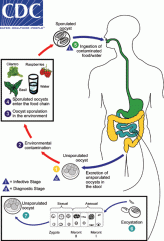
In its annual report summing up the latest trends with pathogens that are common sources of foodborne illness, the Centers for Disease Control and Prevention (CDC) said today that the incidence of most illnesses increased in 2018, especially Cyclospora infections.

A team from the CDC and partners in 10 states that are part of the FoodNet surveillance network looked at levels for 2018 and compared them with levels for 2015 through 2017. The pathogens they tracked included Campylobacter, Cryptosporidium, Cyclospora, Listeria, Salmonella, Shiga toxin-producing Escherichia coli (STEC), Shigella, Vibrio, and Yersinia. They published their findings today in the latest edition of Morbidity and Mortality Weekly Report.

In preliminary findings for 2018, the FoodNet system flagged 25,606 infections, 5,893 hospitalizations, and 120 deaths. They note that the incidence for most infections is rising, including Campylobacter and Salmonella. However, they added an important caveat that some of the increase might be partly due to the increased use of culture-independent diagnostic tests (CIDTs), which can identify pathogens not regularly found by other testing methods — complicating data interpretation.

USA – 53,200 and 113,424 pounds of raw ground beef products recalled in E. coli O103 Outbreak – more recalls likely

Food Poison Journal

As of this week, a total of 156 people infected with the outbreak strain of E. coli O103 have been reported from 10 states – Minnesota, Illinois, Indiana, Ohio, Kentucky, Tennessee, Virginia, Mississippi, Georgia and Florida.

To date there have been two recalls.  Link between two producers of meat and the recalls remain unclear (How are the two connected?  Presumably a common supplier?) except that both recalls were prompted by positive E. coli O103 tests on “Unopened, intact, packages of ground beef collected as part of the ongoing investigation tested positive for E. coli O103 at an FSIS laboratory.”

It is likely that more recalls will happen as FSIS, CDC and state health authorities continue their efforts to find the source.

Food Poison Journal

What we know is that illnesses began March 1 and it is now almost May 1 – why did it take so long to figure out that 177 people with E. coli O103 were linked to ground beef? Why do we do not yet know the original source of the contamination?  Why is the public not being told the location where known illnesses occurred? Finally, are more people going to get sick?

Canada – 73 with Salmonella Enteritidis in Canada linked to Profiteroles and Eclairs – 2 Dead

Food Poison Journal

Frozen profiteroles and mini eclairs sold in grocery stores are the apparent sources of two deaths among at least 73 lab-confirmed cases of Salmonella Enteritidis infections in Canada as of April 27, 2019, according to the Public Health Agency of Canada (PHAC).

The outbreak, which was first announced on April 5, 2019, has spread to six Canadian provinces: British Columbia (27), Alberta (12), Saskatchewan (9), Manitoba (10), Ontario (13) and Quebec (2).

The outbreak began in early November 2018 and remains ongoing, with the most recent case having been reported in late March 2019. Outbreak victims range in age between 1 and 88 years of age.

PHAC has not determined whether or not Salmonella was a contributing factor in either of the deaths. Nineteen outbreak victims have been hospitalized.

France – French Cheeses Recalled after 12 with E. coli caused Kidney Failure

Food Poison Journal

CDC E.coli

Image CDC

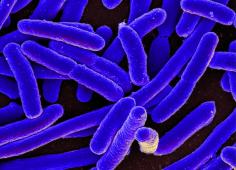
According to press reports and French health authorities, the cheeses Saint-Félicien and Saint-Marcellin, both made by the Société Fromagerie Alpine in Romans-sur-Isère in the Drôme department, were pulled from shelves yesterday (Saturday April 27) due to the likely link to an E. coli outbreak.

The brands are mainly sold in large supermarkets such as Leclerc, Lidl and Auchan.

The recall was a “precautionary measure”, said the ministers for health and agriculture, after 13 children in several regions were reported to have contracted cases of hemolytic uremic syndrome (HUS) due to an E. coli infection, since March 21.  In the US, only about 5% of outbreak victims develop HUS, raising the question that this outbreak may impact a significant number of people.

Investigations revealed that several of the children had eaten these cheeses before symptoms appeared.

Anyone who still has cheese from this brand is advised not to eat the product.