Category Archives: Uncategorized

Canada -Nuts ‘N More brand Peanut Spread (Plain) recalled due to Listeria species

CFIA

Recall details

Ottawa, February 10, 2020 – Nutrition Excellence Canada is recalling Nuts ‘N More brand Peanut Spread (Plain) from the marketplace due to possible Listeria species contamination. Consumers should not consume the recalled product described below.

Recalled products

Brand Product Size UPC Codes
Nuts ‘N More Peanut Spread (Plain) 454 g 6 09132 00242 7 LOT PB91
EXP 03/04/2021

What you should do

If you think you became sick from consuming a recalled product, call your doctor.

Check to see if you have the recalled product in your home. Recalled products should be thrown out or returned to the store where they were purchased.

Food contaminated with Listeria species may not look or smell spoiled but can still make you sick. Symptoms can include vomiting, nausea, persistent fever, muscle aches, severe headache and neck stiffness. Pregnant women, the elderly and people with weakened immune systems are particularly at risk. Although infected pregnant women may experience only mild, flu-like symptoms, the infection can lead to premature delivery, infection of the newborn or even stillbirth. In severe cases of illness, people may die.

Background

This recall was triggered by a recall in another country. The Canadian Food Inspection Agency (CFIA) is conducting a food safety investigation, which may lead to the recall of other products. If other high-risk products are recalled, the CFIA will notify the public through updated Food Recall Warnings.

The CFIA is verifying that industry is removing the recalled product from the marketplace.

This product is being recalled by the Canadian importer as a result of actions taken by the American manufacturer, Nuts ‘N More LLC. This recall warning is being posted as a public service.

Illnesses

There have been no reported illnesses associated with the consumption of this product.

Product photos

Printer ready version of photos

  • Nuts 'N More - Peanut Spread (Plain)

Cruise Ship – Cruise ship outbreak: 190 sickened onboard Princess Cruises’ Caribbean Princess

Outbreak News Today

Federal health officials report investigating a gastrointestinal disease outbreak on a Princess Cruises’ Caribbean Princess February 2–16, 2020 voyage.

To date, 190 passengers and crew have experienced symptoms of vomiting and diarrhea. The exact etiology of the outbreak has not been determined.

USA – Hepatitis A Outbreak tied to Long Beach 555 East American Steakhouse

Food Poison Journal

The Long Beach Department of Health and Human Services (Health Department) is investigating an outbreak of hepatitis A associated with 555 East American Steakhouse in downtown Long Beach. Several cases of hepatitis A have been confirmed in individuals who ate at the restaurant on or around December 24, 2019. Those who ate there during that time may have been exposed. The source of the illness is still under investigation, and the restaurant’s management and staff are fully cooperating with Health Department officials to prevent further illness. The restaurant does not pose an ongoing risk to the public at this time.

Research -How Do You Know If You Have a Hepatitis A Infection?

Food Poisoning Bulletin

Hepatitis A is a very contagious virus that can cause serious illness and death. In recent years, a huge hepatitis A outbreak in the United States has been ongoing since 2016. According to the Centers for Disease Control and Prevention (CDC), more than 30,000 people have. even sickened, almost 19,000 patients have been hospitalized, and more than 300 people have died. How do you know if you have a hepatitis A infection?

Hepatitis A can spread in food establishments through infected food handlers.

Click to access ABCTable.pdf

Link to CDC Information

Click to access ABCTable.pdf

UK – Nearly 200 ill in UK after eating oysters – No Recalls?

Food Safety News

Almost 200 people have fallen ill after eating oysters in the United Kingdom in recent months.

Since November 2019 there have been at least 180 reported cases of gastroenteritis associated with oyster consumption linked to multiple food outlets and oyster producers.

A Public Health England spokeswoman told Food Safety News that norovirus had been identified as the cause of a number of these outbreaks.

“Public Health England is working with the Food Standards Agency and Food Standards Scotland, and affected local authorities, to investigate outbreaks of gastrointestinal illness reported since November 2019 associated with consumption of oysters.”

Officials say there is no connection to the norovirus outbreaks from oysters in Europe. In Sweden, 70 people fell sick after eating oysters, some of which came from domestic production and others from France.

France – Salmonella outbreak linked to raw milk Morbier

Outbreak News Today

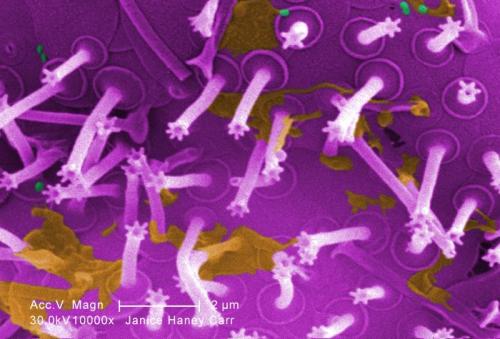
kswfoodworld Salmonella

Image CDC

Since November 2019, Public Health France reports investigating 13 cases of salmonellosis caused by Salmonella enterica serotype Dublin (S. Dublin) reported by the National Reference Center (CNR) of Salmonella (Institut Pasteur) due to the fact that the strains belong to the same genomic cluster.

The outbreak has been linked to the consumption of raw milk Morbier (cheese), purchased from different brands, health officials note.

The cases are spread over 7 regions of the country. Three cases died, though its not clear if the salmonellosis attributed to the deaths.

The analysis by the Directorate General of Food (DGAL) of cheese purchases from case loyalty cards made it possible to identify that the Morbiers bought by the cases came from the same supplier.

Investigations with this producer are underway by the DDPP in conjunction with the DGAL in order to identify the causes of this contamination and take the necessary corrective measures.

Following the results of the investigations, SA PERRIN (FR 25-155-001 CE), in conjunction with the health authorities, proceeded on 07/02/2020 to withdraw from sale and recall the following raw milk morbiers:

  • Whole wheels of lots: n ° 23240923 (DLUO 10/02), 23240924 (DLUO 01/02), 23271122, 23271123, 23271124, 23271125, 23271126 and 23271127 (DLUO as of 05/03 and 30/03)
  • Cutting batch: n ° 13 (DLC to 12/02)

USA/Canada/UK – Positive Listeria test results spur international recall of peanut spread

Food Safety News

Nuts ‘N More of East Providence, RI, has initiated an international recall for some of its plain “Peanut Spread” because tests showed a sample of the finished product was contaminated with Listeria. 

The company reports distributing the product to eight U.S. states as well as Canada and the United Kingdom, according to a recall notice posted on the Food and Drug Administration website. The eight states are Virginia, Arizona, Maryland, Rhode Island, Maine, Alabama, Indiana and Florida. A total of 4,143 jars are implicated.

No illnesses had been reported in relation to the product as of the posting of the recall notice today.

UK – Happy Hounds is recalling a range of its frozen raw dog food products because they may pose a risk to health

FSA

Happy Hounds is recalling a range of its frozen raw dog food products on a precautionary basis because they may pose a risk to human and animal health.

Risk statement

Happy Hounds is recalling a range of its frozen raw dog food products on a precautionary basis as they may pose a risk to human and animal health. Sampling undertaken by the company has identified elevated levels of bacteria indicating a potential risk. A withdrawal and recall have been actioned by the company.

Action taken by the company

Happy Hounds is recalling the above products on a precautionary basis

Our advice to consumers

Our advice consumers (pet owners):
If you have bought any of the above products do not use them. Instead, return them to the store from where they were bought for a full refund.

When handling and serving raw pet food it is always advised to clean utensils and
feeding bowls thoroughly after use. Consumers should wash hands thoroughly after handling raw pet food, bowls, utensils or after contact with the faeces of animals. Raw pet food should be stored separately from any food (especially ready to
eat foods). Care should be taken when defrosting to avoid cross contamination of foods and surfaces.

Research – A Successful Technique for the Surface Decontamination of Salmonella enterica Serovar Typhimurium Externally Contaminated Whole Shell Eggs Using Common Commercial Kitchen Equipment

Mary Ann Liebert hazegg.jpg

Eggs are a highly nutritious food source used in a wide range of food products. In Australia, eggs are a frequent source of foodborne salmonellosis outbreaks, associated with eggshell contamination with Salmonella enterica serovar Typhimurium (ST). Despite their potentially hazardous nature, raw eggs are often used and consumed in mayonnaise, mousse, ice cream and eggnog. The aim of this study was to develop a shell egg decontamination method that removed ST contamination from the outside of an egg without impacting its usability. The decontamination method was developed by the adaptation of a temperature-controlled water bath (commonly present in kitchens and associated with the sous-vide technique) for the surface decontamination of eggs. The outside of whole eggs was artificially inoculated with two ST strains. The eggs were decontaminated by placing in a sous-vide cooker with the water heated to 57°C. The remaining viable ST present on the whole shell egg, crushed shells, internal egg contents and sous-vide water were enumerated over time by culturing onto XLD agar. The quality of the uncontaminated heat-treated eggs was determined by measuring the Haugh unit, yolk index, albumen pH, thermocoagulation, and stability of foam. A blind control study was conducted to assess the acceptability and usability of the treated eggs by chefs and food handlers for the preparation of mayonnaise. Complete decontamination of ST was achieved by treating eggs for 9 min in the sous-vide cooker (57°C). No statistically significant difference was observed in the quality of treated eggs compared with nontreated eggs using the quality measurements and acceptability score from chefs. This method provides a simple approach that can be adopted by chefs and food handlers to obtain safe eggs before the preparation of raw egg products.

Research – Differential Effects of Growth Medium Salinity on Biofilm Formation of Two Salmonella enterica Strains

Journal of Food Protection

ABSTRACT

Salmonella enterica is a prominent foodborne pathogen, including diverse serotypes that are prolific biofilm formers. Its ability to form biofilm can be affected by multiple environmental factors. In this study, the effect of salinity on biofilm formation by S. enterica was evaluated by using two recently isolated strains of Salmonella serotypes Enteritidis and Newport. Although supplementing the growth medium with a low concentration (0.5 to 2%) of sodium chloride (NaCl) slightly enhanced biofilm formation for the strain S. enterica serovar Enteritidis 110, it sharply reduced or abolished biofilm formation by the strain S. enterica serovar Newport 193. This differential effect of salinity on S. enterica strains of different serotypes was poorly correlated with inhibition of planktonic growth but strongly correlated with cell motility. Examining genes known to affect biofilm formation showed that the expression of adrA, csgD, and fliC, which encode proteins required for surface adhesion and cell motility, was significantly downregulated with salinity increase in Salmonella Newport 193 but not in Salmonella Enteritidis 110. Therefore, it is plausible that the differential effect of salinity on biofilm formation by Salmonella Enteritidis 110 and Salmonella Newport 193 resulted from the differential regulation to genes required for cell adherence and motility.

HIGHLIGHTS
  • Salinity differentially affects biofilm formation in Salmonella Enteritidis and Newport.
  • NaCl at 0.5% abolishes biofilm formation of Salmonella Newport but not Salmonella Enteritidis.
  • The effect of NaCl on biofilm formation is correlated with effects on cell motility.