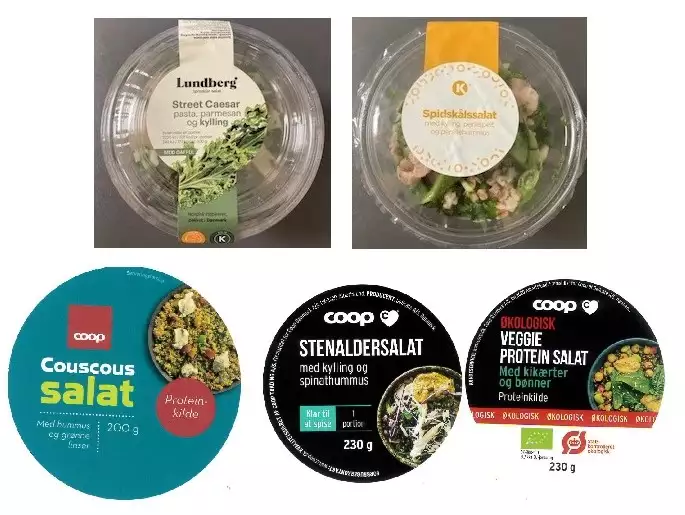
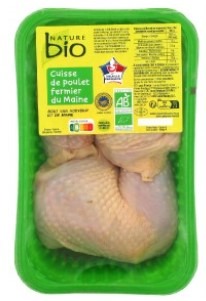
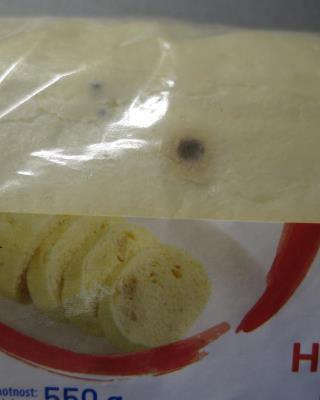
The purpose of this announcement is to advise you that Fullei Fresh is voluntarily recalling Bean Sprouts and Soy Sprouts as a precaution due to possible exposure to listeria monocytogenes. Affected lots are numbered consecutively between 251 and 271. They were harvested and shipped to distributors between September 14 and October 5, 2021. Both conventional and organic bean sprouts as well as soy sprouts are voluntarily recalled. No other products are affected at this time as they are grown and packed in segregated departments.
The Centre for Food Safety (CFS) holds a series of exhibitions in major shopping centres of public and private housing estates across the territory every year. Panels covering different topics such as food safety and nutrition, and educational videos are shown to enhance public knowledge on how to make safe and suitable food choices.
FIVE roving exhibitions will be held in the following venues in October 2021. Details are as follows:
Date
Time
Venue
Theme
5/10
10am – 4pm
Kowloon City Market
Nutrition Labelling;
Acrylamide + Trans Fats
8/10
10am – 4pm
Oi Man Plaza
Enhance Food Traceability, Strengthen Food Safety; Control of Food Temperature + Genetically Modified Food
5 Keys for Food Safety; Prevention of Cross-contamination + Organic Food
28/10
10am – 4pm
To Kwa Wan Market
Acrylamide; Food Safety Advice for Pregnant Women + Enhance Food Traceability, Strengthen Food Safety
New arrangements of the exhibitions will be announced regularly and members of the public are welcome to visit the CFS website. For any enquiries, please contact our Communication Resource Unit at 2381 6096.
Knoll Consultants & Investments Pty. Ltd. is conducting a recall of Duck and walnut pate 110g, Truffle pate 110g, Duck Terrine 110g and Farmhouse pate 110g. The products have been available for sale at Foodland (SA only) and independent grocers in VIC and SA.
Date markings
Use By 20 NOV 21
Problem
The recall is due to possible microbial contamination (Listeria monocytogenes).
Food safety hazard
Listeria may cause illness in pregnant women and their unborn babies, the elderly and people with low immune systems.
Country of origin
Australia
What to do
Any consumers concerned about their health should seek medical advice and should return the product to the place of purchase for a full refund.
The FDA, along with CDC and state and local partners, investigated a multistate outbreak of Salmonella Typhimurium infections linked to the consumption of BrightFarms packaged salad greens produced in the firm’s Rochelle, IL facility.
FDA visited the facility and collected samples. Some environmental samples taken inside the facility tested positive for Salmonella Liverpool, but were not a match to the outbreak strain. In addition, a sample collected from an outdoor storm water drainage pond adjacent to the facility was analyzed and reported to be Salmonella Typhimurium and a genetic match to the outbreak strain.
Although no clear route of contamination was readily identified, the FDA is preparing a report to discuss findings and provide information to assist in future prevention efforts.
Recommendation
CDC has declared this outbreak to be over.
Investigation Background
On July 15, 2021, BrightFarms recalled packaged salad greens produced in its Rochelle, Illinois (Ogle County) greenhouse farm sold in Illinois, Indiana, Iowa, and Wisconsin. On July 21, 2021, Michigan was added to the list of states that received recalled products. Interview data and shopper card records show that 15 people ate or bought multiple types of BrightFarms brand salad products before they got sick, including Sunny Crunch, 50/50 Spring & Spinach, Harvest Crunch, and Butter Crisp. FDA conducted a traceback investigation and identified the farm in Rochelle, IL, as the likely source of the BrightFarms brand salad bought by people who became ill. On July 28, 2021, following positive sample results, BrightFarms expanded their recall to include Baby Spinach packaged in clear, plastic clamshells with “Best By” dates through 7/26/2021.
Map of U.S. Distribution of Recalled BrightFarms Products
Case Count Map Provided by CDC
Case Counts
Total Illnesses: 31
Hospitalizations: 4
Deaths: 0
Last Illness Onset: August 18, 2021
States with Cases: IL (18), MI(1), PA (2), WI (10)
Product Distribution*: IA, IL, IN, MI, WI
*Distribution has been confirmed for states listed, but product could have been distributed further, reaching additional states
Recall of Match SA Product: ALNATURA brand “Dinkel vollorn spaghetti” spelled spaghetti (500 g). Problem: Traces of ergot alkaloids.
WE ARE RECALLING THE PRODUCT DESCRIBED BELOW FOLLOWING A NON-CONFORMITY WHICH MAY LEAD TO A RISK FOR THE CONSUMER:
Spelled spelled “Dinkel vollorn spaghetti” from the ALNATURA brand (500 g). Expiration dates (DDM): 02/26/2023
These products were sold in the Match supermarket in Scheut (1071).
Match has decided, in consultation with the AFSCA (Federal Agency for the Safety of the Food Chain) to recall this product to consumers.
Customers who have purchased this product will be asked not to consume it and return it to the point of sale, where it will be refunded.
In the meantime, the product has been taken off the shelves of all stores.
We sincerely apologize to our customers for these inconveniences and assure them that we are taking the most effective measures to prevent such incidents.
Any customer who wants more information can contact our quality department on 071/820 345 or by e-mail at the following address: alertealimentaire@match.be
If you get sick, write down what you ate and what you did in the week before.
Keep food receipts from stores and restaurants.
Talk to your healthcare provider about whether you should be tested for a foodborne disease.
Did you know you can help disease detectives find and solve foodborne disease outbreaks? Learn some ways you can help protect others from getting sick.
Foodborne Disease Outbreaks
Each year in the United States, about 1 in 6 people (or 48 million) get sick from a foodborne illness, also known as food poisoning. Many of these illnesses occur one by one, but some are part of outbreaks.
Finding the source of an outbreak is important because the contaminated food could still be in stores, restaurants, or kitchens and could make more people sick. You can help solve these outbreaks by providing vital clues to disease detectives. Keep reading to find out how you can help.
Three Ways You Can Help if You Have Food Poisoning
1. Talk to Your Healthcare Provider
Talk to your healthcare provider about whether you should be tested for a foodborne disease.
Healthcare providers can test your stool (poop) or blood, which can tell them if you have a foodborne disease. Many doctors are now using tests that give a quick diagnosis, often while you wait in the office. If this test shows that you have an infection with a notifiable disease like Salmonella or E. coli, the doctor or laboratory should order another test and send those results to the public health laboratory in your state. Results from this test, without information that identifies you, are added to a database at CDC that holds DNA fingerprints of foodborne germs. The database is part of PulseNet, a network of local, state, and federal public health and food regulatory agency laboratories. PulseNet looks for groups of similar foodborne germ DNA fingerprints for health officials to investigate. This information helps health officials determine if there is an outbreak where other people became sick from the same food item.
2. Write Down What You Ate and What You Did
Did you know that the food that made you sick is usually not the last food you ate? The time between eating a contaminated food and feeling sick is often 2–3 days and sometimes longer. If you get sick with food poisoning, write down everything that you remember eating in the week before you started to get sick, including restaurants where you ate or special events you attended. Write down any contact you had with pets or other animals.
Gather and save food receipts you have kept from the grocery store or restaurants.
Promptly reporting your illness helps your local or state health department identify possible foodborne disease outbreaks. Health departments track reports of illnesses and look for groups of people with similar symptoms and exposures.
Disease detectives will likely interview you over the phone to find out what you ate and did in the week before you got sick. Investigators may also ask for copies of receipts or leftover food. Take the time to participate in this interview—you’ll be helping the investigation!
Three Ways You Can Help When You’re Not Sick With Food Poisoning
1. Keep Food Receipts and Enroll in Shopper Card Programs
It’s a good idea to keep food receipts from grocery stores and restaurants for at least 2 months before discarding them. Keeping these receipts can help you remember what you ate if you get sick.
Many shopper card or loyalty programs allow you to track your purchases and can provide important information on foods, brands, and other details that can help disease detectives during outbreak investigations. Investigators only use your shopper card information with your permission.
2. Keep Food Labels
Store or freeze food with the original packaging or label. This helps identify what the food is and could help trace where it came from during an outbreak investigation. This information can also help you identify a recalled food that may be in your pantry or freezer.
If you buy food in bulk and divide it into smaller portions to freeze, write information from the food label on the portioned items such as what the food is and where and when you purchased it. For meat or poultry, the USDA plant number can be found inside the USDA mark of inspection;external icon include this information, too.
If you store foods such as flour in canisters rather than in the original packaging, save the part of the label that gives the product name and “best by” or other dates or coding.
3. Follow Steps to Food Safety
Following four simple steps at home—Clean, Separate, Cook, and Chill—can help protect you and your loved ones from food poisoning.
Green Field Farms Chocolate Milk has been recalled for improper pasteurization. Pasteurization is a heat treatment process used on milk to kill pathogens that make it safe to consume. No illnesses have been reported to the company or the government to date in connection with the consumption of this product. The recalling company is Green Field Farms of Fredericksburg, Ohio.
People who hold the product in question are asked not to consume them – and more particularly young children, pregnant women, immunocompromised people and the elderly – and to return them to the point of sale where they were purchased.
People who have consumed it and who present symptoms such as diarrhea, abdominal pain or vomiting should consult their doctor as soon as possible, mentioning this consumption and the possible link with the bacterium Escherichia coli.
In the absence of symptoms within 10 days after consuming the affected products, there is no need to worry and consult a doctor.
The E. coli bacterium is naturally present in the digestive microflora of humans and warm-blooded animals. Some strains of E. coli are pathogenic, and can be responsible in humans for various disorders ranging from mild diarrhea to more serious forms such as hemorrhagic diarrhea or severe kidney damage such as HUS, mainly in young children.
FURTHER INFORMATION
▸ Names of models or references VALENCAY AOP ANJOUIN CPE 6x220g
▸ Affected products
GTIN
Lot
Dated
0003301170008504
V214
Date of minimum durability 02/10/2021
▸ 220g packaging
▸ Start date / End of marketing From 08/18/2021 to 09/09/2021
▸ Health mark FR 36.004.001 CE
▸ Geographical area of sales throughout France
▸ AUCHAN, APS PROLAICENTRE, CAP ENTREPOTS GRAND PUBLIC, RUNGIS, EUROFRAIS, FRANCAP, FRANCE FRAIS, SYSTEME, PRO A PRO distributors
Several cases of collective food infection have been identified in recent days among students in schools in Saint-André-Lez-Lille. Several of these children required hospitalization.
The Hauts-de-France regional health agency has been alerted to a suspicion of collective food poisoning (TIAC). A TIAC is suspected when at least two people who have consumed the same food present similar symptoms, most often digestive (nausea, vomiting, diarrhoea, abdominal pain), within a short period of time.
21 cases enrolled in 3 schools in Saint-André-lez-Lille have been identified to date.
Investigations are underway, coordinated by the ARS, in conjunction with the Departmental Directorate for the Protection of Populations (DDPP) in order to determine the origin of the TIAC, and to put in place the necessary health measures.
The first investigations of the ARS allowed:
estimate the date of contamination around September 2 and 3, taking into account the incubation period (1 to 8 days) and the dates of onset of the symptoms observed;
to note that all the sick children ate in the canteen of the community attended.
The DDPP implements inspections to identify more precisely the food causing the cases, in order to be able to implement the necessary measures as quickly as possible to avoid any reproduction.
The catering services of the three school complexes concerned depend on the municipal catering service. This municipal service also supplies a fourth school complex, 3 nurseries and a home, in which there have been no other cases reported to date.
Information is being transmitted to the parents of the pupils of the establishments concerned.
Health professionals in the sector, liberal and hospital, have been informed of this event, in order to better adapt the management of suspected cases.