Seven students of the Moraji Desai Residential School in Gundlupete, Karnataka, fell ill after consuming the hostel food on Thursday, July 27.
KSWFoodWorld

Seven students of the Moraji Desai Residential School in Gundlupete, Karnataka, fell ill after consuming the hostel food on Thursday, July 27.
Posted in Uncategorized

Recall of Jumbo Supermarkten
Product: Amandelvijgenschijfjes “fig slices with almonds” from the brand Jumbo.
Problem: Too high content of Ochratoxin A.
In agreement with the FASFC, Jumbo is withdrawing the product Amandelvijgenschijfjes “slices of figs with almonds” from the Jumbo brand with the expiry date of 03/11/2023 and the EAN code 8718452424740 and is recalling it from consumers due to an excessively high content of Ochratoxin A. Jumbo asks its customers not to consume this product and to return it to the point of sale in which it was purchased, where it will be refunded to them
Product description Product
name: Amandelvijgenschijfjes “fig slices with almonds”
Brand: Jumbo
EAN code on the label: 8718452424740
Best before date (BDD): 03-11-2023
Sale period: from 12/07/2023 to 20/07/2023 inclusive
Nature of packaging: Plastic packaging
Weight: 75 g
Posted in Aspergillus Toxin, food contamination, food handler, Food Hazard, Food Hygiene, Food Inspections, Food Micro Blog, Food Microbiology, Food Microbiology Blog, Food Microbiology Testing, Food Poisoning, Food Quality, food recall, Food Safety, Food Safety Alert, Food Safety Management, Food Safety Regulations, Food Testing, Food Toxin, Mold Toxin, Mould Toxin, Mycotoxin, Ochratoxin, Ochratoxin A, Uncategorized
Posted in Uncategorized
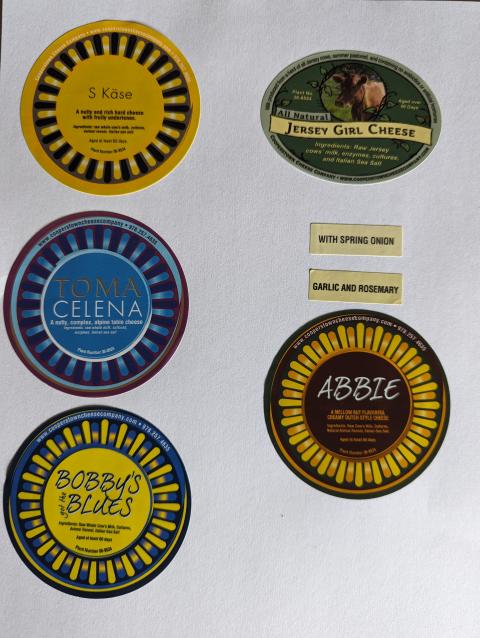
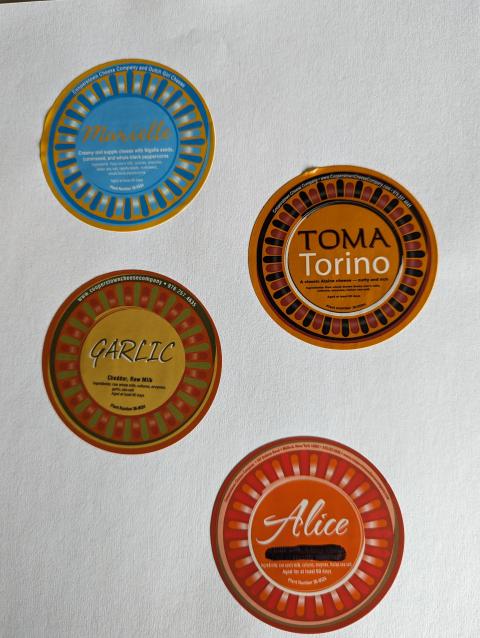
Cooperstown Cheese Company of Milford, NY, is recalling 1400 pounds of cheese purchased, sold or distributed from June 21, 2023 to July 10, 2023 because it has the potential to be contaminated with Listeria monocytogenes, an organism which can cause serious and sometimes fatal infections in young children, frail or elderly people, and others with weakened immune systems. Although healthy individuals may suffer only short-term symptoms such as high fever, severe headache, stiffness, nausea, abdominal pain and diarrhea, listeria infection can cause miscarriages and stillbirths among pregnant women.
Product was distributed in New York State and reached customers through farmers markets, restaurants and retail stores. In a retail store, the product may be repackaged and wrapped in cellophane or cheese paper or vacuum sealed. The products are labelled as Jersey Girl, Toma Celena and Abbie. At farmers markets, the product is wrapped in cheese paper or plastic. The products found at farmers markets are labelled as Jersey Girl, Toma Celena, SK, Jersey Gold, Marielle, Jersey Girl with garlic/rosemary, Jersey Girl spring onion, Bobby’s got the Blues, Toma Torino, Jersey Gold with garlic, and Abbie. Cut and wrapped, the product would last roughly 2 weeks, depending on storage. In restaurants, the products are labelled as Jersey Girl and Toma Celena. All are labelled with Cooperstown Cheese Company labels that contain the company contact information.
The listeria was found through routine environmental testing by the firm and during an FDA inspection.
The company has ceased production as they and FDA continue to investigate the problem.
No illnesses have been reported to date.
Consumers who have purchased any of the products can return them to where they were purchased for refund. For more information, please contact Sharon Tomaselli of Cooperstown Cheese Company at 978-257-4635, 9 to 5, EST.
Posted in Uncategorized
Salmonella in dried dog chews from Germany in Austria
Salmonella spp in soybean meal from Brazil in Hungary and Romania
Salmonella Mbandaka in sunflower seed meal pellets from Argentina in Belgium, France and the Netherlands
Posted in Animal Feed, Animal Feed Salmonella, Animal Feed Testing, Decontamination Microbial, dog chews, Food Micro Blog, Food Microbiology Blog, microbial contamination, Microbial growth, Microbiological Risk Assessment, Microbiology, Microbiology Investigations, Microbiology Risk, Pet Food, Pet Food Salmonella, Pet Food Testing, RASFF, Salmonella Dog Food, Uncategorized
TORONTO — Laura Gieraltowski, lead of the Foodborne Outbreak Response Team at the CDC’s Outbreak Response and Prevention Branch, Division of Foodborne, Waterborne, and Environmental Diseases, presented a review of multistate outbreaks of Salmonella infections linked to melons grown in Indiana.
Speaking at the annual conference of the International Association for Food Protection, Gieraltowski highlighted the outbreak in 2012, where Salmonella-contaminated cantaloupes from a farm in southwest Indiana as the beginning of a concerning pattern. The outbreak caused illness in 261 people across 24 states, resulting in 94 hospitalizations and three deaths.
Posted in Uncategorized
Rabat – About 60 people suffered from food poisoning due to seasonal fruits in Sidi Bennour, a city 174 kilometers away from Casablanca.
A statement from local authorities said that the victims of food poisoning were admitted to the Hospital of Sidi Bennour, with preliminary data showing a consumption of seasonal fruits as a possible cause.
Several ambulances have been deployed to ensure the transfer of urgent cases that need medical care.
No information on the specific products consumed by the victims has been revealed.
The people admitted to the hospital are in stable condition, the statement said, noting that services of the National Office for Food Safety (ONSSA) intervened to take samples of the concerned products to submit them for necessary laboratory analyses.
Posted in Uncategorized
Rajouri/Jammu, Jul 9 (PTI) In a suspected case of food poisoning, a teenager from Nepal died and his cousin brother was hospitalised in Rajouri district of Jammu and Kashmir, police said on Sunday.
Quoting the statement of the accompanying relatives, the official said the condition of the duo deteriorated shortly after having dinner and they were rushed to hospital.
Posted in Uncategorized
New Zealand Food Safety is supporting several importers in their recall of Durra brand products containing tahini due to the possible presence of Salmonella.
“Salmonellosis can be serious, so it is important that people do not eat these products,” says New Zealand Food Safety acting deputy director-general Jenny Bishop.
“Tahini has a long shelf-life, so please check your fridge and throw out the affected products or return them to the place of purchase for a refund.”
The Durra brand products included in this recall are:
As our investigations continue, more products may be posted on the recall page.
Food recall: Durra brand Tahina and Halawa
The affected products are sold at various stores and retail outlets throughout New Zealand. They have been removed from store shelves.
The products have been imported from Jordan and have not been re-exported.
Salmonellosis symptoms appear within 12 to 72 hours and include abdominal cramps, diarrhoea, fever, headache, nausea and vomiting. Illness usually lasts between 4 and 7 days but, in more severe cases, it can go on for up to 10 days and cause more serious illness.
If you have consumed any of these products and are concerned for your health, contact your health professional, or call Healthline on 0800 61 11 16.
“Tahini is a high-risk food, so New Zealand Food Safety has been keeping a close watch on problems with tahini overseas,” Ms Bishop says.
“When we saw a potential issue with product from a manufacturer in Jordan, we worked with importers here to ensure they assessed the safety of the tahini sourced from this manufacturer. Testing was a part of this, and the tests came back positive for Salmonella.”
We are continuing to trace where this product is used, so additional recalls may follow. Our recall page will be updated as needed with additional products. You can subscribe to our food recall emails to get the latest information.
Posted in Uncategorized
The food industry continues to be complicated as new food products with unique ingredients are introduced into the marketplace, supply chain interruptions remain a challenge, and the demand for minimally processed foods grows. Ensuring that appropriate food safety parameters are utilized during the manufacture of food products, with the right supporting documentation, is paramount to providing customers with safe and wholesome food.
The Food Safety Modernization Act’s (FSMA’s) Current Good Manufacturing Practice, Hazard Analysis, and Risk-based Preventive Controls for Human Food regulation requires that preventive controls for food are validated. Per the regulation, validation “…must include obtaining and evaluating scientific and technical evidence (or, when such evidence is not available or is inadequate, conducting studies) to determine whether the preventive controls, when properly implemented, will effectively control the hazards.” Validations for thermal processes are conducted to demonstrate that a specific thermal process can adequately eliminate or reduce the pathogen of concern to a reasonably safe level.
Performance standards are the specific pathogen reduction levels that must be attained during processing to ensure that proper food safety has been achieved. In the case of traditional canning, these limits have been established over decades of scientific testing of canned foods. The 12-D concept, which describes a thermal process that results in a 12-log reduction of Clostridium botulinum spores, has been established for low-acid canned foods as an acceptable performance standard that results in a very low health risk for consumers.
However, in the case of non-canning processing (heat treatment or an alternative), these performance standards can vary depending on the product type. For some non-canned products such as meats, poultry, and nuts, the performance standards have been established by previous scientific testing. For other food products where thermal processes such as baking or blanching are applied, sufficient scientific data is not available or is still in development to establish the proper performance standards for those respective items. Applying previously established high-moisture products’ cook time and temperature parameters to low-moisture products has been proven to be ineffective. Other variables must be considered, such as increased thermal resistance of Salmonella spp. in lower-moisture products, as demonstrated by some recent scientific investigations1 and the effect of impingement cooking on the surfaces of meat products.2,3
Performance standards can be chosen based on available scientific literature, scientific studies performed by the company, or by using risk-based pathogen modeling. In the case where there is no industry-available scientific literature to reference, food companies are expected to provide their own scientific studies and justifications for the safety of their food products.
Posted in Uncategorized

 FoodWorld