Category Archives: Staphylococcus aureus

France – Individual Tropézienne sold in pastry kiosk (traditional showcase)- E.coli – Staphylococcus aureus

Gov france

Identification information of the recalled product

  • Product category Feed
  • Product subcategory Others
  • Product brand name/
  • Model names or references Individual Tropézienne sold in newsstands (traditional showcase) Products sold from 29/08 TO 30/08
  • Identification of products
    Batch
    see attached product list
  • Products Listposter_Auchan_Englos_20220919.pdfAttachment
  • Packaging Sold in pastry stand
  • Marketing start/end date From 08/29/2022 to 08/30/2022
  • Storage temperature Product to be stored in the refrigerator
  • Health mark/
  • Further information/
  • Geographic area of ​​sale Auchan English
  • Distributors Auchan English

Practical information regarding the recall

  • Reason for recall presence of coagulase-positive staphylococci and Escherichia coli
  • Risks incurred by the consumer Escherichia coli
    Staphylococcus aureus (causative agent of staphylococcal poisoning)

Research – Effect of sub-lethal treatment of carvacrol and thymol on virulence potential and resistance to several bactericidal treatments of Staphylococcus aureusResearch –

Journal of Food Protection

This study examined the changes in biofilm-formation ability, hemolytic/lipase/nuclease/protease activities, and resistance to various bactericidal treatments of Staphylococcus aureus after sublethal treatment with carvacrol and thymol. The minimum inhibitory concentrations (MICs) of carvacrol and thymol for S. aureus were 0.4 and 0.3 mg/ml, respectively, and sublethal concentrations (1/2 and 1/4 MIC) were determined based on these concentrations. Sublethal treatment with carvacrol and thymol did not change the protease and lipase activities but reduced the hemolytic and nuclease activities of S. aureus. After sublethal treatment with carvacrol and thymol, the biofilm-formation ability of S. aureus was decreased, which was found to be due to the decrease in cell surface hydrophobicity. In addition, after sublethal treatment with carvacrol and thymol, the resistance of S. aureus to heating and malic acid treatments increased, whereas resistance to ultraviolet and hypochlorous acid (HOCl) decreased, and resistance to hydrogen peroxide (H2O2) did not change. The results of this study show that sublethal treatment with carvacrol and thymol can effectively suppress some virulence factors of S. aureus and that applying HOCl or ultraviolet radiation would be an effective subsequent treatment to inactivate S. aureus after sublethal treatment.

RASFF Alert- Spring Rolls – Staphylococcus

RASFF

Spring rolls_ Staphylococci from France in Ireland, Belgium and the Netherlands

France – NEM CHUA (GUT) – Staphylococcus aureus

Gov france

Identification information of the recalled product

  • Product category Feed
  • Product subcategory Meats
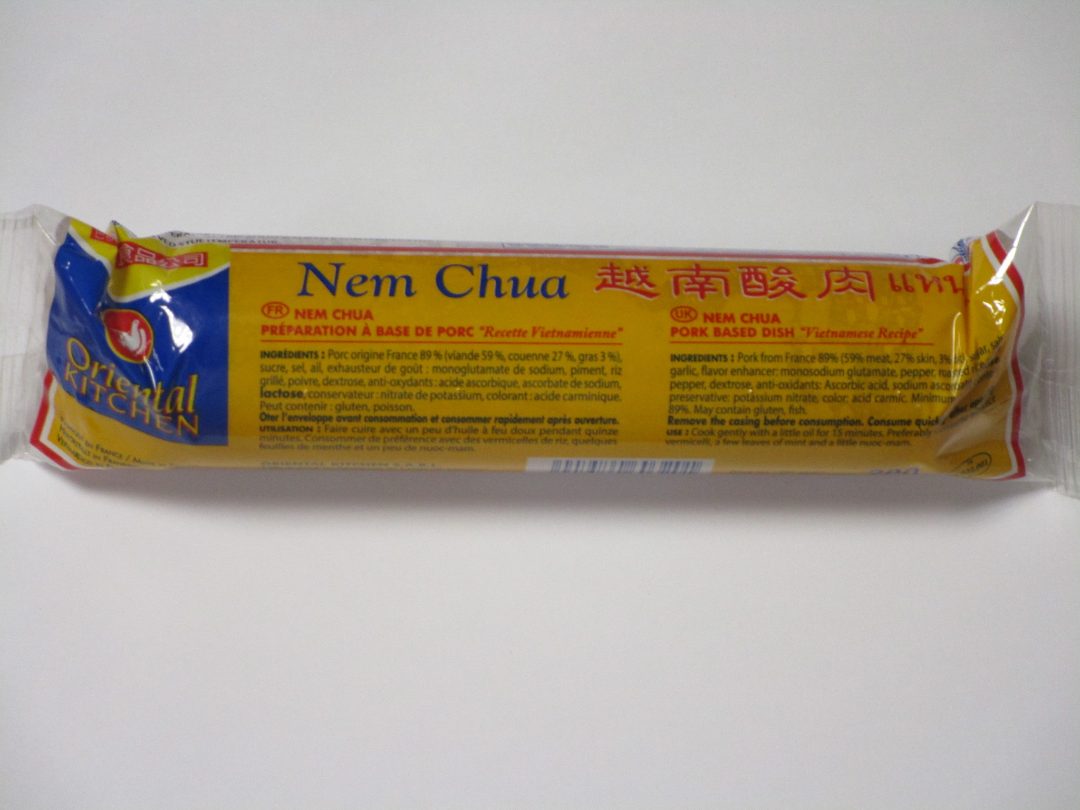
  • Product brand name ORIENTAL KITCHEN
  • Model names or references NEM CHUA Long Stick (gut)
  • Identification of products
    GTIN Batch Date
    3447574603201 Produced in a 200g casing. Use-by date 09/11/2022 Use-by date 09/11/2022
  • Packaging Casing in 200g packaging
  • Marketing start/end date Since 08/19/2022
  • Storage temperature Product to be stored at room temperature
  • Health mark EN 94.022.001 CE
  • Geographic area of ​​sale Whole France
  • Distributors Asian supermarkets and grocery stores, restaurants
  • List of points of saleLIST_CLIENTS_NEM_CHUA_LS_-_DLC_11.09.2022_RAPPEL_CONSO.pdf

Practical information regarding the recall

  • Reason for recall Possible presence of Staphylococci (precautionary principle)
  • Risks incurred by the consumer Staphylococcus aureus (causative agent of staphylococcal poisoning)

France – NEM CHUA (BOYAU) -Staphylococcus aureus

Gov france

Identification information of the recalled product

  • Product category Feed
  • Product subcategory Meats
  • Product brand name ORIENTAL KITCHEN
  • Model names or references Long Stick Noodles (boyau)
  • Identification of products
    GTIN Lot Date
    3447574603201 Produced in a 200g casing. Use-by date 09/11/2022 Use-by date 09/11/2022
  • Packaging Casing in 200g packaging
  • Marketing start/end date Since 08/19/2022
  • Storage temperature Product to be stored at room temperature
  • Health mark FR 94.022.001 CE
  • Geographic area of ​​sale Whole France
  • Distributors Asian supermarkets and grocery stores, restaurants
  • List of points of saleLISTE_CLIENTS_NEM_CHUA_LS_-_DLC_11.09.2022_RAPPEL_CONSO.pdf

Practical information regarding the recall

  • Reason for recall Possible presence of Staphylococci (precautionary principle)
  • Risks incurred by the consumer Staphylococcus aureus (agent responsable d’intoxination staphylococcique)

France – NEM CHUA and NEM CHUA La Tam Ruot – Staphylococcus aureus

Gov france

Identification information of the recalled product

  • Product category Feed
  • Product subcategory Meats
  • Product brand name ORIENTAL KITCHEN
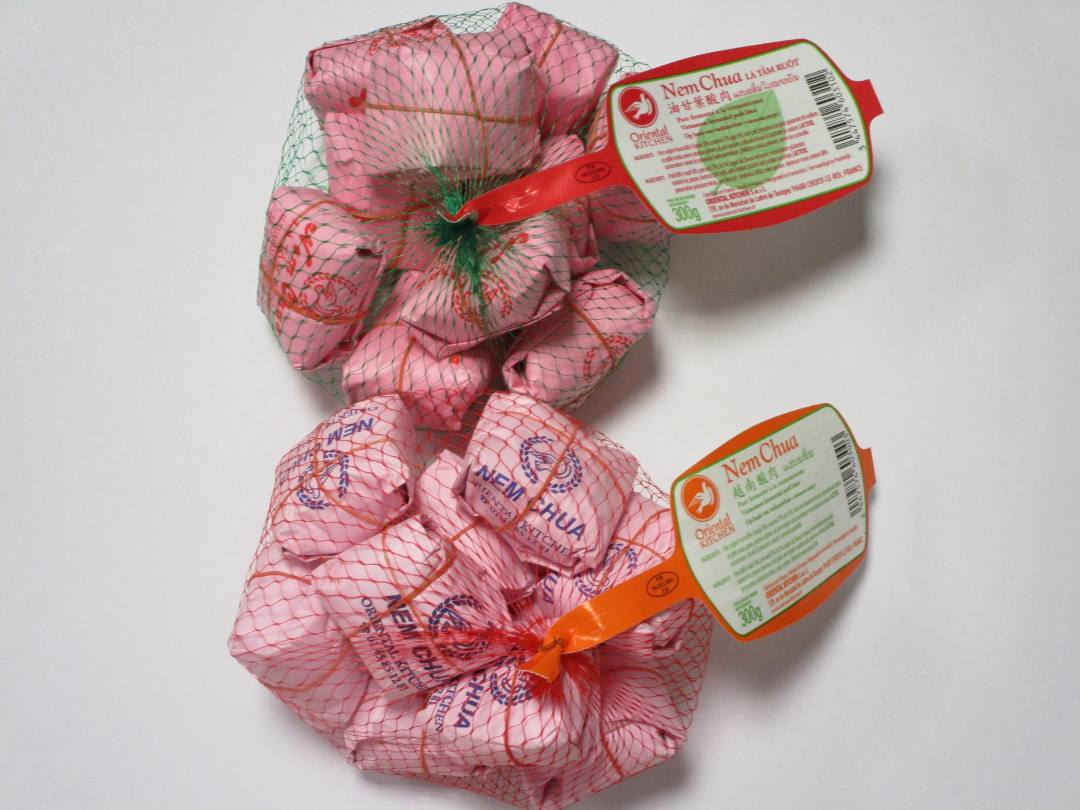
  • Model names or references NEM CHUA and NEM CHUA La Tam Ruot
  • Identification of products
    GTIN Batch Date
    3447574603003 Filet of 300g with Expiration Date: 09/11/2022 Use-by date 09/11/2022
    3447574603102 Filet of 300g with Expiration Date: 09/11/2022 Use-by date 09/11/2022
  • Packaging Net of 10 units (300g)
  • Marketing start/end date Since 08/19/2022
  • Storage temperature Product to be stored at room temperature
  • Health mark EN 94.022.001 CE
  • Geographic area of ​​sale Whole France
  • Distributors Asian supermarkets and grocery stores
  • List of points of saleLIST_CLIENTS_NEM_CHUA_et_NC_LTR_-_DLC_11.09.2022_RAPPEL_CONSO.pdf

Practical information regarding the recall

  • Reason for recall Presence of Staphylococci
  • Risks incurred by the consumer Staphylococcus aureus (causative agent of staphylococcal poisoning)

Research – Whole-Genome Analysis of Staphylococcus aureus Isolates from Ready-to-Eat Food in Russia

MDPI

This study provides a thorough investigation of a diverse set of antimicrobial resistant (AMR) Staphylococcus aureus isolates collected from a broad range of ready-to-eat (RTE) food in various geographic regions of Russia ranging from Pskov to Kamchatka. Thirty-five isolates were characterized using the whole genome sequencing (WGS) analysis in terms of clonal structure, the presence of resistance and virulence determinants, as well as plasmid replicon sequences and CRISPR/Cas systems. To the best of our knowledge, this is the first WGS-based surveillance of Russian RTE food-associated S. aureus isolates. The isolates belonged to fifteen different multilocus sequence typing (MLST)-based types with a predominant being the ones of clonal complex (CC) 22. The isolates studied can pose a threat to public health since about 40% of the isolates carried at least one enterotoxin gene, and 70% of methicillin-resistant (MRSA) isolates carried a tsst1 gene encoding a toxin that may cause severe acute disease. In addition, plasmid analysis revealed some important characteristics, e.g., Rep5 and Rep20 plasmid replicons were a “signature” of MRSA CC22. By analyzing the isolates belonging to the same/single strain based on cgMLST analysis, we were able to identify the differences in their accessory genomes marking their dynamics and plasticity. This data is very important since S. aureus isolates studied and RTE food, in general, represent an important route of transmission and dissemination of multiple pathogenic determinants. We believe that the results obtained will facilitate performing epidemiological surveillance and developing protection measures against this important pathogen in community settings. View Full-Text

Sweden – Pasta meal behind 80 illnesses in Sweden – Staphylococcus/Bacillus

Food Safety News

Around 80 people got food poisoning from a pasta meal at a soccer tournament this past month in Sweden.

An investigation into the incident in Gammelstad on Aug. 5 revealed people fell ill after eating spaghetti bolognese from a restaurant in the city of Luleå.

Testing of the bolognese left at the restaurant was found to be satisfactory. Samples were also taken in Gammelstad where serving took place. High levels of bacteria were detected in the pasta, plus the presence of toxins that can cause food poisoning. Food had been left at room temperature for some time after serving, which provided an opportunity for bacterial growth.

Bacillus cereus and Staphylococcus aureus were found in the pasta meal. Symptoms experienced by those sick matched what would be expected with such contamination.

RASFF Alert – Staphylococcal Toxin Outbreak – Canned Mushrooms

RASFF

Staphylococcal toxin outbreak due to consumption of canned mushrooms (boletus edulis) from Spain

Spain – Alert for the presence of Staphylococcal toxin in mushrooms fried in olive oil (Boletus edulis)

asca

 09:30
fried mushrooms