Category Archives: Shigella

USA -Shigella Hits Brazoria County

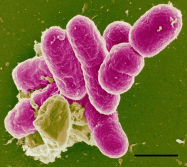
Shigella - kswfoodworld

The Brazoria County Department of Health announced today that there has been an increase in Shigella illnesses in the Texas county over the last two months.

The majority of those sick are children and most cases appear to be linked to schools and daycares. The number of confirmed cases or the daycares linked in this Brazoria County Shigella Outbreak have not yet been disclosed.

Research – Population dynamics of Salmonella spp. and Shigella spp. in ready‐to‐eat Mediterranean vegetable salads

Wiley Online

Abstract

This study evaluated the behavior of Salmonella and Shigella (5–6 log CFU/g) in tomato–cucumber (TC) salad without additives (control), TC with 1.0% lemon juice and 0.5% salt, TC with 10% wt/wt tahini, coleslaw, and toum sauce at 4, 10, or 24°C for 5 days. At 4°C, both pathogens survived well in all salads, with a 0.2–1.6 log CFU/g reduction after 5 days (except for toum sauce with >3.5 log CFU/g reduction after 4 days). At 10°C, Salmonella in the different TC salads remained constant, whereas Shigella numbers significantly increased by 1.0–1.7 log CFU/g after 5 days. Yet, both pathogens significantly decreased by 1.2–1.4 log CFU/g in coleslaw after 5 days and by >3.5 log CFU/g in toum sauce after 3 days. At 24°C, Salmonella significantly increased in TC salad without additives by 1.4 log CFU/g after 5 days and were below the detection level in the other types of salad after 5 days. However, Shigella numbers significantly increased by 1.0 log CFU/g in TC with tahini, but they significantly declined by 1.9–2.9 log CFU/g in TC salads after 5 days, and the pathogen was not detected in coleslaw and toum sauce after 4 days.

USA – Shigella Outbreak in Amador County

Outbreak News Today

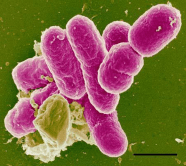
Shigella - kswfoodworld

Image CDC

Amador County health officials announced this week that they are currently investigating a Shigella outbreak in their county. According to the announcement, there is a “significant increase in acute frequent diarrhea is being reported in Amador County.” The county, however, did not state how many illnesses are involved or the medical status of those who are sick. 
It is believed that the health department has determined the source but has been mum about naming it. The health department’s statement noted that: “Amador County Environmental Health and Public Health are completing an investigation and have enforced food safety practices at a lone establishment associated with reports of this illness.”

USA – Multistate Outbreak of Gastrointestinal Illnesses Linked to Oysters Imported from Mexico is Over

CDC

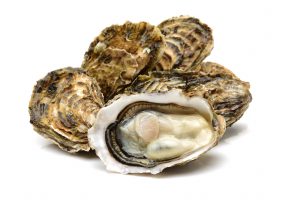
Photo of oysters.

Image CDC

This outbreak appears to be over. Consumers, restaurants, and retailers should always handle and cook oysters properly. Get CDC’s tips for preventing foodborne illness from oysters and other shellfish.

Final Outbreak Information
Illustration of a megaphone.
  • As of June 21, 2019, this outbreak appears to be over.
  • Sixteen ill people were reported from five states.
    • Illnesses started on dates ranging from December 16, 2018, through April 17, 2019.
    • Two people were hospitalized. No deaths were reported.
  • Laboratory testing on samples from patients identified multiple pathogens causing infections. Some people were infected with more than one pathogen.
  • Case counts by pathogen or illness:
    • Four cases of Shigella flexneri infection
    • Two cases of Vibrio parahaemolyticus infection
    • One case of Vibrio parahaemolyticus and Shiga toxin-producing Escherichia coli (STEC) non-O157 coinfection
    • One case of Vibrio parahaemolyticus and Shigella flexneri coinfection
    • One case of Shigella flexneri and Campylobacter lari coinfection
    • One case of Vibrio albensis infection
    • One case of norovirus genogroup 1 infection
    • One case of infection with Vibrio of unknown species
    • Four cases of illness without a pathogen identified
  • Epidemiologic and traceback evidence indicated that raw oysters harvested from Estero El Cardon in Baja California Sur, Mexico, were the likely source of this outbreak.
  • On May 6, 2019, one U.S. distributor of oysters harvested from Estero El Cardon issued a voluntary recallexternal icon.
  • At the request of Mexico’s public health authorities, all raw oysters distributed from Estero El Cardon from the last week of April 2019 through the first week of May 2019 were recalled pdf icon[PDF – 474 KB]external icon.


USA – Raw Oysters link in Shigella Outbreak

Food Poison Journal


Audience

  • Consumers who recently experienced symptoms of foodborne illness after eating raw oysters
  • Restaurants that sell raw oysters in California, Nevada, New York, and Arizona

Product

  • Oysters harvested from Estero El Cardon, Baja California Sur, Mexico
  • Oysters were distributed primarily to California, Nevada, New York, and Arizona
  • Oysters were sold to wholesale distributors with direct sales to restaurants and not to grocery retail outlets.

Purpose

Consumers should not purchase oysters marketed as being harvested from Estero El Cardon, in Baja California Sur, Mexico from restaurants. Consumers who have recently experienced symptoms of foodborne illness should contact their healthcare provider and report their symptoms and receive care.

Restaurants and retailers should not serve oysters from the Estero El Cardon harvest area in Baja California Sur, Mexico. Restaurants and retailers should dispose of any products with harvest tags that indicate a growing area of Estero El Cardon by throwing them away.


USA – Shigella Outbreak at Wedding in Oregon Linked to Asparagus

Food Poisoning Bulletin Shigella - kswfoodworld

According to data presented at the CDC’s Annual Epidemic Intelligence Service Conference, contaminated asparagus was the likely source of a Shigella outbreak at a Yarnhill County wedding in Oregon in 2018. One hundred twelve people were sickened; 10 people were hospitalized.

A total of 263 people attended the wedding. Seventy-five percent of those people responded to the survey. The patient age range was from 2 to 93 years. Of the 95 people who responded, 97% said they got sick within 12 to 72 hours after the wedding. Fifty-seven patients went to a health care facility.

Investigators found that only asparagus was associated with illness.

USA – FDA Investigates Shigella Illnesses Linked to Imported Raw Oysters

FDA


The FDA is investigating a subset of a larger outbreak investigation being conducted by the Centers for Disease Control and Prevention. Between the harvesting dates of February 12, 2019 and April 9, 2019, five ill patients reported eating raw oysters shortly before becoming ill with Shigella flexneri. One of the five patients was hospitalized; there have been no deaths. The last illness onset was April 17, 2019. Laboratory analyses were used to confirm that reported clinical illnesses matched pathogens found in product samples and traceback information indicated the implicated shellfish were harvested from Estero El Cardon, in Baja California Sur, Mexico.

The FDA confirmed that oysters harvested in Estero El Cardon, Baja California Sur, Mexico, were distributed to California, Nevada, New York, and Arizona with illnesses reported in California, Nevada and New Hampshire. The New Hampshire case reported eating at a restaurant in California shortly before becoming ill. It is possible that additional states received these potentially contaminated oysters either directly from Mexico or through further distribution within the U.S.

On May 7, 2019, the Mexican Shellfish Sanitation Program authorities voluntarily closed the growing area of Estero El Cardon and halted oyster harvesting in response to the reported illnesses. The shelf-life of fresh, raw oysters is limited. All raw oysters from this growing area are no longer expected to be available to consumers. For more information please see www.issc.org/noticesExternal Link Disclaimer.

USA – FDA Investigates Shigella Illnesses Linked to Imported Raw Oysters

FDA 

May 21, 2019

Audience

  • Consumers who recently experienced symptoms of foodborne illness after eating raw oysters
  • Restaurants that sell raw oysters in California, Nevada, New York, and Arizona

Product

  • Oysters harvested from Estero El Cardon, Baja California Sur, Mexico
  • Oysters were distributed primarily to California, Nevada, New York, and Arizona
  • Oysters were sold to wholesale distributors with direct sales to restaurants and not to grocery retail outlets.

Purpose

Consumers should not purchase oysters marketed as being harvested from Estero El Cardon, in Baja California Sur, Mexico from restaurants. Consumers who have recently experienced symptoms of foodborne illness should contact their healthcare provider and report their symptoms and receive care.

Restaurants and retailers should not serve oysters from the Estero El Cardon harvest area in Baja California Sur, Mexico. Restaurants and retailers should dispose of any products with harvest tags that indicate a growing area of Estero El Cardon by throwing them away.

Symptoms of Shigella Illness (Shigellosis)

Shigella is a bacterium that spreads from contaminated feces. It often spreads through unclean water that an infected person has been in. Food can become contaminated when handled by an infected person who did not use proper hand hygiene after going to the bathroom, or if contaminated water is used in the process of growing or preparing the food.

Symptoms of shigellosis generally develop within 8 hours or up to about 2 days. Although shigellosis is often mild and goes away by itself in a week or less, it can become very serious in some cases. Severe cases can be treated with certain antibiotics. Symptoms of shigellosis may include watery stool that may have blood, pus, or mucus in it, vomiting, cramping, and fever. Young children, the elderly, and people with a weak immune system are more likely than others to develop severe illness.

If you suspect you have symptoms of shigellosis, contact a health professional.

USA – Vibrio Shigella E. coli Outbreak Linked to Raw Oysters in California

Food Poisoning Bulletin

A Vibrio Shigella E. coli and norovirus outbreak linked to raw oysters from Baja California Sur, Mexico has sickened at least 12 people in California, according to the California Department of Public Health (CDPH).

Those twelve patients reported illnesses in February, March, and April 2019 after consuming raw oysters that were sold by restaurants and retailers in Los Angeles, Orange, Santa Barbara, and San Diego counties. The raw oysters were sold throughout the state.

Lab testing was performed on isolates from eight cases. Officials identified Vibrio parahaemolyticus in three patients, Vibrio albensis in one, an unidentified species of Vibrio in one patient, Shigella flexneri serotype 1 in two patients, and norovirus. In addition, one of the people infected with Vibrio parahaemolyticus cases was co-infected with non-O157 Shiga toxin-producing E. coli bacteria.

Traceback evidence has shown that the oysters were harvested from Estero El Cardon. Authorities in Mexico have been notified about this outbreak and are investigating.

USA – Outbreak of Multidrug-Resistant Shigella sonnei Infections in a Retirement Community — Vermont, October–November 2018

CDC

On October 22, 2018, the Vermont Department of Health (VDH) notified CDC’s Waterborne Disease Prevention Branch of an outbreak of diarrhea caused by Shigella sonnei among residents, visitors, and staff members of a retirement community in Chittenden County, the state’s most populous county. High-quality single nucleotide polymorphism (SNP) analysis predicted initial isolates were multidrug resistant (MDR), and were closely related to a concurrent multistate cluster (differing by 0–11 SNPs). In the United States, rates of MDR shigellosis are increasing (1); outbreaks of MDR shigellosis are more common among men who have sex with men and are rare in retirement community settings (2). CDC collaborated with VDH to identify additional cases, determine transmission routes, and recommend prevention and control measures.