Category Archives: Salmonella

Luxembourg – La Provençale products recalled for Salmonella risk

RTL

A number of meat products have been recalled from Luxembourg’s supermarkets, petrol stations and butchers due to the risk of contracting salmonella.

Salmonella can cause symptoms such as nausea, vomiting, abdominal cramps, diarrhoea, fever and headache within six to 72 hours after consumption.

These symptoms may be aggravated in young children, immunocompromised individuals and the elderly. People who have consumed these products and who have these symptoms are advised to consult their doctor.

SAP

La Provençale is recalling the following products:

New
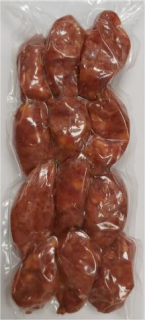
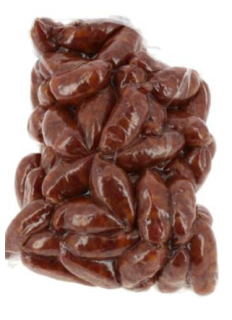
Last name Mettwurst Cocktail 12 pieces vacuum packed
Mark The Provencal
Use by date (DLC) 04/25/21
Lot 555015
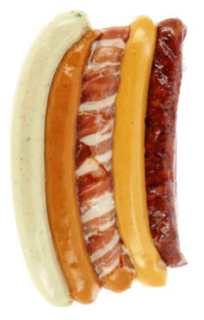
Last name BARBECUE SAUSAGE ASSORTMENT 5 pieces vacuum packed
Mark The Provencal
Use by date (DLC) All DLC between 04/16/21 and 04/23/21
Lot  520520 and 534534
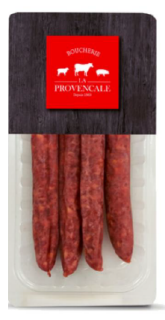
Last name BIERSTUMPEN MINI 4X + -50GR (190GR) UNDER SKIN
Mark The Provencal
Unit 190 g
Use by date (DLC) 04/25/2021
Lot 513166
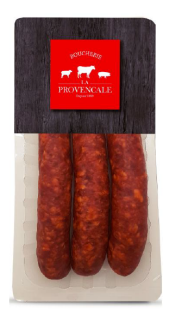
Last name METTWURST 3PC 340GR UNDER SKIN
Mark The Provencal
Unit 340 g
Use by date (DLC) 04/25/2021
Lot 513218
Last name METTWURST HOUSE COCKTAIL 80X15 GR S / EMPTY
Mark The Provencal
Use by date (DLC) 04/25/21
Lot 530494

Danger  : Presence of Salmonella

Salmonella can cause symptoms such as nausea, vomiting, abdominal cramps, diarrhea, fever and headache within 6 to 72 hours after consumption. These symptoms may be aggravated in young children, immunocompromised individuals and the elderly. People who have consumed these products and who have these symptoms are advised to consult a doctor, notifying him of this consumption.

Sale in Luxembourg through supermarkets, gas stations, butchers and grocery stores.

Source of information: La Provençale recall notification

Communicated by: Government Commission for Quality, Fraud and Food Safety .
USA- FSIS Issues Public Health Alert for Raw Ground Turkey Products Linked to Salmonella Hadar Illness

FSIS USDA

The U.S. Department of Agriculture’s Food Safety and Inspection Service (FSIS) is issuing a public health alert for approximately 211,406 pounds of raw ground turkey products, produced by Plainville Brands, LLC, a Pennsylvania establishment, due to concerns the products may have caused Salmonella Hadar illness. A recall was not requested because it is believed that the products are no longer available for consumers to purchase.

FSIS is concerned that some product may be frozen and in consumers’ freezers. Consumers who have purchased these products are urged not to consume them. These products should be thrown away or returned to the place of purchase. Retail locations that may receive returned product from consumers should destroy this product immediately.

The raw ground turkey products were produced on December 18, 2020 through December 29, 2020. The following products are subject to the public health alert:

  • 1-lb. packages of Nature’s Promise Free from 94% LEAN | 6% FAT Ground Turkey with Use by/freeze/sell by date of 1/1/21, 1/3/21,1/4/21, 1/8/21 and 1/10/21 on the front of the package.
  • 1-lb. packages of Wegman 94% LEAN | 6% FAT Ground Turkey with Use by/freeze/sell by date of 1/3/21, 1/4/21, 1/8/21 and 1/10/21 on the front of the package.
  • 3-lb. packages of Wegman 94% LEAN | 6% FAT Ground Turkey with Use by/freeze/sell by date of 1/3/21, 1/4/21, 1/8/21 and 1/10/21 on the front of the package.
  • 1-lb. packages of Plainville Farms Ground White Turkey 93% | 7% Fat with Use by/freeze/sell by date of 1/10/21 on the front of the package.

The products bear establishment number EST. P-244 inside the USDA mark of inspection. These items were shipped to retail locations nationwide.

FSIS and its public health partners, including the Centers for Disease Control and Prevention (CDC), public health and regulatory officials are investigating a multistate outbreak of 28 Salmonella Hadar illnesses in 12 states with onset dates ranging from December 28, 2020 through March 4, 2021. The traceback investigation for one case patient identified the patient consumed ground turkey produced by Plainville Brands, LLC. An intact, unopened package of Plainville Brands’ ground turkey collected from this case-patient’s home tested positive for Salmonella Hadar and was closely related genetically to the sample from the patient. Evidence collected to date does not link all illnesses to this establishment. Based on the continuing investigation, additional product from other establishments may be involved. FSIS continues to work with CDC and state and local public health partners on this investigation and will provide updated information as it becomes available.

Consumption of food contaminated with Salmonella can cause salmonellosis, one of the most common bacterial foodborne illnesses. The most common symptoms of salmonellosis are diarrhea, abdominal cramps, and fever within 12 to 72 hours after eating the contaminated product. The illness usually lasts 4 to 7 days. Most people recover without treatment. In some persons, however, the diarrhea may be so severe that the patient needs to be hospitalized. Older adults, infants, and persons with weakened immune systems are more likely to develop a severe illness. Individuals concerned about an illness should contact their health care provider.

FSIS advises all consumers to safely prepare their raw meat products, including fresh and frozen, and only consume raw ground turkey that has been cooked to a temperature of 165°F. The only way to confirm the poultry item is cooked to a temperature high enough to kill harmful bacteria is to use a food thermometer that measures internal temperature, https://www.fsis.usda.gov/safetempchart.

Consumers and members of the media with questions about the public health alert can contact Yusef Robb at (323)384-1789 or by email at yusef@tkCommunicationsLLC.com.

Consumers with food safety questions can call the toll-free USDA Meat and Poultry Hotline at 1-888-MPHotline (1-888-674-6854) or live chat via Ask USDA from 10 a.m. to 6 p.m. (Eastern Time) Monday through Friday. Consumers can also browse food safety messages at Ask USDA or send a question via email to MPHotline@usda.gov. For consumers that need to report a problem with a meat, poultry, or egg product, the online Electronic Consumer Complaint Monitoring System can be accessed 24 hours a day at https://foodcomplaint.fsis.usda.gov/eCCF/.

Product Images

Company Information

New Oxford, PA

ESTABLISHMENT ID

P244

PROCESSING CATEGORY

Raw – Not Intact

Company Contact Information

COMPANY MEDIA CONTACT
Company Media Contact
Yusef Robb (323) 384-1789

FSIS Contact Information

MEDIA CONTACT
Congressional and Public Affairs
Veronica Pegram-Williams 202-697-9113

USA- Recalled: Meow Mix Original Choice Dry Cat Food -Salmonella

Petful

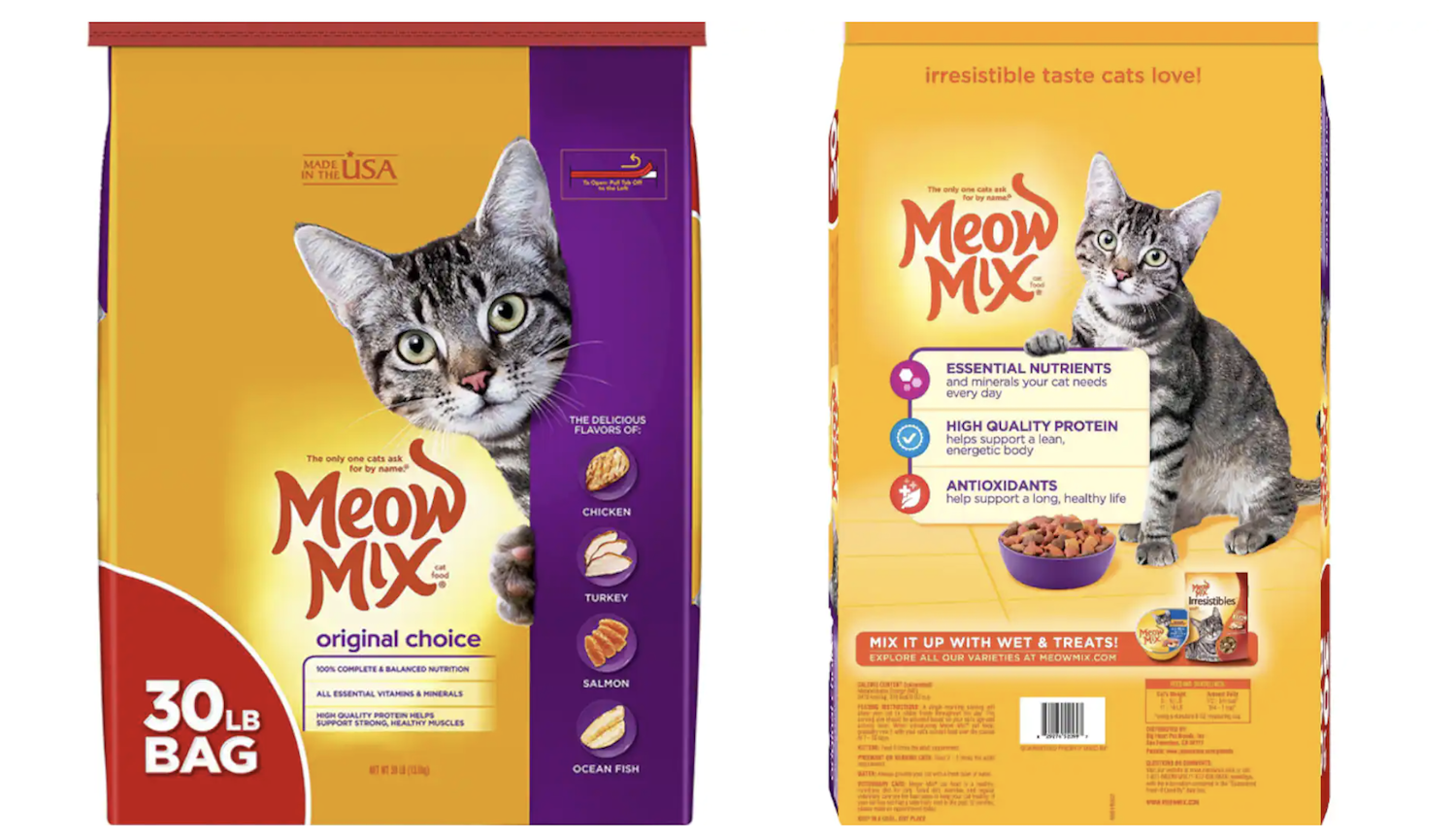
Photo of front and back of Meow Mix packages

Maker: J.M. Smucker Co.
Cause: Potential for salmonella
Announcement: News release dated April 9, 2021 (archived here)
What was recalled: The following 2 specific lots of dry cat food under the Meow Mix brand:

  • Meow Mix Original Choice Dry Cat Food, 30 lb. bag, Lot #1081804, UPC #2927452099, best by Sept. 14, 2022
  • Meow Mix Original Choice Dry Cat Food, 30 lb. bag, Lot #1082804, UPC #2927452099, best by Sept. 15, 2022

This is the first-ever Meow Mix recall we are aware of — which is quite impressive given the brand’s 47-year history.

The recall was announced in a news release by the parent company, J.M. Smucker Co., and it is limited to only the 2 specific lots of dry cat food listed above. No other Meow Mix products are affected.

The company says the bags of food listed above may be at risk of contamination with salmonella, a type of bacteria that can cause illness in pets and humans. So far, according to the company, there have been no reports of illness stemming from the Meow Mix.

The affected Meow Mix cat food was sold in select Walmart stores in Illinois, Missouri, Nebraska, New Mexico, Oklahoma, Utah, Wisconsin and Wyoming.

If you have either of the specific packages listed above, do not feed it to your cats. Instead, throw the cat food away and request a refund from the store you purchased it from.

If you need more information or would like to report adverse reactions, call the company at 1-888-569-6728.

Research – Pulsed light treatment of dried parsley: reduction of artificially inoculated Salmonella spp. and impact in given quality parameters

Journal of Food Protection

Dried parsley is regularly contaminated with foodborne pathogens, especially Salmonella (S.) spp. Application of contaminated ingredients in ready-to-eat dishes without further thermal treatment represents a considerable health risk. This study examines the suitability of pulsed light as a novel decontamination method of Salmonella spp. in dried parsley, the impact on selected quality parameters (chlorophyll content, phenolic compounds, color, odor) and product characters (temperature, aw-value). Samples were inoculated with one of three Salmonella isolates (S. Cerro or one of two isolates of S. Agona) at two contamination levels of 103 or 107 CFU/g and treated under various experimental factors, including distance to the light source and exposure time, resulting in fluences in the range of 1.8 – 19.9 J/cm2. At selected parameter settings (9.8 and 13.3 J/cm2), the effect of prolonged storage time (48 h) of inoculated samples prior to treatment on the reduction of S. Cerro was examined. Samples treated at the same fluences were also stored for 35 days at 22 – 25 °C. The three Salmonella isolates were significantly reduced by pulsed light (p < 0.05). Reduction factors ranged between 0.3 – 5.2 log CFU with varying sensitivities of the isolates. In general, increasing fluences (depending on exposure time and distance to the light source) resulted in increasing reductions of Salmonella spp. However, on closer examination, exposure time and distance to the light source in detail had a varying influence on the reduction of the different Salmonella isolates. Decreasing reduction factors were observed by increasing the contamination level and prolonging storage time of inoculated samples prior to treatment. No undesirable changes in quality parameters and sensory analysis were detectable at fluences of 9.8 and 13.3 J/cm2, indicating that pulsed light may be a suitable alternative for the decontamination of dried parsley.

Research – Resistance levels still high in bacteria causing foodborne infections

EFSA

A sizeable proportion of Salmonella and Campylobacter bacteria is still resistant to antibiotics commonly used in humans and animals, as in previous years, says a report released today by the European Centre for Disease Prevention and Control (ECDC) and the European Food Safety Authority (EFSA).

In humans, high proportions of resistance to ciprofloxacin, an antibiotic commonly used to treat several types of infections, were reported in a specific Salmonella type known as S. Kentucky (82.1%). In recent years, S. Enteritidis resistant to nalidixic acid and/or ciprofloxacin has been increasingly reported in several countries. The increasing occurrence of fluoroquinolone and/or quinolone resistance in these types of Salmonella probably reflects the spread of particularly resistant strains.

In Campylobacter, resistance to ciprofloxacin is now so common in most countries that this antimicrobial has limited use in treatment of Campylobacter infections in humans.

However, the report also includes some positive findings. Over the period 2015-2019, a decline in resistance to ampicillin and tetracyclines has been observed in Salmonella isolates from humans in eight and eleven Member States respectively.

A decreasing trend has also been observed in the prevalence of extended-spectrum β-lactamase (ESBL)- producing E. coli in samples from food producing animals from 13 Member States between 2015 and 2019. This is an important finding as particular strains of ESBL-producing E. coli are responsible for serious infections in humans.

Combined resistance to two critically important antimicrobials – fluoroquinolones and third generation cephalosporines in Salmonella and fluoroquinolones and macrolides in Campylobacter – remains low. These critically important antimicrobials are commonly used to treat serious infections from Salmonella and Campylobacter in humans.

The rate of E. coli bacteria in samples from food producing animals that respond to all antimicrobials tested also increased. This was observed in nine Member States over the period 2014-2019.

The report was based on antimicrobial resistance monitoring data collected by Member States as part of their EU regulatory obligations and jointly analysed by EFSA and ECDC with the assistance of external contractors.

Research – A cross-border outbreak of Salmonella Bareilly cases confirmed by whole genome sequencing, Czech Republic and Slovakia, 2017 to 2018

Eurosurveillance

spp. are the third most common cause of bacterial food-borne illnesses worldwide and the second most commonly reported zoonotic agents in the European Union (EU). The bacterial genus  consists of  and  species. More than 2,500 serotypes of  have been identified so far , many of them commonly infecting animals (e.g. poultry, pigs, cattle) and humans. The distribution of predominant serovars in each country are affected by changes in the global food and livestock trade, international travel, and human migration.

 subsp.  serovar Bareilly ( Bareilly) belongs to the C1 serogroup (antigenic formula 6, 7, 14: y: 1,5) and was first identified in India in 1928. In the United Kingdom (UK), 31% of all  Bareilly human cases identified between 2005 and 2009 were attributed to travel from India. Since 2004,  Bareilly has most commonly been isolated from spices. Contaminated mung bean seeds were the likely source of a  Bareilly outbreak in the UK in 2010, with total of 231 cases. In an outbreak of salmonellosis in the United States, which comprised 410 cases of  Bareilly across 28 states and the District of Columbia, tuna scrape imported from India was identified to be the source using whole genome sequencing (WGS)-based methods.

Since 2016,  Bareilly has been among the top 20  serotypes associated with human diseases in the European Union/European Economic Area (EU/EEA) . Between 2006 and 2016,  Bareilly was among the top 25 serotypes detected in humans in the Czech Republic, with the annual incidence ranging from 0.04 to 0.23 per 100,000 inhabitants (data from the Czech national electronic communicable diseases notification system). According to data from the Czech national control programme for  in poultry,  Bareilly was identified in broiler flocks with a prevalence of up to 0.06%.

Salmonellosis has been a mandatory notifiable disease in both the Czech Republic and Slovakia since 1951. Regional public health officers notify case-based data to the national electronic communicable diseases notification system (EpiDat/ISIN in the Czech Republic and the Epidemic Intelligence Information System (EPIS) in Slovakia). Both systems record data on all cases that meet the definition of a confirmed case in accordance with the European Commission Implementing Decision 2119/98/EC. The information on  serovar, which is provided by routine microbiological laboratories handling human samples, is included in the reporting systems. These laboratories typically test for a limited spectrum of serovars only, and  Bareilly is usually not included. The Czech and Slovak National Reference Laboratories (NRLs) (the Czech NRL is a part of the National Institute of Public Health in Prague, the Slovak NRL is part of the Public Health Authority in Bratislava) provide serotyping of less common serovars and confirm results from routine microbiological laboratories on request.

There are several options to confirm the relatedness of  isolates in laboratories. Macro-restriction analysis followed by pulsed-field gel electrophoresis (PFGE) is usually a suitable method for the detection and investigation of  outbreaks. However, in some cases, it does not provide sufficient discriminatory power to distinguish outbreak isolates. Therefore, WGS-based typing methods are now increasingly applied as molecular epidemiology tools to assist in outbreak investigations.

Denmark – Risk of Salmonella in the Supplement REMEMBER Psyllium Stomach Balance Basic (capsules)

DVFA

Orkla Care A / S is recalling a batch of the dietary supplement REMEMBER Psyllium Stomach Balance Basic (capsules) due to the risk of salmonella in the product.

Recalled Foods , Published: April 9, 2021

What foods:
REMEMBER Psyllium Stomach Balance Basic (capsules) 
Best before date: 30.09.2023
Batch number: 505433
Sold in:
Specialty stores and pharmacies
Company recalling:
Orkla Care A / S
Cause:
Risk of salmonella in the product.
Risk:
There is a risk of infection with salmonella. The symptoms include diarrhea, nausea, abdominal pain, fever and vomiting.
Advice for consumers:
The Danish Veterinary and Food Administration advises consumers to deliver the product back to the store where it was purchased or to discard it.

Research – Exotic dried fruits caused Salmonella Agbeni outbreak with severe clinical presentation, Norway, December 2018 to March 2019

Eurosurveillance

Non-typhoid salmonellosis is a gastrointestinal infection characterised by diarrhoea, nausea and occasionally vomiting and fever. In 2017, 20 confirmed salmonellosis cases per 100,000 population were reported in the European Union (EU), making it the second most commonly reported food-borne infection [1]. In Norway, it is mandatory to report all cases of salmonellosis to the Norwegian Surveillance System for Communicable Diseases (MSIS), and the medical microbiology laboratories submit  isolates to the National Reference Laboratory for Enteropathogenic Bacteria (NRL) at the Norwegian Institute of Public Health (NIPH) for confirmation and molecular epidemiological surveillance by whole genome sequencing (WGS). The incidence rate was 18 per 100,000 inhabitants in 2018

The majority of cases are travel-related, as Norway has few known domestic reservoirs. The dominating serotypes detected are  Typhimurium and  Enteritidis. Outbreaks involving different serovars of  are observed irregularly in Norway, with four national outbreaks reported in 2018.

On Tuesday 12 February 2019, the NRL identified a cluster of four  Agbeni isolates, identical by WGS. Previously, this rare serotype of  had only been reported from a few sporadic cases in Norway and from a few outbreaks in the United States (US) and Canada. The cases resided in different municipalities in Norway. The following week, three more cases were detected. The initial interviews indicated a dried fruit mix product as the possible source of the outbreak. The NIPH initiated an outbreak investigation in collaboration with the Norwegian Food Safety Authority (NFSA) and the Norwegian Veterinary Institute (NVI) to identify the source of the outbreak and implement control measures.

This article describes the outbreak investigation and public health measures, and the finding that consumption of a ready-to-eat snack product of dried exotic fruits caused the outbreak of  Agbeni in Norway.

Italy – BLACK PEPPER wild boar salami – Salmonella

Salute

Brand : IT 645 – L CE

Name : BLACK PEPPER wild boar salami

Reason for reporting : Recall due to microbiological risk

Publication date : 8 April 2021

Documentation

Documentation

RASFF Alerts – Salmonella – Potato Seasoning – Polish Chicken – Boar Salami – Black Pepper – Ground Onions

European Food Alerts

RASFF

Salmonella enterica ser. Bredeney (presence /25g) and Salmonella enterica ser. Montevideo (presence /25g) in potato seasoning from Turkey in Finland

RASFF

Salmonella enterica ser. Enteritidis (in 4 out of 5 samples /25g) in chilled chicken elements from Poland in Poland

RASFF

Salmonella enterica ser. Enteritidis (phagetype 6D /25g) in frozen chicken leg meat from Poland in Bulgaria

RASFF

Salmonella enterica ser. Enteritidis (in 3 out of 5 samples /25g) in chilled chicken fillets from Poland in Poland

RASFF

Salmonella group C1 (detected /25g) in boar salami from Italy in Austria

RASFF

Salmonella (presence /25g) in black pepper from Brazil in Spain

RASFF

Salmonella (in 1 out of 5 samples; O:8 /25g) in frozen chicken products from Poland in Poland

RASFF

Salmonella (in 2 out of 5 samples, O:7 O:8 /25g) in frozen chicken products from Poland in Poland

RASFF

Salmonella (presence /25g) in ground onions from India in Germany