Category Archives: Salmonella

RASFF Alerts – Salmonella – Polish Chicken Products – Polish Duck Products – Polish Eggs – Salami – Tiger Nut Flour – Chicken Shashlik in Yogurt Marinade – Black Pepper – Organic Horsetail – Sesame Paste – Fresh Eggs

RASFF

Salmonella Enterica ser. Enteritidis in frozen pekin duck from Poland in Slovenia

RASFF

Suspicion of Salmonella enterica ser. Enteritidis (presence in enviromental samples /25g) in eggs from Poland in Poland and Ireland

RASFF

Salmonella Enteritidis in samples of chicken filet from Poland in France and Vietnam

RASFF

Chicken shashlik in yogurt marinade – Salmonella Infantis- from Estonia in Latvia

RASFF

Salmonella in black pepper from Brazil in the Netherlands

RASFF

Salmonella spp. in organic horsetail from Ukraine in Austria, Germany, Italy, Netherlands, Switzerland

RASFF

Salmonella Enteritidis and Infantis in samples of chicken neck skins from Poland in Belgium, Czech Republic, Italy, Latvia, Romania

RASFF

Salmonella Enteritidis in chicken neck skin from Poland in Austria, Czech Republic, Ghana, Poland and Slovakia

RASFF

Salmonella spp. in sesame paste from Syria in Germany and the Czech Republic

RASFF

Salmonella enterica ser. Infantis in chicken legs from Poland in the Czech Republic

RASFF

Poultry meat – salmonella enteritidis from Poland in Poland and Ghana

RASFF

Salmonella Enteritidis in frozen chicken mini breast fillets rom Belgium in UK and the Netherlands

RASFF

Salmonella Newport in chicken meat from Poland in Poland, Hungary, Italy, Lithuania

RASFF

Salmonella enterica ser. Newport (in 5 out of 5 samples /25g) in chilled chicken meat from Poland in Belgium, Bulgaria, Czech Republic and Hungary

RASFF

Risk of Salmonella Enteritidis in fresh eggs from Denmark in Germany, Hong Kong and Sweden

RASFF

Salmonella Johannesburg in tiger nut flour from Spain in Germany and Hungary

RASFF

Salmonella spp. in salami from Italy in Italy

Italy – Emiliano Appetizer – Salmonella

Salute

Brand : Cuor di Terra

Name : Emiliano Appetizer

Reason for reporting : Recall due to microbiological risk

Publication date : 5 November 2021

Click to access C_17_PubblicazioneRichiami_1549_azione_itemAzione0_files_itemFiles0_fileAzione.pdf

USA – Core Investigations Table Update – 4 Ongoing Investigations

FDA

EU – Eleventh external quality assessment scheme for Salmonella typing

ECDC

Executive summary

Salmonellosis was the second-most commonly reported zoonotic disease in the European Union (EU) in 2019, with a notification rate of 20.0 cases per 100 000 population. The total number of reported cases was 90 105 [3]. Since 2007, ECDC has been responsible for EU-wide surveillance of salmonellosis, including facilitating the detection and investigation of food-borne outbreaks. Surveillance data, including certain basic typing parameters, are reported by Member States to the European Surveillance System (TESSy). Since 2012, the EQA scheme has covered molecular typing methods used for EU-wide surveillance.

The effective molecular typing-enhanced surveillance relies on the capacity of NPHRLs in the FWD-Net to produce comparable typing results. ECDC has opened the possibility for Member States to submit WGS data for Salmonella and Listeria monocytogenes to TESSy to be used for EU-wide surveillance and cross-sector comparison. The previous EQA schemes from EQA-4 to EQA-8 included assessment of the PFGE typing methods for all Salmonella serovars and MLVA for S. Typhimurium (STm). Since EQA-8, the participants could participate in MLVA for S. Enteritidis (SE). From EQA-9, the separate PFGE part was excluded. Since then, PFGE has only been included into the cluster analyses part where the ability of identifying a cluster based on molecular typing by either using PFGE, MLVA and/or whole genome sequencing (WGS) derived data was assessed.

The objectives of the EQA-11 scheme were to assess the quality of data and comparability of molecular typing analysis results produced by NPHRLs in FWD-Net. Test isolates for the EQA were selected to cover isolates currently relevant for public health in Europe. Three sets of 10 isolates were selected, including S. Typhimurium and S. Enteritidis isolates for the respective MLVA methods and the cluster analysis included ten S. Enteritidis ST11 isolates.

Twenty-one laboratories signed up and 20 completed the exercise. This is a decrease from EQA-8 (N=23) by 13%. It is unknown if the removal of the PFGE part (gel quality and analysis) was the cause of this. Most laboratories (N=19) participated in the molecular typing-based cluster analysis. Out of the 20 laboratories participating in EQA-11, 14 (70%) performed molecular typing-based cluster analysis using WGS-derived data, which is one less compared to EQA-10.

In total, eight laboratories participated in the S. Typhimurium and S. Enteritidis MLVA analysis, which is slightly fewer compared with EQA-8, when 10 and eight laboratories participated, respectively. The performance level was high for both analyses (95% and 98% respectively) and within the range of the previous years.

The aim of the cluster analysis part of the EQA was to assess the NPHRL’s ability to identify a cluster of genetically closely related isolates i.e. correctly categorise cluster test isolates regardless of the method used. The cluster of closely related S. Enteritidis ST11 isolates could be investigated by PFGE, MLVA and WGS-derived data. The expected cluster was based on a predefined categorisation by the organiser and contained five isolates based on WGS-derived data.

The number of laboratories performing WGS has stabilised as no new laboratories performed WGS this year and over time, the use of PFGE and MLVA has become less frequent. Fewer laboratories performed cluster analysis with more than one method and only one laboratory performed cluster analysis using all three methods in EQA-11.

Six laboratories used PFGE for cluster analysis and for three participants; PFGE was the only cluster analysis method. None of the six laboratories were able to identify the correct cluster using PFGE. Four laboratories used MLVA for cluster analysis and two laboratories only used MLVA for the cluster analysis. All ten test isolates had the same MLVA profile and therefore it was not possible for the participants to identify the correct cluster of closely related isolates using this less discriminatory method.

The performance among the 14 participants using WGS derived data was very high, as 13 (93%) correctly identified the cluster of closely related isolates and the use of allele-based analysing method (mainly core genome multilocus sequence typing (cgMLST)/Enterobase scheme) was dominant.

An assessment of six EQA provided genomes was an additional part to the molecular typing-based cluster analysis. In an urgent outbreak situation, the sequence data available is not always of high quality, therefore, this EQA-part was designed to mimic this situation. The participants were asked to assess six genomes, which were modified by the EQA provider in order to give a realistic view of different quality issues. All participants (except one for one of the genomes) successfully identified the three genomes of high quality as either a cluster isolate (one genome) or a non-cluster isolate (two genomes). Two poor quality genomes with contamination of a different Salmonella ST34 (20%) were identified by all the participants. Ten of 14 participants identified the genome with 10% Citrobacter -contamination.

USA – Keeler Family Farms Salmonella Onions Retail List Released

Food Poisoning Bulletin

The FDA has published the Keeler Family Farms Salmonella onions retail distribution list, associated with the huge multistate Salmonella Oranienburg outbreak that has sickened at least 808 people in 37 states. The list is very short, as opposed to the retail distribution list for ProSource Produce onions, which was released a few days ago.

Germany – DANAEG Great Freedom 6 pieces DANAEG Frei 10 pieces – Eggs – Salmonella

LMW

Danaeg Bild.jpg

Warning type:

Food

Date of first publication:

11/02/2021

Product name:

DANAEG Great Freedom 6 pieces DANAEG Frei 10 pieces

Consumer information DANAEG
Manufacturer (distributor):

DANAEG A / S Denmark

Reason for warning:

In the course of a quality control carried out, suspicion of Salmonella was found for the articles mentioned.

Packaging Unit:

6 pieces per unit, 10 pieces per unit

Durability:

11/01/2021, 11/03/2021, 11/05/2021, 11/08/2021, 11/10/2021, 11/12/2021, 11/15/2021,

Lot identification:

Print number: 1DK081131

Germany – Horsetail “Horsetail” cut organic – Salmonella

LMW

Warning type: Food
Date of first publication: 03/11/2021
Product name:

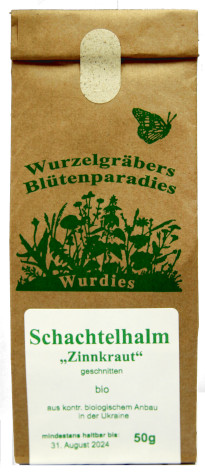
Horsetail “Horsetail” cut organic

Product pictures:
Produktbild.png
Manufacturer (distributor):

Wurdies Herbs GmbH & Co. KG

Reason for warning: 

Detection of salmonella

Packaging Unit: see attached press release
Durability: see attached press release
Production date: see attached press release
Lot identification: see attached press release
Additional Information:

Reference is made to the company’s press release attached.

Homepage of the manufacturer:

Research – Irradiation to tackle foodborne bacteria

Food Manufacture

Alison Johnson, managing director at Food Forensics, discusses the use of irradiation in the fight against salmonella, campylobacter and E.coli.

USA – Outbreak Investigation of Salmonella Oranienburg: Whole, Fresh Onions (October 2021) – Update

FDA

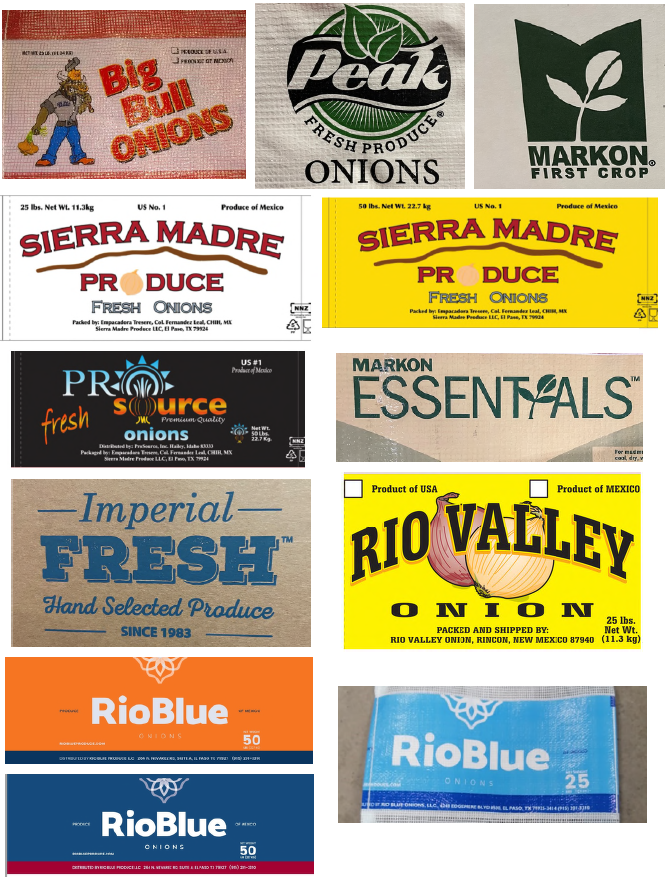
Outbreak Investigation of Salmonella Oranienburg in Whole, Fresh Onions - Sample Product Images (October 2021)

The FDA, along with CDC and state and local partners, is investigating a multistate outbreak of Salmonella Oranienburg infections linked to whole, fresh onions. FDA’s traceback investigation is ongoing but has identified ProSource Produce, LLC (also known as ProSource Inc.) of Hailey, Idaho, and Keeler Family Farms of Deming, New Mexico, as suppliers of potentially contaminated whole, fresh onions imported from the State of Chihuahua, Mexico.

On October 29, 2021, the FDA published a list of retail establishments that received product recalled by ProSource Produce LLC. This list represents the best information currently available to the FDA; however, it may not include all retail establishments that have received the recalled product or may include retail establishments that did not actually receive the recalled product. It is important that you use the product-specific information, available on the ProSource Produce LLC recall announcement, in addition to this list of retail stores, when you check the food you have to see if it has been recalled.

FDA’s investigation is ongoing to determine the source of contamination and if additional products or firms are linked to illness. Additional information will be provided as it becomes available.

Recommendation

Advice for restaurants, retailers and consumers: Do not eat, sell or serve recalled onions, or products containing recalled onions. All recalled onions were supplied by ProSource Produce LLC and Keeler Family Farms and imported from the State of Chihuahua, Mexico between July 1, 2021 and August 31, 2021. FDA has posted a list of additional recalls being conducted by companies that may have received recalled onions from ProSource Produce LLC and Keeler Family Farms. This list includes recalls conducted by companies that further processed the onions by using them as ingredients in new products or by repackaging them. If you cannot tell if your onions were recalled, do not eat, sell, or serve them and throw them out.

Onions may last up to three months if stored in a cool, dry place. Restaurants, retailers, and consumers who suspect having purchased such onions may still have them in storage and should not eat, sell, or serve them, and should throw them out.

FDA recommends that anyone who received or suspects having received recalled onions use extra vigilance in cleaning and sanitizing any surfaces and containers that may have come in contact with these products to reduce the risk of cross-contamination. This includes cleaning and sanitizing cutting boards, slicers, countertops, refrigerators, displays, and storage bins.

Suppliers and Distributors: Do not use, ship, or sell recalled onions. Suppliers and distributors that repackage raw onions should clean, rinse, sanitize, and air dry any surfaces and storage areas that may have come into contact with these products.  Farms and firms within the supply chain of recalled onions, including shippers, distribution centers, retailers and restaurants, should immediately clean and sanitize all food contact surfaces and non-food contact surfaces of equipment and tools that the onions may have touched or that may have become contaminated, including refrigerators, counter tops, storage shelving, trucks or other transportation carriers, etc. If there has been potential cross contamination or mixing of onions from other sources with these products, suppliers and distributors should discard all comingled and potentially cross-contaminated product.

Recall Information

FDA published a list of retail establishments that received product recalled by ProSource Produce LLC. This list represents the best information currently available to the FDA; however, it may not include all retail establishments that have received the recalled product or may include retail establishments that did not actually receive the recalled product. It is important that you use the product-specific information, available on the ProSource Produce LLC recall announcement, in addition to this list of retail stores, when you check the food you have to see if it has been recalled.

FDA has posted a list of additional recalls being conducted by companies that may have received recall onions from ProSource Produce LLC and Keeler Family Farms. This list includes recalls conducted by companies that further processed the onions by using them as ingredients in new products or by repackaging them.

ProSource Produce LLC has voluntarily recalled red, yellow, and white onions imported from the State of Chihuahua, Mexico, with import dates from July 1, 2021, through August 31, 2021. Additional descriptors used for these onion types may include, but are not limited to, jumbo, colossal, medium, summer and sweet onions. Additional recall information will be made public as soon as it is available from ProSource Inc.

The onions were distributed to wholesalers, broadline foodservice customers, and retail or grocery stores in:

  • 50 lb., 25 lb., 10 lb., 5 lb., 3 lb., and 2 lb. mesh sacks
  • 50 lb., 40 lb., 25 lb., 10 lb., and 5 lb. cartons

And by the following distributors and/or under the following brands:

  • Big Bull
  • Peak Fresh Produce
  • Sierra Madre
  • Markon First Crop.
  • Markon Essentials
  • Rio Blue
  • ProSource
  • Rio Valley
  • Sysco Imperial

Keeler Family Farms has recalled red, yellow, and white whole, fresh onions imported from the State of Chihuahua, Mexico, with import dates from July 1, 2021, through August 25, 2021. The onions were distributed in 25lb and 50lb mesh sacks. They contain a label that is marked as “MVP (product of MX)”.

Additional details regarding the recalled products are available on the Keeler Family Farms recall announcement.

Recalls have also been initiated by companies that sold recalled onions or products containing the recalled onions.

Information – Spain – Omelette, yes. Salmonella, no

asca

Salmonella is a bacterium that causes one of the most common foodborne diseases: salmonellosis. In food it is found mainly in eggs and in raw pork and chicken. It can be spread to people through foods that contain Salmonella .

According to epidemiological data, salmonella causes a third of the food poisoning that occurs in Catalonia.

Thanks to the control measures applied at all stages of the food chain, from primary production until the food reaches the consumer, the number of salmonella cases and outbreaks in Catalonia has been considerably reduced.

Another essential element for the prevention of human salmonellosis is the improvement in food preparation practices in restaurants and at home.

Scientific knowledge supports that cooking is the only way to eliminate salmonella:

  • Food containing eggs must be cooked to a temperature that reaches 75 ° C in the center of the product.
  • The tortillas have to be well curdled.
  • Roasts of meat and chicken have to reach 75 ° C in the center of the piece. Make sure the juices are clear and not pink.

Click to access EFSA_Salmonela-no.pdf