Category Archives: Salmonella

Research – The Prevalence and Epidemiology of Salmonella in Retail Raw Poultry Meat in China: A Systematic Review and Meta-Analysis

MDPI

Foodborne disease caused by Salmonella is an important public health concern worldwide. Animal-based food, especially poultry meat, is the main source of human salmonellosis. The objective of this study was to evaluate the prevalence and epidemiology of Salmonella contamination in raw poultry meat commercialized in China. Following the principle of systematic review, 98 sets of prevalence data were extracted from 74 publications conducted in 21 Chinese provincial regions. The random-effect model was constructed for subgrouping analysis by meat category, preservation type, and geographical location. The prevalence levels differed from high to low among raw poultry meat, including chicken, 26.4% (95% CI: 22.4–30.8%); pigeon, 22.6% (95% CI: 18.2–27.8%); duck, 10.1% (95% CI: 5.3–18.2%); and other poultry meat, 15.4% (95% CI: 12.0–19.5%). Prevalence data on the preservation type revealed that chilled poultry meat might be more likely to experience cross-contamination than non-chilled poultry meat in China. The distribution map of Salmonella for raw poultry meat showed that a higher prevalence level was found in the Shaanxi, Henan, Sichuan, and Beijing regions. All subgroups possessed high amounts of heterogeneity (I2 > 75%). The scientific data regarding the differences in prevalence levels between meat category, preservation method, and geographical region sources might be useful to improve specific interventions to effectively control the incidence of Salmonella in poultry meat. View Full-Text

USA – Salmonella, Mold/Mould prompt recall of Marijuana Syrups and Distallates

Food Safety News

Aflatoxin

Image CDC

Public health officials in Arizona are reporting a recall of several marijuana products after testing found Salmonella and Aspergillus mold. The Arizona Department of Health Services reports that the recall includes edible products in the forms of honey-like syrup and distallates.

Several unidentified dispensaries and other unspecified marijuana-related businesses initiated the recall. Consumers who bought the products listed below are being advised to throw them away.

Although no illnesses or reactions have been confirmed as of the posting of the recall notice, Salmonella can cause serious infections and Aspergillus can cause life-threatening reactions in people who have certain mold allergies.

Denmark – Salmonella outbreaks from Danish eggs stopped

SSI

The same type of salmonella has been found in both samples from a Danish egg producer and samples from patients in a current salmonella outbreak. The eggs, which have been sold through several retail stores, were recalled on October 30 and can therefore no longer be purchased.

Salmonella in Danish eggs has made a number of Danes sick. That is the conclusion, after the Statens Serum Institut (SSI) between 15 September and 29 October 2021 has registered 18 infected people with the same type of Salmonella Enteritidis. The 10 women and eight men aged 2-85 years live scattered across the country. In total, 9 (50%) of the patients have been hospitalized.

The DTU Food Institute and SSI have compared the bacteria from the herd and salmonella samples from the patients. The comparison showed that the 18 patients had an infection with exactly the same subtype of salmonella. Interviews with ten of the patients have further shown that they had all eaten eggs shortly before they became ill and before the infected eggs were withdrawn.

“It is highly unusual for us to have an outbreak of disease caused by Danish eggs. Fortunately, these outbreaks are very rare and the last time we had a similar outbreak was seven years ago “, says epidemiologist at SSI, Luise Müller.

Pulled eggs back

On Saturday, October 30, 2021, the egg packing plant recalled the specific eggs after salmonella was found in high levels in samples from the herd. The recall concerns scrap eggs, free-range eggs and cage eggs, where the egg has a stamp with “DK081131”. The eggs had a minimum shelf life to date 16 November 2021. Information on the recall of eggs can be found on the Danish Veterinary and Food Administration’s website .

“In Denmark, we have a fine-meshed system for testing eggs for salmonella and an emergency response across the human and food side that responds as soon as we see an outbreak with salmonella. That is why it is also a success that we have been able to clear up the source of the infection so quickly and call the eggs back, so that no more people get sick, ”says Nikolas Kühn Hove, Emergency Manager at the Danish Veterinary and Food Administration.

The system works

The Danish monitoring program for salmonella in eggs is very fine-grained and means, among other things, that samples for control of salmonella are taken every 14 days from egg producers. With this sampling frequency in Denmark, the risk of infected eggs entering the market is very small. The most recent disease outbreak, where Danish eggs were the source of infection, was in 2014, with 18 registered cases of the disease. Also there, the eruption was stopped before it became a major eruption.

There is no guarantee that eggs are free of salmonella, but the risk is generally small, especially in Danish eggs. To be on the safe side, and if, for example, you cook for the sick, the elderly and children, you can use pasteurized eggs for dishes that are not subsequently heat-treated. In addition, it is always important to follow the three tips on good kitchen hygiene: “Warm up properly – cool down quickly”, “Keep it separate” and “Rinse fruit and vegetables.”

The coordination of the efforts and the investigation of the disease outbreak has taken place under the auspices of the Central Outbreak Group. It consists of representatives from SSI, the DTU Food Institute and the Danish Veterinary and Food Administration.

RASFF Alerts – Salmonella- Polish Chicken Products – Black Pepper – Chicken Meat Preparation – Frozen Chicken Wings and Thighs – Chicken Cutlets- Guinea Fowl – Turmeric

RASFF

Salmonella Infantis and Salmonella Enteritidis in chilled chicken meat from Poland in Latvia, Czech Republic, Belgium and Bulgaria

RASFF

Salmonella enteritidis in chicken breast from Poland in the Czech Republic

RASFF

Fresh poultry meat-Salmonella spp from Poland in Poland, UK, Netherlands and France

RASFF

Salmonella in Brazilian black pepper in the Netherlands

RASFF

Salmonella in Brazilian black pepper in the Netherlands

RASFF

Salmonella Typhimurium in frozen chicken wings and drumsticks from Hungary in Croatia

RASFF

Salmonella Enteritidis and Salmonella Typhimurium in poultry meat from Poland in Bulgaria, Hungary, Italy, Latvia and Poland

RASFF

Salmonella Enteritidis in chicken meat from Poland in France

RASFF

Salmonella Minnesota, Salmonella Newport and Salmonella Abaetetuba in black pepper from Brazil in Germany

RASFF

Salmonella enterica ser. Saintpaul (presence /25g) in black pepper from Brazil in Germany

RASFF

Salmonella Minnesota in black pepper from Brazil in Germany

RASFF

Salmonella Münster in black pepper from Brazil in Germany

RASFF

Salmonella Bovismorbificans and Salmonella II 42:r:- in black pepper from Brazil in Germany

RASFF

S. Poona and S. Morehead in black pepper from Brazil in Germany

RASFF

Salmonella Poona, Salmonella Oranienburg, Salmonella Minnesota and Salmonella Saintpaul in black pepper from Brazil in Germany

RASFF

Salmonella group E1 O-form in black pepper from Brazil in Germany

RASFF

Salmonella enterica ser. Typhimurium in chilled turkey thighs from Poland in Poland and Belgium

RASFF

Salmonella enterica ser. Derby (in 1 out of 5 samples /25g) in chilled chicken meat from Poland in Austria, Bulgaria, Czech Republic, Germany, Greece, Hungary, Latvia, Poland and Slovakia

RASFF

Salmonella derby in official samples of chicken neck skins from Poland in Hungary, Italy and Romania

RASFF

Salmonella in chicken meat preparation from Thailand in the Netherlands

RASFF

Salmonella Bareilly and Bacillus cereus (enterotoxin) in Turmeric from Bosnia and Herzegovina in Slovenia

RASFF

Salmonella Enteritidis in official samples of chicken neck skins from Poland in Hungary and Latvia

RASFF

Salmonella in chicken cutlets from Italy in Germany

RASFF

Salmonella Enteritidis in poultry meat (guinea fowl and chicken) from France in Germany and Monaco

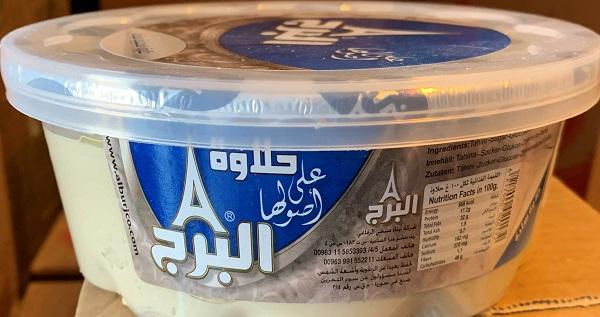
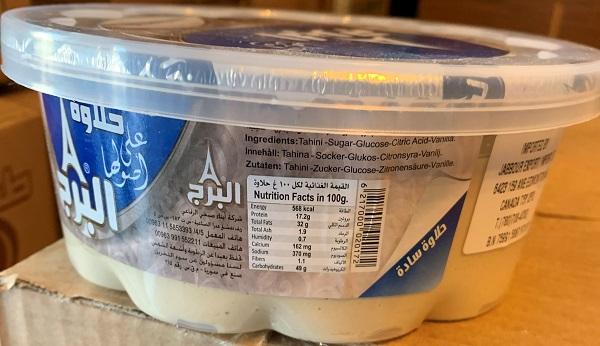
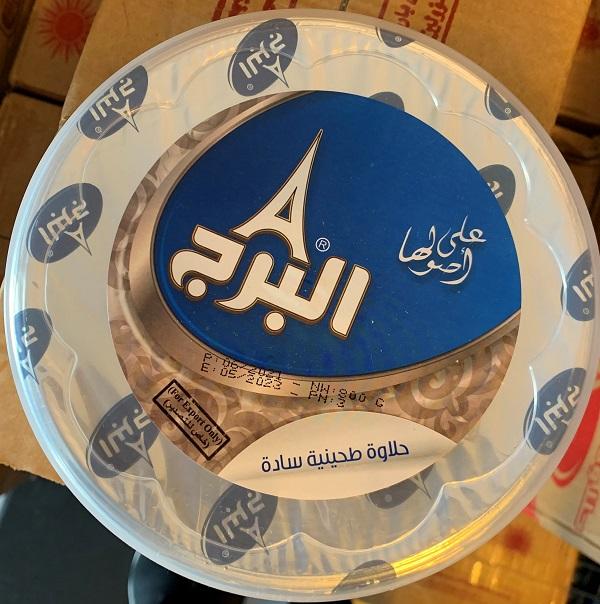
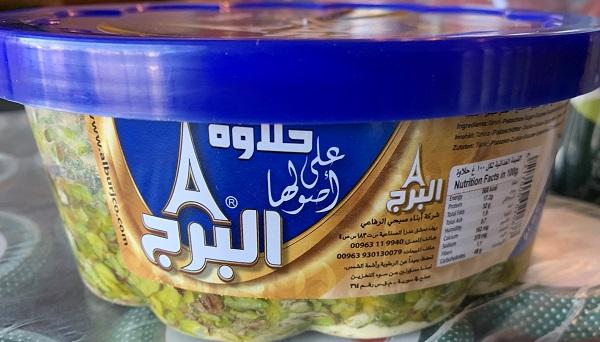
Canada – AlBurj brand Tahina and Halawa recalled due to Salmonella

CFIA

Summary

Product
Tahina and halawa
Issue
Food » Microbial Contamination » Salmonella
What to do

Do not consume, use, sell, serve, or distribute the recalled products

Affected products

Brand Product Size UPC Codes
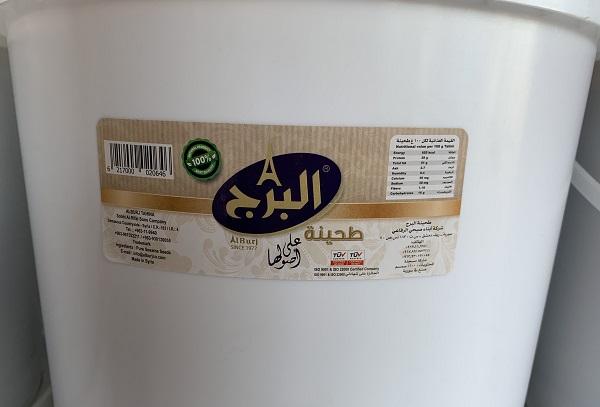
AlBurj (Arabic characters only) Tahina 800 g 6 217000 020646 All codes up to and including:
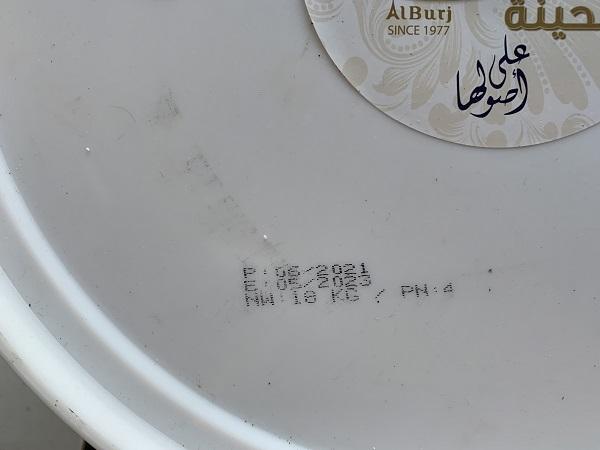
P: 06/2021
AlBurj Tahina 18 kg 6 217000 020646 All codes up to and including:
P: 06/2021
AlBurj (Arabic characters only) Halawa Original (Arabic characters only) 800 g 6 217000 020172 All codes up to and including:
P: 06/2021
AlBurj (Arabic characters only) Halawa Pistachio Extra (Arabic characters only) 800 g 6 217000 020677 All codes up to and including:
P: 06/2021
AlBurj (Arabic characters only) Halawa Pistachio (Arabic characters only) 800 g 6 217000 020486 All codes up to and including:
P: 06/2021

Issue

Jabbour Export/Import Ltd. is recalling AlBurj brand Tahina and Halawa from the marketplace due to possible Salmonella contamination.

The recalled products have been sold in Alberta.

What you should do

  • If you think you became sick from consuming a recalled product, call your doctor
  • Check to see if you have the recalled products in your home or establishment
  • Do not consume the recalled products
  • Do not serve, use, sell, or distribute the recalled products
  • Recalled products should be thrown out or returned to the location where they were purchased

USA – A 30-month Study of 80 Cases of Salmonella Oranienburg Infection

AAP

kswfoodworld Salmonella

A 30-month study is reported of an epidemic of salmonellosis involving 46 newborn infants and 34 older individuals who were contacts and became carriers. A total of 80 persons was involved, all having positive stool cultures for Salmonella sp. (type Oranienburg). Of the total number of infants delivered during the epidemic, the 46 infected infants established an attack rate of 20%. The additional 34 older individuals who were carriers were contacts of the infected infants. The mechanics of contact or mode of pattern of spread could not be completely determined. In the newborn infants response to this infection varied. One infant died, 7 were acutely ill, 33 had symptoms of grossly abnormal stools, 5 had asymptomatic infection and were diagnosed by positive stool cultures alone. With one exception, the older individuals all were asymptomatic and were diagnosed by positive stool cultures. Serologic confirmation of the presence of this specific infection was established by determinations of specific antibodies. These were positive in 9 of 10 infants. In the older individuals, antibody agglutinations were positive in seven of eight so studied. Of the 33 infants followed, all became carriers and at the end of 30 months, cultures of stools of 30 of the total number had become negative for Salmonella sp. (type Oranienburg) and 3 remained positive. Of the 22 older individuals followed, all had cultures negative for Salmonella sp. (type Oranienburg) at the end of 13 months. Therapy was prescribed in six acute cases and all of these patients recovered. Experimental therapy for the carrier state resulted in failure in all cases. A comparison of the group of 20 infants not treated suggested that stools of the untreated patients cleared spontaneously more readily than those who were treated.

France – GROUND BEEF PREPARED TO REQUEST – Salmonella

Gov france

Identifying information for the recalled product

  • Product category Food
  • Product sub-category Meats
  • Product brand name/
  • Names of models or references GROUND BEEF PREPARED TO REQUEST SOLD IN BUTCHER STAND
  • Product identification
    Lot
    see list of products attached
  • Products List Reminder_Tag.pdf Enclosed
  • Packaging Packaged in butcher’s stand
  • Start date / End of marketing From 11/02/2021 to 11/09/2021
  • Storage temperature Product to be stored in the refrigerator
  • Health mark/
  • Further information The packaging date is indicated on the label of the bag given to the customer.
  • Geographical sales area Auchan Supermarket Les Halles Strasbourg
  • Distributors Auchan Supermarket Les Halles Strasbourg

Practical information regarding the recall

  • Reason for recall presence of Salmonella
  • Risks incurred by the consumer Salmonella spp (causative agent of salmonellosis)

USA -Euro Foods Dba Citterio USA Corp. Recalls Salame Stick Products Due To Possible Salmonella Contamination

FSIS USDA

WASHINGTON, Nov. 10, 2021 – Euro Foods, a Freeland, Penn. establishment, is recalling approximately 119,091 pounds of salame stick products that may be contaminated with Salmonella the U.S. Department of Agriculture’s Food Safety and Inspection Service (FSIS) announced today. FSIS issued a public health alert for the salame stick products on October 29, 2021, believing that the product was no longer in commerce. However, following this alert, FSIS observed product available at one retail location and two Citterio salame stick samples previously collected by the California Department of Public Health have tested positive for Salmonella.

The Italian-style salame stick items were produced prior to October 25, 2021. The following products are subject to recall [view label]:

  • 2-oz. packages containing Citterio “Premium Italian-Style Salame Sticks ALL NATURAL” with “best by” dates through January 23, 2022, located next to the barcode.

The products subject to recall bear establishment number “EST. 4010” inside the USDA mark of inspection. These items were shipped to retail locations nationwide and exported to Bermuda.

FSIS has been working with the Centers for Disease Control and Prevention (CDC) and state public health partners to investigate a multistate outbreak of 31 Salmonella I 4,[5],12:i:- illnesses in 10 states with onset dates ranging from September 18, 2021 through October 18, 2021. The epidemiologic and traceback investigation identified that ill people consumed Citterio Italian-style Salame Sticks produced by Euro Foods Inc. Two unopened, intact, packages of Citterio Italian-style Salame Sticks collected by the California Department of Public Health as part of the ongoing investigation tested positive for Salmonella. Further testing is ongoing to determine if the product samples are related to the outbreak. FSIS continues to work with federal and state public health partners to determine if there are additional illnesses linked to these products.

Consumption of food contaminated with Salmonella can cause salmonellosis, one of the most common bacterial foodborne illnesses. The most common symptoms of salmonellosis are diarrhea, abdominal cramps, and fever within 6 hours to 6 days after eating the contaminated product. The illness usually lasts 4 to 7 days. Most people recover without treatment. In some persons, however, the diarrhea may be so severe that the patient needs to be hospitalized. Older adults, infants, and persons with weakened immune systems are more likely to develop a severe illness. Individuals concerned about an illness should contact their health care provider.

FSIS is concerned that some product may be in consumers’ pantries or refrigerators. Consumers who have purchased these products are urged not to consume them. These products should be thrown away or returned to the place of purchase.

Click to access 042-2021-label.pdf

Canada – Certain broccoli seeds sold by Junction Microgreens recalled due to Salmonella

CFIA

Product
Broccoli seeds
Issue
Food » Microbial Contamination » Salmonella
What to do

Do not consume or use the recalled product

Affected products
Brand Product Size UPC Codes
None – sold by Junction Microgreens Broccoli seeds Approximately 12 g None Sold from June 1, 2021 to August 31, 2021 at The Junction Farmers Market, Toronto, Ontario

Issue

Junction Microfarm (dba Junction Microgreens) is recalling certain broccoli seeds from the marketplace due to possible Salmonella contamination.

The recalled product has been sold in Ontario.

What you should do

  • If you think you became sick from consuming a recalled product, call your doctor
  • Check to see if you have the recalled product in your home
  • Do not consume or use the recalled product
  • Recalled products should be thrown out or returned to the location where they were purchased

USA – Chicken and Salmonella Infantis, the Neverending Outbreak?

Food Poisoning Bulletin

When the CDC ended its investigation of a deadly Salmonella Infantis outbreak linked to raw chicken products in February 2019, it added an unusual note at the top of the posting. “This investigation is over. Illnesses could continue because this Salmonella strain appears to be widespread in the chicken industry,” it read in part.

Two and a half years later, the impact of that statement came into focus when an investigative report from ProPublica revealed that the outbreak, linked to a multidrug-resistant strain of Salmonella Infantis, has never ended.

“Many people are still becoming ill, and some of them gravely ill,” Robert Tauxe told ProPublica. Tauxe, who is the director of the Center for Disease Control and Prevention’s (CDC’s) Division of Foodborne, Waterborne, and Environmental Diseases, said the agency receives dozens of reports of illness linked to this strain each month, according to the report.

For every culture-confirmed Salmonella illness, the CDC uses a multiplier of 29 to account for undiagnosed infections. One internal CDC document that the ProPublica Team found estimated that this single strain of Salmonella Infantis is responsible for 11,000-17,000 illnesses per year.

And the strain is still frequently turning up in chicken.