At least four European countries have been affected by a Salmonella outbreak with investigators as yet unable to determine the source.
Thirteen people have fallen ill in Iceland, eight in Denmark, one in Sweden and an unknown number of people were also ill in the Netherlands and Belgium. The European Centre for Disease Prevention and Control (ECDC) was informed about the outbreak by national authorities.
In September in Iceland, there was an increase in reports of Salmonella infections. Further investigations found they were the same type of Salmonella typhimurium. Samples were sent to Statens Serum Institute (SSI) in Denmark for sequencing.
The objective of the present study was to analyze the prevalence of Salmonella in multiple food commodities in China by performing a meta-analysis. Accordingly, we screened studies that examined the prevalence of Salmonella in PubMed, Embase, and Web of Science databases. Methodological quality assessment and heterogeneity analyses were performed for included studies. The prevalence rate with the 95% confidence interval (95% CI) was selected as the effect size. Subgroup analyses for each food type were conducted and then stratified by regions, food-chain processing points, and seasons. In total, 49 studies were included in the meta-analysis, among them, 8 (16.3%) studies were deemed “High risk”, 13 (26.5%) studies were “Unclear risk”, and 28 (57.2%) studies were “Low risk”. The overall prevalence rate of Salmonella was 20.0 (95%CI: 15.9-24.4)%. The prevalence rate of Salmonella in raw meat products was 23.6 (95%CI: 19.8-27.6)%, which was higher than that in aquatic products (13.7 [95%CI: 3.1-29.9]%), milk products (0.9 [95%CI: 0.0-3.9]%), frozen convenience foods (6.5 [95%CI: 4.4-8.9]%), ready-to-eat foods (2.0 [95%CI: 1.1-3.2]%), vegetables and fruits (0.9 [95%CI: 0.0-5.2]%), and shell eggs (4.2 [95%CI: 3.0-5.7]%). Subgroup analyses revealed that prevalence rates of Salmonella in raw meat products from abattoirs (26.3 [95%CI: 17.4-36.3]%) and retail stores (30.0 [95%CI: 24.6-35.8]%) were higher than those determined from farms (10.2 [95%CI: 7.0-13.9)%; P < 0.05); however, no significant difference was observed in the prevalence of Salmonella stratified by different geographical regions or seasons (P > 0.05). Based on these findings, high levels of Salmonella contamination could be detected in raw meat products in China, and the prevalence rate of Salmonella in raw meat products from abattoirs and retail stores was high.
The raw milk has unique virtues such as its taste, texture and smell. At the same time, it is a very direct link with good farmers, because it can only be sold by farms that meet a series of animal health and hygiene requirements in their milking facilities .
In Spain, the direct sale of raw milk to the consumer is allowed as long as the requirements established in the hygiene package regulations and the additional requirements established in Royal Decree 1086/2020 , of December 9, by which regulate and make flexible certain conditions of application of the provisions of the European Union regarding hygiene in the production and marketing of food products and activities excluded from their scope of application are regulated.
Milk-producing farms may only supply raw milk from their own farm directly to the final consumer or to retail establishments that supply directly to the final consumer if they meet the following requirements:
The establishment is authorized and registered in the General Registry of Food and Food Companies
The milk has to be sold
The package label indicates the expiration date not exceeding three days after milking and the following indications:
Raw milk without heat treatment: Consume only after boiling for at least one minute.
Store refrigerated between 1 and 4 ºC.
Retail establishments may only use raw milk as a raw material or ingredient for food processing if it is boiled or subjected to an equivalent culinary treatment.
However, catering establishments that serve food to vulnerable communities , such as hospitals, nursery schools, colleges or homes for the elderly, cannot use raw milk.
To drink milk safely , follow the instructions below:
Transport raw milk quickly to your home and boil it immediately , in order to destroy any bacteria it contains. Use a container with a wide base and stir while it boils. Once the boiling foam has risen, turn off the heat. Immediately, you have to cool it down and put it in the refrigerator, in the coldest place, at a temperature below 4ºC, and it is necessary to keep it covered to prevent it from becoming contaminated and acquiring odors from other foods.
If you cannot boil the milk right away, put it in the fridge at a temperature below 4ºC. But boil it as soon as possible .
You can also freeze raw milk , just like you do with other foods. Freezing, however, does not kill bacteria, so to ensure safety, remember that it is best to always boil milk before freezing . To maintain its structure and prevent it from precipitating, it must be stirred well before freezing and, even, it must be stirred several times while it freezes.
You must defrost the milk in the refrigerator. It may happen that it has a slightly grainy texture, which is normal. Remember to keep frozen milk well covered to prevent it from absorbing strange odors.
It is recommended that raw milk be consumed within 3 days of purchase, that is, without exceeding 72 hours.
Pregnant women, children, the elderly and people with depressed immunity are more susceptible to foodborne infections, for this reason, they must take special care to strictly comply with these measures.
Tahini (sesame paste) is a traditional food. Numerous foodborne outbreaks have been associated with it. This study aimed to (i) explore the efficiency of 2450 MHz microwave heating at 220, 330, 440, 550, and 660 W on the inactivation of Salmonella spp, Escherichia coli O157:H7, and Listeria monocytogenes in tahini; (ii) determine the impact of desiccation and starvation stresses on pathogen survival; (iii) assess the impact of microwave heating on the physicochemical characteristics of tahini. The inoculated microorganisms in tahini were reduced with higher microwave power levels (p < 0.05) and longer exposure times. The D-values of unstressed Salmonella spp., Escherichia coli O157:H7, and L. monocytogenes ranged from 6.18 to 0.50 min, 6.08 to 0.50 min, and 4.69 to 0.48 min, respectively, at power levels of 220 to 660 W, with z-values of 410, 440, and 460 W, respectively. Generally, desiccation and starvation stress levels prior to heating increased microbial resistance to heat treatment. Microwave heating did not affect acid, peroxide, p-anisidine, or color values of tahini up to 90 °C. These findings reveal microwave heating as a potential method for lowering the risk of Salmonella spp., E. coli O157:H7 and L. monocytogenes in tahini with no compromise on quality. View Full-Text
A new Salmonella Javiana outbreak has been listed on the FDA’s Core Outbreak Investigation Table. The product linked to the illnesses has not been identified.
Salmonella contamination of eggs and egg shells has been identified as a public health problem worldwide. Here, we reported an outbreak of severe gastrointestinal symptoms caused by Salmonella enterica serovar Enteritidis (S. enteritidis) in China. We evaluated the outbreak by using epidemiological surveys, routine laboratory testing methods, and whole genome sequencing (WGS). This outbreak occurred in a canteen in Beijing, during March 9–11, 2021, 225 of the 324 diners who have eaten at the canteen showed gastrointestinal symptoms. The outbreak had characteristical epidemiological and clinical features. It caused a very high attack rate (69.4%) in a short incubation time. All patients developed diarrhea and high fever, accompanied by abdominal pain (62.3%), nausea (50.4%), and vomiting (62.7%). The average frequency of diarrhea was 12.4 times/day, and the highest frequency of diarrhea was as high as 50 times/day. The average fever temperature was 39.4°C, and the highest fever temperature was 42°C. Twenty strains of S. enteritidis were recovered, including 19 from the patients samples, and one from remained egg fried rice. Antibiotic susceptibility test showed that the 20 outbreak strains all had the same resistance pattern. PFGE results demonstrated that all 20 strains bore completely identical bands. Phylogenetic analysis based on WGS revealed that all 20 outbreak strains were tightly clustered together. So the pathogenic source of this food poisoning incident may was contaminated egg fried rice. Resistance gene analysis showed that the outbreak strains are all multi-drug resistant strains. Virulence gene analysis indicated that these outbreak strains carried a large number of virulence genes, including 2 types of Salmonella pathogenicity islands (SPI-1 and SPI-2). Other important virulence genes were also carried by the outbreak strains, such as pefABCD, rck and shdA. And the shdA gene was not in other strains located in the same evolutionary branch as the outbreak strain. We speculated that this is a significant reason for the serious symptoms of gastroenteritis in this outbreak. This outbreak caused by S. enteritidis suggested government should strengthen monitoring of the prevalence of outbreak clone strains, and take measures to mitigate the public health threat posed by contaminated eggs.
Introduction
World Health Organization (WHO) estimated the global burden of foodborne diseases, the results showed that almost 1 in 10 people fall ill every year from eating contaminated food and 420,000 die as a result (Dewey-Mattia et al., 2018). Salmonellosis is one of the most frequently reported foodborne diseases worldwide. In particular, disease caused by non-typhoid Salmonella is a global public health problem, whether in a high-income country or a low-income country (Feasey et al., 2016). Each year, approximately 40,000 Salmonella infections are reported to the United States Centers for Disease Control and Prevention (CDCs) (Vaughn et al., 2020). Salmonella enterica serovar Enteritidis (S. enteritidis) is the predominant Salmonella serotype accounting for between 40 and 60% of laboratory-confirmed illnesses of salmonellosis in recent years (Quick et al., 2015). Salmonella enteritidis typically cause a self-limiting gastroenteritis with the symptoms of diarrhea, fever, abdominal cramps, and dehydration (Jiang et al., 2020). Salmonellosis is mainly caused by eating eggs and egg products contaminated with S. enteritidis (90%) and has become a serious health problem. It has been attributed to this serovar’s unusual ability to colonize ovarian tissue of hens and to be able to present within the contents of intact shell eggs (Chousalkar et al., 2018).
Here we reported a severe gastroenteritis outbreak of S. enteritidis linked to contaminated egg fried rice. There were 225 cases of diarrhea and fever in a short period of time in a canteen in Beijing within 3 days. Epidemiological investigations and laboratory tests confirmed that the outbreak was caused by S. enteritidis and was related to the undercooked egg fried rice. At present, such a large-scale outbreak with severe clinical symptoms of S. enteritidis caused by undercooked eggs is rarely reported (Li et al., 2020). Therefore, we reported the outbreak and examined its molecular characteristics using whole genome sequencing (WGS).
In-home or food service antimicrobial treatment options for fresh produce are limited. Hot water treatments for whole (unpeeled) produce have been proposed, but data to support this practice for onions are not available. Separate cocktails of rifampin-resistant Escherichia coli O157:H7, Listeria monocytogenes, and Salmonella were cultured on agar and suspended in sterile water. The outer papery skin at the equator or root or stem ends of the whole yellow onions was spot inoculated at 6 log CFU per onion. After drying for 30 min and, in some cases, storage at 4°C for 6 days, onions were immersed in water at ca. 100°C for 5 s or 85°C for 10 to 180 s. No significant difference (P > 0.05) in the mean decline of Salmonella was found on onions that were exposed to hot water after drying the inoculum for 30 min or after storage at 4°C for 6 days. Exposure of whole onions at 100°C for 5 s reduced E. coli O157:H7 and L. monocytogenes populations by >5 log CFU per onion at all inoculum sites and Salmonella populations by >5 log CFU per onion at the stem end and equator but not consistently at the root end. Mean root-end reductions of ≥5 log CFU per onion of E. coli O157:H7, L. monocytogenes, and Salmonella were achieved consistently when the root end was fully immersed in 85°C hot water for 45 or 60 s except in a small number of cases (4 of 57; 7%) when the root end was oriented upward and above the water line during treatment. When onions were held at 85°C for 180 s with the root end above the water line in an uncovered water bath, no significant declines in Salmonella populations were observed; significant mean declines in Salmonella were achieved (mean, 5 log CFU per onion; range, 3.49 to 6.25 log CFU per onion) when the water bath was covered. Short exposure to hot water can significantly reduce pathogens on the surface of whole onions. Reductions are more consistent when the root end is submerged and when the water bath is covered.
HIGHLIGHTS
Short hot-water exposure significantly reduces pathogen populations on whole onions.
Salmonella reductions were greater at the stem and equator than at the root end.
Pathogen reduction was greater for fully submerged root ends in covered water baths.
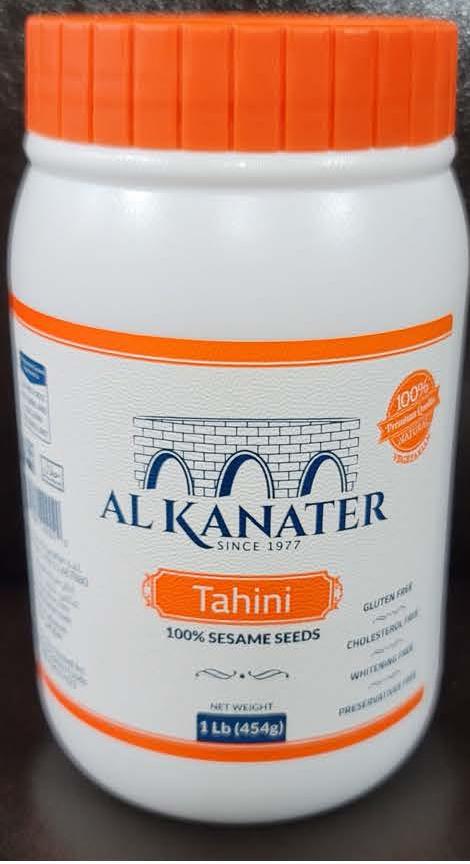
International Golden Foods, Inc (IGF) of Bensenville, IL is voluntarily recalling certain lot codes of the Al kanater brand tahini because it has the potential to be contaminated with Salmonella, an organism which can cause serious and sometimes fatal infections in young children, frail or elderly people and others with weakened immune system. Healthy persons infected with Salmonella often experience fever, diarrhea (which may be bloody), nausea, vomiting and abdominal pain. In rare circumstances, infection with Salmonella can result in the organism getting into the bloodstream and producing more severe illnesses such as arterial infections (i.e., infected aneurysms), endocarditis and arthritis.
The product was distributed nationwide and is sold in 16 Oz. jars. The jars are labelled “Al kanater Tahini.” Lot codes are printed on the jar. Product code, description, lot code, and UPC information are noted below.
Product Code
Product Description & Size
Lot #
UPC
AT1LB
Al kanater Tahini Sesame Paste 1 lb. (454 gr)
TT4N‐201127
6‐92551‐00002‐0
No illnesses have been reported to-date in connection with the Al Kanater Brand Tahini.
This problem was revealed as a result of a random sampling by the Michigan Department of Agriculture. Although we have not received the final laboratory reports, IGF is recalling product with the lot codes listed above. Consumers who have purchased Al kanater Tahini with these lot codes should discontinue use and return it to the store of purchase for a full refund. Retailers that may have further distributed the recalled lot codes should share this notice with their customers. Retailers or consumers with questions may contact IGF at 630-860-5552. Please see attached a sample product picture. Company Contact Information: ‐630‐860‐5552, 800‐343‐7423.,info@goldenfood.com,
Please return all product back to us.
Mansour Amiran 11/29/21 International Golden Foods, Inc. 819 Industrial Dr. Bensenville, IL 60106.






 FoodWorld