Category Archives: Research

Research – Biofilm Formation Ability of Arcobacter-like and Campylobacter Strains under Different Conditions and on Food Processing Materials

MDPI

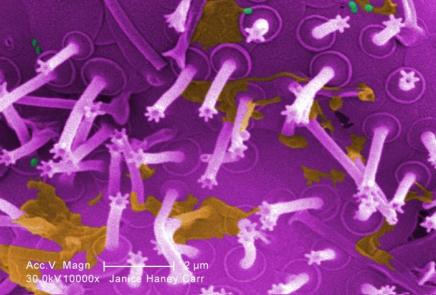
kswfoodworld biofilm

Campylobacter jejuni is the most frequent cause of bacterial gastrointestinal food-borne infection worldwide. The transmission of Campylobacter and Arcobacter-like species is often made possible by their ability to adhere to various abiotic surfaces. This study is focused on monitoring the biofilm ability of 69 strains of Campylobacter spp. and lesser described species of the Arcobacteraceae family isolated from food, water, and clinical samples within the Czech Republic. Biofilm formation was monitored and evaluated under an aerobic/microaerophilic atmosphere after cultivation for 24 or 72 h depending on the surface material. An overall higher adhesion ability was observed in arcobacters. A chi-squared test showed no association between the origin of the strains and biofilm activity (p > 0.05). Arcobacter-like species are able to form biofilms under microaerophilic and aerobic conditions; however, they prefer microaerophilic environments. Biofilm formation has already been demonstrated at refrigerator temperatures (5 °C). Arcobacters also showed higher biofilm formation ability at the temperature of 30 °C. This is in contrast to Campylobacter jejuni NP 2896, which showed higher biofilm formation ability at temperatures of 5–30 °C. Overall, the results demonstrated the biofilm formation ability of many strains, which poses a considerable risk to the food industry, medical practice, and human health. View Full-Text

Research – The Influence of Environmental Conditions on the Antagonistic Activity of Lactic Acid Bacteria Isolated from Fermented Meat Products

MDPI

The aim of this study was to determine the impact of environmental conditions on the antimicrobial properties of 21 lactic acid bacteria strains in the selected indicator bacteria. To assess the antimicrobial activity of the whole bacteria culture (WBC), the agar well diffusion method was used. The interference of LAB strains with the growth of the selected indicator bacteria was evaluated by incubating co-cultures in the food matrix. Based on the conducted research, it was found that environmental conditions have a significant impact on the antimicrobial activity of lactic acid bacteria strains. The highest antimicrobial activity was recorded under optimal conditions for the development of LAB, the incubation time being different depending on the indicator strain used. The tested LAB strains were characterized by a high ability to inhibit indicator strains, especially in the food matrix. These results led us to further characterize and purify the antimicrobial compound produced by lactic acid bacteria taking into account changing environmental conditions. View Full-Text

Research – USA – Novel Outbreak-Associated Food Vehicles, United States

CDC

Novel outbreak-associated food vehicles (i.e., foods not implicated in past outbreaks) can emerge as a result of evolving pathogens and changing consumption trends. To identify these foods, we examined data from the Centers for Disease Control and Prevention Foodborne Disease Outbreak Surveillance System and found 14,216 reported outbreaks with information on implicated foods. We compared foods implicated in outbreaks during 2007–2016 with those implicated in outbreaks during 1973–2006. We identified 28 novel food vehicles, of which the most common types were fish, nuts, fruits, and vegetables; one third were imported. Compared with other outbreaks, those associated with novel food vehicles were more likely to involve illnesses in multiple states and food recalls and were larger in terms of cases, hospitalizations, and deaths. Two thirds of novel foods did not require cooking after purchase. Prevention efforts targeting novel foods cannot rely solely on consumer education but require industry preventive measures.

Research – Controlling Campylobacter jejuni in vitro and in chicken using combinations of citrus-based and trisodium phosphate formulations

Wiley Online

Campylobacter kswfoodworld

Campylobacter frequently contaminates chicken. Trisodium phosphate (TSP) is used for chicken decontamination; however, reduction of chemical preservatives is desirable. This study analyzed the efficacy of two commercial citrus-based products (CitroSan [CS] and Citrol-K Ultra [CK]) alone and in combination with TSP for reduction of Campylobacter in vitro and in chicken. The minimum bactericidal concentration (MBC) of the preservatives alone or in combination was determined against Campylobacter jejuni. Their ability to reduce bacteria in raw chicken and their effect on the sensorial characteristics of the meat were determined. The MBCs obtained were 0.5 ± 0.04% for TSP, 0.05 ± 0.0006% for CS, and 0.0006 ± 0.0001% for CK. When combined, bactericidal concentrations varied. Following contact with TSP–CS and TSP–CK for 6 hr, C. jejuni was reduced from 106 to <100 CFU/g. Concentrations below those used in industry (2% TSP, 0.3% CS, and 0.05% CK) were added on the raw chicken skin before (B: treated with TSP and then inoculated) and after (A: inoculated and then treated with TSP) inoculation of Campylobacter. TSP (A) reduced C. jejuni by 92.6% after 24 hr, whereas TSP (B) caused a 36% reduction. TSP (A and B) in combination with both CS and CK caused 98.9 and 95.9% reduction, respectively, after 120 hr. The CS–CK combination (without TSP) reduced bacteria to undetectable levels after 48 hr. No significant differences were detected in the sensorial characteristics of treated wings. All the combinations tested, but especially 0.3% TSP + 0.0003% CK represent alternatives to control C. jejuni in chicken and reduce or avoid synthetic preservatives.

Research – Antimicrobial resistance, virulence , Antimicrobial resistance, virulence genes, and biofilm formation in Staphylococcus aureus strains isolated from meat and meat products

Wiley Online

Staphylococcus aureus is an important food pathogen that has the ability to form biofilms. This pathogen has been implicated in foodborne outbreaks associated with the consumption of meat and meat products. Since the role of meat products as reservoirs of antimicrobial resistant S. aureus and biofilm formers has not been studied, this research was conducted to assess the incidence, antimicrobial resistance, and presence of biofilm-forming genes in S. aureus bacteria from meat and meat products. For this purpose, 440 samples of meat and meat products were randomly collected from supermarkets of Shahrekord city, Iran. S. aureus isolates were highlighted and identified through biochemical tests. All S. aureus isolates were profiled for susceptibility to 14 antibiotics and the corresponding resistance genes were searched. The quantification of biofilm formation followed by a screening of biofilm formation encoding genes was done. Of the 440 samples collected, 61 were found to contain S. aureus. The incidence of S. aureus among the beef meat (16/61) was the highest followed by its incidence in sausage (10/61) and lunch meat (9/61). At least one isolate of S. aureus carries one of the following resistance gene blaZmecAtet KlinAtetMerm AermB, and aac A-D. High distribution of icaAicaBicaCicaDclfB, and clfA, biofilm formation genes and Enterotoxin encoding genes seasebsec, and sed. The ability of biofilm production and the presence of virulence determinants in the genome of S. aureus can contribute to their pathogenicity. This research demonstrated the roles of meat and meat products as reservoirs of biofilm-forming and antimicrobial-resistant strains of S. aureus. This poses a food safety and public health problem. However, further work needs to be done to better understand the implication of icaABCD biofilm forming genes present in S. aureus from meat and meat products in their resistance.

Research – Antimicrobial and Antibiofilm Effect of ε-Polylysine against Salmonella Enteritidis, Listeria monocytogenes, and Escherichia coli in Tryptic Soy Broth and Chicken Juice

MDPI

ε-Polylysine (ε-PL) is a safe food additive that is used in the food industry globally. This study evaluated the antimicrobial and antibiofilm activity of antibacterial peptides (ε-PL) against food poisoning pathogens detected in chicken (Salmonella Enteritidis, Listeria monocytogenes, and Escherichia coli). The results showed that minimum inhibitory concentrations (MICs) ranged between 0.031–1.0 mg/mL, although most bacterial groups (75%) showed MICs of 1.0 mg/mL. The reduction in the cell viability of pathogens due to ε-PL depended on the time and concentration, and 1/2 × MIC of ε-PL killed 99.99% of pathogens after 10 h of incubation. To confirm biofilm inhibition and degradation effects, crystal violet assay and confocal laser scanning microscopy (CLSM) were used. The biofilm formation rates of four bacterial groups (SalmonellaListeriaE. coli, and multi-species bacteria) were 10.36%, 9.10%, 17.44%, and 21.37% at 1/2 × MIC of ε-PL, respectively. Additionally, when observed under a CLSM, ε-PL was found to induce biofilm destruction and bacterial cytotoxicity. These results demonstrated that ε-PL has the potential to be used as an antibiotic and antibiofilm material for chicken meat processing. View Full-Text

UK – Salmonella in Livestock Production in GB 2020 September 2021 in Livestock Production in GB

Gov

This publication presents data on Salmonella reports from livestock species in Great Britain (England, Wales and Scotland) collected and collated by the Animal and Plant Health Agency (APHA) during 2020 and also provides data from previous years for comparative purposes. The data in the first eleven chapters cover reports of Salmonella in livestock, with separate chapters for the main species, reports of Salmonella in wildlife and reports of Salmonella in animal feeding stuffs. The twelfth chapter covers antimicrobial resistance data for Salmonella(England and Wales only).Since 1993, the date of a Salmonella incident has been recorded as the date it was reported to an Officer of the Minister. Under the present system, any Salmonella reports that are confirmed or identified after the publication of the annual report will be incorporated into the revised tables that appear in the following year’s publication. This may result in the number of incidents and/ or isolations differing from that previously given for a particular year. The most recent version of the report should therefore always be used when comparing data from year to year. Revisions in the way that data have been compiled and presented since 1993 mean that, with the exception of the tables on Salmonella in animal feeding stuffs, data in this report cannot be compared directly with information published prior to 1993. A more detailed comparison can be generated, if required, for any Salmonella serovar, or phage type in the case of S. Enteritidis and S. Typhimurium. Requests for such data should be made to the Department of Epidemiological Sciences, APHA Weybridge who will be happy to assist with requests (Foodbornezoonoses@apha.gov.uk). Care should be taken when comparing data from one year to another as an increase or decrease in the number of isolations and incidents does not necessarily indicate a similar change in prevalence. This is because the total number of samples examined and their distribution are often not known.

USA- Decreased Incidence of Infections Caused by Pathogens Transmitted Commonly Through Food During the COVID-19 Pandemic — Foodborne Diseases Active Surveillance Network, 10 U.S. Sites, 2017–2020

CDC

Summary

What is already known about this topic?

Before 2020, the incidence of infections transmitted commonly by food had not declined for many years.

What is added by this report?

During 2020, FoodNet identified 26% fewer infections compared with the average annual number during 2017–2019, including decreased infections associated with international travel.

What are the implications for public health practice?

The pandemic and resulting public health response present challenges to explaining changes in observed foodborne illness incidences. Continued surveillance might help elucidate the impact of the COVID-19 pandemic on foodborne illness and identify strategies to decrease illnesses. Concerted efforts are needed to reduce the incidence of these infections from farm to processing plant to restaurants and homes. Consumers can reduce their risk of foodborne illness by following safe food-handling and preparation recommendations.

Foodborne illnesses are a substantial and largely preventable public health problem; before 2020 the incidence of most infections transmitted commonly through food had not declined for many years. To evaluate progress toward prevention of foodborne illnesses in the United States, the Foodborne Diseases Active Surveillance Network (FoodNet) of CDC’s Emerging Infections Program monitors the incidence of laboratory-diagnosed infections caused by eight pathogens transmitted commonly through food reported by 10 U.S. sites.* FoodNet is a collaboration among CDC, 10 state health departments, the U.S. Department of Agriculture’s Food Safety and Inspection Service (USDA-FSIS), and the Food and Drug Administration. This report summarizes preliminary 2020 data and describes changes in incidence with those during 2017–2019. During 2020, observed incidences of infections caused by enteric pathogens decreased 26% compared with 2017–2019; infections associated with international travel decreased markedly. The extent to which these reductions reflect actual decreases in illness or decreases in case detection is unknown. On March 13, 2020, the United States declared a national emergency in response to the COVID-19 pandemic. After the declaration, state and local officials implemented stay-at-home orders, restaurant closures, school and child care center closures, and other public health interventions to slow the spread of SARS-CoV-2, the virus that causes COVID-19 (1). Federal travel restrictions were declared (1). These widespread interventions as well as other changes to daily life and hygiene behaviors, including increased handwashing, have likely changed exposures to foodborne pathogens. Other factors, such as changes in health care delivery, health care–seeking behaviors, and laboratory testing practices, might have decreased the detection of enteric infections. As the pandemic continues, surveillance of illness combined with data from other sources might help to elucidate the factors that led to the large changes in 2020; this understanding could lead to improved strategies to prevent illness. To reduce the incidence of these infections concerted efforts are needed, from farm to processing plant to restaurants and homes. Consumers can reduce their risk of foodborne illness by following safe food-handling and preparation recommendations.

FoodNet conducts active, population-based surveillance of laboratory-diagnosed infections caused by Campylobacter, Cyclospora, Listeria, Salmonella, Shiga toxin-producing Escherichia coli (STEC), Shigella, Vibrio, and Yersinia reported from 10 sites covering approximately 15% of the U.S. population (approximately 50 million persons per U.S. Census Bureau estimates in 2019). Bacterial infections are defined as isolation of bacteria from a clinical specimen by culture or detection of pathogen antigen, nucleic acid sequence, or, for STEC, Shiga toxin or Shiga toxin genes by a culture-independent diagnostic test (CIDT).§ Listeria infections are defined as isolation of L. monocytogenes or detection of its nucleic acid sequences from a normally sterile site, or from placental or fetal tissue in the instance of miscarriage or stillbirth. Cyclospora infections are defined as detection of the parasite using ultraviolet fluorescence microscopy, specific stains, or polymerase chain reaction.

In this analysis, patients with no history of international travel or unknown travel were considered to have domestically acquired infection. Death was attributed to infection when it occurred during hospitalization or within 7 days after specimen collection for non-hospitalized patients. Incidence (cases per 100,000 population) was calculated by dividing the number of infections in 2020 by the U.S. Census estimates of the surveillance area population for 2019. Incidence measures included all laboratory-diagnosed infections. A negative binomial model with 95% confidence intervals (CIs) was used to estimate change in incidence during 2020 compared with those during 2017–2019, adjusting for changes in the population over time.

Surveillance for physician-diagnosed post-diarrheal hemolytic uremic syndrome (HUS), a complication of STEC infection characterized by renal failure, thrombocytopenia, and microangiopathic anemia, was conducted through a network of nephrologists and infection preventionists and by hospital discharge data review. This report includes HUS data for children aged <18 years for 2019, the most recent year for which data are available. FoodNet surveillance activities were reviewed by CDC and were conducted consistent with applicable federal law and CDC policy.**

During 2020, FoodNet identified 18,462 cases of infection, 4,788 hospitalizations, and 118 deaths (Table). The overall incidence was highest for Campylobacter (14.4 per 100,000 population), followed by Salmonella (13.3), STEC (3.6), Shigella (3.1), Yersinia (0.9), Vibrio (0.7), Cyclospora (0.6), and Listeria (0.2). During 2020, 26% fewer infections were reported compared with the average annual number reported during 2017–2019; the incidence in 2020 was significantly lower for all pathogens except Yersinia and Cyclospora. The percentage of infections resulting in hospitalization increased 2% compared with 2017–2019 (Figure 1). During 2020, 5% (958) of infections were associated with international travel compared with 14% during 2017–2019. In 2020, most (798; 83%) of these infections occurred during January–March.

Overall, 59% of bacterial infections were diagnosed using a CIDT (range = 14% [Listeria] to 100% [STEC]); this was a 2% increase from 2017−2019. The percentage diagnosed using only a CIDT (i.e., including specimens with negative cultures and those not cultured) was 1% higher during 2020 than the percentage during 2017−2019. Among specimens with a positive CIDT result during 2020, a reflex culture†† was performed for 73%, which was 2% lower than during 2017–2019. Reflex cultures decreased for Vibrio (by 15%), Yersinia (7%), Campylobacter (5%), and STEC (2%); increased for Salmonella (2%), and Shigella (2%); and did not change for Listeria.

Among 5,336 (91%) fully serotyped Salmonella isolates in 2020, the seven most common serotypes were Enteritidis (1.6 per 100,000 population), Newport (1.5), Javiana (1.0), Typhimurium (0.9), I 4,[5],12:i:- (0.5), Hadar (0.4), and Infantis (0.3). Compared with 2017–2019, incidence during 2020 was significantly lower for I 4,[5],12:i:- (48% lower), Typhimurium (37% lower), Enteritidis (36% lower), and Javiana (31% lower). Incidence was significantly higher for Hadar (617% higher; 95% CI = 382–967) and did not change significantly for Newport or Infantis. Most (73%) of the 631 outbreak-associated Salmonella infections during 2020 were caused by three serotypes: Newport (220; 35%), Hadar (135; 21%), and Enteritidis (108; 17%). All outbreak-associated Hadar infections were from one multistate outbreak linked to contact with backyard poultry; 47 (35%) illnesses resulted in hospitalization. Four serogroups accounted for 63% of the 955 culture-positive STEC isolates. Serogroup O157 was most common (264; 28%), followed by O26 (148; 15%), O103 (115; 12%), and O111 (78; 8%).

FoodNet identified 63 cases of post-diarrheal HUS in children aged <18 years (0.6 cases per 100,000 population) during 2019; 55 (87%) had evidence of STEC infection and 41 (65%) were in children aged <5 years (1.4 per 100,000 population). These rates were similar to those during 2016–2018.

Norway – The Norwegian Food Safety Authority with an inspection campaign on Listeria measures at producers of ready-to-eat seafood.

Mattilsynet

In the autumn of 2021 and the spring of 2022, the Norwegian Food Safety Authority will carry out an inspection campaign with approved producers of ready-to-eat seafood. In the campaign, the Norwegian Food Safety Authority will investigate measures and routines to prevent the ready-to-eat products from being contaminated with the listeria bacterium.

The campaign starts in November and lasts until April next year.

– We will look in particular at the manufacturers’ documentation of the chosen limit value, routines for sampling and non-conformance treatment. We will also provide guidance on the limit values ​​and clarify regulations and responsibilities for manufacturers. This is to ensure that ready-to-eat seafood produced in Norway is safe to eat, says Siv Jorunn Nordlund, section manager for biological food safety at the Norwegian Food Safety Authority.

The control will take place in the form of audits, and the goal is to audit all approved producers of smoked and digged seafood.

Research – The influence of organic load and free chlorine on Salmonella cross-contamination of tomatoes in a model flume system

Journal of Food Protection

The process of washing tomatoes in dump (flume) tanks has been identified as a potential source of cross-contamination. This study’s objective was to assess the potential for Salmonella enterica cross-contamination at various inoculation levels at the presence of 0 and 25 mg/L free chlorine (HOCl) and organic matter.  Uninoculated tomatoes were introduced into a laboratory-based model flume containing tomatoes inoculated with a cocktail of five rifampicin-resistant Salmonella enterica serovars at 104, 106, or 108 CFU/tomato in water containing 0 or 25 mg/L HOCl and 0 or 300 mg/L chemical oxygen demand (COD). Uninoculated tomatoes were removed from the water at after 5, 30, 60, 120 s and were placed in bags containing tryptic soy broth supplemented with rifampicin and 0.1% sodium thiosulfate. Following incubation, enrichments were plated on tryptic soy agar supplemented with rifampicin and xylose lysine deoxycholate agar to determine the presence of Salmonella. HOCl and pH were measured before and after each trial. The HOCl in water containing 300 mg/L COD significantly (P≤0.05) declined by the end of each 120 s trial, most likely due to the increased demand for the oxidant. Higher inoculum levels and lower HOCl concentrations were (P≤0.05) significant factors that contributed to increased cross-contamination seen in this study. When HOCl levels were at 25 mg/L, no Salmonella was recovered on non-inoculated tomatoes under all conditions when inoculum levels were at 104 CFU/tomato. When the inoculum was increased to 106 and 108 CFU/tomato, cross-contamination was observed, independent of COD levels. The results from this study show that the currently required sanitizer level (e.g., 100 or 150 mg/L) for flume water may be higher than necessary and warrants re-evaluation.