Category Archives: Raw Milk

Information – Raw Milk

ACSA

Raw milk

milk

____________________________________________________________________________________________

  • Always boil raw milk
  • Store at 4ºC
  • Consume it within 3 days of purchasing it

TREAT RAW MILK SAFELY

The raw milk has unique virtues such as its taste, texture and smell. At the same time, it is a very direct link with good farmers, because it can only be sold by farms that meet a series of animal health and hygiene requirements in their milking facilities .

However, raw milk, due to its special composition, can contain bacteria that are harmful to health, mainly Salmonella , Campylobacter , Listeria  and Escherichia coli.

In Spain, the direct sale of raw milk to the consumer is allowed as long as the requirements established in the hygiene package regulations and the additional requirements established in Royal Decree 1086/2020 , of December 9, by which regulate and make flexible certain conditions of application of the provisions of the European Union regarding hygiene in the production and marketing of food products and activities excluded from their scope of application are regulated.

Milk-producing farms may only supply raw milk from their own farm directly to the final consumer or to retail establishments that supply directly to the final consumer if they meet the following requirements:

  • The establishment is authorized and registered in the General Registry of Food and Food Companies
  • The milk has to be sold
  • The package label indicates the expiration date not exceeding three days after milking and the following indications:
    • Raw milk without heat treatment: Consume only after boiling for at least one minute.
    • Store refrigerated between 1 and 4 ºC.
  • Retail establishments may only use raw milk as a raw material or ingredient for food processing if it is boiled or subjected to an equivalent culinary treatment.
  • However, catering establishments that serve food to vulnerable communities , such as hospitals, nursery schools, colleges or homes for the elderly, cannot use raw milk.

To drink milk safely , follow the instructions below:

2_Recipient llet Transport raw milk quickly to your home and boil it immediately , in order to destroy any bacteria it contains. Use a container with a wide base and stir while it boils. Once the boiling foam has risen, turn off the heat. Immediately, you have to cool it down and put it in the refrigerator, in the coldest place, at a temperature below 4ºC, and it is necessary to keep it covered to prevent it from becoming contaminated and acquiring odors from other foods.
3_Temperature llet If you cannot boil the milk right away, put it in the fridge at a temperature below 4ºC. But boil it as soon as possible .
4_Frozen llet You can also freeze raw milk , just like you do with other foods. Freezing, however, does not kill bacteria, so to ensure safety, remember that it is best to always boil milk before freezing . To maintain its structure and prevent it from precipitating, it must be stirred well before freezing and, even, it must be stirred several times while it freezes.
5_ Thawed llet You must defrost the milk in the refrigerator. It may happen that it has a slightly grainy texture, which is normal. Remember to keep frozen milk well covered to prevent it from absorbing strange odors.
6_Consum llet It is recommended that raw milk be consumed within 3 days of  purchase, that is, without exceeding 72 hours.

Pregnant women, children, the elderly and people with depressed immunity are more susceptible to foodborne infections, for this reason, they must take special care to strictly comply with these measures. 

Click to access Trate-la-leche-cruda-con-seguridad.pdf

Research – A Strong Evidence Outbreak of Salmonella enteritidis in Central Italy Linked to the Consumption of Contaminated Raw Sheep Milk Cheese

MDPI

Salmonellaa

Salmonellosis is the second most commonly reported gastrointestinal infection in humans after campylobacteriosis, and an important cause of foodborne outbreaks in the EU/EEA. The vast majority (72.4%) of the salmonellosis foodborne outbreaks reported in EU in 2019 were caused by Salmonella enteritidis, even if their total number due to this serovar decreased. In spring 2020, a foodborne outbreak of S. enteritidis occurred in the Marche region (Central Italy), involving 85 people. The common exposure source was a cheese, pecorino “primo sale”, produced with raw sheep milk. The cheese batches were produced by two local dairies, with a livestock production facility, also including a sheep farm, being part of one dairy. Bacteriological analysis of samples collected allowed the detection of S. enteritidis in animal faeces, environmental samples, raw-milk bulk tanks and milk taken from single animals. These data confirm that, despite the scarce scientific evidence, S. enteritidis can infect sheep and be shed into the animals’ milk. Hence, this is a real risk for public health when unpasteurized milk is used in production of such cheese. The present paper describes the results of the investigations conducted to clarify this outbreak. View Full-Text

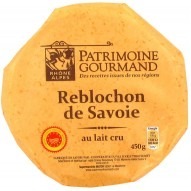
France- Reblochon de Savoie PDO with raw milk 450 g – Brucella

Gov france

Identifying information for the recalled product

  • Product category Food
  • Product sub-category Milk and dairy products
  • Product brand name Gourmet heritage
  • Names of models or references Reblochon de Savoie PDO raw milk 450 g Patrimoine Gourmand
  • Product identification
    GTIN Lot Dated
    3257985003435 311921 Date of minimum durability 11/22/2021
    3257985003435 311929 Date of minimum durability 11/30/2021
    3257985003435 311931 Date of minimum durability 12/03/2021
    3257985003435 311933 Date of minimum durability 12/05/2021
    3257985003435 311935 Date of minimum durability 12/06/2021
    3257985003435 312013 Date of minimum durability 12/14/2021
    3257985003435 312016 Date of minimum durability 12/18/2021
  • Packaging Whole reblochon 450 g in film
  • Start date / End of marketing From 09/30/2021 to 11/12/2021
  • Storage temperature Product to be stored in the refrigerator
  • Health mark FR 73.114.001 CE
  • Geographical sales area Whole France
  • Distributors cora and supermarkets match

Practical information regarding the recall

  • Reason for recall Contamination of a cow by brucellosis
  • Risks incurred by the consumer Brucella spp (causative agent of brucellosis)

USA – Oklahoma dairy recalls unpasteurized, raw milk after state finds Listeria monocytogenes

Food Safety News

Listeria kswfoodworld food safety food poisoning

Image CDC

An Oklahoma dairy is recalling unpasteurized, raw milk because the Oklahoma Department of Agriculture, Food and Forestry found Listeria monocytogenes in it.

Swan Bros. Dairy of Claremore, OK, had a similar recall this past July when officials found Listeria contamination of its raw milk. 

The current recall involves raw milk the dairy sold in plastic jugs of half-gallons, gallons and pints. The milk was sold directly from the Swan Bros. Dairy. The statewide recall includes raw whole milk, raw 2-percent milk, raw skim milk and raw heavy cream sold in pints.

State health officials are urging consumers who bought the milk to discard it immediately and throughly clean and sanitize and containers or storage areas the milk came into contact with. 

Also, anyone who has consumed the raw milk should monitor themselves for 70 days because it can take that long for symptoms of Listeria infection to develop.

State officials found the Listeria monocytogenes in a routine sample collected from Swan Bros. Dairy Inc.

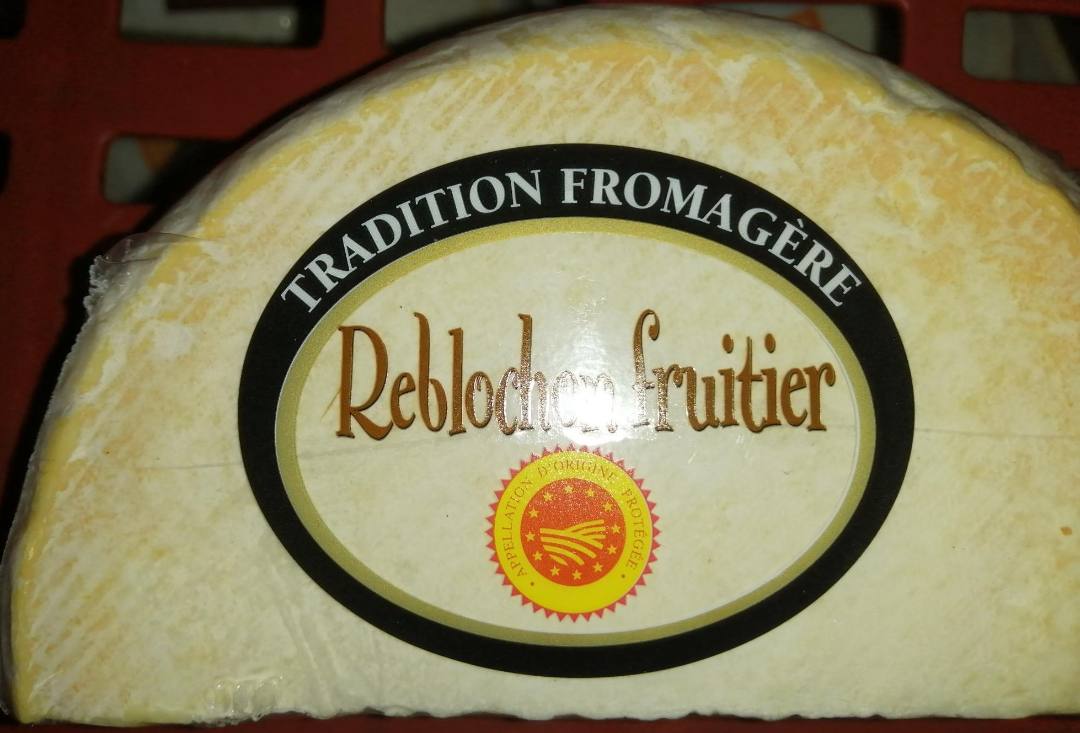
France – Reblochon in raw milk Cheese tradition – Brucella spp.

Gov france

Identifying information for the recalled product

  • Product category Food
  • Product sub-category Milk and dairy products
  • Product brand name Disfres
  • Names of models or references Reblochon fruitier Cheese tradition
  • Product identification
    GTIN Lot Dated
    3252540951107 21038420 21039074 21039796 21039886 21040273 21040630 21041079 21041860 21042769 Use-by date between 10/23/2021 and 11/30/2021
  • Packaging Sub film
  • Start date / End of marketing From 04/10/2021 to 03/11/2021
  • Storage temperature Product to be stored in the refrigerator
  • Health mark FR 84.007.011 CE
  • Geographical sales area Whole France
  • Distributors Disfres

Practical information regarding the recall

  • Reason for recall likely to be contaminated with brucellosis
  • Risks incurred by the consumer Brucella spp (causative agent of brucellosis)

USA – Pet Food – ST. JOHN CREAMERY VOLUNTARILY RECALLS RETAIL RAW GOAT PET MILK BECAUSE OF POSSIBLE HEALTH RISK – Listeria monocytogenes

AGR

October 28, 2021—St. John Creamery of Stanwood, WA is voluntarily recalling retail raw goat milk treat for dogs and cats because it may be contaminated with Listeria monocytogenes (L. mono) that can cause serious illness.
Pets with L. mono infections may be lethargic and have diarrhea or bloody diarrhea, fever, and vomiting. Some pets will have only decreased appetite, fever and abdominal pain. Infected but otherwise healthy pets can be carriers and infect other animals or humans.
L. mono may cause serious and sometimes fatal infections in young children, frail or elderly people, and others with weakened immune systems. Although healthy individuals may suffer only short-term symptoms such as high fever, severe headache, stiffness, nausea, abdominal pain and diarrhea, a listeria infection can cause miscarriages and stillbirths among pregnant women.
Anyone experiencing these symptoms after handling the affected product or interacting with a pet that has consumed the affected product should immediately contact a health care provider. If your pet has consumed the affected product and has these symptoms, please contact your veterinarian. At this time, there are no known illnesses associated with the recalled product. The recall was initiated after routine sampling conducted by the Washington State Department of Agriculture (WSDA) Animal Feed Program revealed the presence of L. mono in retail raw goat pet milk dated 080722 (August 7), 090322 (September 3), and 091522 (September 15). St. John Creamery and WSDA have worked jointly to address the source of the problem. St. John Creamery retail raw goat pet milk displaying Best By dates of July 2022 (07##22) through October 2022 (10##22)has been recalled. The recalled product, which was bottled in half-gallon, one-quart and one-pint containers, was sold
at retail stores in Western Washington.

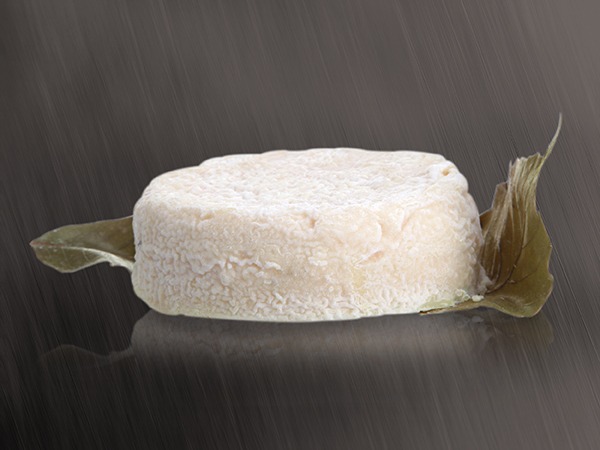
France – Raw milk goat cheese – Listeria monocytogenes

Gov france

Identifying information for the recalled product

  • Product category Food
  • Product sub-category Milk and dairy products
  • Product brand name Goat cheese
  • Names of models or references Parthenay nature; Parthenay ash; Nature goats; Goat ash; Natural duffel; Ashen duffel; Chabis; Ingot; Pictou; Coquillon
  • Lot         Dated

    Number of lots affected by the recall: 131021; 141021; 151021; 161021; 171021; 181021; 191021; 201021.

  • Date of minimum durability between 13/12/2021 and 20/12/2021
  • Product identification
  • Products List Product_list.pdf Enclosed
  • Packaging Wooden box from the cheese factory.
  • Storage temperature Product to be stored in the refrigerator
  • Health mark CE APPROVAL
  • Geographical sales area Whole France
  • Distributors France Frais Group; French Cheese Refining Company; Odeon Company; etc.

Practical information regarding the recall

  • Reason for recall Trace of Listeria in the products.
  • Risks incurred by the consumer Listeria monocytogenes (causative agent of listeriosis)

USA – St. John Creamery Raw Goat Milk Recalled For E. coli

Food Poisoning Bulletin

St. John Creamery raw goat milk is being voluntarily recalled for possible E. coli contamination in Washington state. The same product was recalled in September 2021 for possible Listeria monocytogenes contamination. No known illnesses are associated with the consumption of this recalled goat milk at this time.

The recalled product is St. John Creamery raw goat milk that is bottled in half-gallon and one-pint containers. It was sold at the dairy’s on farm store, directly to private customers in drop groups, and at retail stores in western Washington state. The milk has best by dates through 110521 (November 5, 2021)

RASFF Alerts – Listeria monocytogenes – Chicken Salad – Raw Milk Goats Cheese – Spiced Prat Fillet – Ham

RASFF

Presence of Listeria monocytogenes in Spiced Prat Fillet from Latvia in Estonia

RASFF

Listeria monocytogenes in chicken salad from Belgium in the Netherlands

RASFF

Listeria monocytogenes on raw milk goat cheese from France in Germany and Belgium

RASFF

Listeria monocytogenes in ham from Belgium in Luxembourg

Research – An assessment of the microbiological quality and safety of unpasteurised milk cheese for sale in England during 2019 – 2020

Journal of Food Protection

Cheese made with unpasteurised milk has been associated with outbreaks of illness. However, there are limited data on the prevalence of shiga-toxin producing E. coli (STEC) in these products, and a lack of clarity over the significance of E. coli as general indicators of hygiene in raw milk cheeses. The aim of this study was to provide further data to address both of these issues as well as assessing the overall microbiological quality of raw milk cheeses available to consumers in England. A total of 629 samples of cheese were collected from retailers, catering premises and manufacturers throughout England. The majority (80%) were made using cow’s milk with 14% made from sheep’s milk and 5% from goat’s milk. Samples were from 18 different countries of origin, with the majority originating from either the UK (40%) or France (35%). When interpreted against EU microbiological criteria and UK guidance, 82% were considered to be of satisfactory microbiological quality, 5% were borderline and 12% were unsatisfactory. Four samples (0.6%) were potentially injurious to health due to the isolation of STEC from one, >10 4 cfu/g of coagulase positive staphylococci in two and >100 cfu/g of Listeria monocytogenes in the fourth sample. Indicator E. coli and Listeria species were detected more frequently in soft compared to hard cheese. Higher levels of indicator E. coli were significantly associated with a greater likelihood of detecting shiga toxin genes ( stx 1 and/or stx 2).