Category Archives: outbreak

New Zealand – Various frozen vegetable products 10 July 2018 (Pinguin product added 11 July 2018): Greenyard Group is recalling all batches of Bell Farms brand Steam Veggies carrot, corn, and broccoli and Pinguin brand 4 mixed vegetables due to the possible presence of Listeria monocytogenes.

MPI

Product identification

Product type Frozen vegetables
Name of product
  • Bell Farms brand Steam Veggies carrot, corn, and broccoli (450g)
  • Pinguin brand 4 mixed vegetables (1kg, appears as 1,000g)
Batch marking All batches
Date marking All dates
Package size and description Bell Farms brand Steam Veggies carrot, corn, and broccoli are sold frozen in a 450g plastic bag.

Pinguin brand 4 mixed vegetables are sold frozen in a 1kg plastic bag (appears as 1,000g)

Distribution The product is imported from Belgium and the UK

Bell Farms brand Steam Veggies carrot, corn, and broccoli is sold in Countdown, SuperValue and FreshChoice supermarkets throughout New Zealand.

Kuwait – Salmonella, other bacteria found in Hawally restaurant food samples

Kuwait Times 


KUWAIT: Test results on samples taken from a Hawally restaurant where nearly 300 customers were recently hospitalized with food poisoning came positive for contamination with salmonella and other types of bacteria, said sources familiar with the results.

The Public Authority for Food and Nutrition (PAFN) had received samples of the food served by the popular falafel joint, and tests revealed traces of salmonella and other bacteria which makes the food completely inedible, the sources noted.

Other sources said meanwhile that the owner, who is currently detained with his staff members pending investigations, accused his former partner, a Syrian man, of conspiring with one of the restaurant’s staff members, and had him contaminate the falafel, which resulted in poisoning a large number of customers. The sources added that the former partner would be summoned for interrogation as well.

On a related concern, PAFN urged Kuwait Municipality to hand over authority of the main food lab to it, said the capital food and nutrition department’s manager Abdul Rahman Al-Fares. He noted that food inspectors are incapable of detecting food contamination by virtual inspection, adding that samples have to be collected and examined in labs, which would enable routine inspection rounds to examine food and prevent any further poisoning cases.

Hong Kong – *(Updated on 10 July 2018) Not to consume prepackaged frozen vegetable products suspected to be contaminated with Listeria monocytogenes

CFS

Source of Information The United Kingdom Food Standards Agency

*Updated on 10 July 2018

  • The United Kingdom Food Standards Agency (FSA) and the Food Safety Authority of Ireland (FSAI)
  • Rapid Alert System for Food and Feed (RASFF) of the European Commission
Food Product Several kinds of prepackaged frozen vegetable products produced by the Greenyard Frozen UK Ltd

*Updated on 10 July 2018

  • Four kinds of prepackaged frozen vegetable products recalled by the U.K. FSA and the FSAI
  • Frozen vegetable products produced by Greenyard Frozen

UK- Scotland – Listeriosis outbreak – EU member states (update)

HPS Scotland

On 3 July 2018, the European Food Safety Authority (EFSA) issued an update on the multi-country Listeria monocytogenes outbreak. Frozen corn and possibly other frozen vegetables are the likely source of the outbreak, which has affected Austria, Denmark, Finland, Sweden and the United Kingdom since 2015 (see current note 52/1202 at http://www.hps.scot.nhs.uk/ewr/article.aspx?id=77600).

The same strains of L. monocytogenes have been detected in frozen vegetables produced by the same Hungarian company in 2016, 2017 and 2018. This suggests that the strains have persisted in the processing plant despite the cleaning and disinfection procedures that have been carried out. Further investigations are needed to identify the exact points of environmental contamination at the Hungarian plant.

On 29 June 2018, the Hungarian National Food Chain Safety Office (NFCSO) banned the marketing of all frozen vegetable and frozen mixed vegetable products produced by the affected plant between August 2016 and June 2018, and ordered their immediate withdrawal and recall. All freezing activity at the plant has stopped.

As of 8 June 2018, 47 cases including nine deaths had been reported in total. Public Health England (PHE) is working with the Food Standards Agency (FSA), Food Standards Scotland (FSS) and Health Protection Scotland (HPS) to identify the cause of 11 cases in the UK.

To reduce the risk of infection, consumers should thoroughly cook non ready-to-eat frozen vegetables, even though these products are commonly consumed without cooking. This advice is especially important to those with the highest risk of contracting listeriosis – such as the elderly, pregnant women, infants and adults with weakened immune systems. Advice issued by PHE, FSS, FSA and HPS on the proper cooking of frozen vegetables is available at: https://www.food.gov.uk/news-alerts/news/precautionary-advice-on-cooking-fr….

The current list of recalled frozen vegetable products is available on the FSA website at: https://www.food.gov.uk/news-alerts/alert/fsa-prin-35-2018. Updates to this list are being made as and when they become available in the news and alerts section of the FSA website.

[Source: EFSA, 3 July 2018. http://www.efsa.europa.eu/en/press/news/180703]

Norway – Yersinia enterocolitica outbreak sickens 18 in Norway

Outbreak News Today 


The Norway Institute of Public Health reports investigating an outbreak of gastrointestinal bacteria, Yersinia enterocolitica O:9. To date, 18 people from several counties have been diagnosed with the infection.

Health and Food Safety officials are are trying to determine if there is a common source of infection. Interviews are conducted with the patients, and samples from the homes are taken to find the source of infection, if possible.

“Investigations can be complicated and take time, and in many cases you will not be able to find the source of infection or to clarify if there is a common source”, says Solveig Jore Senior Adviser.

USA – Texas officials report dozens sick from parasitic infections – Cyclospora

Food Safety News cyclo

Texas officials warned the public Monday about a seasonal increase in infections from Cyclospora parasites, reporting there have been 56 confirmed cases since the beginning of May.

Neither this week’s outbreak notice nor a June 21 health advisory from the Texas State Department of Health Services (DSHS) referenced an ongoing cyclosporiasis outbreak in four other states. At least 185 people are infected in that outbreak, which is associated with trays of pre-cut fresh vegetables from Del Monte. 

Europe – Listeria monocytogenes: update on foodborne outbreak

EFSA kswfooworld

Frozen corn and possibly other frozen vegetables are the likely source of an outbreak of Listeria monocytogenes that has been affecting Austria, Denmark, Finland, Sweden, and the United Kingdom since 2015.

Experts used whole genome sequencing to identify the food source, which initially was thought to be limited to frozen corn. As of 8 June 2018, 47 cases including nine deaths had been reported.

The same strains of L. monocytogenes have been detected in frozen vegetables produced by the same Hungarian company in 2016, 2017 and 2018. This suggests that the strains have persisted in the processing plant despite the cleaning and disinfection procedures that were carried out.

The available information confirms the contamination at the Hungarian plant. However, further investigations, including thorough sampling and testing, are needed to identify the exact points of environmental contamination at the Hungarian plant. The same recommendation applies to other companies belonging to the same commercial group if environmental contamination is detected.

On 29 June 2018, the Hungarian Food Chain Safety Office banned the marketing of all frozen vegetable and frozen mixed vegetable products produced by the affected plant between August 2016 and June 2018, and ordered their immediate withdrawal and recall. This last measure is likely to significantly reduce the risk of human infections and contain the outbreak. All freezing activity at the plant has been stopped.

New cases could still emerge due to the long incubation period of listeriosis (up to 70 days); the long shelf-life of frozen corn products; and the consumption of frozen corn bought before the recalls and eaten without being cooked properly.

To reduce the risk of infection, consumers should thoroughly cook non ready-to-eat frozen vegetables, even though these products are commonly consumed without cooking (e.g. in salads and smoothies). This applies especially to consumers at highest risk of contracting listeriosis – such as the elderly, pregnant women, new-borns and adults with weakened immune systems.

Technical Report

Multi-country outbreak of Listeria monocytogenes serogroup IVb, multi-locus sequence type 6, infections linked to frozen corn and possibly to other frozen vegetables – first update

 

USA – Canal water likely source of E. coli in romaine-related outbreak

Food Safety News 


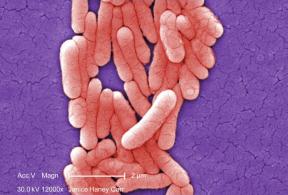
Federal officials say contaminated canal water near romaine lettuce growing fields is the likely source of the unusually virulent strain of E. coli that has sickened people across 36 states, killing five.

The outbreak is over, according to an update this afternoon from the Centers for Disease Control and Prevention. The agency has confirmed 210 people with infections. Twenty-seven of the victims have developed kidney failure. The most recent victim became sick on June 6.

“Samples have been collected from environmental sources in the region, including water, soil, and cow manure. Evaluation of these samples is ongoing,” according to an update this afternoon from the Food and Drug Administration investigators.

“To date, CDC analysis of samples taken from canal water in the region has identified the presence of E. coli O157: H7 with the same genetic fingerprint as the outbreak strain. We have identified additional strains of Shiga-toxin producing E. coli in water and soil samples, but at this time, the samples from the canal water are the only matches to the outbreak strain.”

RASFF – Foodborne outbreak caused by Hepatitis A virus

kswfoodworld food safety poisoning

RASFF -foodborne outbreak caused by hepatitis A virus (1B) in frozen strawberries from Poland in Sweden

USA – Cyclospora Kwik Trip Outbreak Linked to Del Monte Vegetable Trays Grows to 144 Sick

Food Poisoning Bulletin cyclo

The cyclospora Kwik Trip outbreak linked to Del Monte vegetable trays has now grown to 144 patients, according to an FDA update. The patients live in Iowa, Minnesota, Wisconsin, and Michigan. Six people have been hospitalized in this outbreak because they are so sick.

Cyclospora Kwik Trip Del Monte Outbreak 622