Category Archives: mold

RASFF Alert- Mold/Mould – Wheat Biscuits

RASFF

Wheat biscuit with soy from India infested with moulds in Belgium and Germany

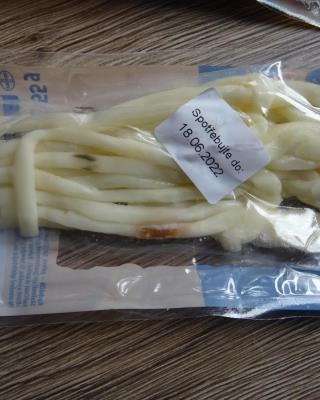
Czech Republic – Steamed Cheese – Mold/Mould

Potravinynapranyri

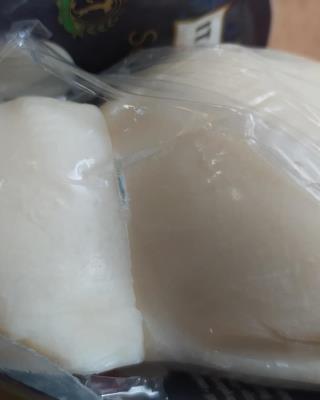
Illustration photo no. 1 Illustration photo no. 5

Place of inspection:
Jirkov ( Hrdinů 1848, 431 11 Jirkov )
ID: 64945880
Food group: Milk and milk products Cheese

Boni KORBÁČIK Korbáčik – steamed cheese
Category: Dangerous food
Unsatisfactory parameter:

mold visible to the eye

On the surface of the food under the packaging, mold was visible to part of the package visible to the naked eye. Food is not considered safe if it shows signs of spoilage.

During the inspection, unsatisfactory storage temperatures of this product were not found, the food did not expire,

Expiration date: 06/18/2022
Packaging: PP sealed with print
Quantity of product in package: 0.055 kg
Producer: SIMABELLE sro, č.p.1074, 739 98 Mosty u Jablunkova, branch: Rudé armády 1820, 733 01 Karviná – Hranice.
Sampling date: 5. 5. 2022
Reference number: 22-000167-CAFIA-CZ
The sample was found by an official inspection of the State Agricultural and Food Inspection

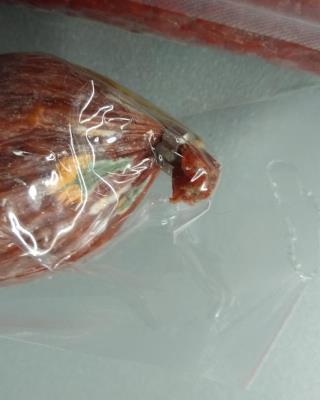
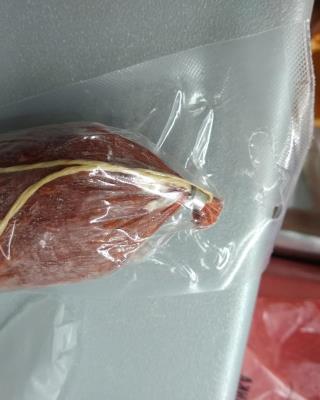
Czech Republic – Poličan – Mold/Mould

Potravinynapranyri

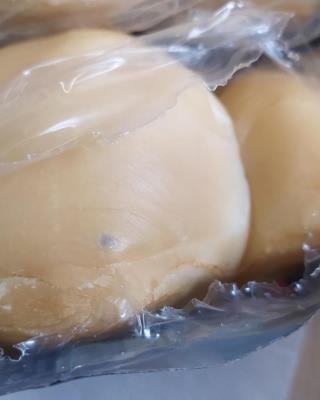
Illustration photo no. 1 Illustration photo no. 3

Place of inspection:
Trebechovice pod Orebem ( Csl. Legii 1212, 50346 Trebechovice pod Orebem )
Company ID: 19014325
Unsatisfactory parameter:

mold visible to the eye

Mold colonies were found on the surface of the food. Food is not considered safe if it shows signs of spoilage.

The food had a damaged package (there was no longer a vacuum inside the package).

Lots: L: 0411211
Date of minimum durability: 01. 05.2022
Packaging: welded foil
Quantity of product in package: 0.796 kg
Sampling date: March 8, 2022
Reference number: 22-000158-CAFIA-CZ
The sample was found by an official inspection of the State Agricultural and Food Inspection Authority.

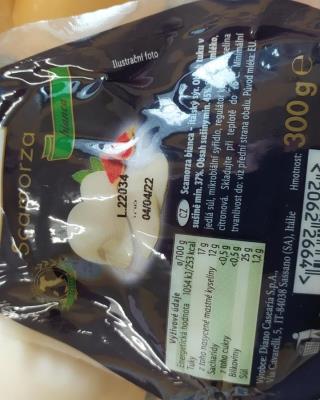
Czech Republic – Scarmorza bianca – Italian cheese – Mould/Mold

Potravinynapranyri

Illustration photo no. 1 Illustration photo no. 4

Place of inspection:
Chocen ( Zamesti, 56501 Chocen )
ID: 26178541
Food group: Milk and milk products Cheese

Scarmorza bianca – Italian cheese
Category: Dangerous food
Unsatisfactory parameter:

mold visible to the eye

Colonies of white and green fungi appeared on the surface of the product under intact packaging in almost all inspected packages. Food is not considered safe if it shows signs of spoilage.

During the inspection, unsatisfactory storage temperatures of this product were not found. The product has not expired.

Lots: L22034
Date of minimum durability: 04/04/22
Packaging: PP welded foil
Quantity of product in package: 300 g
Producer: Diano Casearia SpA Via Cavarelli, 5, Sassano
Country of origin:  Italy
Sampling date: March 22, 2022
Reference number: 22-000144-CAFIA-CZ
The sample was found by an official inspection of the State Agricultural and Food Inspection Authority.

Czech Republic – Scarmorza bianca – Italian cheese with smoked flavour – Mould/Mold

Potravinynapranyri

Illustration photo no. 1 Illustration photo no. 5

Place of inspection:
Chocen ( Zamesti, 56501 Chocen )
ID: 26178541
Food group: Milk and milk products Cheese

Scarmorza bianca – Italian cheese with smoked flavour
Category: Dangerous food
Unsatisfactory parameter:

mold visible to the eye

Colonies of white and green fungi appeared on the surface of the product under intact packaging in almost all inspected packages. Food is not considered safe if it shows signs of spoilage.

During the inspection, unsatisfactory storage temperatures of this product were not found. The product has not expired.

Lots: L22034
Date of minimum durability: 04/04/22
Packaging: PP welded foil
Quantity of product in package: 300 g
Producer: Diano Casearia SpA Via Cavarelli, 5, Sassano
Country of origin:  Italy
Sampling date: March 22, 2022
Reference number: 22-000143-CAFIA-CZ
The sample was found by an official inspection of the State Agricultural and Food Inspection Authority.

Research – Impact of chlorinated water on pathogen inactivation during wheat tempering and resulting flour quality

Journal of Food Protection

Outbreaks of enteric pathogens linked to wheat flour have led the wheat milling industry to seek solutions addressing this food safety concern. Chlorinated water at 400-700ppm has been used in the flour milling industry as a tempering aid to control growth of yeast and mold in tempering bins. However, the effectiveness of chlorinated water for inactivating enteric pathogens on wheat kernels remained unknown. Five strains of Shiga-toxin producing Escherichia coli (STEC) and two strains of Salmonella were inoculated onto hard red spring wheat at 7 log CFU/g and stored at room temperature for 1-month. Inoculated wheat was tempered with four concentrations (0, 400, 800, 1200ppm) of chlorinated water (pH 6.5). The reduction due to chlorine was determined by calculating change in cell density at each chlorine level using the response at 0ppm as a reference. Uninoculated wheat tempered with chlorinated water was used to measure flour quality parameters. Changes in pathogen density over 18 hours ranged from -2.35 to -0.30 log CFU/g with 800ppm chlorinated water and were not significantly different from changes at 400ppm and 1200ppm. Significant (p< 0.05) differences in the extent of reduction were observed among strains. However, the effect of chlorinated water at reducing native microbes on wheat kernels was minimal, with an average reduction of 0.39 log CFU/g for all concentrations. No significant (p>0.05) changes occurred in flour quality and gluten functionality, or during breadmaking for grains tempered at 400 and 800ppm chlorinated water. There were small but significant (p<0.05) changes in flour protein content, final viscosity, and water absorption when tempered with 1200ppm chlorinated water. The data showed that the level of chlorinated water currently used in industry for tempering could reduce enteric pathogen numbers by 1.22 log CFU/g for STEC and 2.29 log CFU/g for Salmonella, with no significant effects on flour quality and gluten functionality.

RASFF Alerts – Mold/Moulds –

RASFF

Flour tortillas infested with moulds from the Netherlands in Ireland

Research – Inactivation of viruses related to foodborne infections using cold plasma technology

Wiley Online

Globally, there is a rise in day-to-day demand for minimally processed foods to supply nutritious, wholesomeness and safe foods to the consumers. Contamination of food by pathogens is a serious problem resulting in several outbreaks. Food pathogens like molds, bacteria were detectable and can be inactivated. The virus detection in foods is always a difficult task as their presence could not alter any noticeable change in the quality. Norovirus, Hepatitis A viruses are well-known for their foodborne outbreaks and illnesses. Enveloped viruses are resistant and have the stability to the current traditional preservation methods due to the presence of a protective capsid layer and an envelope. The current thermal processing has shown significant effect on the product quality. The use of chemical disinfestation compounds is not suitable for food commodities. There is a need for alternative nonthermal food processing technologies for decontamination of food and food packages and preserving the food quality as well. Cold plasma is one of the emerging nonthermal, chemical-free residues, and eco-friendly technology widely being applied to the different food sectors. The main antiviral mechanism is the disruption of the capsid protein layer, the oxidation and denaturation of viral proteins. The method has also caused damage to the envelope layer and genetic material. This review focuses on cold plasma inactivation efficiency on different viruses.

RASFF Alert – Mould/Mold – Lasagne Plates

RASFF

Mold growth in lasagne plates from Italy in Denmark

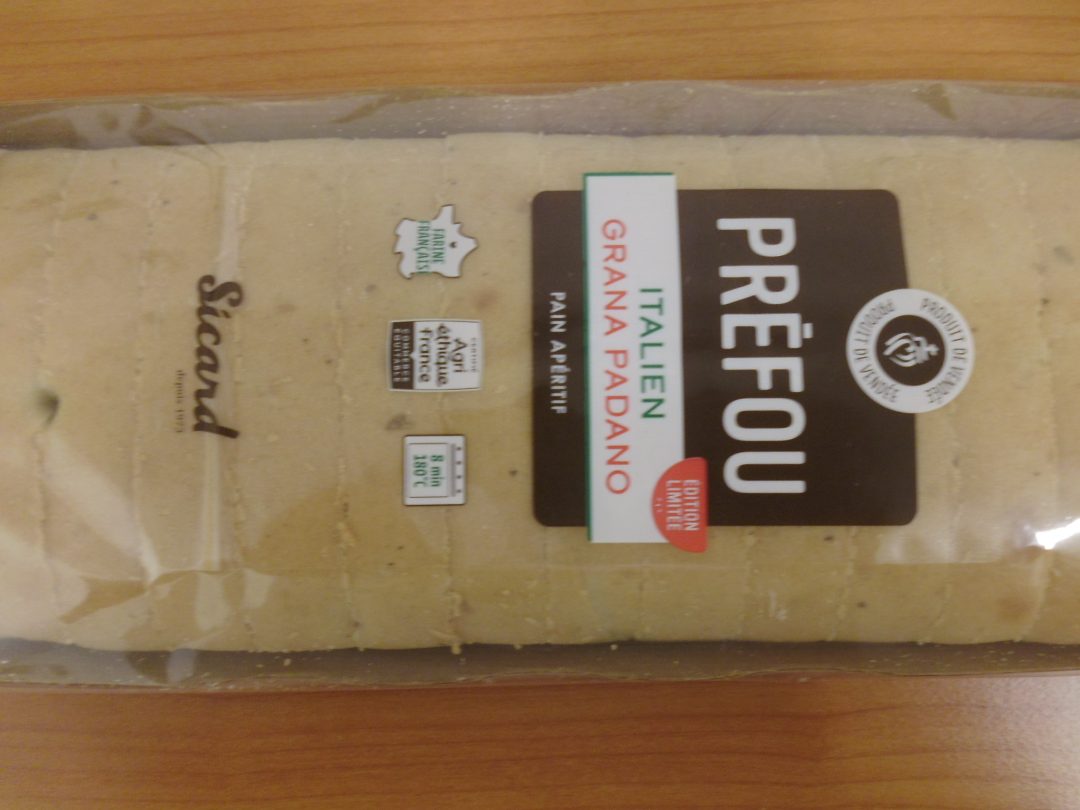
France – Italian Prefou Grana Padano, appetizer bread – Mold/Mould

Gov france

Identification information of the recalled product

  • Product category Food
  • Product subcategory Cereals and baked goods
  • Product brand name Sicard
  • Model names or references PRE-BAKED SLICED BREAD FILLED WITH A GRANA PADANO, TOMATO, BUTTER AND BASIL MIX
  • Identification of products
    GTIN Batch Date
    3608737783622 2117 Use-by date 05/27/2022
    3608737783622 2123 Use-by date 02/06/2022
    3608737788535 2123 Use-by date 02/06/2022
    3608737788535 2117 Use-by date 05/27/2022
  • Products List Products_concerned.pdf Enclosed
  • Packaging Cardboard tray + Film
  • Marketing start/end date From 27/04/2022 to 24/05/2022
  • Storage temperature Product to be stored in the refrigerator
  • Geographic area of ​​sale Whole France
  • Distributors Leclerc (central) / Hyper U (A point of sale in Saintes)

Practical information regarding the recall

  • Reason for recall Presence of mold
  • Risks incurred by the consumer Other biological contaminants