Category Archives: Microbiology

USA – Foodborne Illness Outbreak at Dave’s Sushi Under Investigation; now up to 30 cases.

Food Poisoning News

Bozeman, Montana – The Gallatin City-County Health Department, the Department of Public Health and Human Services (DPHHS), and federal agencies are continuing their investigation into the foodborne illness outbreak at Dave’s Sushi, which has been linked to two recent deaths in the area. The outbreak appears to be isolated to customers who dined at Dave’s Sushi between March 31 and April 17, 2023. The restaurant remains closed, with no further risk to the public.

According to the DPHHS, at least 30 individuals have been identified as being associated with the outbreak, having eaten at the restaurant within the specified time frame. Of these, three individuals experienced severe outcomes, including hospitalizations, and two deaths are being investigated. Autopsy and toxicology results for the deceased individuals are still pending.

Preliminary investigative findings suggest that food containing morel mushrooms may be the source of concern. However, no specific pathogen or toxin has been identified as of yet. Both state and federal partners are continuing to test clinical and food samples.

The DPHHS has determined that the morel mushrooms served at Dave’s Sushi were not distributed to any other restaurants or businesses in Montana. The mushrooms were cultivated in China, shipped to a distributor in California, and subsequently sent to multiple states. At this time, no known associated illnesses in other states have been identified.
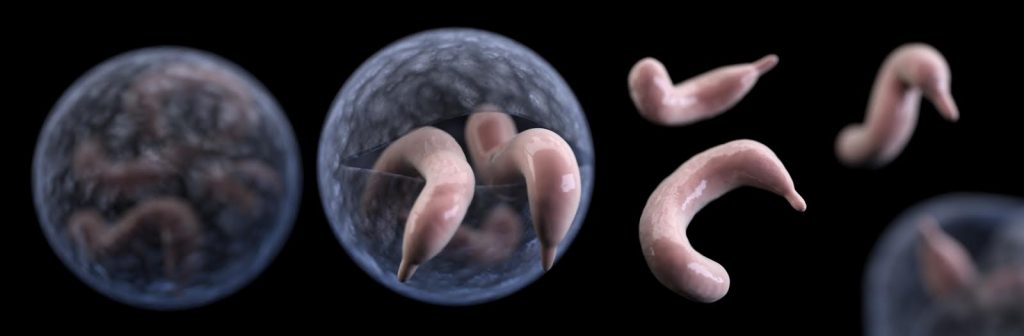
Canada – Critter Barn in Zeeland voluntarily closing for week after parasite outbreak

Holland Sentinel

ZEELAND — Critter Barn in Zeeland is voluntarily closing for the week in response to an outbreak of a parasite, the nonprofit announced Tuesday, May 2.

More: Parasite infects three Critter Barn volunteers

Critter Barn at 2950 80th Ave. will clean, scrub and disinfect its farm as an extra measure of precaution, it wrote, expecting to reopen Tuesday, May 9.

The Ottawa County Department of Public Health told WOOD TV-8 on Friday, April 28, there have been eight confirmed cases and three probable cases of Cryptosporidium, a parasite commonly found in water and near farm animals, traced back to Critter Barn. No one has been hospitalized, according to the health department.

Research – Impact of gas ultrafine bubbles on the efficacy of antimicrobials for eliminating fresh and aged Listeria monocytogenes biofilms on dairy processing surfaces

Wiley Online

Abstract

Ultrafine bubbles (UFB) are a novel concept that has the potential to enhance the potency of antimicrobials to eliminate biofilms. This study investigated the impact of incorporating gas (air, CO2, and N2) UFB on the potency of chlorine (Cl2; 50, 100, and 200 ppm) and peracetic acid (PAA; 20, 40, and 80 ppm) antimicrobial (AM) solutions against fresh (3 days) and aged (30 days) Listeria monocytogenes biofilms on polypropylene, silicone, and stainless steel surfaces. Listeria monocytogenes biofilms were statically grown on polypropylene, silicone, and stainless steel coupons (7.62 × 2.54 cm) at 25°C for 3 or 30 days, by immersing in a three-strain cocktail of L. monocytogenes in brain heart infusion (BHI) broth. The coupons were treated by submerging in AM solutions with or without UFB for 1 min, then swabbed into Dey-Engley neutralizing broth and enumerated on BHI agar. Incorporation of air, CO2, and N2 UFB in AM solutions resulted in significantly increased log reductions (0.4–1.5 logs) of fresh and aged L. monocytogenes biofilms on polypropylene and stainless steel surfaces, whereas incorporation of CO2 UFB in AM solutions resulted in ~1 log greater reductions of fresh and aged L. monocytogenes biofilms on silicone surfaces compared with AM solutions without UFB. This study also demonstrated that 200 ppm Cl2 was most effective against fresh and aged L. monocytogenes biofilms on polypropylene, silicone, and stainless steel surfaces compared with 50 ppm Cl2, 20 ppm PAA, and 40 ppm PAA.

USA – Two possibly dead linked to Dave’s Sushi in Bozeman

Food Poison Journal

According to press reports, Gallatin County Sheriff Dan Springer tells MTN News that Donna Ventura, age 64, died of a possible foodborne illness, after eating at Dave’s Sushi. The cause of Ventura’s death has not been confirmed as officials are waiting on autopsy and toxicology results.

According to earlier press reports, William “Bill” Lewis 74, of Townsend, died after eating at Dave’s Sushi, according to Broadwater County Sheriff Nick Rauser, who is also the county coroner. Sheriff Rauser says the 74-year-old man died at his home in Broadwater County. Sheriff Rauser says the call came in at 6:34 AM on the morning of April 18 and a relative told the responding officer that the man had eaten at Dave’s Sushi the night before, the same night the Gallatin County Health Department reported they received complaints of people becoming ill which led to the investigation and closure of the restaurant.

New Zealand – Barista Bros brand Double Espresso Ice Coffee – Microbial Contamination

MPI

Luxembourg – SPECIAL FOR DOGS MADE OF BEEF, HEAD MEAT, BELLY AND LEAF STOMACH – Salmonella

SAP

The Luxembourg Veterinary and Food Administration is recalling the following product in Luxembourg:

Name Spezial für den Hund aus Rindfleisch, Kopffleisch, Pansen und Blättermagen
Brand DIBO
Unit 2000g
Date of minimum durability (MDD) 06/09/2024
Batch 060924

Danger  : Possible presence of Salmonella 

Salmonella can cause symptoms such as nausea, vomiting, abdominal cramps, diarrhea, fever and headache within 6 to 72 hours after consumption. These symptoms may be aggravated in young children, immunocompromised subjects and the elderly. People who have consumed these products and have these symptoms are invited to consult a doctor and report this consumption to him.

Sale confirmed in Luxembourg by: Fressnapf

A sale by other operators cannot be excluded.

Click to access rckruf.pdf

Denmark – Salmonella outbreak sickens 16 and kills one in Denmark

Food Safety News

Danish officials are searching for the source of a Salmonella outbreak that has affected 16 people with one recorded death.

During March and April 2023, 16 cases of Salmonella Muenchen have been recorded.

Eight men and eight women are sick. Patients are aged between 10 and 95 with a median of 73 years old. One person has died and seven have been hospitalized.

Ill people live all over the country with eight cases in Hovedstaden, four in Sjælland, three in Midtjylland, and one in Syddanmark.

The Statens Serum Institut (SSI), Danish Veterinary and Food Administration (Fødevarestyrelsen), and DTU Food Institute are investigating the outbreak.

SSI is continuing to whole genome sequence isolates from patients and interview them or their relatives to try and identify a possible source of infection.

Whole genome sequencing of bacteria isolated from patients has found they were very closely related which suggests that there is a common source of infection.

Salmonella Muenchen is a rare type in Denmark with usually only around two to eight cases per year.

USA – Possible Hepatitis A contamination leads to frozen blackberry recall

Food Safety News

Patagonia Food LLC, of San Luis Obispo, CA, is recalling certain frozen blackberries because of possible hepatitis A contamination.

According to the company recall posted by the Food and Drugs Administration (FDA), the recall was initiated on March 17 and is ongoing. There is concern that consumers may have the frozen fruit in their home freezers.

The recalled blackberries were distributed in California, Oregon, Nebraska, Texas, Washington and Nevada.

Recalled product:

Product Description Recall Number Class Code Info Product Quantity Reason for Recall
Patagonia Foods 3610100 Blackberry IQF Product of Mexico Net Wt. 30 LBS. (13.61 kg) Production/Lot Code 20422 Distributed By: Patagonia Foods, LLC. San Luis Obispo, CA 93401 patagoniafoods.com F-0760-2023 Class I Lot Code: 20422 Possible Hepatitis A in blackberries

Consumers who purchased the recalled products should immediately dispose of them and not consume them.

USA – Researchers say raw milk infected people in Tennessee; one baby developed kidney failure

Food Safety News

A new report describes how raw, unpasteurized milk in Tennessee likely caused infections in people, including infants, one of whom developed kidney failure.

The report from the Center for Infectious Disease Research & Policy (CIDRAP) discusses two babies who developed E. Coli infections after being fed raw milk from a cow-sharing arrangement in Tennessee.

Often called “herd-shares,” such arrangements get around bans on raw milk sales by legally allowing people to buy part of a herd or of a single animal so that they can consume unpasteurized milk. Participants in herd-share operations pay a farmer to care for and milk the animals.

The babies discussed in the new CIDRAP report developed diarrhea between July 25 and Aug. 1, 2022. Testing revealed Shiga toxin-producing E. coli (STEC). Both households received raw milk from participants in the same cow share. The baby who developed kidney failure (hemolytic uremic syndrome) was hospitalized for 27 days.

USA – Public Health reports 88 people got food poisoning at event – Bacillus cereus

GUELPH TODAY

More than 80 people were left with food poisoning after attending an International Women’s Day event in Orangeville last month, reports Wellington-Dufferin-Guelph Public Health.

Held on March 8, around 244 guests attended the Best Western Plus Orangeville & Suites for an International Women’s Day luncheon; at least 88 of those guests found themselves experiencing vomiting, diarrhea, headaches and nausea after eating contaminated food at the event. 

The primary culprits were the sweet potatoes and quinoa in the chicken bowl, which was prepared by an outside caterer. 

Public Health inspectors found the food was contaminated with the bacillus cereus bacteria, which lives in soil and can easily attach itself to vegetables and fruits.