Category Archives: Microbiology

Research -Enumeration and Survival of Salmonella enterica in Live Oyster Shellstock Harvested from Canadian Waters

Journal of Food Protection

ABSTRACT

Since 2015, 11 recalls of live oyster shellstock have been issued in Canada due to the presence of Salmonella enterica. Six of those recalls took place in 2018. To understand this increase, fundamental information is needed on the relationship between S. enterica and oysters. The aims of this study were to address important data gaps concerning the levels of Salmonella in naturally contaminated oysters and the ability of this pathogen to survive in live oyster shellstock. Enumeration data were evaluated for five oyster and clam samples collected from the east coast of Canada from 2015 to 2018. The reported levels were <0.0015 to 0.064 most probable number per g of oyster tissue. The S. enterica isolates recovered from these animals belonged to serovars Typhimurium, Infantis, Enteritidis, and I 4,5:i:−. Filter feeding by the oysters was exploited to assess the Salmonella accumulation that would occur following a natural contamination event. Detectable levels of the pathogen were observed after 30 min of exposure and began to plateau at 60 min. A survival study in live oyster shellstock indicated that after 4 days of storage at ambient temperatures, the Salmonella level declined slightly from 4.3 to 3.7 log CFU/g. These data indicate that the levels of Salmonella found in naturally contaminated oysters are low and are not expected to increase between the point of harvest and the point of consumption. The changing ecology of shellfish environments requires continued monitoring and testing to safeguard public health. The data presented here will be useful for the evaluation and design of sampling plans and risk management approaches for the control of Salmonella in live oyster shellstock.

HIGHLIGHTS
  • Salmonella levels in naturally contaminated clams and oysters were <0.1 to 6.4 MPN/100 g.

  • Salmonella was detected in oysters after 30 min of exposure.

  • Salmonella did not grow in live oyster shellstock.

  • Salmonella was able to survive for at least 7 days in live oyster shellstock.

Research – Edible films containing carvacrol and cinnamaldehyde inactivate Escherichia coli O157:H7 on organic leafy greens in sealed plastic bags

Wiley Online Eurofins Food Testing UK

The antimicrobial effects of apple‐, carrot‐, and hibiscus‐based edible films containing carvacrol and cinnamaldehyde against Escherichia coli O157:H7 on organic leafy greens in sealed plastic bags were investigated. Fresh‐cut Romaine and Iceberg lettuce, and mature and baby spinach leaves were inoculated with E. coli O157:H7 and placed into Ziploc® bags. Edible films were then added to the bags, which were stored at 4°C. The evaluation of samples taken at days 0, 3, and 7 showed that on all leafy greens, 3% carvacrol‐containing films had the greatest effect against E. coli O157:H7, reducing the bacterial population by about 5 log CFU/g on day 0. All three types of 3% carvacrol‐containing films reduced E. coli O157:H7 by about 5 log CFU/g at day 0. The 1.5% carvacrol‐containing films reduced E. coli O157:H7 by 1–4 logs CFU/g at day 7. Films with 3% cinnamaldehyde showed reduction of 0.6–3 logs CFU/g on different leafy greens.

New Zealand -Campylobacter and E. coli infections climb in New Zealand; raw milk cited

Food Safety News

Campylobacter, Yersinia, E. coli and Listeria infections all went up while Salmonella declined, according to the 2018 report on foodborne disease in New Zealand.

Campylobacter remained the top foodborne pathogen. The country has a performance target to reduce cases of foodborne campylobacteriosis by 10 percent from 88.4 to 79.6 per 100,000 per head of population by the end of 2020. The estimated incidence in 2018 was 78.3 per 100,000.

New Zealand Food Safety (NZFS) is part of the Ministry for Primary Industries (MPI) and leads the country’s food safety system. EpiSurv is the country’s notifiable disease surveillance system

Full Report Link


Research – Detection of Psychrophilic Clostridium spp. Causing “Blown Pack” Spoilage in Meat Juice Samples from Chilled Vacuum-Packed Beef and Lamb Meat Imported from Different Countries to Switzerland

Journal of Food Protection

ABSTRACT

“Blown pack” spoilage (BPS) of chilled vacuum-packed meat is mainly caused by anaerobic and psychrophilic Clostridium spp., including C. estertheticum, C. gasigenes, C. frigoriphilum, and C. frigidicarnis. Recently, its occurrence has been reported in several countries, especially in internationally traded meat. Therefore, this study aimed at detecting the occurrence of psychrophilic Clostridium spp. causing BPS in meat juice samples (MJS) from chilled vacuum-packed beef and lamb meat imported from other countries to Switzerland. One hundred fifty-four MJS (n = 78 from beef; n = 76 from lamb meat) were screened for psychrophilic Clostridium spp. by quantitative PCR, whereby MJS with a crossing point PCR cycle value <35 and >35 were considered positive and negative, respectively. Psychrophilic Clostridium spp. were detected in 10 MJS, of which 2 were from beef and 8 were from lamb meat. The two beef MJS originated from Spain and Lithuania, whereas the lamb MJS originated from New Zealand (six) and Australia (two). This is the first report of psychrophilic Clostridium spp. in MJS from chilled vacuum-packed beef and lamb meat imported from other countries to Switzerland and provides further evidence that the risk of BPS in lamb meat is higher than in beef.

HIGHLIGHTS
  • Psychrophilic Clostridium spp. were detected in 10 of 154 meat juice samples.

  • Prevalence of psychrophilic Clostridium spp. in lamb meat was higher than in beef.

  • Prevalence of psychrophilic Clostridium spp. was highest in meat imported from New Zealand and Australia.

USA – Illinois: Legionnaires’ Disease reported at Quincy Veterans home

Outbreak News Today

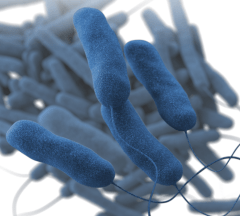
CDC legionella

Image CDC

The Illinois Department of Veterans’ Affairs (IDVA) and the Illinois Department of Public Health (IDPH) are investigating a single case of Legionnaires’ disease in a resident at the Illinois Veterans Home – Quincy (IVHQ). The resident has received medical treatment and is recovering at IVHQ. No other cases have been identified and IVHQ continues to follow its plans to monitor residents for respiratory illness. The last case of Legionnaires’ disease at IVHQ was February 2018.

IDPH infectious disease staff are working with the facility to collect information and further investigate the resident’s illness. IVHQ has notified residents, staff, and families or power-of-attorneys. IVHQ continues to operate a robust water management program and is implementing best practices to control the growth and spread of waterborne pathogens. IVHQ provides additional water treatment, including filtration and disinfection, prior to use on its campus. IVHQ also maintains point of use filters on all fixtures in residential areas to reduce the possibility of transmission to susceptible individuals. IVHQ continues to conduct active surveillance for Legionella by monitoring residents and reviewing water quality data on an ongoing basis.

Research – Growth and Survival of Listeria monocytogenes on Intact Fruit and Vegetable Surfaces during Postharvest Handling: A Systematic Literature Review

Journal of Food Protection

ABSTRACT

Listeria monocytogenes may be present in produce-associated environments (e.g., fields, packing houses); thus, understanding its growth and survival on intact, whole produce is of critical importance. The goal of this study was to identify and characterize published data on the growth and/or survival of L. monocytogenes on intact fruit and vegetable surfaces. Relevant studies were identified by searching seven electronic databases: AGRICOLA, CAB Abstracts, Center for Produce Safety funded research project final reports, FST Abstracts, Google Scholar, PubMed, and Web of Science. Searches were conducted using the following terms: Listeria monocytogenes, produce, growth, and survival. Search terms were also modified and “exploded” to find all related subheadings. Included studies had to be prospective, describe methodology (e.g., inoculation method), outline experimental parameters, and provide quantitative growth and/or survival data. Studies were not included if methods were unclear or inappropriate, or if produce was cut, processed, or otherwise treated. Of 3,459 identified citations, 88 were reviewed in full and 29 studies met the inclusion criteria. Included studies represented 21 commodities, with the majority of studies focusing on melons, leafy greens, berries, or sprouts. Synthesis of the reviewed studies suggests L. monocytogenes growth and survival on intact produce surfaces differ substantially by commodity. Parameters such as temperature and produce surface characteristics had a considerable effect on L. monocytogenes growth and survival dynamics. This review provides an inventory of the current data on L. monocytogenes growth and/or survival on intact produce surfaces. Identification of which intact produce commodities support L. monocytogenes growth and/or survival at various conditions observed along the supply chain will assist the industry in managing L. monocytogenes contamination risk.

HIGHLIGHTS
  • L. monocytogenes growth and/or survival on intact produce differed by commodity.

  • Intact produce held at ≥20°C had the highest L. monocytogenes growth rates.

  • Produce surface and storage conditions affected L. monocytogenes growth and/or survival.

  • Microbial carrying capacity is crucial to characterizing growth and/or survival patterns.

  • Studies need to describe experimental conditions (e.g., relative humidity) for modeling efforts.

Research – Combined ohmic heating and krypton‐chlorine excilamp treatment for the inactivation of Listeria monocytogenes, Salmonella Typhimurium, and Escherichia coli O157:H7 in apple juice

Wiley Online

Abstract

The combined effect of the 222‐nm krypton‐chlorine (KrCl) excilamp and ohmic heating for the inactivation of Listeria monocytogenesSalmonella enterica serovar Typhimurium, and Escherichia coli O157:H7 in apple juice was investigated in this study. When ohmic heating and a KrCl excilamp were applied to apple juice simultaneously, the reduction level of E. coli O157:H7 following 70 s (target temperature of 65.9°C) of combination treatment reaching 4.6 log CFU/ml was significantly higher than that of each treatment alone (2.7 log CFU/ml). The same trend, indicating a synergistic bactericidal effect, was observed for L. monocytogenes and S. Typhimurium. Therefore, the combination treatment of the KrCl excilamp and ohmic heating can be used effectively to control bacterial pathogens in apple juice with a reduced processing time.

Practical applications

Demands for energy‐efficient and environmentally friendly bactericidal apparatuses have been increasing. Although the mercury UV lamp has been widely used to inactivate foodborne pathogens in water or juice products individually or combined with heat treatment, the use of this conventional lamp will be limited continuously in accordance with the Minamata Convention treaty, which restricts the use of mercury. Thus, it is of interest to identify the bactericidal effect of an alternative UV‐C lamp and its combination with heat treatment. The synergistic bactericidal effect of the KrCl excilamp and ohmic heating, which are alternative nonthermal and thermal technologies, respectively, was identified in the present study. The results indicated in this study could be utilized by juice processors to achieve a 5‐log reduction in foodborne pathogens.

Research – High mycotoxin levels pose risk to dairy farmers this winter

Dairy Global

A high risk of mycotoxin contamination in this year’s forage is posing a challenge for many producers and could be responsible for struggling milk yields and excessive feed waste and underutilisation, experts warn.

According to a press release, Bob Kendal, regional sales manager at Alltech U.K. says, while many producers have lots of forage available this year due to a bumper harvest, we have had a record number of mycotoxin related enquiries, and a number of silage test results have shown high levels of penicillium.

Research – Infectivity of Norovirus GI and GII from Bottled Mineral Water during a Waterborne Outbreak, Spain

CDC

Abstract

During a waterborne outbreak of norovirus in Spain, we estimated 50% illness doses for a group of exposed (secretor) persons to be 556 (95% CI 319–957) genome copies/day for norovirus GI and 2,934 (95% CI 1,683–5,044) genome copies/day for norovirus GII. Use of a propidium monoazide viability assay reduced these values.

Research – Shigella Bacteremia, Georgia, USA, 2002–2012

CDC

Abstract

Shigella commonly causes gastroenteritis but rarely spreads to the blood. During 2002–2012, we identified 11,262 Shigella infections through population-based active surveillance in Georgia; 72 (0.64%) were isolated from blood. Bacteremia was associated with age >18 years, black race, and S. flexneri. More than half of patients with bacteremia were HIV-infected.