Category Archives: Microbiology

RASFF Alerts – Animal Feeds – Salmonella – Organic Soya Cakes – Rapeseed Expeller – Dried Dog Food – Rapeseed Meal

European Food Alerts

RASFF

Salmonella (presence /25g) in organic soya cakes from Belgium in Germany

RASFF

Salmonella enterica ser. Mbandaka (presence /25g) in rapeseed expeller from Estonia in Finland

RASFF

Salmonella enterica ser. Livingstone (presence /25g) in dried dog food from Germany in Finland

RASFF

Salmonella enterica ser. Livingstone (presence /25g) in rapeseed meal from Germany in Sweden

Research – Practical application of bacteriophage in food manufacturing facilities for the control of Listeria sp.

Wiley Online

Listeria monocytogenes is a foodborne pathogen with the ability to persist and form biofilm matrices in processing environments of food manufacturing facilities. Bacteriophages are bacterial viruses with host specific lethality. Published research on the application of phage to control Listeria sp. in manufacturing environments is limited. In this study, we have assessed the capacity of bacteriophage P100 (Listex™) to reduce incidence of Listeria sp. in the ready‐to‐eat (RTE) environment of refrigerated (4°C) and ambient (20°C) temperature facilities using two different application strategies. A moderate application applied as a single treatment every 24 hr over three days (2 × 107 PFU/ml) and an intensified application applied once every 6 hr over a 24 hr period (1 × 108 PFU/ml). Environmental nonfood contact surface (NFCS) samples were collected and analyzed for the presence of Listeria sp. before and after treatment. When the moderate treatment protocol was applied the incidence of positives decreased from 51.3 to 17.5% in the 4°C environment and from 67.5 to 23.1% in the 20°C production area. For the intensified phage treatment method, the initial positive rate in the 4°C environment ranged from 5 to 47.5%, with an overall 43% reduction in Listeria sp. In the 20°C facility, initial environmental Listeria sp. ranged from 15 to 50%, with an overall reduction of 32% after treatment with phage P100. Data indicate the application of Listeria specific phage P100 in RTE food production environments by either the moderate or intensified application method can reduce incidence and be considered an additional intervention strategy for controlling this pathogen on NFCS.

Research – Mycotoxins in Beverages

MDPI

Mycotoxins are secondary metabolites produced by fungi that contaminate raw materials such as cereals, fruits, dried fruits, coffee, and grapes when they have been produced or maintained in a temperature and/or humidity conditions that favour fungi growth. In general, mycotoxins are very resistant to temperature and remain stable during food preparation and processing [1].Therefore, food prepared from contaminated raw materials can retain the levels of these compounds.Several beverages are produced based on raw materials prone to be contaminated, such as beer from cereals, wine from grapes, coffee, and more. Moreover, and due to the fact that one fungal speciescan produce various of these metabolites [2], the most likely scenario is the co-occurrence of several mycotoxins in one food product.

Mycotoxins have different toxic effects on human health. They can be divided into acute effects,due to the ingestion of high levels of toxins in a short time period, and into chronic effects, due to the ingestion of low quantities for a long time. These chronic effects are the most common ones and they have been described as hepatotoxicity, immune diseases, carcinogenicity, genotoxicity, endocrine andreproductive effects, mutagenicity, teratogenicity, nausea, vomiting and diarrhea, among others [2].All the above make the presence of these compounds in human foods a global problem regarding food safety and also regarding economics, due to the loss of lots of contaminated raw materials or food products and its impact on global trade [3].In order to protect human health, legislative organisms promote the monitorization of these toxins in raw materials and foods, along with the regulation of maximum levels that can be present in some food products.

This Special Issue “Mycotoxins in Beverages” comprises three research articles and three reviews related to the presence of these toxins in beverages and covers different aspects. The research articles are devoted to the presence of mycotoxins in beer and milk. The reviews collect, on the one hand,information regarding mycotoxin presence in wine and in beverages obtained from tropical crops, and,on the other, new approaches for detecting ochratoxin A and other compounds in beverages.

France – Product recall: 80/100 Venezuela ASC shrimps – 300g from Atelier Poissonnerie – Listeria monocytogenes

Oulah

Product recall: 80/100 Venezuela ASC shrimps - 300g from Atelier Poissonnerie

ENCOUNTERED PROBLEM

Presence of Listeria monocytogenes

PROPOSED SOLUTION

People who may have this product are asked not to consume it and to return it to the point of sale where it was purchased.

People who have consumed this product and who have a fever, isolated or accompanied by headaches, are invited to consult their doctor, notifying him of this consumption.
Pregnant women should pay special attention to these symptoms, as well as immunocompromised people and the elderly. These symptoms may suggest listeriosis, a disease that can be serious and can take up to eight weeks to incubate.

FURTHER INFORMATION

▸ Packaging
300g self-service tray

▸ Barcode
3664335051327

▸ Lot
2203220692

▸ DLC
11/27/2020

▸ Marketing period
From 11/19/2020 to 11/24/2020

▸ Identif. Veterinarian
FR 62.160.112 CE

▸ Consumer service contact
CRUSTA C is at the disposal of consumers to answer their questions at the following telephone number: 05 62 07 31 85

▸ Source
https://fd1-courses.leclercdrive.fr/magasin-089301-Aulnay-sous-Bois.aspx


Research – Research examines potential Listeria risks in distribution centers

CPS

Numerous research projects have examined potential risks from foodborne pathogens in field-grown produce as well as in packinghouses, but little work has looked at whether produce distribution centers (DCs) may be potential contamination sources.
“I think the DCs are a little out of sight, out of mind,” she said. “We have been so focused on foodborne outbreaks and what’s happening at the field level or packinghouse wash water and employees and hand hygiene.”
Key Take-Aways
• Produce distribution centers have been largely overlooked as potential foodborne pathogen sources.
• Project focuses on the Listeria genus because they do well indoors, form biofilms and are difficult to eliminate once established.
• Project outcome may yield a set of risk-reduction guidances for DCs.
Her two co-principle investigators — Laura K. Strawn, Ph.D., with Virginia Tech, and Ben Chapman, Ph.D., with North Carolina State University – are veterans at studying potential foodborne outbreak risks at the retail level.
“At least from my perspective, I don’t typically think of DCs,” Dunn said of potential risks. “It’s kind of something that our eyes have been opened up to.” Should they find potential Listeria risks, the researchers plan to develop written risk-reduction recommendations for DCs.
“I think given the trends we’re already seeing, we’re already pretty clear there will need to be some written guidances for DC management,” Dunn said. “These will be based on some high-risk areas, practices and/or equipment in DCs that we’ve found in the study.”
The researchers are focusing efforts on vented produce in breathable containers and stored in coolers. Among the items are berries, tomatoes and other items packed in plastic clamshells and onions in mesh bags.
Dunn said they are concentrating on Listeria because it forms biofilms and, once in a facility, is difficult to eliminate. Listeria also is more of an indoor pathogen and doesn’t compete as well in fields as Salmonella and E. coli, which tend to do better outdoors.
The researchers also are testing just for the Listeria genus and won’t be going further to differentiate between pathogenic Listeria monocytogenes and other more benign Listeria species.
“They’re family members, and they have similar growth environments, conditions and preferences,” she said. “We assume if we find Listeria that the conditions could possibly be right for Listeria monocytogenes to be there.”
Chapman will analyze the meta data to see if he can correlate positive finds at different facilities to commonalities. As part of the analysis, he’ll look at a myriad of variables, including on-site management practices, employee shifts, facility design, sanitation practices and sanitation materials.
As originally proposed, Dunn and colleagues were to visit at least 25 DCs throughout the nation to collect samples by swabbing numerous surfaces from Zones 2 through 4. Those areas don’t contact produce directly but are farther removed, such as pallets, forklift tires, floors, floor cracks, truck trailers and employee shoes.
Then the COVID-19 pandemic hit in March, and two of the three researchers are still under travel restrictions. As of this writing, they’ve collected samples from 11 DCs, and most of that sampling was before the pandemic.
Although the researchers had hoped to visit cooperating California DCs, Dunn said they may settle with operations east of the Mississippi River. So far, they’ve visited facilities in Texas, Michigan and New York and are trying to recruit one more partner from Florida, Georgia or Alabama, she said. Michelle Danyluk, Ph.D., with the University of Florida, has helped by collecting samples from DCs in her state.
What has made the project possible is the input and cooperation from participating DCs, Dunn said. In fact, distribution center representatives were the ones who brought their concerns to the Center for Produce Safety initially.
“We couldn’t do the work without them,” Dunn said. “This was one of the CPS target areas a couple years ago, and it was because our partners brought it forward. If they weren’t onboard, we couldn’t have brought this forward. Our partners have been a huge help. They conceived the idea, were instrumental in the project design and have been so accommodating in getting us into the facilities.”
She said the DCs wanted to be proactive, identify any potential risks and take care of them before they became issues.
Despite the COVID-19 challenges, Dunn said the researchers have been able to collect a substantial number of samples from each facility, and they should be able to put together a “nice packet of information” that will benefit DCs.


Sweden – Lidl Sweden is recalling Goose Breasts, of the Culinea brand – Salmonella

Lidl

Lidl Sweden is recalling Goose Breasts from the Culinea brand, after routine analyzes it has been shown that the product may contain Salmonella.

Salmonella has been detected after a routine analysis. We would like to urge all our customers who bought the product to come back to us with the product. The relevant best-before date 2022-09-30 has been sold in all of Lidl Sweden stores. Salmonella poses no risk if you have heated the food to at least 70 degrees. 

The recall only concerns the product:

Article: Goose breast 

Pack size: 950g

Brand: Culinea

Best-before date: 2022-09-30

Other best-before dates or other Culinea products are not affected. We at Lidl Sweden apologize and take what happened seriously. Consumers who have purchased the product are welcome to return it to the place of purchase, or to the nearest Lidl store. Of course, customers get their money back, even without presenting a cash receipt.

Facts Lidl’s quality checks In addition to Lidl Sweden’s suppliers being certified with IFS (International Featured Standard), BRC (British Retail Consortium) or FSSC 22000 (Foundation Food Safety System Certification), Lidl Sweden performs regular unannounced on-site inspections at suppliers (performed by accredited institution). We go further than required by law and also test all products in external accredited laboratories to ensure that our products meet the highest quality.

Germany – Fresh Farmer’s Sausage in the Ring / Stracke Solid Farmer’s Sausage in the Ring Pfefferbeißer Farmer’s Sausages – Listeria monocytogenes

LMW

Warning type: Food
Date of first publication: December 01, 2020
Product name: Fresh Farmer’s Sausage in the Ring / Stracke Solid Farmer’s Sausage in the Ring Pfefferbeißer Farmer’s Sausages
Manufacturer (distributor): Herbertehof Rhönstrasse 5 36396 Hintersteinau
Reason for warning: Detection of Listeria monocytogenes
Durability: sold from 11/10/2020 to 12/01/2020
Lot identification: sold from 11/10/2020 to 12/01/2020
Further information: The affected products were sold regionally in Schlüchtern, Steinau, Bad Soden- Salmünster and Fulda . Further information can be found on the attached customer notice or on the manufacturer’s Facebook page.

Listeria usually manifests itself within 14 days of infection with diarrhea and fever. In particular, pregnant women, the elderly and people with a weakened immune system can develop more severe disease with blood poisoning and meningitis. In pregnant women, the unborn child can be harmed, even without symptoms.

People who have eaten this food and develop severe or persistent symptoms should seek medical attention and advise them of a possible Listeria infection.

Pregnant women who have eaten this food should seek medical treatment and seek advice even without symptoms. This is not useful for other people without symptoms.

Contact to the responsible authorities:

Hesse: Schnellwarnung@rpda.hessen.de

France – Product recall: Old-fashioned country pâté 1 slice of SAVEURS BRESSANES brand – Listeria monocytogenes

Oulah

Product recall: Old-fashioned country pâté 1 slice of SAVEURS BRESSANES brand

ENCOUNTERED PROBLEM

Presence of listeria

PROPOSED SOLUTION

Those in possession of this product are asked not to consume it and to return it to the point of sale where it was purchased.

People who have consumed this product and who present with a fever, isolated or accompanied by headaches, are invited to consult their doctor, notifying him of this consumption.
Pregnant women should pay special attention to these symptoms, as well as immunocompromised people and the elderly. These symptoms may suggest listeriosis, a disease that can be serious and can take up to eight weeks to incubate.

FURTHER INFORMATION

▸ Barcode
3384110003494

▸ Lot
T1911

▸ DLC
12/18/2020

▸ Health
stamp FR 38.190.001 CE

▸ Marketing
from 23/11/2020


Black tray packaging under atmosphere

▸ Consumer service contact
The company Nouvelle UTP is available to consumers to answer their questions at the following telephone number: 04.74.50.38.90

▸ Source
https://www.intermarche.com/

Italy – SPICY WASTED ABRUZZESE SAUSAGE – Salmonella

Salute

Brand : TAVOLA ITALIA

Name : SPICY WASTED ABRUZZESE SAUSAGE

Reason for reporting : Recall due to microbiological risk

Publication date : 2 December 2020

Documentation

Documentation

USA – Vegpro International Issues a Recall of Fresh Attitude Baby Spinach Because of Potential Salmonella Health Risk

FDA

Company Announcement

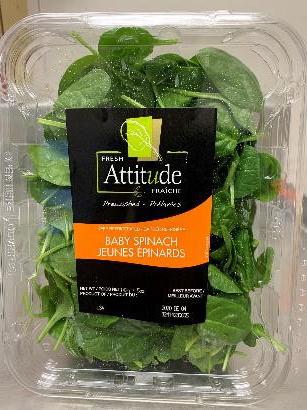
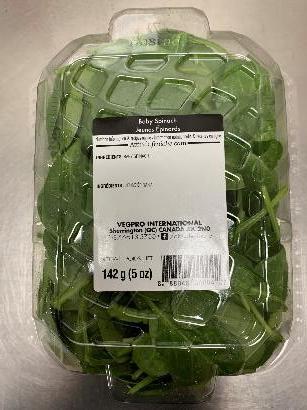
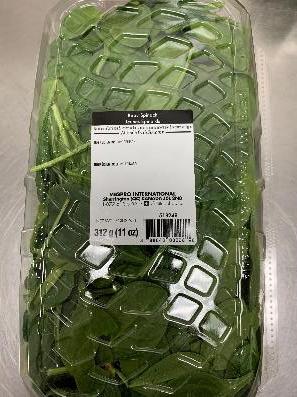
Vegpro International of Sherrington, QC CAN is recalling Fresh Attitude baby spinach (5oz and 11oz) with Best before dates of Dec 4th (for 11oz) and Dec 4th & 5th (for the 5oz), because it has the potential to be contaminated with Salmonella, an organism which can cause serious and sometimes fatal infections in young children, frail or elderly people, and others with weakened immune systems. Healthy persons infected with Salmonella often experience fever, diarrhea (which may be bloody), nausea, vomiting and abdominal pain. In rare circumstances, infection with Salmonella can result in the organism getting into the bloodstream and producing more severe illnesses such as arterial infections (i.e., infected aneurysms), endocarditis and arthritis

These products were produced in Vegpro’s Eastern Canadian plant and have been distributed ONLY in Eastern Canada and in the Northeastern United States (NY,NJ, DE, CT,MD & PA ). All other Fresh Attitude product sold in the US is produced in Belle-Glade Florida and is not linked to this recall whatsoever and therefore safe for consumption.

No illnesses have been reported to date.

The recall was initiated after it was discovered that the product was possibly contaminated with Salmonella subsequent investigation indicates that the problem may have been caused by contamination of a part of a lot of  Baby Spinach.

Veg Pro recalled due to health risk

  • BABY SPINACH. 8 X 5 OZ, Fresh Attitude, Best before 2020-12-04 & 2020-12-05
    UPC : 888048000042
    UPC case : 10888048000049
  • BABY SPINACH. 9 X 11 OZ, Fresh Attitude, Best before 2020-12-04
    UPC : 888048000288
    UPC case : 10888048000285

Consumers who have purchased these products are urged to return it to the place of purchase for a full refund. Consumers with questions may contact the company at 1-877-613-5700 or on our website at: http://vegpro.com/contact/


Company Contact Information

Consumers:
Vegpro International
 1-877-613-5700
 http://vegpro.com/contact/

Product Photos