Category Archives: Microbiology

Research – Salmonella enterica Serovar Panama, an Understudied Serovar Responsible for Extraintestinal Salmonellosis Worldwide

NCBI

kswfoodworld salmonella

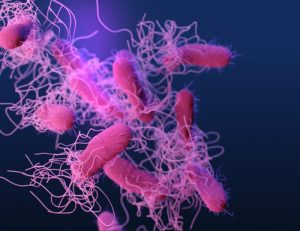
In recent years nontyphoidal Salmonella has emerged as one of the pathogens most frequently isolated from the bloodstream in humans. Only a small group of Salmonella serovars cause this systemic infection, known as invasive nontyphoidal salmonellosis. Here, we present a focused minireview on Salmonella enterica serovar Panama, a serovar responsible for invasive salmonellosis worldwide. S. Panama has been linked with infection of extraintestinal sites in humans, causing septicemia, meningitis, and osteomyelitis. The clinical picture is often complicated by antimicrobial resistance and has been associated with a large repertoire of transmission vehicles, including human feces and breast milk. Nonhuman sources of S. Panama involve reptiles and environmental reservoirs, as well as food animals, such as pigs. The tendency of S. Panama to cause invasive disease may be linked to certain serovar-specific genetic factors.

Zimbabwe – Shigella outbreak declared in Bulawayo City

Outbreak News Today

Shigella - kswfoodworld

A Shigellosis outbreak was declared November 26, 2021 in Bulawayo City, the second largest city in Zimbabwe.

The outbreak is mostly centered around Tshabalala suburb. As of Dec. 15, a total of 1,111 cases and 1 death (CFR 0.1%) have been reported so far from Bulawayo City.

The source of the outbreak is not reported.

From the beginning of the year to Dec. 12, 2021, Zimbabwe recorded 13,397 cases of Shigellosis with 22 deaths (CFR 0.2%).

New Zealand – Annual report concerning Foodborne Diseases in New Zealand 2020

MPI

New Zealand Food Safety, part of the Ministry for Primary Industries (MPI), leads New Zealand’s food safety system, protecting the health and wellbeing of consumers here and overseas. This includes reducing food-related risks to human health. Human health surveillance is an essential element of the monitoring and review component of New Zealand Food Safety’s risk management framework. In addition, evidence from notifications, case enquiries, outbreak investigations and other epidemiological studies of human enteric diseases are used as sources of data for risk profiles and assessments.

There is ongoing interest in foodborne disease statistics within New Zealand Food Safety and its stakeholders. This report for the calendar year 2020 is part of a series providing a consistent source of data and method of presentation to allow monitoring of foodborne illness in New Zealand. Human health surveillance data and foodborne disease The information in this report concerns reported cases of notifiable disease and reported outbreaks collected in the EpiSurv database.

Some notifiable illnesses may be caused by transmission of pathogens through foods, but it is important to remember that most of the information relates to the illness, not the mode of transmission.

The information needs to be considered with two caveats:

1. Notified cases of illness and reported outbreaks represent a subset of all the cases and outbreaks that occur in New Zealand each year. Many sick individuals do not visit a GP or otherwise come to the attention of the health system. By using these data as indicators, we are assuming that they are representative of all the cases and outbreaks that occur [1].

2. Foodborne transmission is only one of the routes by which humans are exposed to pathogens; other routes include water, animal contact and person to person. There are some indicators from which we can get information on the proportion of cases caused by foodborne transmission:

•Outbreak reports: the circumstances of an outbreak (multiple cases from a single event) mean that an investigation is more likely to identify a source of exposure to the pathogen than investigation of sporadic cases.

•Expert opinion: based on their experience in laboratories and epidemiological investigations, as well as knowledge of factors influencing the risk, experts can provide estimates of the proportion of cases caused by foodborne transmission.

Estimates for New Zealand have been developed for some foodborne diseases [2, 3], as presented in relevant report sections. These are not fixed values; future changes to the New Zealand food chain may require the values to be amended.

•Overseas analyses and estimates: information for countries with food supplies similar to New Zealand can be helpful, especially for illnesses where a foodborne estimate could not be developed f rom local studies. New Zealand estimates [2, 3] and published country-specific estimates, for the USA [4], Canada [5], Australia [6, 7], England and Wales [8] and the Netherlands [9] are given in Table 1.

In addition, a WHO project to estimate the global burden of foodborne diseases derived estimates for 14 international regions [10, 11]. The estimates for New Zealand, Australia, Canada, the Netherlands and the international WHO estimates are based on expert opinion, the estimates for England and Wales are based on outbreak analysis, while the US estimates are based on data from surveillance, risk factor studies and a literature review.

It is worth noting that, although for most of the diseases included in this report foodborne transmission is considered significant, there are several illnesses (shigellosis, giardiasis, cryptosporidiosis, hepatitis A) where foodborne transmission is considered to only contribute a small proportion of the total disease burden

Egypt/Denmark – Egyptian cabinet denies exports of green onions contaminated with E. Coli

Fresh Plaza

The Egyptian cabinet has denied rumors circulating about the export of a shipment of green onions with E. Coli bacteria. The Ministry of Agriculture affirmed that the news is void of truth, the governmental media center said in a statement on Tuesday.

The Ministry confirmed that all Egyptian agricultural exported crops including green onions are in line with the international standards. The media center urged all media outlets to scrutinize news about this subject matter intensely.

RASFF Alerts – Animal Feed – Aflatoxin – Rice Bran

RASFF

Aflatoxins in rice bran from the Netherlands, with raw material from Pakistan in Belgium

Research – Main Groups of Microorganisms of Relevance for Food Safety and Stability

NCBI

Microbiology is important to food safety, production, processing, preservation, and storage. Microbes such as bacteria, molds, and yeasts are employed for the foods production and food ingredients such as production of wine, beer, bakery, and dairy products. On the other hand, the growth and contamination of spoilage and pathogenic microorganisms is considered as one of the main causes to loss of foodstuff nowadays. Although technology, hygienic strategies, and traceability are important factors to prevent and delay microbial growth and contamination, food remains susceptible to spoilage and activity of pathogen microorganisms. Food loss by either spoilage or contaminated food affects food industry and consumers leading to economic losses and increased hospitalization costs. This chapter focuses on general aspects, characteristics, and importance of main microorganisms (bacteria, yeasts, molds, virus, and parasites) involved in food spoilage or contamination: known and recently discovered species; defects and alterations in foodstuff; most common food associated with each foodborne disease; resistance to thermal processing; occurrence in different countries; outbreaks; and associated symptoms.

Research – Evaluation of microbial contamination in cold dishes and Prevalence of food-borne pathogens in the Jilin Province

Journal of Food Protection

In this study, we evaluated the microbial contamination status of cold dishes consumed by residents of Jilin Province and investigated to determine the incidence of four pathogenic bacteria in cold dishes. A total of 300 samples of cold dishes including meat, vegetable and mixed products, were collected from three different purchasing places: supermarkets, farmers’ markets and mobile vendors. Live bacteria were isolated using conventional culture methods. After separation, a quick and easy polymerase chain reaction (PCR) was used to detect Listeria monocytogenes , Staphylococcus aureus , Enterotoxic Escherichia coli and Salmonella . The results showed that the total number of microbial colonies in the vegetable samples exceeded the standard rate of 8%, and the total number of microbial colonies in the meat and mixed samples did not exceed the standard. The total microbial colony count exceeded the standard in all three different procurement sites, with the highest exceedance of 7.4% in the mobile vendor sites. The detection rates of Enterotoxigenic Escherichia coli , Staphylococcus aureus , L. monocytogenes and Salmonella among the four pathogenic bacteria detected in all samples were 4.3%, 3.3%; 3.0%; and 1.0%, respectively. This study can be used to qualitatively assess the microbiological quality associated with cold dishes. It provides data to support the detection of possible food safety problems.

Research – The Changing Face of the Family Enterobacteriaceae (Order: ” Enterobacterales”): New Members, Taxonomic Issues, Geographic Expansion, and New Diseases and Disease Syndromes

PubMed

Entero

The family Enterobacteriaceae has undergone significant morphogenetic changes in its more than 85-year history, particularly during the past 2 decades (2000 to 2020). The development and introduction of new and novel molecular methods coupled with innovative laboratory techniques have led to many advances. We now know that the global range of enterobacteria is much more expansive than previously recognized, as they play important roles in the environment in vegetative processes and through widespread environmental distribution through insect vectors. In humans, many new species have been described, some associated with specific disease processes. Some established species are now observed in new infectious disease settings and syndromes. The results of molecular taxonomic and phylogenetics studies suggest that the current family Enterobacteriaceae should possibly be divided into seven or more separate families. The logarithmic explosion in the number of enterobacterial species described brings into question the relevancy, need, and mechanisms to potentially identify these taxa. This review covers the progression, transformation, and morphogenesis of the family from the seminal Centers for Disease Control and Prevention publication (J. J. Farmer III, B. R. Davis, F. W. Hickman-Brenner, A. McWhorter, et al., J Clin Microbiol 21:46-76, 1985, https://doi.org/10.1128/JCM.21.1.46-76.1985) to the present.

Research – Controlling Listeria monocytogenes Growth and Biofilm Formation using Flavonoids

Journal of Food Protection

The aim of the present study was to investigate the ability of natural plant-derivate (flavonoid compounds) products to reduce and/or inhibit the biofilm-forming ability of Listeria monocytogenes. A collection of 500 synthetic and natural flavonoids were tested on strains of L. monocytogenes for their antimicrobial and anti-biofilm activity. L. monocytogenes biofilm inhibition by flavonoid compounds was tested on i) stainless steel coupons using crystal violet staining and ii) glass slides using confocal laser scanning microscopic (CLSM) imaging. The flavonoids were tested against a L. monocytogenes cocktail of 5 strains at a concentration of 100 µM to determine their effect on planktonic growth. A total of 17 flavonoids were chosen for further study due to their ability to significantly reduce the growth of L. monocytogenes in BHI broth, while 2 flavonoids were chosen because they actually increased growth. A lower concentration of flavonoid compounds (50 µM) was selected to investigate their effects on L. monocytogenes biofilm formation using i) stainless steel coupons to quantify biomass and ii) glass coupons to observe the biofilm architecture. The 19 flavonoids showed various levels of L. monocytogenes growth inhibition, ranging from 2% to 100%, as compared to the respective positive and negative controls on stainless steel, after 48 h of incubation at 22 o C. In addition, in comparison to the control, most of the 19 flavonoids significantly (p ≤ 0.05) inhibited biofilm formation, with at least one of the L. monocytogenes strains or at one of the tested temperatures. In fact, when grown in BHI broth with 50 µM of the 19 selected flavonoid compounds for 48 h at 22 o C, there were visible reductions in L. monocytogenes biofilm formation on the glass coupons. Overall, we found multiple flavonoid compounds to be promising anti-biofilm and antimicrobial agents against L. monocytogenes .

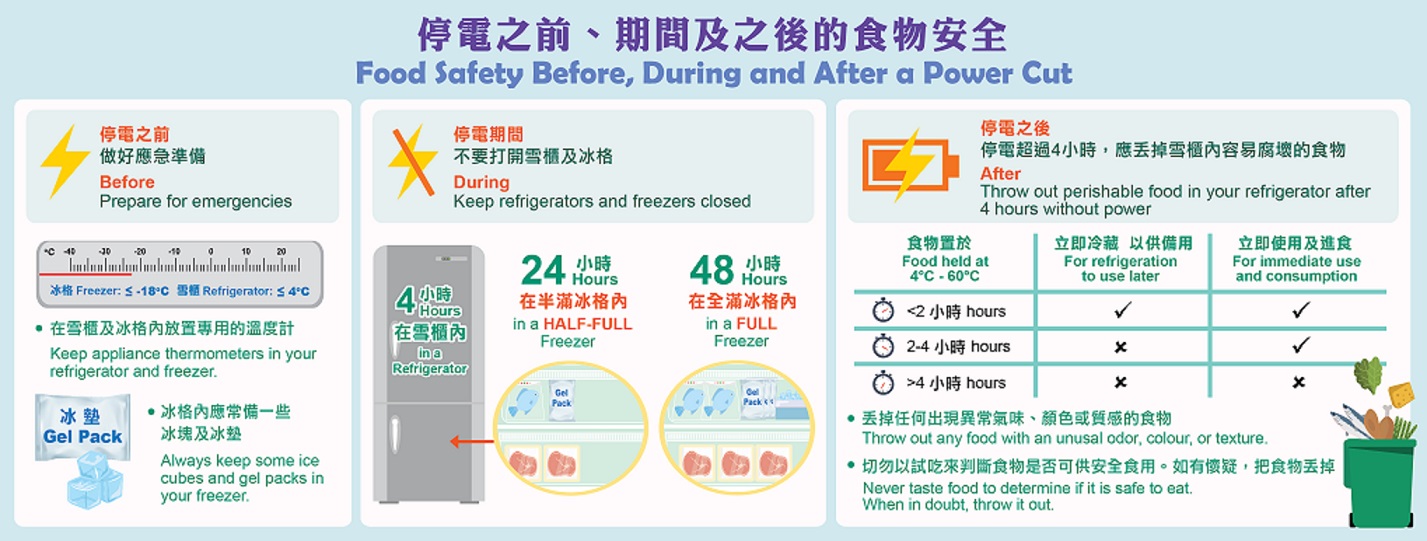
Hong Kong- How to Keep Food Safe in Case of a Power Cut at Home?

CFS

Prolonged power cut is uncommon in Hong Kong nowadays. However, sudden interruption of electricity supply may still occur due to unforeseeable factors such as adverse weather and equipment failure. Power disruptions can last for minutes to hours, during which food will spoil rapidly without refrigeration. Power cut can be troublesome, especially when you have a lot of perishable food items in your refrigerator and freezer compartment. Nonetheless, there is no need to panic. The following tips can help you keep food safe while waiting for resumption of power supply.