Category Archives: Microbial growth

Finland – Large outbreak linked to school meals in Finland; hundreds sickened

Food Safety News

More than 600 people have fallen ill in a suspected food poisoning outbreak at several schools in a Finnish city.

This past week, officials from the city of Mikkeli sent a questionnaire to parents of students and staff about symptoms that occurred during or after school meals on Aug. 16. As of Monday morning, answers had been received from nearly 3,800 parents and 350 employees.

All schools in Mikkeli have had at least a few patients. The incident is being investigated with the Finnish Food Authority (Ruokavirasto) and National Institute of Health and Welfare (THL).

Samples taken from different foods and raw materials are being examined to find out the cause of the epidemic. Results of laboratory tests are expected later this week.

UK – Urgent health warning as Brits returning from holiday with grim parasite amid outbreak – Cyclopsora


The Mirror

Cyclospora_LifeCycle201

Holidaymakers returning to the UK from Mexican all-inclusive resorts have been hit by a severe gastro-parasite infection, as the government warns of a large outbreak.

The UK Health Security Agency (UKHSA) is investigating the cluster of Cyclospora infections in the United Kingdom among people who visited Mexico between May and August. Between May 12 and August 14, 74 cases of Cyclospora cayetanensis — a nasty gastric illness caused by a parasite only endemic in certain countries — were reported in England, Wales, and Scotland.

Russia – 76 poisoned by kebab in Russian city – Salmonella

Big News Network

Dozens of victims, including children, were hospitalized with suspected salmonella poisoning

More than 70 people got food poisoning after eating shawarma in the Russian City of Vladimir, according to Rospotrebnadzor, the federal regulating agency for surveillance on consumer rights protection and human wellbeing.

In a statement released on Saturday, the agency confirmed that in just two days, twenty more people sought medical help for the illness “associated with consumption of shawarma,” thus bringing the total number of affected to 76, including 19 children.

USA – FDA issues advisory over Darwin’s Natural Pet Products over Salmonella concerns

Food Safety News

The U.S. Food and Drug Administration (FDA) has issued a cautionary advisory to consumers, urging them not to feed their pets specific lots of raw cat food and dog food produced by Arrow Reliance Inc.’s brand, Darwin’s Natural Pet Products. The agency’s move comes after samples from the affected lots tested positive for Salmonella contamination.

The FDA’s advisory was spurred by the potentially severe health implications these contaminated pet food lots can cause for both animals and humans. Salmonella infections can lead to serious illness, especially in individuals with weakened immune systems, the elderly, and young children. Since the affected products are typically stored frozen, the FDA is particularly worried that people might still have them and unwittingly feed them to their pets.

The FDA identified the potentially hazardous products as follows:

  • Darwin’s Natural Pet Products Natural Selections Chicken Recipe with Organic Vegetables for Dogs, Lot 9774, manufactured on June 13, 2023.
  • Darwin’s Natural Pet Products Natural Selections Chicken Recipe for Cats, Lot 9795, manufactured on June 28, 2023.
  • Darwin’s Natural Pet Products Natural Selections Chicken Recipe for Cats, Lot 9830, manufactured on July 19, 2023.

USA – Kansas: Trade Winds Bar & Grill Under Investigation for Campylobacter Outbreak


Outbreak News Today

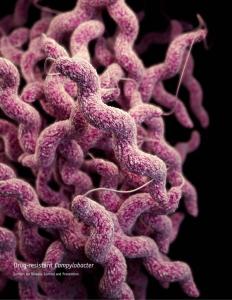
The Kansas Department of Health and Environment (KDHE) is investigating an outbreak of Campylobacteriosis linked to the Trade Winds Bar & Grill in Garnett, Kansas. Symptoms of Campylobacteriosis include diarrhea, bloody diarrhea, abdominal pain, nausea, or vomiting. 

To help KDHE in their investigation, KDHE asks anyone who visited Trade Wind Bar & Grill between July 14 and August 9 and then experienced these Campylobacter symptoms to complete a confidential survey.

The Trade Wind Bar & Grill closed on August 9th and remained closed until August 15th. 

People with Campylobacter infection usually have diarrhea (often bloody), fever, and stomach cramps. Nausea and vomiting may accompany the diarrhea. These symptoms usually start two to five days after the person ingests Campylobacter and last about one week. In some cases, individuals can develop more serious complications.

Research – First Report of Aeromonas veronii as an Emerging Bacterial Pathogen of Farmed Nile Tilapia (Oreochromis niloticus) in Brazil

MDPI

Abstract

Brazil is one of the world’s leading producers of Nile tilapia, Oreochromis niloticus. However, the industry faces a major challenge in terms of infectious diseases, as at least five new pathogens have been formally described in the last five years. Aeromonas species are Gram-negative anaerobic bacteria that are often described as fish pathogens causing Motile Aeromonas Septicemia (MAS). In late December 2022, an epidemic outbreak was reported in farmed Nile tilapia in the state of São Paulo, Brazil, characterized by clinical signs and gross pathology suggestive of MAS. The objective of this study was to isolate, identify, and characterize in vitro and in vivo the causative agent of this epidemic outbreak. The bacterial isolates were identified as Aeromonas veronii based on the homology of 16S rRNA (99.9%), gyrB (98.9%), and the rpoB gene (99.1%). A. veronii showed susceptibility only to florfenicol, while it was resistant to the other three antimicrobials tested, oxytetracycline, enrofloxacin, and amoxicillin. The lowest florfenicol concentration capable of inhibiting bacterial growth was ≤0.5 µg/mL. The phenotypic resistance of the A. veronii isolate observed for quinolones and tetracycline was genetically confirmed by the presence of the qnrS2 (colE plasmid) and tetA antibiotic-resistant genes, respectively. A. veronii isolate was highly pathogenic in juvenile Nile tilapia tested in vivo, showing a mortality rate ranging from 3 to 100% in the lowest (1.2 × 10⁴) and highest (1.2 × 10⁸) bacterial dose groups, respectively. To our knowledge, this study would constitute the first report of highly pathogenic and multidrug-resistant A. veronii associated with outbreaks and high mortality rates in tilapia farmed in commercial net cages in Brazil.

Research – Campylobacter Trends Show Decreasing Incidence, Rising Resistance Since 2012

Infectious Disease Advisor

Researchers conducted a study to estimate trends in the incidence of Campylobacter infection in the United States over time. Data on laboratory-confirmed Campylobacter diagnoses at 10 sites were collected from the Foodborne Diseases Active Surveillance Network between 1996 and 2019. Data on antimicrobial susceptibility were collected from the National Antimicrobial Resistance Monitoring System from 2005 to 2018. Campylobacter jejuni and C coli isolates were tested for antimicrobial susceptibility via broth microdilution. The incidence of Campylobacter infection was estimated after adjustments for sex, age, and the use of culture-independent diagnostic testing.

The researchers used a pooled chi-squared statistic to compare changes (2005-2016 vs 2017-2018) in the percentage of ciprofloxacin-, erythromycin-, and extensively drug-resistant isolates. They also used multivariable logistic regression to assess the association between AMR and clinical outcomes.

Research – Impact of climate change on foodborne infections and intoxications

Journal of Health Monitoring

Temperature, precipitation, humidity, and soil properties are important environmental factors that influence the spread and survival of zoonotic pathogens. Changes in these environmental factors as a result of climate change, such as permanently elevated ambient temperatures, in-creasing precipitation, but also water scarcity, may contribute to the spread and survival of pathogens.

Climate change may thus exert an increasing influence on more than half of all infectious diseases. This is not only true for already existing, i. e. endemic, infectious agents; climatic changes also favour the establishment of novel infectious agents (emergence) as well as the return of pathogens sup-pressed in the past (re-emergence). For example, in the
future, agriculture may have to rely more frequently on treated wastewater due to water scarcity, which will be ex- acerbated by climate change. This poses a number of risks
to food safety, including contamination of irrigated produce by various types of pathogens.

This review addresses hazards to human health posed by the most important foodborne bacteria, parasites and marine biotoxins in Germany and presents recommendations for reducing the risks. For example, the risk of all infections discussed here can be reduced by observing good hygiene during food preparation (kitchen hygiene) and adherence to cold chains.

Research – 12 Mistakes You Might Be Making When Defrosting Meat

The Daily Meal

Storing meat can be pretty tricky. As a perishable substance, meat doesn’t last long once you get it home from the store, and some types, like chicken pieces or ground beef, may only have a day or two in your refrigerator before they start to spoil. To take advantage of the affordability of buying meat in bulk, turn to your freezer

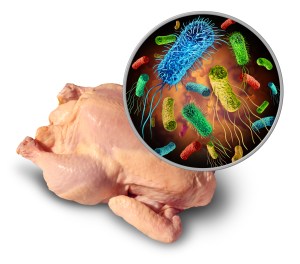
But handling meat — defrosted or otherwise — can be a tricky business. Meat can be a host for multiple different kinds of bacteria, including E. coli, Salmonella, and Bacillus cereus, all of which can cause food poisoning.

Read More at the link above

Research – Invasive listeriosis in Finland: surveillance and cluster investigations, 2011–2021

Cambridge Org

Abstract

Foodborne pathogen Listeria monocytogenes may cause serious, life-threatening disease in susceptible persons. We combined data from Finnish national listeriosis surveillance, patient interview responses, and laboratory data of patient samples and compared them to listeria findings from food and food production plants collected as part of outbreak investigations during 2011–2021. The incidence of invasive listeriosis in Finland (1.3/100000 in 2021) is higher than the EU average (0.5/100000 in 2021), and most cases are observed in the elderly with a predisposing condition. Many cases reported consuming high-risk foods as well as improper food storage. Since ongoing patient interviews and whole genome sequencing were introduced, several listeriosis outbreaks were detected and food sources identified. Recommendations about high-risk foods for listeriosis and proper food storage should be better communicated to susceptible people. In Finland, patient interviews and typing and comparing listeria isolates in foods and patient samples are crucial in solving outbreaks and determining measures to control invasive listeriosis.