Category Archives: microbial contamination

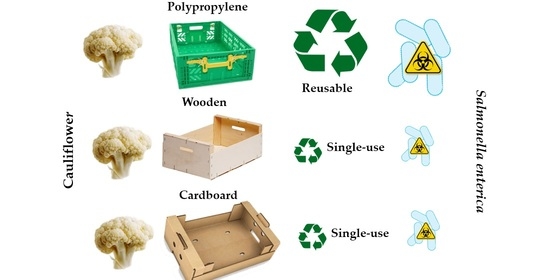
Research – Reusable Plastic Crates (RPCs) for Fresh Produce (Case Study on Cauliflowers): Sustainable Packaging but Potential Salmonella Survival and Risk of Cross-Contamination

MDPI

The handling of fresh fruits and vegetables in reusable plastic crates (RPCs) has the potential to increase the sustainability of packaging in the fresh produce supply chain. However, the utilization of multiple-use containers can have consequences related to the microbial safety of this type of food. The present study assessed the potential cross-contamination of fresh cauliflowers with Salmonella enterica via different contact materials (polypropylene from RPCs, corrugated cardboard, and medium-density fiberboard (MDF) from wooden boxes). Additionally, the survival of the pathogenic microorganism was studied in cauliflowers and the contact materials during storage. The life cycle assessment (LCA) approach was used to evaluate the environmental impact of produce handling containers made from the different food-contact materials tested. The results show a higher risk of cross-contamination via polypropylene compared with cardboard and MDF. Another outcome of the study is the potential of Salmonella for surviving both in cross-contaminated produce and in contact materials under supply chain conditions. Regarding environmental sustainability, RPCs have a lower environmental impact than single-use containers (cardboard and wooden boxes). To exploit the potential environmental benefits of RPCs while ensuring food safety, it is necessary to guarantee the hygiene of this type of container. View Full-Text

Ireland – Tipperary County Council not aware of source of Cryptosporidium in Borrisokane water

Tipperary Live

crypto

Tipperary County Council is not aware if the source of the cryptosporidium that has affected Borrisokane water supply has been found, local councillors have been told.

Cllr Ger Darcy had also raised concerns as to whether the pollution could happen again.

Irish Water is installing a UV system to kill any bacteria in the supply and director of water services Jerry Robinson said that hopefully that would be done this month, but warned it was a “work in progress”.

He said the UV system should prevent issues in the future.

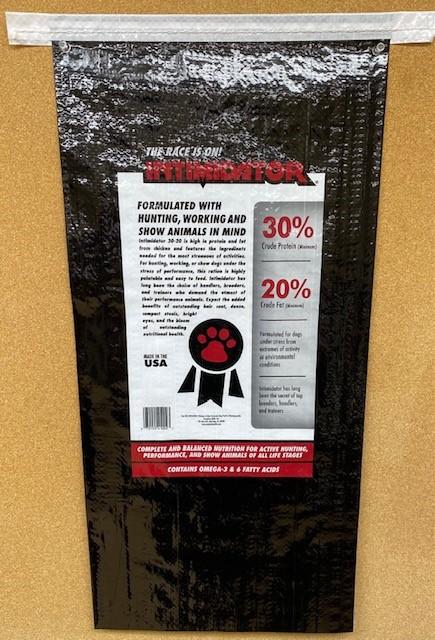
USA – Sunshine Mills, Inc. Issues Voluntary Recall of Certain Dog Food Products Because of Possible Salmonella Contamination

FDA

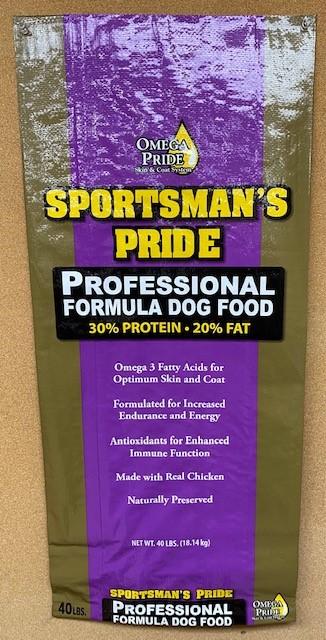
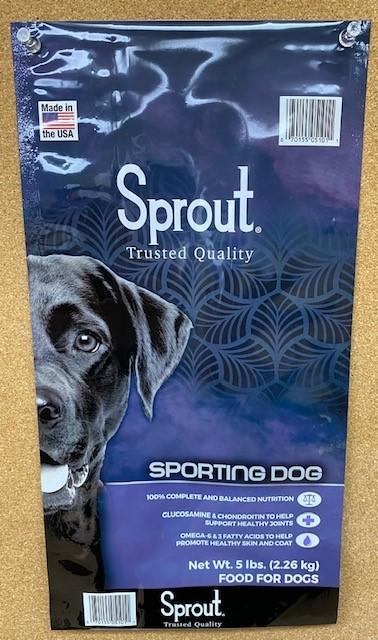
Sunshine Mills, Inc. is issuing a voluntary recall of certain dog food products because of the potential to be contaminated with Salmonella. No illnesses, injuries or complaints have been reported to date. The potential for contamination was noted after the firm was notified by the distributor, Fleet Wholesale Supply Company, who was informed by Minnesota Department of Agriculture when a sample of 5 lbs. Sprout Sporting Dog Food product was collected and tested positive for Salmonella during routine surveillance.

Salmonella can affect animals eating the products and there is risk to humans from handling contaminated products, especially if they have not thoroughly washed their hands after having contact with the products or any surfaces exposed to these products.

Healthy people infected with Salmonella should monitor themselves for some or all of the following symptoms: nausea, vomiting, diarrhea or bloody diarrhea, abdominal cramping and fever. Rarely, Salmonella can result in more serious ailments, including arterial infections, endocarditis, arthritis, muscle pain, eye irritation, and urinary tract symptoms. Consumers exhibiting these signs after having contact with this product should contact their healthcare providers.

Pets with Salmonella infections may be lethargic and have diarrhea or bloody diarrhea, fever, and vomiting. Some pets will have only decreased appetite, fever and abdominal pain. Infected but otherwise healthy pets can be carriers and infect other animals or humans. If your pet has consumed a recalled product and has these symptoms, please contact your veterinarian.

The best buy date and lot code can be found on the back of each package. The products identified below were distributed online and in retail stores:

Product Size BB Date Code & Lot UPC Code States
Sportsman’s Pride Professional
Formula 30/20 Dog Food
40 lb. Best if used By 7 Oct 2021 7015510184 MS, FL, TN, LA, VA, NC, TX
Lot: TI1 07/Oct/2020
Sprout Sporting Dog Food 5 lb. Best if used By 6 Oct 2021 7015505101 MN, WI, IA, SD, ND
Lot: TE1 06/Oct/2020
40 lb. Best if used By 6 Oct 2021 7015505100
Lot: TI3 06/Oct/2020
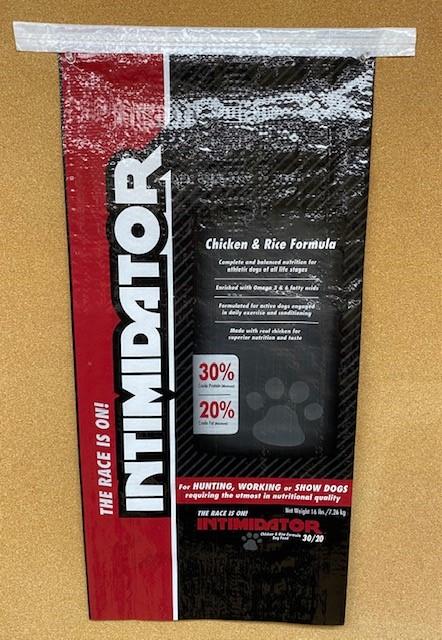
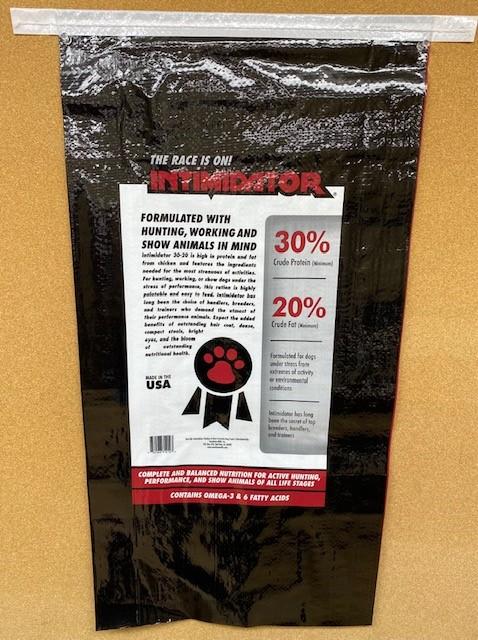
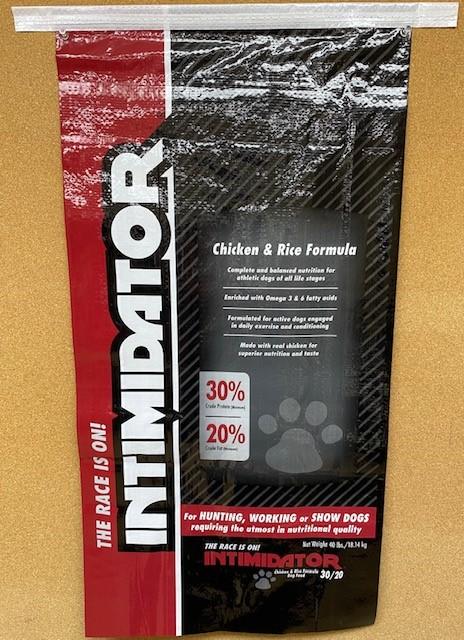
Intimidator Chicken & Rice Formula
Dog Food 30/20
16 lb. Best if used By 6 Oct 2021 7015541002 TX, MS, FL, AL
Lot: TA1 06/Oct/2020
40 lb. Best if used By 6 Oct 2021 5216631214
Lot: TA1 06/Oct/2020
FRM Gold Select High Performance
Dog Food
50 lb. Best if used By 6 Oct 2021 1549905873 GA, FL
Lot: TA1 06/Oct/2020

There are no other Sportsman’s Pride®, Sprout, Intimidator®, or FRM® Gold Select products or other lot codes of these products affected by this recall.

Retailers who received the recalled lots have been contacted and asked to pull these lots from their inventory and shelves Consumers who have purchased the recalled products should discontinue use of the product and may return the unused portion to the place of purchase for a full refund. Consumers may contact Sunshine Mills, Inc. customer service at (800) 705-2111 from 7AM to 4PM Central Time, Monday through Friday, or by email at customer.service@sunshinemills.com for additional information.

This is a voluntary recall being conducted in cooperation with the U.S. Food and Drug Administration.


Company Contact Information

Consumers:
Sunshine Mills, Inc.
 800-705-2111
 customer.service@sunshinemills.com
 

Product Photos

USA -Banner Smoked Fish Recalls Smoked Fish Products Because of Possible Health Risk – Listeria monocytogenes

FDA

Banner Smoked Fish, Inc. of Brooklyn, NY is voluntarily recalling its SMOKED FISH (product names and photos of labels are listed below) of all products within expiry, in all package sizes, all package types and all lots. The recall is because the products have the potential to be contaminated with Listeria monocytogenes, an organism which can cause serious and sometimes fatal infections in young children, frail or elderly people, and others with weakened immune systems. Although healthy individuals may suffer only short-term symptoms such as high fever, severe headache, stiffness, nausea, abdominal pain and diarrhea, Listeria infection can cause miscarriages and stillbirths among pregnant women.

The recalled smoked fish were distributed through retails and distributions, also online purchasing in NY, NJ, IL, PA, CA, FL, NE, AZ, MA, MD, VA, NV, OR, WI, NC, SC, and GA area.

The product comes in various sizes in both air pack and vacuum packages. The lot number or sell by date are placed on the back of the package.

The products were found to be processed under unsanitary condition. The problem was discovered through FDA routine inspection. No illnesses have been reported to date in connection with this problem.

Consumers who have purchased these items are urged to return them to the place of purchase for a full refund. Consumers with questions may contact the company at (718) 449 – 1400 from 8 AM – 4 PM EST.

Product name
1. Barbeque Spiced Smoked Nova Salmon
2. Brook Trout
3. Center Sliced Smoked Norwegian Style Salmon
4. Everything Spiced Smoked Nova Salmon
5. Finest Sliced Salty Lox
6. Finest Sliced Smoked Nova Salmon
7. Irish Cured Smoked Salmon
8. Lox Trimmings
9. Mackerel
10. Naturally Smoked Nova Salmon
11. Noon Hour Smoked Salmon
12. Norwegian Style Smoked Salmon
13. Nova Atlantic Salmon
14. Nova Bits
15. Nova Homarus
16. Nova Lox
17. Nova Salmon
18. Nova Salmon Bagel Cuts
19. Pastrami Nova Atlantic Salmon
20. Pastrami Style Smoked Nova Salmon
21. Pepper Crusted Smoked Nova Salmon
22. Presliced Gravad Lox
23. Presliced Pastrami Style Salmon
24. Presliced Pastrami Style Salmon
25. Presliced Scotch Style Salmon
26. Presliced Scotch Style Salmon
27. Presliced Scotch Style Smoked Salmon
28. Presliced Smoked Atlantic Salmon
29. Sable
30. Sliced Gravlax
31. Sliced Pastrami Style Nova
32. Sliced Smoked Norwegian Style Salmon
33. Sliced Smoked Salmon
34. Sliced Smoked Scotch Style Salmon
35. Smoked Nova Bagel Cuts
36. Smoked Nova Lox
37. Smoked Nova Salmon
38. Smoked Sliced Nova Salmon
39. Smoked Trout
40. Somga
41. Trimmed Nova
42. Whitefish

Company Contact Information
Consumers:
Banner Smoked Fish, Inc.
 718-449-1400

Product Photos at the Link above

RASFF Alert – Animal Feed – Mould – Sunflower Meal

RASFF

Mould in sunflower meal from Ukraine in Poland

RASFF Alerts – Animal Feed Salmonella – Rapeseed Meal – Rapeseed Cake – Toasted Soya Bean

RASFF

Salmonella Havana in rapeseed meal from Germany in Denmark and the Netherlands

RASFF

Salmonella enterica ser. Agona in rapeseed cake from Belgium in France

RASFF

Salmonella Agona in toasted soy bean from Belgium in Belgium, Italy, Germany and Austria


Information – 1,000,000,000,000 germs can live in one gram of poop

Click to access one-trillion-germs_508_8x11.pdf

Research – Kitchen-scale Treatments for Reduction of Listeria monocytogenes in Prepared Produce

Journal of Food Protection

Listeriosis, a foodborne illness caused by Listeria monocytogenes , has relatively low incidence, but a substantial mortality rate, particularly in immunocompromised populations. Because of the known risk of L. monocytogenes and other pathogens in produce, immunocompromised individuals are often placed on neutropenic diets that exclude fresh produce. Therefore, this study aimed to evaluate several kitchen-scale treatments as potential interventions to reduce L. monocytogenes in prepared produce. Cucumbers, apples, and celery were dip inoculated with a three-strain cocktail of L. monocytogenes and dried for 24 h. Inoculated products were subjected to the following treatments as applicable: commercial sanitizer soak (90 s, with agitation), tap water rinse (15 s), tap water soak (90 s, with agitation), surface blanching (25 s), tap water rinse (15 s) followed by peeling, and surface blanching (25 s) followed by peeling. Additionally, inoculum uptake in celery and the impact of two different types of peelers (mechanical crank and manual) were assessed. Treated samples were plated on differential media and incubated for 48 h at 37°C. L. monocytogenes populations were then enumerated and compared to the untreated control (log CFU/g). All treatments lacked efficacy for celery, with reductions significantly less ( P < 0.05) than in other products, likely due to inoculum internalization. The sanitizer soak, tap water rinse, and tap water soak did not differ in efficacy ( P > 0.05), which was low for cucumbers (< 1.5 log CFU/g), apples (< 1.3 log CFU/g), and celery (< 0.7 log CFU/g). The two types of apple peelers did not differ in efficacy ( P > 0.05). Surface blanching and surface blanching followed by peeling were the most effective treatments in both cucumbers and apples ( P < 0.05), with average reductions of 4.2 to 5.1 and 3.5 to 5.9 log CFU/g, respectively.

Research – Presence of Listeria monocytogenes in Ready-to-Eat (RTE) meat products sold at retail stores in Costa Rica and analysis of contributing factors

Journal of Food Protection

Listeria monocytogenes is a pathogenic bacterium associated with RTE meat products sold at the retail level. The objective of this research was to determine the prevalence of Listeria monocytogenes in RTE meat products sold at retail in Costa Rica and to study the factors associated with the levels of contamination; analyzed factors include hygienic practices within stores (cutting techniques, microbial contamination of products) and the behavior of the isolates (persistence against antimicrobials and transfer potential). A total of 190 samples of RTE meat products were collected and analyzed for the presence of coliforms and Listeria species.  Isolates of L. monocytogenes were then evaluated in terms of resistance to disinfectants (quaternary ammonium compounds and chlorine) and their transfer potential from food contact surfaces (knife and cuttingboards). Overall Listeria spp. prevalence was 37,4% (71/190); L. innocua was present in 32,1% (61/190) of the products and L. monocytogenes was found in just 2,6% (5/190) of the samples. Most of the contaminated samples were cut with a knife at the moment of purchase (44,2%). When analyzing practices within the stores, it was observed that L. monocytogenes transfer from inoculated knife to “salchichón” was higher for samples cut right at the beginning of the experiment. Also, L. monocytogenes transfer from inoculated cuttingboards was independent of the number of slices but contamination from plastic was higher than wood. Regarding L. monocytogenes resistance to disinfectants, average reductions of 2,6 ± 1,1 log CFU/mL were detected after 6 minutes of exposure to 200 ppm of chlorine; however, chlorine resistance varied among the strains. Prevalence of L. monocytogenes in RTE meat products sold at retail could be associated with handling practices within the stores; further studies are necessary to estimate the impact of these practices on the overall risk for consumers.

France – Product recall: THE WHOLE MILK that I prefer from the VERNEUIL brand – Sterility Issue

Oulah

Product recall: THE WHOLE MILK that I prefer from the VERNEUIL brand

ENCOUNTERED PROBLEM

Due to a technical problem during packaging, some UHT milk cartons have a sterility defect.

PROPOSED SOLUTION

Do not consume and bring back to the point of sale

FURTHER INFORMATION

▸ Names of models or references
Whole UHT sterilized milk


▸ Barcode
3173980040087


▸ Lot
130 (11:27:00 to 11:39:00)


▸ DLC – DDM
09/07/2021


Pack sizes Brick 1 L


▸ Start date / End of marketing
From 05/18/2021 to 06/01/2021


▸ Health mark
FR 37 269 031 CE


▸ Geographical sales area
Center-Val de Loire


METRO TOURS distributors + possibility of other distributors


▸ Consumer service contact
0247947102


▸ Source
LAITERIE DE VERNEUIL – COOPERATIVE TOURAINE-BERRY