Category Archives: microbial contamination

USA – Hawaii’s food safety agency uses embargo to drive raw milk sales off the islands

Food Safety News

State and local health departments went for months with no concerns other than the pandemic. But this summer, they are finding the time and personnel to work on other public health issues.

Hawaii, for example, has had an embargo underway for unpasteurized goat milk. The Hawaii Department of Health’s Food Safety Branch found numerous pet stores on O’ahu were selling raw goat milk.

Hawaii retailers and restaurants must purchase only pasteurized Grade A milk and milk products.

Raw milk is not safe for human consumption. As of July 1, the Food Safety Branch found about 20 O’ahu pet stores selling raw milk. Under the embargo, pet stores or any other retailer with raw milk in their possession were fined up to $10,000 a day unless they removed the raw goat milk from sale and destroyed the product.

UK project gets funding to monitor foodborne pathogens and AMR

Food Safety News

A project in the United Kingdom has received funding for the surveillance of foodborne pathogens and antimicrobial resistance.

Pathogen Surveillance in Agriculture, Food and the Environment (PATH-SAFE) involves the Food Standards Agency (FSA); Food Standards Scotland (FSS); Department of Environment, Food and Rural Affairs (Defra); Department of Health and Social Care (DHSC); Public Health England (PHE); and the Environment Agency.

The aim is to establish the infrastructure and sampling frameworks needed to monitor the source and spread of foodborne pathogens and antimicrobial resistance (AMR) genes between the environment, animals, food and people.

USA – Pacific Northwest heat wave causes vibrio bacteria outbreak in oysters

SeaFoodSource

Vibrio

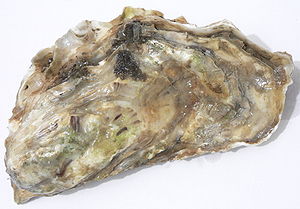
A heat wave that sent temperatures into the triple digits for three days in the U.S. Pacific Northwest in late June and early July drove up levels of the vibrio bacteria in area oysters, causing record numbers of illnesses from the bacteria and prompting oyster recalls.

The Washington State Department of Health (DOH) reported 75 lab-confirmed cases of vibriosis as of Wednesday, 29 July, and said there are likely many unreported cases. According to figures provided by DOH, the previous record number of vibriosos cases through 28 July was 48 in 2018.

The outbreak occurred over the holiday weekend of 4 July and coincided with the reopening of many of Washington’s businesses and restaurants. DOH said that several people visiting the area had fallen ill, including tourists from California, Canada, and Mexico. Officials had traced 48 of the cases back to commercial growers, while five of the cases were from recreational catch. The other cases with either unknown or still under investigation.

Vibriosis cases have been traced back to 24 different growing in areas in Washington state, including Samish Bay and Hood Canal, both of which have large tracts of oysters. A recall was issued for all oysters harvested in Samish Bay from 29 June onward, and the area was closed until at least 6 August, pending the results of ongoing tests. Officials were working to gather harvest from the area, while the Interstate Shellfish Sanitation Conference reported that some oysters from the affected spot had been exported to China, Cambodia, and the Philippines.

Canada – Notice not to consume various products packaged in glass jars prepared and sold by Les Jardins de Caroline – Food Safety

MAPAQ

WARNING TO THE POPULATION

QUEBEC, July 30. 2021 / CNW Telbec / – The Ministère de l’Agriculture, des Pêcheries et de l’Alimentation (MAPAQ), in collaboration with the company Les Jardins de Caroline, located at 605, chemin Cowan , in Havelock , is warning the population not to not consume the products indicated in the table below, because they have not been prepared and packaged in such a way as to ensure their safety.

Product name

Format

Targeted lot

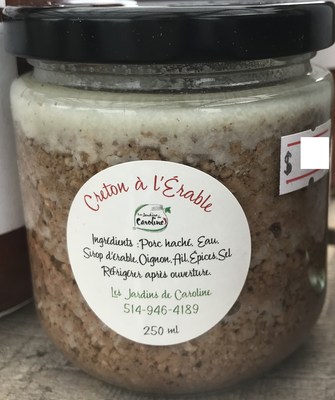
“MAPLE CRETON”

Unitary

Units sold until July 30, 2021

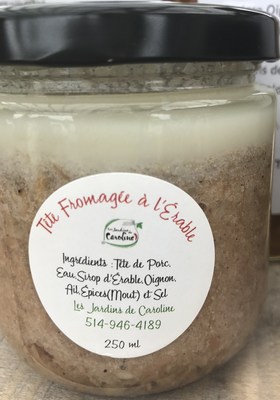
“CHEESE HEAD WITH MAPLE”

The products that are the subject of this warning were offered for sale until July 30, 2021, at the Valleyfield Public Market , located at 51, rue Hébert, in Salaberry-de-Valleyfield and at the County Farmer’s Market. de Huntingdon , located at 11, rue Dalhousie , in Huntingdon . They were packaged in glass jars and offered at room temperature. The product label includes, in addition to their name, the mention “Les Jardins de Caroline”.

The operator is voluntarily recalling the products in question. He agreed with MAPAQ to disseminate this warning as a precautionary measure. In addition, people who have these products in their possession are advised not to consume them. They must return them to the establishment where they bought them or throw them away. Although the affected products do not show any signs of spoilage or a suspicious odor, their consumption may represent a health risk. It should be noted that no case of illness associated with the consumption of these foods has been reported to MAPAQ so far.

Additional information

The Ministry publishes various information documents concerning food safety. Those interested can consult them in the “Food consumption” section of the MAPAQ website: www.mapaq.gouv.qc.ca/consommation . They can also register online, by visiting www.mapaq.gouv.qc.ca/rappelsaliments , to receive, by e-mail, the food recall releases published by the Department. Finally, it is possible to follow “MAPAQaliments” on Twitter at the following address: www.twitter.com/MAPAQaliments .

Maple creton (CNW Group / Ministry of Agriculture, Fisheries and Food) This link will open in a new window.

Maple Head Cheese (CNW Group / Ministry of Agriculture, Fisheries and Food) This link will open in a new window.

Source:
Media relations
Communications
Department Ministry of Agriculture, Fisheries
and Food
Tel. : 418 380-2100, extension 3512
www.mapaq.gouv.qc.ca

Risk classification:  Class 1
Reference number:  4381

Australia – Koo canned mixed vegetable varieties – Microbial Contamination

FSANZ

Product information

Sapro Australia is conducting a recall of a variety of Koo brand vegetable products:

Baked Beans in Tomato Sauce; Butter Beans in Flavoured Brine; Butter Beans in Tomato Sauce; Corn Creamstyle Sweetcorn; Whole Kernel Sweetcorn in Brine; Mixed Vegetables in Hot Curry Sauce; Mixed Vegetables in Curry Sauce; Mixed Vegetables in Brine; Baked Beans in Chilli Sauce.

The products have been available for sale at independent food retailers nationwide.

Date markings

Date of Manufacture from 1/5/2019 up to and including 5/5/2021.

Koo canned vegetables

Problem

The recall is due to potential microbial contamination as a result of a canning failure.

Food safety hazard

Food products with potential microbial contamination may cause illness if consumed.

Country of origin

South Africa

What to do​

Consumers should not eat this product and should return the products to the place of purchase for a full refund. Any consumers concerned about their health should seek medical advice.

For further information please contact:

Sapro Australia
0414070564
www.saproaustralia.com.au

Related links:

Research – Formation of multi-species biofilms and their resistance to disinfectants in food processing environments: A review

Journal of Food Protection

In food processing environments, various microorganisms can adhere and aggregate on the surface of equipment, resulting in the formation of multi-species biofilms. Complex interactions among microorganisms may affect the formation of multi-species biofilms and their resistance to disinfectants, which are food safety and quality concerns. This paper reviews the various interactions among microorganisms in multi-species biofilms, including competitive, cooperative and neutral interactions. Then, the preliminary mechanisms underlying the formation of multi-species biofilms are discussed in relation to factors, such as quorum sensing (QS) signal molecules, extracellular polymeric substances (EPS) and biofilm-regulated genes. Finally, the resistance mechanisms of common contaminating microorganisms to disinfectants in food processing environments are also summarized. This review is expected to facilitate a better understanding of inter-species interactions, and provide some implications for the control of multi-species biofilms in food processing.

Research – Characterisation of multidrug resistant Escherichia coli isolated from two commercial lettuce and spinach supply chains

Journal of Food Protection

ABSTRACT Leafy green vegetables have increasingly been reported as a reservoir of multidrug-resistant pathogenic Enterobacteriaceae; with Shiga toxin- producing Escherichia coli frequently implicated in disease outbreaks worldwide.  This study aimed to determine the presence and characteristics of antibiotic resistance, diarrheagenic virulence genes and phylogenetic groupings of E. coli isolates (n=51) from commercially produced lettuce and spinach from the farm, through processing and at the point of sale.  Multidrug resistance was observed in 33 of the 51 E. coli isolates (64.7%); with 35.7% (n=10/28) being generic and 100% (n=23/23) Extended Spectrum β-lactamase/AmpC- producing.  Resistance of E. coli isolates was observed against neomycin (100%; n=51/51), ampicillin (70.6%; n=36/51), amoxycilin (68.6%; n=35/51), tetracycline (45%; n=23/51), trimethoprim/ sulfamethoxazole (43%; n=22/51), chloramphenicol (25.5%; n=13/51), augmentin (11.8%; n=6/51) and gentamicin (7.8%; n=4/51); with 100% (n=51/51) susceptibility to imipenem. Virulence gene eae was detected in two E. coli isolates from irrigation water sources only, while none of the other virulence genes tested for were detected.   Most of the E. coli strains belonged to phylogenetic group B2 (25.5%; n=13), B1 (19.6%; n=10) and A (17.6%; n=9); with D (5.9%; n=3) less distributed. Although diarrheagenic E. coli were not detected, antibiotic resistance in E. coli prevalent in the supply chain was evident. Additionally, a clear link between E. coli isolates from irrigation water sources and leafy green vegetables through DNA fingerprinting was established which indicates the potential transfer of E. coli from irrigation water to minimally processed leafy green vegetables.

Research – Multidrug resistant and ESBL producing Salmonella enterica serotype Heidelberg is widespread in a poultry processing facility from Southern Brazil

Journal of Food Protection

This study aimed to characterize the Salmonella spp. distribution in a poultry processing facility, and to identify their antibiotic resistance profiles. S. enterica was detected in 146 samples (66.7%), and 125 isolates were identified as S. Heidelberg (n = 123), S. Abony (n = 1) and S. O:4,5 (n = 1). S. Heidelberg isolates were subjected to XbaI macrorestriction and PFGE, resulting in 66 pulsotypes grouped in 4 major clusters and demonstrating the cross contamination and persistence of this serotype in the processing facility. Also, S. enterica selected isolates were subjected to antibiotic resistance characterization, with most being categorized as multidrug resistant (n = 122, 97.6%). The resistance to third generation cephalosporins was particularly high: ceftazidime (n = 84, 67.2%) and cefotaxime and ceftriaxone (n = 91, 72.8%). Production of extended-spectrum beta-lactamases (ESBL) was identified in 24 isolates (19.2%) and ESBL-producing isolates were resistant to at least eight different antibiotics. The study highlighted the occurrence and the distribution of S. Heidelberg in the poultry chain, allowing proper understanding of the ecology of this pathogen in the studied facility. Also, the presence of multidrug resistant S. enterica at high frequencies is a concern due to the potential consequences for public health.

Research – Combined Hurdle Technologies Using UVC Waterproof LED for Inactivating Foodborne Pathogens on Fresh-Cut Fruits

MDPI

This study investigated the combined bactericidal efficacy of slightly acidic electrolyzed water (SAEW), fumaric acid (FA), and ultravioletC waterproof light-emitting diodes (UVC W-LED) for the control of Staphylococcus aureus and Listeria monocytogenes in fresh-cut fruits. Cherry tomato, grape, apple, and pineapple were inoculated with S. aureus and L. monocytogenes and then washed with 30 ppm SAEW containing 0.5% FA in a container equipped with two UVC W-LEDs. Behaviors of S. aureus and L. monocytogenes and quality properties of fresh-cut fruits were monitored after storage at 10 °C and 15 °C for 7 days. The most effective reductions of S. aureus (1.65 log CFU/g) and L. monocytogenes (2.63 log CFU/g) were observed in the group with the combined treatment of SAEW + FA and UVC W-LED. At 10 °C and 15 °C, populations of both pathogens in the combined treatment group were lower than those in a control. Combined treatment showed no negative effect on moisture retention in the fruit. Moreover, visual changes were less significant than in the control. These results demonstrate that the combined treatment can improve the microbial safety and the quality of fruits. If it is properly used in the sanitizing step of the fresh produce industry, a positive effect can be expected.

Research – Legionella – Can Point-of-Use Water Filters Control Legionella & Other Waterborne Pathogens?

Legionella Control

CDC legionella

This expert water safety article looks at the role of point-of-use water filters, and asks if they can be used to control the health risks from legionella and other waterborne pathogens that can contaminate engineered water systems.

The article considers how these specialist water filters work to protect people from legionella and other waterborne pathogens, and where and under what circumstances they should be used.

Can point-of-use water filters control legionella risk?

You might already suspect the answer to that question is yes, but let’s take a more detailed look. The bigger question to answer is how these filters can help maintain water safety standards, and why you might consider installing point-of-use (POU) water filters in a specific building.

We’ll explain more about these high performance water filters here, so you can better understand their role, the scenarios that might call for them, and how they complement rather than replace other water safety control measures.