Category Archives: HUS

Italy – Italy records nearly 80 HUS cases in 12 months

Food Safety News

Almost 80 hemolytic uremic syndrome (HUS) cases were registered between July 2019 and June 2020 in Italy.

The 77 patients came from 17 regions in the country while one person contracted HUS while abroad. Notification rates varied by region but were highest in Aosta Valley and higher than 1 case per 100,000 in Basilicata, Calabria, Liguria, Lombardy, Marche, Trento, and Bolzano.

Seventy of those affected were under 15 years of age. The median age of patients at the clinical onset of the disease was 2 years and 7 months for the past 12 months and the past decade.

South Korea – Food poisoning sickens about 100 kindergarten pupils in Ansan

YNA

ANSAN, South Korea, June 25 (Yonhap) — About 100 pupils at a kindergarten in Ansan, just south of Seoul, have complained of food poisoning symptoms over the past week, with a fifth of them hospitalized for hamburger disease and other disorders, municipal health officials said Thursday.

According to the officials in Ansan, 50 kilometers south of the capital, 99 out of 184 children attending the unidentified kindergarten showed symptoms of food poisoning from June 16 to Monday, and 22 of them were sent to hospitals.

Some of them are reportedly showing signs of hemolytic uremic syndrome (HUS), also known as hamburger disease, which could cause severe kidney failure, they noted, adding doctors raised the possibility of hamburger disease among some ailing students.

The number of patients has been increasing since four children complained of stomachaches on June 16. By June 17, 10 pupils exhibited symptoms of stomachache and diarrhea.

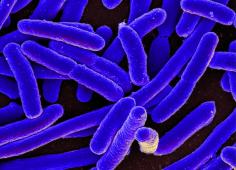
Authorities have found hemorrhaging E. coli bacteria in samples taken from about 30 pupils. HUS is one of the complications caused by E. coli bacteria.

Research – Hemolytic Uremic Syndrome

Pediatrics in Review

Thrombotic microangiopathy (TMA) was described by Moschcowitz in 1924, and the term hemolytic uremic syndrome (HUS) appeared by 1955 to describe a series of patients with small-vessel renal thrombi, thrombocytopenia, and hemolytic anemia. During the 1970s an association was noted between enteric Escherichia coli infections and HUS, and in 1983 the specific trigger of Shiga toxin–producing E coli (STEC) was recognized. This recognition led to classification of HUS as “diarrhea positive” or “diarrhea negative,” although this terminology is no longer popular. Other secondary forms of HUS are known, including HUS associated with invasive pneumococcal infection, human immunodeficiency virus, systemic lupus erythematosus, or uncommon reactions to medications such as cyclosporine. More recently, the term atypical HUS (aHUS) has been used to describe a rare form of HUS occurring in susceptible individuals, most often from defects in regulation of the alternative pathway of complement, whereas typical HUS largely refers to STEC-HUS or pneumococcal HUS.

In patients with bloody diarrhea, it is imperative that front-line providers understand the importance of testing for STEC. In many parts of the world STEC O157:H7 is the most common pathogen leading to HUS, but it certainly is not the only one as many other organisms besides E coli have been causally implicated with HUS. Testing for STEC is evolving quickly. Stool culture, various assays for the Shiga toxin, and most recently DNA testing of stool are all being used, each method with its own strengths and limitations. The most crucial issue is timeliness because the window of opportunity …

USA -E. coli HUS Outbreak: Forty Sick, CDC Says Avoid All Romaine From Salinas, CA

Food Poisoning Bulletin

The CDC just posted a food safety alert, telling consumers that in the wake of the newest E. coli HUS outbreak, they should avoid buying or eating all romaine lettuce from the Salinas, California growing region until more information is available. This is an echo of the same advice from the CDC last April, when another, deadly E. coli O157:H7 outbreak was linked to romaine. The advice in 2018 was to avoid all romaine lettuce until officials found the source.

This newest outbreak is growing by leaps and bounds. Now 40 people in 16 states are sick. That’s an increase of 23 more patients and 8 more states in just the last two days. Twenty-eight people have been hospitalized, which is a very high percentage of cases. Five people have developed hemolytic uremic syndrome (HUS), which is a type of kidney failure.

Forty Sick in E. coli HUS Outbreak: CDC Says Avoid All Romaine From Salinas, CA

France- Escherichia coli O26: HUS increases investigated in France

Outbreak News Today

Public Health France is currently investigating an increase in the number of children with hemolytic uremic syndrome (HUS).

As of May 6, 2019, 16 children infected with Escherichia coli serogroup O26 are being investigated by Public Health France and the National Reference Center (CNR) E. coli  and its associated laboratory (Institut Pasteur, Paris, and Laboratoire de microbiology of Robert Debré Hospital, Paris). Fifteen children had HUS and one child had uncomplicated diarrhea.

France – French Cheeses Recalled after 12 with E. coli caused Kidney Failure

Food Poison Journal

CDC E.coli

Image CDC

According to press reports and French health authorities, the cheeses Saint-Félicien and Saint-Marcellin, both made by the Société Fromagerie Alpine in Romans-sur-Isère in the Drôme department, were pulled from shelves yesterday (Saturday April 27) due to the likely link to an E. coli outbreak.

The brands are mainly sold in large supermarkets such as Leclerc, Lidl and Auchan.

The recall was a “precautionary measure”, said the ministers for health and agriculture, after 13 children in several regions were reported to have contracted cases of hemolytic uremic syndrome (HUS) due to an E. coli infection, since March 21.  In the US, only about 5% of outbreak victims develop HUS, raising the question that this outbreak may impact a significant number of people.

Investigations revealed that several of the children had eaten these cheeses before symptoms appeared.

Anyone who still has cheese from this brand is advised not to eat the product.

Information – How Is HUS Diagnosed After an E. coli Infection?

Food Poisoning Bulletin

CDC E.coli

Image CDC

Hemolytic uremic syndrome, or HUS, is one of the most serious complications of any foodborne illness infection. It is caused by misshapen red blood cells that are created when Shiga toxins produced by E. coli bacteria travel through the bloodstream to the kidneys.

The destroyed blood cells clog the glomeruli, which are tiny tubes in the kidneys. The kidneys can shut down, and some patients experience kidney failure.

One of the worst things about this complication is that most patients are children under the age of 5, who have no choice in what they are given to eat or drink.

Symptoms of HUS include little to no urine output (oligoanuria), lethargy, pale skin, a skin rash, and bleeding from the nose or mouth. If someone is experiencing these symptoms, it’s critical that they are taken to a doctor immediately. Many of these patients are hospitalized for palliative and supportive care.

Hemolytic uremic syndrome is often diagnosed by these symptoms and the timing of symptoms. An E. coli infection usually starts three to four days after exposure to the pathogen. HUS symptoms usually begin about four days after E. coli infection symptom onset.

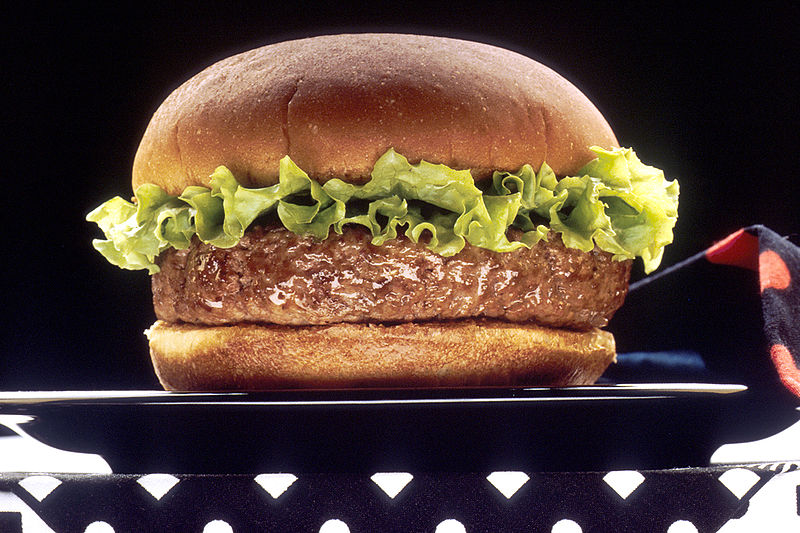
UK -Four more E.coli O157 Cases in Scotland Linked to Burgers

STV NewsBurger

Four more cases of E coli have been linked to the SSE Hydro in Glasgow, health bosses said.

The new cases bring the total number to 15 and are all linked to events at the venue on January 17, 18 and 19.

An investigation by NHS Greater Glasgow and Clyde (NHSGGC) alongside other public health bodies has indicated that burgers sold at the Hydro could have been the cause of the outbreak.

USA – Two Children Ill with HUS – Possible E.coli Infection

Food Poisoning BulletinEcoli Istock

According to WFMY News in North Carolina, two children in Davidson County have been hospitalized with severe, bloody diarrhea and may be suffering from E. coli infections. The cases were reported on Friday, December 27, 2013. The possible cause of these illnesses is not known at this time.

USA – E.coli O157:H7 Outbreak 3 with HUS

Food Poisoning Bulletin

At least 4 people have been sickened in an E. coli O157:H7 outbreak in Humboldt County, California, according to the Humboldt County Department of Health and Human Services (DHHS). Of those, 3 developed hemolytic uremic syndrome (HUS), a severe complication of E. coli poisoning that causes kidney failure.

The first E. coli case was reported in July of this year, the second in the middle of August and the other two in October.