Category Archives: Histamine

Hong Kong- Food Safety Focus – Histamine in Fish and Fish Products

CFS

 Histamine in Fish and Fish Products

Reported by Mr. Kenneth Yung, Research Officer,
Risk Assessment Section, Centre for Food Safety

Fish is an important part of many types of cuisine that we savour.  However, the consumption of fish and fish products containing high level of histamine may cause scombrotoxin fish poisoning (SFP), also called histamine poisoning.  In Hong Kong, the Centre for Health Protection of the Department of Health recorded a total of 26 local SFP cases, affecting 45 persons from 2009 to 2018.  In this article, we discuss how histamine is formed and the ways to control level of histamine in fish and fish products..
Examples of fish which contain elevated levels of naturally

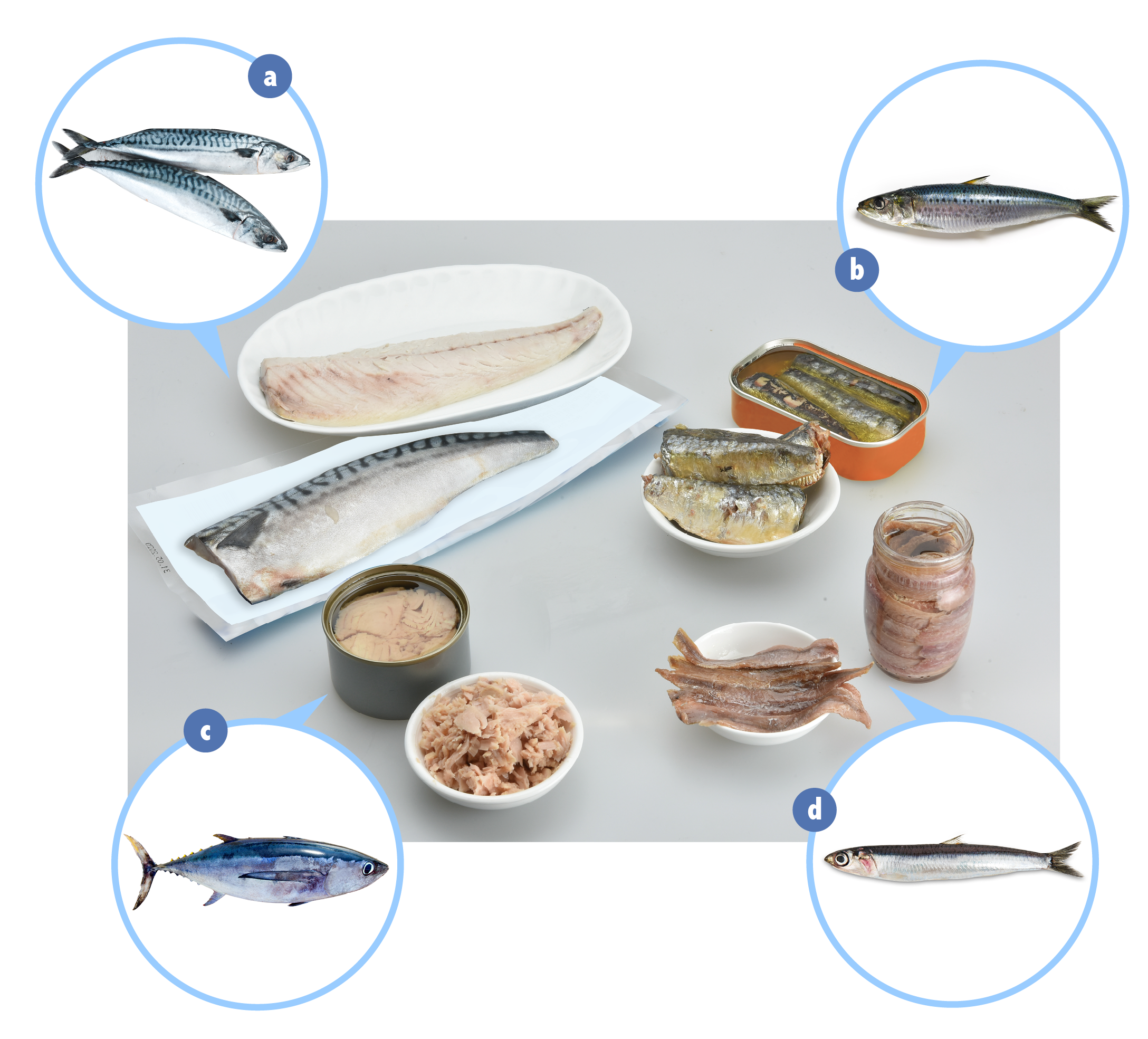
Examples of fish which contain elevated levels of naturally occurring histidine: (a) mackerel, (b) sardine, (c) tuna and (d) anchovy.  Some of their respective products have also been found to contain high levels of histamine.

Formation of Histamine in Fish and Fish Products

Histamine is a toxic metabolite produced by histamine-producing bacteria during spoilage and fermentation of fish and fish products.  Many histamine-producing bacteria are part of the natural microflora of the skin, gills and gut of freshly caught fish.  Histidine decarboxylase (HDC) enzymes, synthesized by histamine-producing bacteria when they multiply, convert the amino acid histidine that are naturally present in fish into histamine.

The level of histamine in fish and fish products mainly depends on species of fish and time-temperature control. Certain fishes like mackerel, sardine, tuna and anchovy naturally contain high amount of histidine and have been associated with SFP cases in Hong Kong and/or other places.

Time and temperature control is the most effective method for ensuring food safety for fish species prone to histamine production.  In the absence of proper time-temperature control such as refrigeration and freezing, formation of histamine may occur at any point throughout the supply chain.  Previous study conducted jointly by the Food and Environmental Hygiene Department and the Consumer Council revealed that high levels of histamine (up to 2600 mg/kg) that can cause SFP were detected in opened canned fish samples that were left at room temperature for 24 hours.  However, histamine was not detected in samples that were kept at 2°C for up to 168 hours.

Health Effects of Histamine

SFP is caused by the ingestion of food containing high levels of histamine i.e. consuming a serving size of 250g fish or fish product with histamine level exceeding 200 mg/kg may cause symptoms in healthy individuals.  Symptoms of SFP include tingling and burning sensation around the mouth, facial flushing and sweating, nausea, vomiting, headache, palpitations, dizziness and rash.  Exacerbation of asthma and more serious cardiac manifestations were reported in more severe cases.  The onset of symptoms is within a few hours after consumption and these symptoms will normally disappear in 12 hours without long term effect.

Control of Histamine in Fish and Fish Products

High levels of histamine can build up in fish and fish products before any signs of spoilage (e.g. bad smell or taste) develop.  Therefore, measures for control of histamine should be taken along the food chain from harvest to consumption.

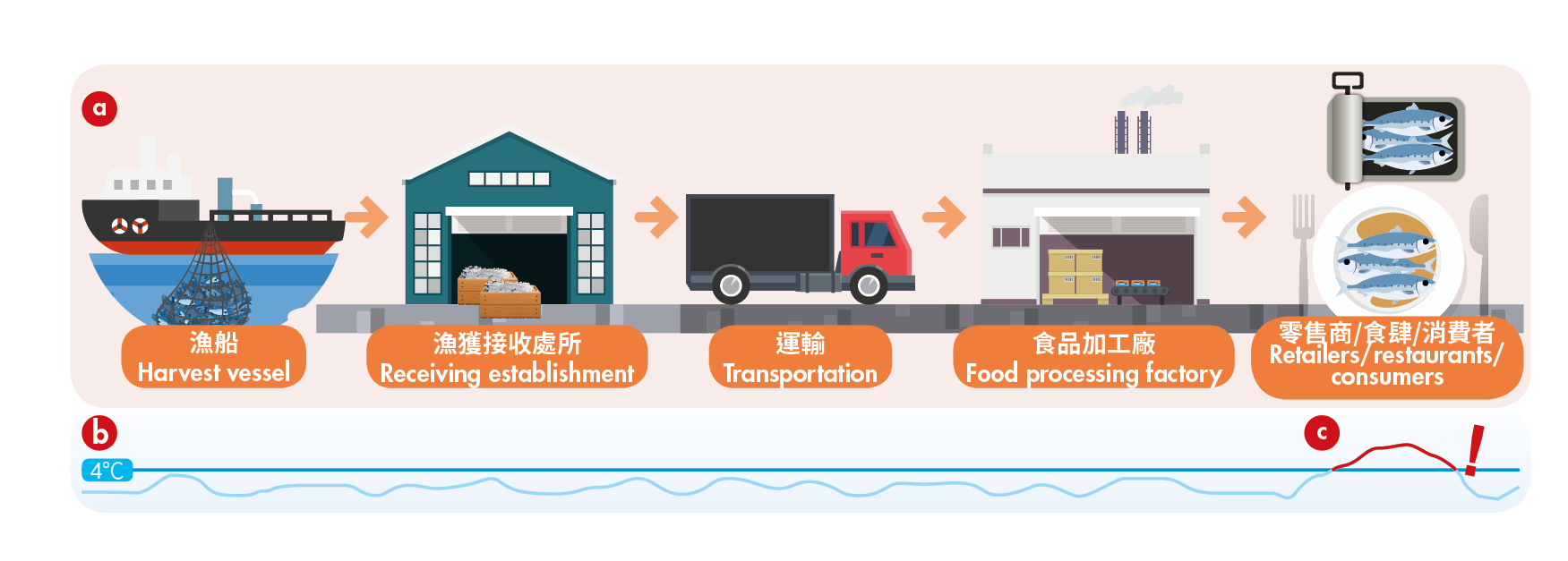
Care should be taken that the cold chain is maintained at or below 4°C along the supply chain, including points of transfer such as offloading of fish from the vessel and processing procedures.  Frozen fish and fish products should be kept at or below -18°C.  Transport vehicles or vessels should be adequately equipped to keep fish cold and pre-chilled before loading fish where applicable.  Adequate heat treatment (e.g. cooking, hot smoking) can kill histamine-producing bacteria and inactivate HDC enzymes, but cannot destroy pre-formed histamine.  Recommendations in the Code of Practice for Fish and Fishery Products (CAC/RCP 52-2003), issued by Codex Alimentarius Commission, should be observed to ensure food safety.
Food chain from harvest to consumption

(a) Cold chain should be maintained throughout the whole supply chain. (b) Refrigerated fish and fish products should be kept at or below 4°C. (c) The time which fish products are kept under ambient temperature should be minimised.

At the consumer level, fish should be chilled rapidly after purchase.  For prepackaged fish and fish products, store according to the instructions of the manufacturer (e.g. keep refrigerated). If cooked fish and ready-to-eat fish products (e.g. tuna fish sandwiches and opened canned fish) are placed at room temperature all day long, they can be re-contaminated and histamine can form.  Therefore, if these foods are not being eaten immediately, they should be kept under refrigeration and be finished as soon as possible.
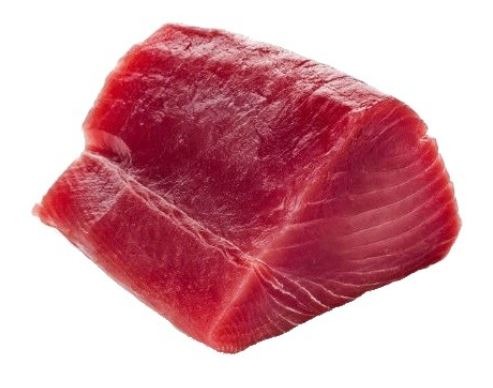
RASFF Alert – Histamine – Tuna in Sunflower Oil

RASFF

Histamine in canned tuna in sunflower oil from Spain in Andorra

Catania – Alert for the presence of histamine in canned tuna in sunflower oil from Spain

ACSA

related links

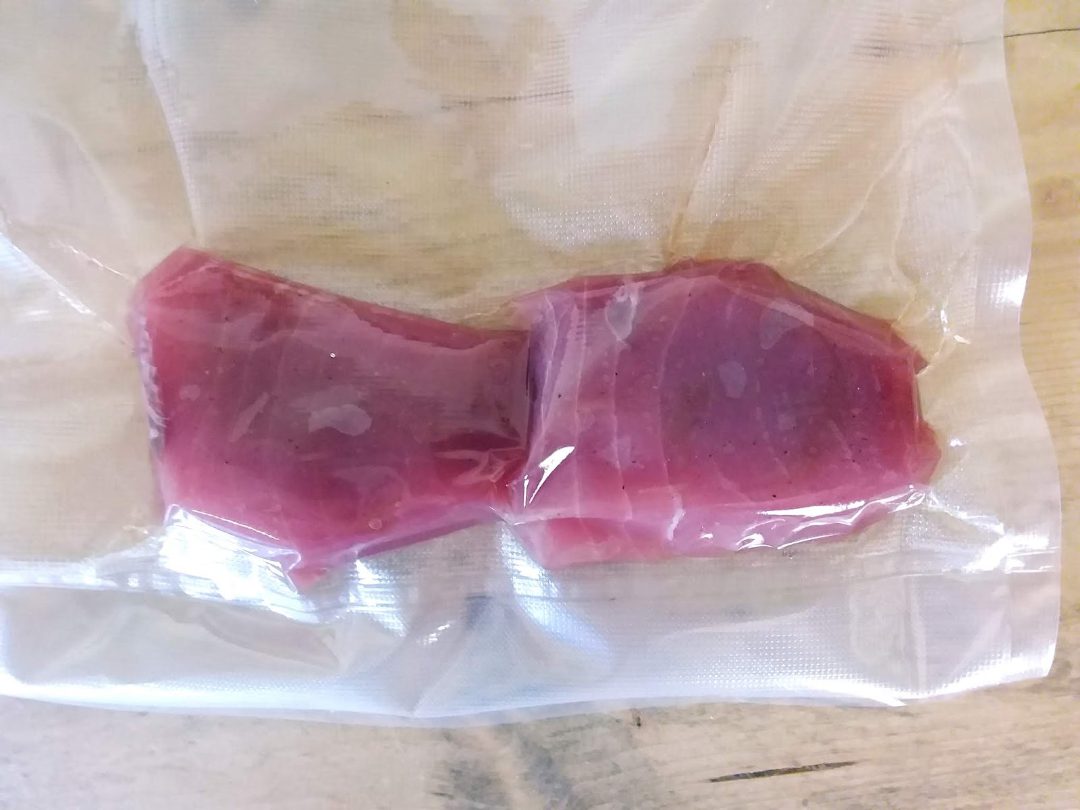
France- Yellowfin Tuna loin 3/5 KGS caught in the Indian Ocean – Histamine

Gov france

Identification information of the recalled product

  • Product category Feed
  • Product subcategory Fishery and aquaculture products
  • Product brand name un branded
  • Model names or references yellowfin tuna loin 3/5 KGS caught in the Indian Ocean
  • Identification of products
    GTIN Batch Date
    2812649000000 949-1 Use-by date 05/13/2022
  • Products List scan0318.pdf Attachment
  • Packaging under a vacuum
  • Marketing start/end date From 03/05/2022 to 13/05/2022
  • Storage temperature Product to be stored in the refrigerator
  • Health mark DFAR/FPE/98/33
  • Further information tuna loin
  • Geographic area of ​​sale Departments: CHARENTE (16)
  • Distributors u teach
  • List of points of salescan0316.pdf

Practical information regarding the recall

  • Reason for recall histamine levels above the norm
  • Risks incurred by the consumer Endogenous toxins: histamine (fish, cheese, alcoholic beverages, meats)

RASFF Alert – Possible foodborne outbreak suspected to be caused by fresh tuna fish – Czech Republic – Histamine

RASFF

Possible foodborne outbreak suspected to be caused by fresh tuna fish from India via Netherlands in the Czech Republic

Research – What to know about Scombroid Poisoning

Medical News Today

Read the full article at the link above.

Scombroid poisoning is a form of food poisoning. It happens when a person eats fish species containing high amounts of a chemical called histidine.

Histidine is an amino acid that naturally occurs in fish. When people do not keep the fish in a refrigerator, bacteria break down the histidine and turn it into histamine.

Histamine is responsible for the toxicity that causes scombroid poisoning, according to the American Academy of Allergy, Asthma & Immunology (AAAAI).

When a person consumes large quantities of fish with histamine, they experience symptoms that resemble an allergic reaction, such as hives. However, it is not a true allergy to a particular fish, according to the National Capital Poison Center.

The condition usually is not long-term or severe, according to the Food and Drug Administration (FDA)Trusted Source. Mild cases often disappear on their own without treatment, but antihistamine medications may help some people.

A person experiencing severe symptoms, such as chest pain or breathing trouble, should go to an emergency room or call local emergency services.

Canada – Cebu’s Dried Fish brand Dried Silver Fish (Bol S Dilis) recalled due to histamine

CFIA

Summary

Product
Dried Silver Fish (Bol S Dilis)
Issue
Food – Chemical
What to do

Do not use, sell, serve or distribute the affected product.

Audience
Retail

Affected products

Issue

Cebu’s Dried Fish brand Dried Silver Fish (Bol S Dilis) recalled due to histamine.

The recalled product has been sold in Alberta and online.

RASFF Alert – Histamine – Sardine Fillets

RASFF

Histamine in sardine fillets from France in Belgium, Germany and the Netherlands

France – Tuna loin – Histamine

Gov france

Identification information of the recalled product

  • Product category Food
  • Product subcategory Fishery and aquaculture products
  • Product brand name Unbranded
  • Model names or references Yellowfin tuna loin 3/5kg caught in the Indian Ocean
  • Identification of products
    GTIN Batch Date
    2812649000000 348 Use-by date 05/26/2022
  • Packaging Under vacuum
  • Marketing start/end date From 05/17/2022 to 05/24/2022
  • Storage temperature Product to be stored in the refrigerator
  • Health mark DFRA/FPE/98/77
  • Geographic area of ​​sale Whole France
  • Distributors U Teaches
  • List of points of sale List_stores.pdf

Practical information regarding the recall

  • Reason for recall Histamine levels above the norm
  • Risks incurred by the consumer Other biological contaminants

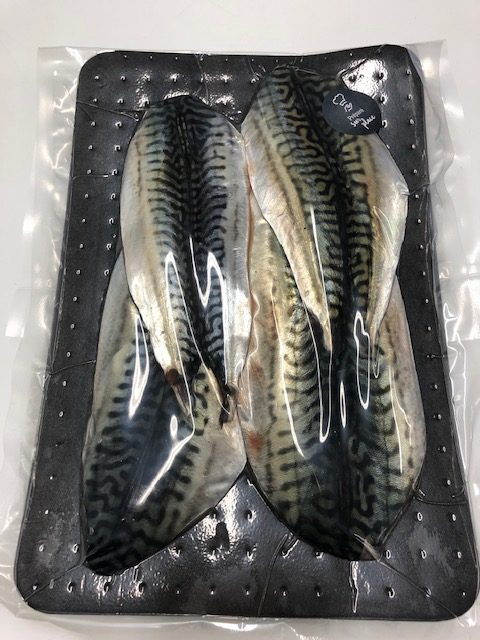
France – Mackerel Fillet – Histamine

Gov france

Identification information of the recalled product

  • Product category Food
  • Product subcategory Fishery and aquaculture products
  • Product brand name unbranded
  • Model names or references mackerel fillet
  • Identification of products
    Batch Date
    1275012015 Use-by date 05/18/2022
  • Products List PRODUCT.pdf Enclosed
  • Packaging VACUUM PACK
  • Marketing start/end date From 05/13/2022 to 05/18/2022
  • Storage temperature Product to be stored in the refrigerator
  • Health mark FR 62 667 126 EC
  • Geographic area of ​​sale Departments: LOIRET (45)
  • Distributors SUPER U

Practical information regarding the recall

  • Reason for recall histamines
  • Risks incurred by the consumer Endogenous toxins: histamine (fish, cheese, alcoholic beverages, meats)