Category Archives: Haemolytic Uremic Syndrome

USA – An E. coli Tragedy – 190 sick, 34 in hospital and 20 with hemolytic uremic syndrome

Food Poison Journal

According to CTV News, the number of lab-confirmed cases of E. coli climbed again Sunday, rising to 190, stemming from a shared kitchen that 11 Calgary Fueling Brains daycares use but four daycares have reported no E. coli cases at all.

An Alberta Health Services (AHS) spokesperson sent updated figures to CTV News, showing that there are currently 27 patients receiving care in hospital. Seven others have been discharged since the beginning of the outbreak.

The number of patients confirmed to have severe hemolytic uremic syndrome (HUS) rose to 20 from 19 on Saturday.

“Based on the epidemiology of the cases we’ve seen to date, it is highly likely the source of this outbreak is food that was distributed from the central kitchen,” AHS said. “At this point, AHS has not been able to identify a food item that was the source. We continue to investigate.”
USA – CDC isolates specific strain of E. coli that is of great concern O157

Food Safety News

The Centers for Disease Control and Prevention has identified a strain of E. coli bacteria that it considers persistent and causing illnesses over a long period.

An article in the September issue of the publication Emerging Infectious Diseases describes a strain of E. coli O157:H7 that caused a large outbreak in late 2019. The outbreak included 167 patients and hospitalized 85 people from 27 states. The outbreak was associated with consuming romaine lettuce from Salinas Valley, CA.

“Researchers at CDC sought to characterize E. coli from this outbreak and other closely related strains. This strain is estimated to have emerged in late 2015, causing multiple outbreaks from 2016-2019,” according to the article.

“An additional outbreak associated with this strain was detected in late 2020 after the conclusion of this study in which a reported 40 infections occurred in 19 states; 20 people were hospitalized, and four developed hemolytic uremic syndrome. CDC defined this strain as a reoccurring, emerging, or persistent strain causing illness over an extended time.”

Research – Cheese link in Italian HUS case

Food Safety News

Italian authorities have issued a warning after a young girl developed a serious condition after suffering an E. coli infection.

The Ministry of Health (Ministero della Salute) published a notice to consumers following a case of hemolytic uremic syndrome (HUS) which has affected a child in Trentino. HUS is a severe complication associated with E. coli infections that causes kidney failure.

Local health authorities have taken steps to try and verify the source of infection. They identified a probable link to the consumption of cheese produced in a malga, which is an alpine hut, in Coredo. In late July, local officials said the girl was hospitalized.

A related Rapid Alert System for Food and Feed (RASFF) report shows Shiga toxin-producing E. coli (STEC) O26 was detected in the cheese.

To protect public health, it was advised that anyone who had purchased dairy products from the implicated site, before July 14, should not consume them. Officials also added that raw milk products should not be given to children under 5 years of age or the elderly.

Germany sounds E. coli and HUS alert after travel to Egypt

Food Safety News

German public health officials have warned of a spike in cases of E. coli among travelers to Egypt.

Experts from the Robert Koch Institut (RKI) said they had also seen a rise in connected cases of hemolytic uremic syndrome (HUS). HUS is a severe complication associated with E. coli infections that causes kidney failure.

Since the beginning of 2023, 31 cases of E. coli and 10 of HUS in people who were likely infected while on holiday in Egypt have been reported.

A large proportion of patients – 12 E. coli cases and six HUS cases – were recorded in May and June. They had stayed in different hotels, mainly in Hurghada, which is also the most frequent travel spot in the country.

Research – Italy sees most HUS cases for decades – STEC E.coli

Food Safety News

Italy has reported the highest annual total of Hemolytic Uremic Syndrome (HUS) cases since records began.

From January to December 2022, 91 cases were recorded. This is the most observed in a single year since the start of surveillance in 1988. HUS is a severe complication associated with E. coli infection that causes kidney failure and can result in lifelong, serious health problems and death.

The number is still lower than in France, which recorded 128 HUS cases in 2021. This was the lowest figure since 2017 and was down from 167 in 2020. Data for 2022 is not yet available but a rise is expected due to an outbreak linked to Nestlé Buitoni Fraîch’Up brand frozen pizzas.

BFR

Flour is a natural product and a valuable foodstuff.

However, Shiga toxin-producing Escherichia coli (STEC) were detected in multiple flour samples (wheat, spelt and rye) during routine food monitoring in Germany in 2018. Escherichia (E.) coli are bacteria that occur naturally in the intestines of animals and humans and the detection of E. coli in food is a strong indicator of a faecal contamination.

Bacteria from the faeces or stool can be shed into the environment and subsequently contaminate various animal- and plant-based foods. Direct transmission between animals and humans and from humans to humans are also possible. Certain toxin producing variants of E. coli can cause serious diseases in animals and humans.

E. coli variants that can form Shiga toxins are of particular importance for humans. These are abbreviated as STEC. STEC, which cause diseases in humans, are referred to as entero-hemorrhagic E. coli (EHEC). The symptoms of an infection with STEC are initially gastrointestinal.

The possible severity of the disease ranges from watery to bloody diarrhea. In adults, the course of the disease can also proceed without symptoms. A particularly severe complication is the hemolytic-uremic syndrome (HUS). HUS is a disease that manifests in acute kidney failure, blood coagulation disorders and destruction of the red blood cells and can lead to death in individual cases. This form of the disease affects particularly sensitive groups of people, such as young chil-dren.

Research – France – Haemolytic-uremic syndrome surveillance data in 2021

Sante Publique

In 2021, the overall annual incidence of pediatric HUS was lower than that observed for the past four years.

Even if this decrease in annual incidence is observed in children under three years of age, the incidence in this age group remains high and much higher than that observed in older children. As every year, regional heterogeneity is observed. In 2021, the Bourgogne-France-Compté and Auvergne-Rhône-Alpes regions were particularly affected.

In 2021, serogroup O26 remains the majority, followed by serogroup O80. After several years of decrease in the share of cases due to O157, a slight increase in the number of O157 strains is observed in 2021.

Research – Sporadic Occurrence of Enteroaggregative Shiga Toxin–Producing Escherichia coli O104:H4 Similar to 2011 Outbreak Strain

CDC

Abstract
We describe the recent detection of 3 Shiga toxin–producing enteroaggregative Escherichia coli O104:H4 isolates from patients and 1 from pork in the Netherlands that were genetically highly similar to isolates from the 2011 large-scale outbreak in Europe. Our findings stress the importance of safeguarding food supply production chains to prevent future outbreaks.

Shiga toxin–producing Escherichia coli (STEC) is a zoonotic pathogen that causes illness ranging from mild diarrhea to haemolytic uremic syndrome and death. During 2011, an exceptionally large outbreak caused by serotype O104:H4 STEC occurred in Europe, mainly in Germany and France, that was associated with sprouts grown from imported fenugreek seeds (1). Besides the ability to produce Shiga toxin, specifically stx2a, the strain had the genetic characteristics and phylogenetic backbone of an enteroaggregative E. coli (EAEC) pathotype (2) but lacked other classical STEC virulence markers eae and hlyA (3). In addition, the outbreak strain carried plasmid-borne blaCTX-M-15 and blaTEM-1 genes. The epidemiologic investigation revealed that a contaminated batch of fenugreek seeds imported into the European Union from Egypt was the most probable source of the pathogen causing the outbreak (4).

After the 2011 outbreak in Germany and France, only a few sporadic cases of infection with Shiga toxin–producing EAEC O104:H4 were reported, most related to travel to Turkey or North Africa (5–8). We describe the sporadic occurrence of Shiga toxin–producing EAEC O104:H4 isolates in the Netherlands, originating from 2 clinical cases from 2019 and 2020 and 1 food isolate from 2017. In addition, we report a clinical case from Austria in 2021.

French E. coli outbreak linked to cucumbers from Belgium

Food Safety News

More than 30 people were sick in France in late 2021 as part of an outbreak traced to contaminated cucumbers.

In September 2021, the Hauts-de-France Regional Health Agency was notified of a suspected foodborne outbreak among students in the Lille area. Two hospitalized children were diagnosed with hemolytic uremic syndrome (HUS). HUS is a severe complication associated with E. coli infection that causes kidney failure. The agency asked Santé publique France for support in investigating the incident.

In total, 35 cases of gastroenteritis, half of whom had bloody diarrhea and fever, were identified. Ten people were hospitalized.

Identified cases were 29 children in four schools and five elderly adults who received meals through a local delivery program. One case was the parent of a pupil. Five children and one adult had meals delivered to them at home.

The median age of patients was 8 with a range of 4 to 89 years old and almost two thirds were female.

School cafeterias and the meal delivery service were all supplied by the same municipal canteen.

France – Food produced or distributed by the farm: milk, yoghurts, fresh or mature cheeses (brousse, ricotta, pecorino, tomme…). – STEC E.coli

Gov france

Identification information of the recalled product

  • Product category Feed
  • Product subcategory Milk and dairy products
  • Product brand name Unbranded
  • Model names or references Various products
  • Identification of products
    Batch
    see attached product list
  • Products List Product_list.pdf Attachment
  • Marketing start/end date Until 07/22/2022
  • Storage temperature Product to be stored in the refrigerator
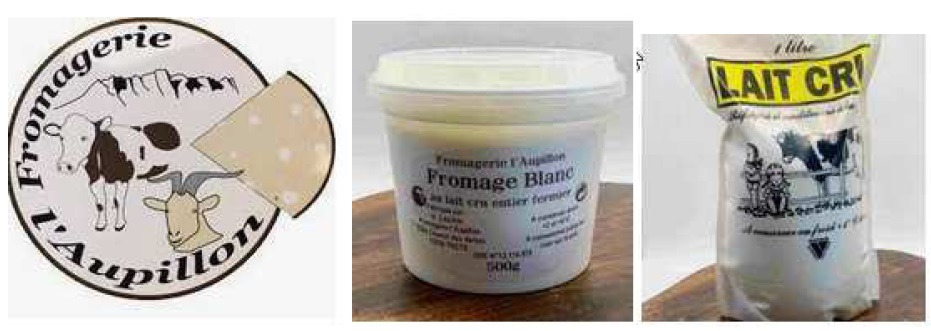
  • Further information Over the period at risk, the products sold by the Aupillon farm were mainly distributed in the Var and Bouches-du-Rhône, in retail stores and restaurants. The points of sale affected by the distribution of suspect products proceed to withdraw them and inform consumers by means of small posters put up at the points of sale concerned.
  • Geographic area of ​​sale Departments: BOUCHES-DU-RHONE (13), VAR (83)
  • Distributors Various retailers.

Practical information regarding the recall

  • Reason for recall Contamination of products by E.COLI STEC bacteria and epidemiological link with cases of pediatric HUS in PACA and OCCITANIE.
  • Risks incurred by the consumer Toxigenic Shiga Escherichia coli (STEC)