Category Archives: Fusarium Toxin

Research – Evaluation of the dietary exposure of the Catalan population to mycotoxins of the genus Fusarium

ACSA

Within the framework of total diet studies, the Catalan Food Safety Agency (ACSA) publishes a second study on the evaluation of mycotoxins: “Evaluation of the dietary exposure of the Catalan population to mycotoxins of the genus Fusarium”.

In 2014, a first study was published in which the presence of the main mycotoxins in food intended for human consumption in the Catalan market was determined, and the intake of food linked to this contamination to estimate the food exposure of the population residing in Catalonia, and evaluate the risk to health (ACSA, 2014). Considering the results obtained, the ACSA considered it necessary to carry out this second, more specific study on mycotoxins, evaluating those that were found most frequently in the foods of the Catalan market, the mycotoxins of the genus Fusarium, and also taking into account the most exposed population groups.

The present study shows that the mycotoxins detected with greater frequency were DON and ENNB followed, with a much lower frequency, by mycotoxin T-2 and mycotoxins FB1 and DON-3G. The rest of mycotoxins analyzed (3-ADON, 15-ADON, NIV, FUS-X, zearalenone, HT-2, FB2 and FB3) will always present levels below the detection limit.

All the age groups evaluated have an exposure to DON and ENNB lower than the respective safety values. The average exposure of the adult population and children in Catalonia to the mycotoxin DON presents values ​​between 7.5% and 10.1% of the safety value. The average exposure of the population to ENNB presents values ​​​​that are two orders of magnitude lower than the extrapolated safety values.

Total diet studies make it possible to better understand the reality linked to the main chemical pollutants that reach the Catalan market, and in this way specific decisions can be made to correct possible risk situations for the health of consumers.
Research – Strategies for Controlling the Sporulation in Fusarium spp

MDPI

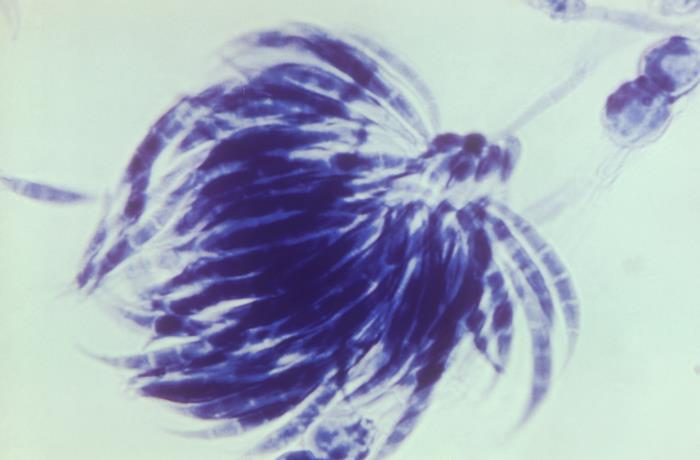
Fusarium species are the most destructive phytopathogenic and toxin-producing fungi, causing serious diseases in almost all economically important plants. Sporulation is an essential part of the life cycle of FusariumFusarium most frequently produces three different types of asexual spores, i.e., macroconidia, chlamydospores, and microconidia. It also produces meiotic spores, but fewer than 20% of Fusaria have a known sexual cycle. Therefore, the asexual spores of the Fusarium species play an important role in their propagation and infection. This review places special emphasis on current developments in artificial anti-sporulation techniques as well as features of Fusarium’s asexual sporulation regulation, such as temperature, light, pH, host tissue, and nutrients. This description of sporulation regulation aspects and artificial anti-sporulation strategies will help to shed light on the ways to effectively control Fusarium diseases by inhibiting the production of spores, which eventually improves the production of food plants.

Research – Emerging health threat and cost of Fusarium mycotoxins in European wheat

Nature.com

CDC Fusarium1

Mycotoxins harm human and livestock health, while damaging economies. Here we reveal the changing threat of Fusarium head blight (FHB) mycotoxins in European wheat, using data from the European Food Safety Agency and agribusiness (BIOMIN, World Mycotoxin Survey) for ten years (2010–2019). We show persistent, high, single- and multi-mycotoxin contamination alongside changing temporal-geographical distributions, indicative of altering FHB disease pressure and pathogen populations, highlighting the potential synergistic negative health consequences and economic cost.

Research – Alltech: Testing of corn and forage in Europe indicates moderate to high mycotoxin risk for dairy cows.

Feed Navigator

In all regions of Europe, grass and corn silage samples contained levels of mycotoxins that would be deemed higher risk for use in dairy production, finds the Alltech 2022 European Harvest Analysis.

Research – From Aflatoxin to Zearalenone: Mycotoxins You Should Know – Deoxynivalenol (DON)

Agfax

Mycotoxins are substances produced by fungi that infect grain crops like maize and small grains and cause ear and kernel rots. Exposure to mycotoxins can lead to chronic or acute toxicity in humans and animals. In addition, mycotoxins can lead to market losses, discounts, rejection of grain lots at elevators, and a reduction in livestock efficiency and productivity.

The most economically important mycotoxins include aflatoxins (AF), deoxynivalenol (DON, also known as vomitoxin), fumonisins (FUM), zearalenone (ZEA), ochratoxin A (OTA), T2, HT-2, ergot alkaloids, and patulin (PAT). The fungal species that produce mycotoxins have worldwide distribution; therefore, mycotoxin contamination occurs everywhere grain crops are grown. Accordingly, mycotoxins have been detected in feed, silage, food, and beverages derived from cereal grains and animal products exposed to contaminated feed.

Research – The underestimated risk of mycotoxins in dairy cows

All About Feed

It is a myth that rumen microbial activity allows dairy cows to handle mycotoxin toxicity completely. A closer look at rumen degradation capability shows that this is not the case. Therefore, a mitigation strategy should be holistic, practical and beyond binding.

Risk, impact, and diagnostics

A complex and diverse Total Mixed Ration (TMR) poses multiple mycotoxin toxicity challenges. Although rumen microbes can reduce the toxicity of some mycotoxins, not all mycotoxins are equally degraded in the rumen. In high-yielding dairy cows high-starch diets can compromise the detoxification capacity of rumen microbes. For some mycotoxins, such as zearalenone (ZEN), rumen degradation may increase the toxicity. Furthermore, extended periods of exposure to low levels of multiple mycotoxins may lead to chronic toxicity, an increasing issue that is notoriously difficult to diagnose at an early stage.

Mycotoxins can threaten dairy cows’ health, rumen function, feed intake, milk yield, milk quality, lameness, and reproductive abilities. Many “mouldy silage syndrome” cases in the field have shown incidences of increased somatic cell counts, undigested faecal feed particles, laminitis, mastitis and ruminitis cases. Cases of reproductive challenges and vaccination failures have been reported with multiple mycotoxins in TMR.

Read more at the link above

Research – Recent Research on Fusarium Mycotoxins in Maize—A Review

MDPI

Maize (Zea mays L.) is one of the most susceptible crops to pathogenic fungal infections, and in particular to the Fusarium species. Secondary metabolites of Fusarium spp.—mycotoxins are not only phytotoxic, but also harmful to humans and animals. They can cause acute or chronic diseases with various toxic effects. The European Union member states apply standards and legal regulations on the permissible levels of mycotoxins in food and feed. This review summarises the most recent knowledge on the occurrence of toxic secondary metabolites of Fusarium in maize, taking into account modified forms of mycotoxins, the progress in research related to the health effects of consuming food or feed contaminated with mycotoxins, and also the development of biological methods for limiting and/or eliminating the presence of the same in the food chain and in compound feed. View Full-Text

Research – Impregnation of the French population by mycotoxins. National Biomonitoring Program, Esteban 2014-2016

Sante Publique

Mycotoxins are substances secreted by certain toxigenic strains of several species of molds (microscopic fungi) such as Aspergillus, Penicillium, Fusarium, Byssochlamys, Alternaria etc. which in particular contaminate cereals and plants before and or after harvest. 

The toxicity of mycotoxins depends on the species and the nature of the toxin. They are generally thermostable, resistant to transformation processes and can be found in many foodstuffs and be responsible for acute or chronic poisoning in humans or animals. 

Of the 300 to 400 known mycotoxins, about ten of them can cause animal or human pathologies: aflatoxins (AF), ochratoxin A (OTA), fumonisins deoxynivalenol (DON), T-2 and HT-2 toxins, trichotecenes (TC), zearalenone (ZEN) and patulins which contaminate fruits, especially apples. In 1993, the IARC (International Agency for Research on Cancer) classified aflatoxins in group 1, carcinogenic to humans; AFB1, considered one of the most potent natural genotoxic carcinogens, is classified in group 1 (IARC, 2002). 

The target organ is the liver. As for OTA, it is considered possibly carcinogenic for humans and classified in group 2B (1993); in humans as in animals, the kidney is the main target organ. OTA would also have immunotoxic and neurotoxic effects. Due to their harmful effects, exposure to mycotoxins must remain as low as possible to protect the population. L’ WHO encourages the monitoring of mycotoxin levels in food because they represent a risk for human and animal health. 

In France, data on the impregnation of the French population by mycotoxins are almost non-existent, with the exception of a study carried out in three French regions [1, 2]. The Esteban cross-sectional study (Health study on the environment, biomonitoring, physical activity and nutrition) made it possible to measure the levels of impregnation by aflatoxins and OTA of the population in mainland France aged 6 at 74 years old between April 2014 and March 2016.

The purpose of this note is to present the results of impregnation by AFs and OTA, and to analyze the determinants of exposure to OTA in adults . Aflatoxins B1, B2, G1, G2, M1 were not quantified, neither in children nor in adults. For OTA, the percentage of quantification was equal to 45.5% in children and 47.8% in adults. The geometric means of the levels of impregnation by the OTA were lower than the LOQ or not provided considering the important rate of censorship. 

The search for the determinants of exposure by OTA, essentially dietary, in adults showed an increase in impregnation with the consumption of processed meats. Not all associations could likely be identified due to small sample size. A future biomonitoring study could make it possible to deepen the search for determinants of the impregnations observed and to broaden the knowledge of the

Author: Oleko Amivi, Hoang Phan, Fillol Clémence, Gane Jessica, Saoudi Abdessattar, Zeghnoun Abdelkrim
Year of publication: 2022
Pages: 35 p.
Collection: Studies and Surveys

Research – Straw Can Pose Mycotoxin Risk in Dairy Heifer Diets

Dairy Herd

Straw is a common, high-fiber, low-energy ingredient in U.S. dairy heifer rations. While we normally monitor grain quality to watch for harmful mycotoxins, it turns out straw can carry its own mycotoxin risk, according to a recent feed quality evaluation by Alltech, Inc.

Each year, Alltech conducts comprehensive mycotoxin testing programs in the U.S., Canada, and Europe to assess the mycotoxin risk in newly harvested grain crops. For the first time this year, wheat and barley straw were added to the sampling in Europe.

Danish farmers were worried about the damaging effects of wet weather both pre- and post-harvest. Because excessive moisture delayed straw harvest, the crops lay in the field for extended periods, damaging quality and fueling mold contamination.

A total of 70 straw samples from Denmark were evaluated. Deoxynivalenol (DON) was identified in 84% of samples, and emerging mycotoxins were found in 70% of samples. All told, 95% of samples contained some form of mycotoxin, with 50% containing two or more.

According a bulletin on mycotoxins in forage shared by the University of Wisconsin, DON may be a marker for other mycotoxins in contaminated feeds. When young dairy animals consume mycotoxins, they can be at risk for feed refusals, diarrhea, and immunosuppression. Additionally, mycotoxin-induced outcomes may be vague, and include unthriftiness, rough haircoat, poor body condition, and reproductive problems.

Alltech technical advisor and veterinarian, Dr. Radka Boutova, DVM, suggested adding straw to the list of feedstuffs that are screened for mycotoxins if it is a commonly used ingredient in a young stock ration. This is particularly important if the straw crop was stressed and/or delayed in the field due to unfavorable weather conditions, or for any straw that shows visible signs of mold.

Research – USDA Discovers 33 New Mycotoxin-Producing Fungi Species

Food Safety Magazine

The U.S. Department of Agriculture’s Agricultural Research Service (USDA’s ARS) has discovered 33 new species of mycotoxin-producing fungi belonging to the genus Fusarium.

According to ARS scientists, many Fusarium species produce harmful secondary metabolites in plant tissues including trichothecenes, which are among the mycotoxins of greatest concern to food safety and human health. Not only do mycotoxins present an immediate threat to livestock and humans as they can cause illness, they may also be carcinogenic if consumed regularly over a prolonged period.